From Concept to Production: Comprehensive Custom Robot Manufacturing Solutions
Engineering Beyond Standardization: The Comprehensive Guide to Custom Robot Manufacturing
The evolution of industrial automation has reached an inflection point where standardized robotic solutions increasingly fail to address specialized application requirements, driving unprecedented demand for sophisticated custom robot manufacturing capabilities. This specialized discipline represents the convergence of mechanical engineering, advanced materials science, precision manufacturing, and application-specific programming to create robotic systems that transcend the limitations of off-the-shelf solutions. At JLYPT, our approach to custom robot manufacturing encompasses the complete product lifecycle, from initial concept development and kinematic optimization through precision component fabrication, system integration, and validation, enabling clients to achieve operational capabilities impossible with conventional robotic systems.
The Technical Imperative for Custom Robotics
The transition from standardized to custom robot manufacturing is driven by several critical technical and operational factors that standard platforms cannot address:
Application-Specific Performance Requirements
-
Kinematic Optimization: Custom robots enable optimization of Denavit-Hartenberg parameters for specific workspace geometries:
θ_i, d_i, a_i, α_i = f(workspace_volume, obstacle_avoidance, dexterity_requirements)
This allows creation of robots with optimal reach, dexterity, and singularity avoidance for unique applications -
Dynamic Performance Customization: The dynamic equation of motion for robotic manipulators:
M(q)q̈ + C(q,q̇)q̇ + G(q) = τ
Can be optimized through custom mass distribution and actuator selection to achieve specific acceleration profiles and settling characteristics -
Stiffness-to-Weight Ratio Maximization: Custom designs achieve optimal structural performance through:
Specific Stiffness = E/ρ × (I/A)^0.5
Where E is Young’s modulus, ρ is density, I is moment of inertia, and A is cross-sectional area, all customizable through material selection and geometric optimization
Integration and Environmental Constraints
-
Space-Constrained Deployments: Custom robots can be designed with folded or compact kinematic chains that occupy up to 60% less volume than equivalent standard robots while maintaining required workspace
-
Environmental Compatibility: Designs can incorporate specific IP ratings, material compatibility, thermal management, and EMI/RFI shielding requirements not available in standard offerings
-
Legacy System Integration: Custom interfaces and mounting solutions enable integration with existing machinery and production systems without costly facility modifications
The Engineering Methodology Behind Custom Robot Manufacturing
Successful custom robot manufacturing follows a rigorous engineering methodology that ensures both technical feasibility and operational excellence:
Phase 1: Requirements Analysis and System Architecture
-
Workspace Analysis and Optimization: Using computational geometry to define optimal reach envelopes and dexterous workspace volumes
-
Load Path Analysis: Identification of force and moment transmission paths through the kinematic chain to optimize structural design
-
Dynamic Simulation: Multi-body dynamics simulation to validate performance under expected operational conditions
-
Lifecycle Requirements Definition: Establishing maintenance intervals, expected service life, and reliability targets based on operational profiles
Phase 2: Mechanical Design and Optimization
-
Topology Optimization: Using finite element analysis (FEA) and generative design algorithms to create optimal material distribution for strength-to-weight ratio
-
Joint Design Customization: Designing specialized joint assemblies that may combine multiple degrees of freedom or incorporate application-specific features
-
Thermal Management Integration: Designing cooling channels, heat sinks, and material selections optimized for specific thermal environments
-
Cable Management Systems: Custom routing solutions that account for full range of motion without stress or interference
Phase 3: Precision Manufacturing and Integration
-
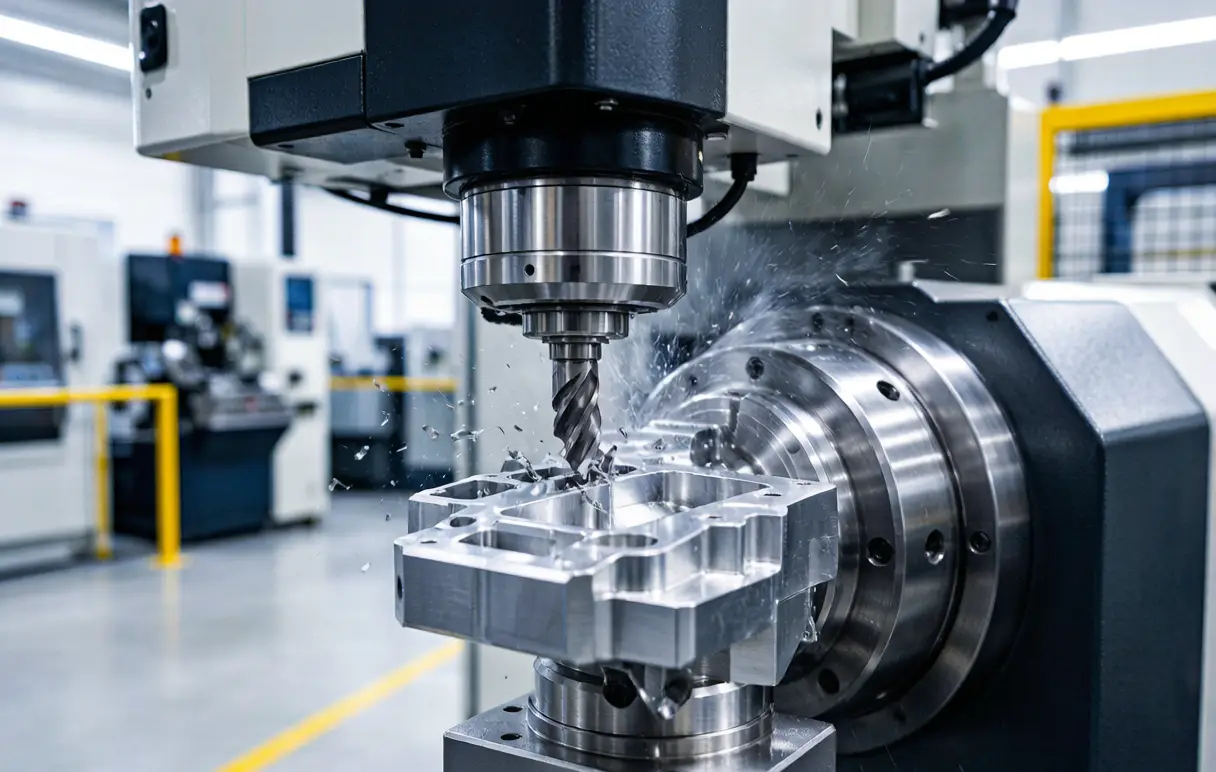
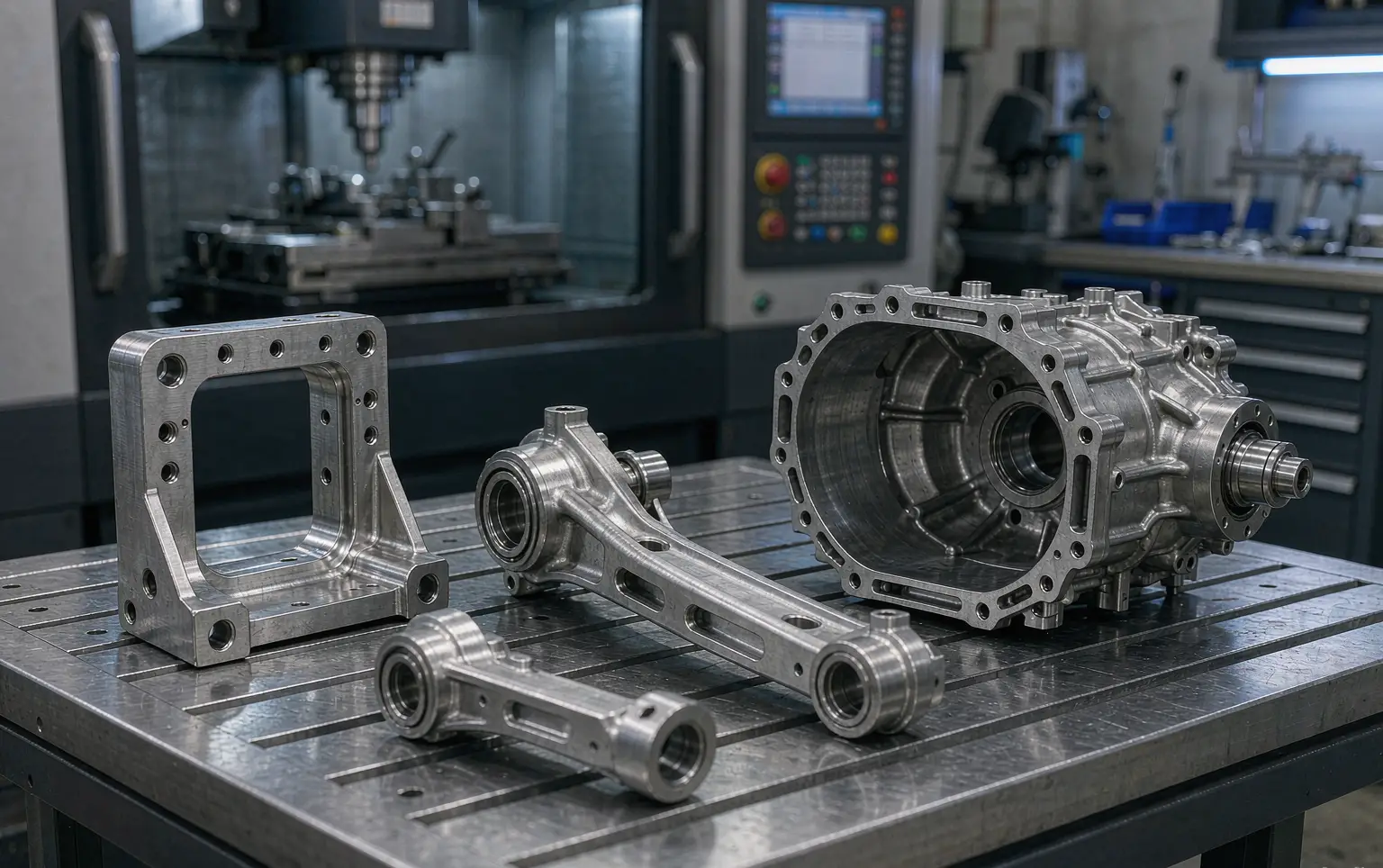
Multi-Axis CNC Machining: Utilizing 5-axis simultaneous machining for complex structural components with tolerances to ±0.005mm
-
Specialized Heat Treatment: Implementing application-specific hardening, tempering, and surface treatment processes
-
Precision Assembly: Using laser alignment and coordinate measurement for sub-micron assembly accuracy
-
Dynamic Balancing: High-speed balancing to G2.5 or better for smooth high-speed operation
Material Science for Custom Robotic Applications
The selection and processing of materials in custom robot manufacturing significantly impact performance characteristics:
Advanced Material Selection Matrix
Material Category Specific Strength (MPa·m³/kg) Thermal Conductivity (W/m·K) Damping Coefficient Typical Applications Aluminum 7075-T6 120-140 130-150 0.0001-0.0003 High-speed arms, structural members Titanium Ti-6Al-4V 180-220 6-7 0.001-0.003 High-strength joints, aerospace applications Carbon Fiber Composite 300-500 5-100 (anisotropic) 0.005-0.015 Ultra-light arms, vibration-sensitive applications Managing Steel 200-250 20-25 0.0002-0.0005 High-precision gears, shafts Invar 36 80-100 10-11 0.0001-0.0002 Metrology frames, thermally stable structures Magnesium Alloys 100-130 80-100 0.01-0.03 Damping elements, high-acceleration components
Heat Treatment and Surface Engineering
-
Deep Cryogenic Treatment: For stabilizing dimensions and enhancing wear resistance in precision components
-
Plasma Nitriding: Creating hard, wear-resistant surfaces with minimal distortion
-
DLC Coatings: Diamond-like carbon coatings for reducing friction and preventing galling in sliding contacts
-
Anodizing and Hard Coatings: For corrosion resistance and improved surface properties
Manufacturing Capabilities and Technical Specifications
Table 1: Custom Robot Manufacturing Capability Framework
Capability Area Standard Range High Performance Extreme Precision Specialized Applications Positioning Accuracy ±0.1-0.3 mm ±0.05-0.1 mm ±0.01-0.02 mm ±0.002-0.005 mm Repeatability ±0.05-0.1 mm ±0.02-0.05 mm ±0.005-0.01 mm ±0.001-0.002 mm Maximum Payload 1-50 kg 50-500 kg 0.1-10 kg 500-2000 kg Working Envelope 0.5-2.0 m 2-5 m 0.1-1.0 m 5-15 m Degrees of Freedom 4-6 6-7 6-9 3-12 Maximum Speed 1-2 m/s 2-5 m/s 0.1-0.5 m/s 5-10 m/s Stiffness 0.5-1.0 N/μm 1.0-5.0 N/μm 5.0-20 N/μm 0.1-0.5 N/μm Environmental Rating IP54 IP65 IP67/IP69K Cleanroom Class 100-1000 Mean Time Between Failures 20,000-40,000 h 40,000-60,000 h 60,000-100,000 h 10,000-30,000 h Power Consumption 1-5 kW 5-20 kW 0.1-1 kW 20-100 kW
Precision Manufacturing Technologies
JLYPT employs advanced manufacturing technologies specifically optimized for custom robot manufacturing:
Multi-Axis CNC Machining Capabilities
-
5-Axis Simultaneous Machining: For complex curved surfaces and multi-sided components in single setups
-
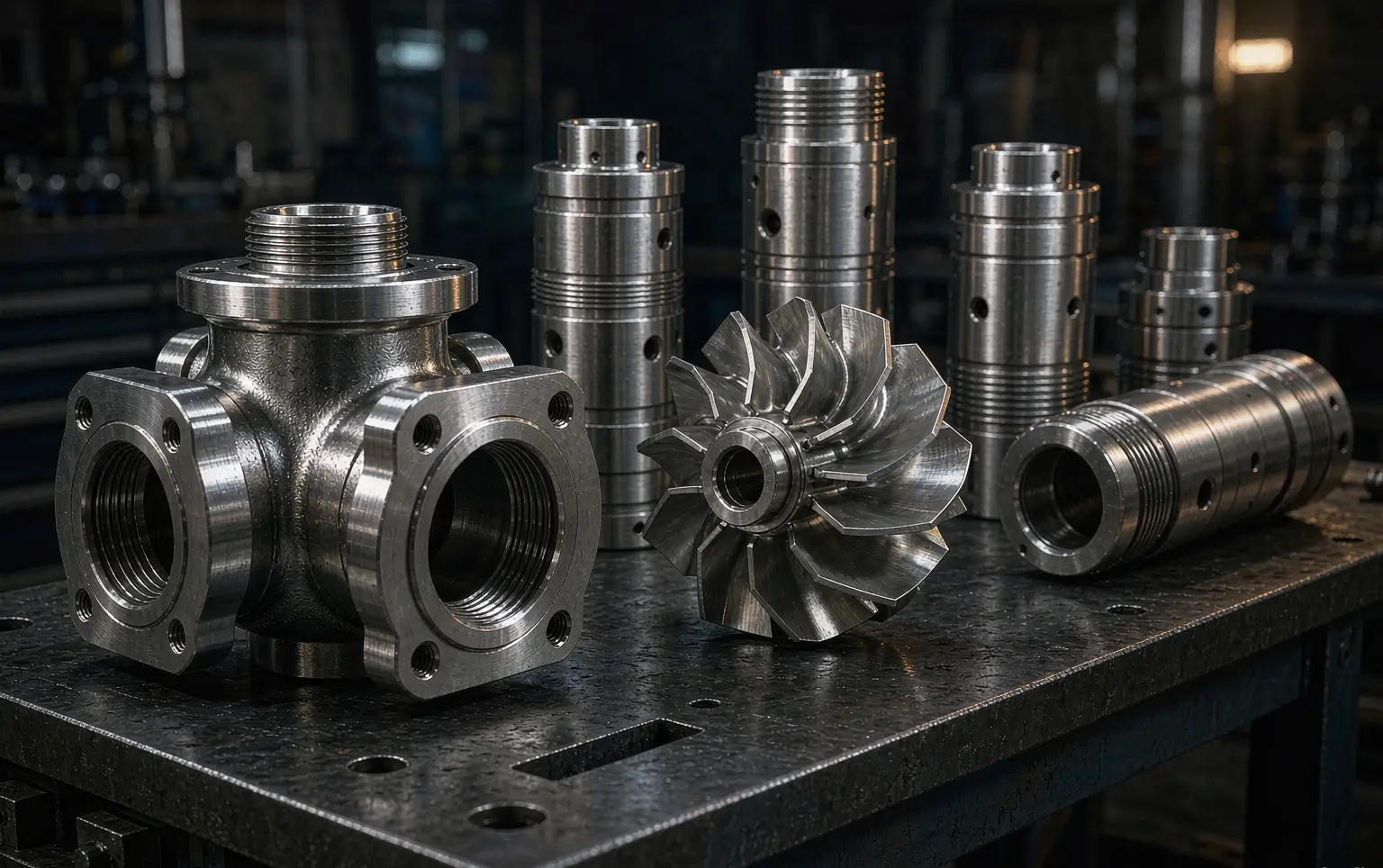
Turn-Mill Centers: Complete machining of complex rotational components with milled features
-
High-Speed Machining: Spindle speeds to 30,000 RPM with optimized toolpaths for aluminum and composite materials
-
Micro-Machining: Capabilities for features as small as 0.1mm with tolerances to ±0.002mm
Additive Manufacturing Integration
-
Metal Additive Manufacturing: Selective laser melting for complex internal structures and lightweight components
-
Composite Additive Manufacturing: Continuous fiber reinforcement in polymer matrices for high-strength components
-
Hybrid Manufacturing: Combining additive and subtractive processes for optimal surface finish and dimensional accuracy
Specialized Finishing Processes
-
Electrochemical Machining: For burr-free finishing of complex geometries
-
Abrasive Flow Machining: For uniform surface finishing of internal passages and complex contours
-
Magnetorheological Finishing: For ultra-smooth surfaces on complex optics and precision components
-
Vibratory Finishing: For consistent edge breaking and surface preparation
Control System Integration and Optimization
The electronic and control systems in custom robot manufacturing require specialized integration:
Motion Control Customization
-
Servo System Optimization: Matching motor inertia to load inertia for optimal dynamic response:
Inertia Ratio = J_load/J_motor
Optimized typically between 3:1 and 10:1 for different application requirements -
Control Algorithm Development: Custom implementations of:
-
Computed torque control for precise trajectory following
-
Impedance control for force-sensitive applications
-
Adaptive control for varying load conditions
-
-
Safety System Integration: Implementing safety-rated components and architectures meeting:
-
ISO 10218-1/2 for industrial robots
-
ISO/TS 15066 for collaborative applications
-
IEC 61508/62061 for functional safety
-
Sensor Integration and Data Processing
-
Multi-Sensor Fusion: Integrating vision, force-torque, proximity, and position sensors with Kalman filtering or Bayesian estimation techniques
-
Real-Time Data Processing: Implementing deterministic control loops with latencies under 1ms
-
Network Integration: Supporting industrial protocols including EtherCAT, PROFINET, and Ethernet/IP
Case Study Applications
Case Study 1: Aerospace Composite Layup Robot
-
Challenge: An aerospace manufacturer required a robot for automated composite tape laying with positional accuracy of ±0.1mm over a 6-meter working envelope, capable of applying precise pressure while maintaining tape orientation.
-
Solution: JLYPT designed and manufactured a custom 7-axis gantry-style robot with carbon fiber composite arms for reduced inertia. The system incorporated a precision end-effector with force-controlled compaction roller and real-time vision guidance. All structural components were machined using 5-axis CNC with temperature-controlled environments to maintain dimensional stability.
-
Result: Achieved positional accuracy of ±0.08mm with force control accuracy of ±2N. The system reduced composite layup time by 65% while improving material utilization by 15%. The custom design enabled layup of complex contours impossible with standard robots.
Case Study 2: Pharmaceutical Aseptic Handling System
-
Challenge: A pharmaceutical company needed a robotic system for aseptic vial handling in ISO Class 5 cleanroom conditions, requiring zero particle generation, full cleanability, and the ability to handle vials from 2ml to 100ml sizes.
-
Solution: We developed a fully enclosed SCARA-style robot with all external surfaces electropolished to Ra 0.1μm. The design utilized magnetic couplings for motion transmission through containment barriers and incorporated HEPA-filtered air purge systems. All components were manufactured from 316L stainless steel with crevice-free designs.
-
Result: Achieved particle generation rates below ISO Class 5 requirements with 99.99% handling reliability. The system passed all validation protocols for aseptic processing and enabled 24/7 operation with maintenance intervals exceeding 10,000 hours.
Case Study 3: Heavy-Payload Automotive Assembly Robot
-
Challenge: An automotive manufacturer required a robot capable of handling 800kg payloads for chassis assembly operations, with positioning repeatability of ±0.2mm at full extension and acceleration of 1m/s² with payload.
-
Solution: JLYPT engineered a custom 6-axis articulated robot with reinforced harmonic drive reducers in all joints. The arm structures utilized finite element analysis-optimized designs manufactured from high-strength steel plate with internal ribbing for maximum stiffness. The base incorporated a custom rotating platform with 5000kg load capacity.
-
Result: Achieved payload capacity of 850kg with positioning repeatability of ±0.15mm. The robot maintained specified performance through 3-shift operation for 2 years without major maintenance, demonstrating the durability of the custom design.
Quality Assurance and Validation
Custom robot manufacturing requires comprehensive validation processes:
Design Verification and Validation
-
Finite Element Analysis: Structural, thermal, and modal analysis to verify design integrity
-
Multi-Body Dynamics Simulation: Verification of dynamic performance under all operational conditions
-
Control System Simulation: Hardware-in-the-loop testing of control algorithms
-
Safety Analysis: Failure modes and effects analysis (FMEA) and risk assessment
Manufacturing Quality Assurance
-
First Article Inspection: Comprehensive dimensional verification of initial production units
-
Process Capability Studies: Statistical verification of manufacturing process capability (Cp/Cpk > 1.33)
-
Material Verification: Chemical and mechanical property testing of all materials
-
Traceability Systems: Complete traceability from raw material to finished assembly
Performance Validation Testing
-
Accuracy and Repeatability Testing: Laser tracker measurement of positioning performance
-
Dynamic Performance Testing: Verification of acceleration, velocity, and settling characteristics
-
Endurance Testing: Accelerated life testing to verify durability and reliability
-
Environmental Testing: Verification of performance under specified environmental conditions
Future Trends in Custom Robot Manufacturing
The field of custom robot manufacturing continues to evolve with emerging technologies:
Advanced Material Applications
-
Smart Materials: Integration of shape memory alloys, piezoelectric materials, and magnetorheological fluids
-
Nanostructured Materials: Materials with engineered properties at the nanoscale for enhanced performance
-
Biomimetic Materials: Materials and structures inspired by biological systems for improved efficiency and adaptability
Digital Integration Technologies
-
Digital Twin Implementation: Virtual models synchronized with physical robots for predictive maintenance and optimization
-
AI-Driven Design: Machine learning algorithms for optimizing robot designs based on performance requirements
-
Cloud-Connected Robotics: Remote monitoring, diagnostics, and optimization through cloud connectivity
-
Blockchain for Supply Chain: Immutable records of manufacturing processes and component provenance
Sustainable Manufacturing Practices
-
Energy-Efficient Designs: Optimization for minimal energy consumption throughout the lifecycle
-
Circular Economy Principles: Design for disassembly, refurbishment, and recycling
-
Green Manufacturing Processes: Minimization of waste and environmental impact in manufacturing
-
Lifecycle Assessment: Comprehensive evaluation of environmental impact throughout the product lifecycle
Strategic Partnership Advantages
Choosing JLYPT for custom robot manufacturing provides significant strategic advantages:
Technical Excellence
-
Cross-Industry Expertise: Application of best practices from aerospace, medical, automotive, and electronics industries
-
Advanced Technology Access: Utilization of advanced manufacturing technologies without capital investment
-
Integrated Engineering: smooth integration of mechanical, electrical, and software engineering
-
Continuous Innovation: Ongoing research and development in advanced manufacturing technologies
Business Benefits
-
Risk Mitigation: Comprehensive risk management through proven processes and methodologies
-
Time-to-Market Optimization: Parallel development and manufacturing reducing overall timeline
-
Cost Control: Transparent costing and value engineering throughout the development process
-
Scalability: Manufacturing capacity that scales with project requirements and business growth
Quality and Reliability
-
Proven Quality Systems: ISO 9001, AS9100, and other relevant quality certifications
-
Comprehensive Testing: Extensive validation and verification of all systems and components
-
Long-Term Support: Ongoing technical support and maintenance throughout the product lifecycle
-
Performance Guarantees: Clear performance specifications and validation of achievement
Conclusion: The Future of Robotic Automation
The evolution of custom robot manufacturing represents the next frontier in industrial automation, enabling solutions that transcend the limitations of standardized systems. As manufacturing challenges become increasingly complex and specialized, the ability to design and produce robots optimized for specific applications becomes not just advantageous but essential for maintaining competitive advantage.
At JLYPT, our comprehensive approach to custom robot manufacturing combines advanced engineering expertise with advanced manufacturing capabilities to deliver solutions that address the most challenging automation requirements. We partner with clients throughout the entire development process, from initial concept through production and support, ensuring that each custom robotic system delivers optimal performance, reliability, and value.
Ready to explore how custom robot manufacturing can transform your automation capabilities? Contact JLYPT today to discuss your specific requirements with our engineering team. Our expertise in precision manufacturing and robotic system integration enables us to deliver custom solutions that push the boundaries of what’s possible in industrial automation.