
Precision Engineering for Robotic Assembly Line Systems: Complete Manufacturing Solutions
Engineering Precision: Advanced Manufacturing Solutions for Robotic Assembly Line Systems
The evolution of modern manufacturing has been fundamentally transformed by the implementation of sophisticated robotic assembly line systems, which represent the convergence of precision mechanical engineering, advanced control systems, and intelligent automation. These complex systems require exacting manufacturing standards and meticulous integration of hundreds of precision components to achieve the reliability, speed, and accuracy demanded by today’s high-volume production environments. At JLYPT, our expertise in manufacturing for robotic assembly line systems encompasses everything from individual component machining and custom fixture fabrication to complete system integration and validation, providing manufacturers with turnkey solutions that optimize production efficiency and quality control across diverse industries.
The Engineering Foundation of Modern Assembly Automation
Robotic assembly line systems represent some of the most technically sophisticated applications of automation, requiring precise integration of multiple engineering disciplines:
Kinematic Chain Optimization and System Integration
-
Coordinate System Alignment: Precision alignment of multiple robotic workcells requires manufacturing tolerances that ensure cumulative positional errors remain within strict limits:
ε_total = √(Σ(ε_robot² + ε_fixture² + ε_part²))
Where each error component must be minimized through precision machining and careful calibration -
Cycle Time Optimization: The overall cycle time of robotic assembly line systems follows:
T_cycle = T_longest_station + T_transfer + T_buffer
Optimized through balanced station design and precision-timed material handling -
Vibration Control and Dynamic Stability: High-speed assembly operations require components with natural frequencies well above operational ranges:
f_natural = (1/2π) × √(k/m)
Where stiffness (k) is optimized through material selection and geometric design
Thermal Management in Continuous Operation
-
Heat Dissipation Requirements: Continuous operation generates significant thermal loads requiring:
Q_total = Σ(P_motors + P_controllers + P_friction)
Managed through strategic material selection and cooling system integration -
Thermal Expansion Compensation: Precision components must maintain dimensional stability despite temperature variations:
ΔL = α × L_0 × ΔT
Compensated through material matching and design clearances -
Lubrication System Design: Continuous operation requires engineered lubrication systems with:
-
Flow rates: 5-50 ml/hour per bearing
-
Pressure: 2-10 bar for forced lubrication systems
-
Filtration: 10-40 micron filtration for critical components
-
Critical Components in Robotic Assembly Systems
Robotic Workcell Structural Components
-
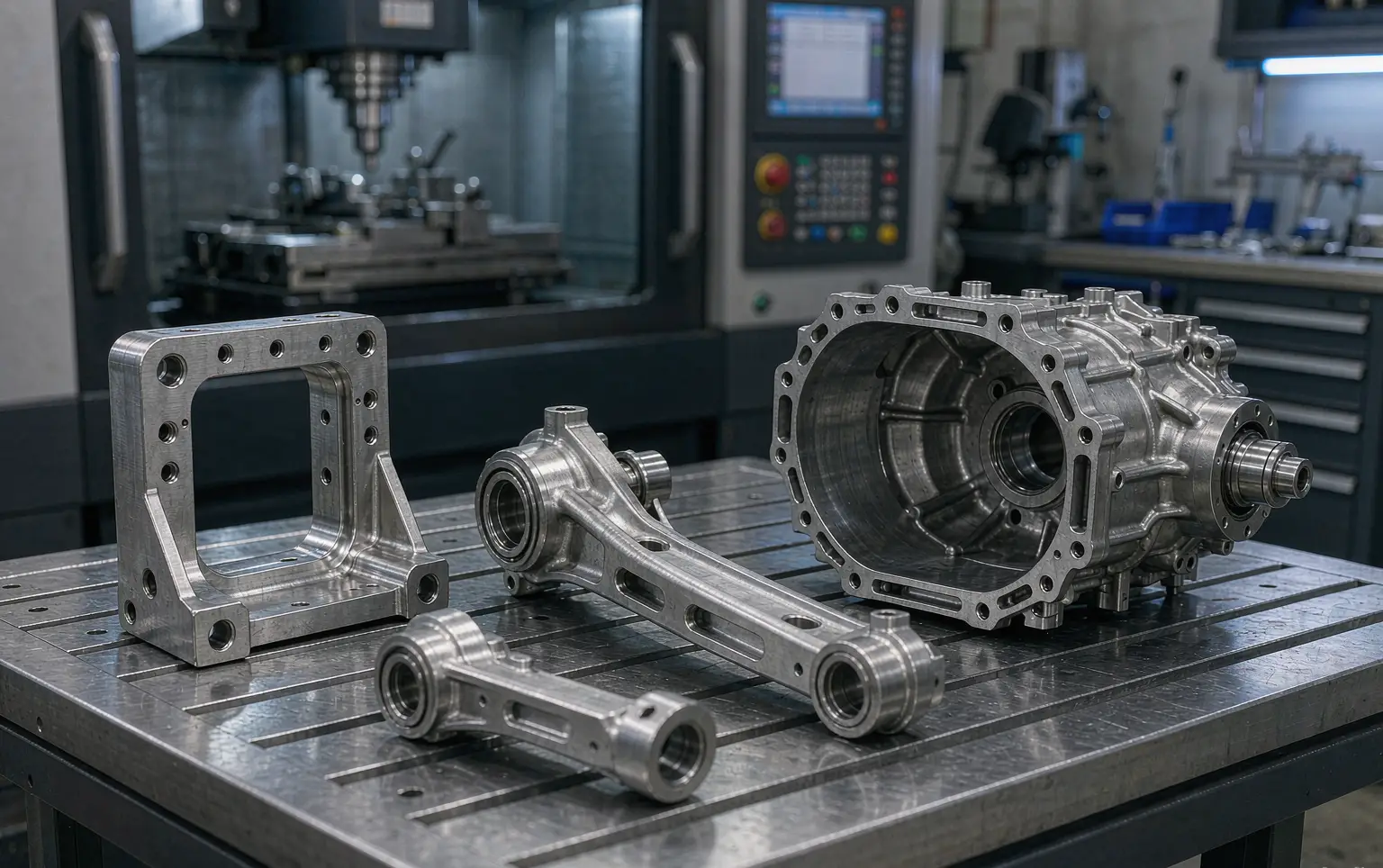
Base Frames and Mounting Plates: Require flatness within 0.05mm/m and precise locating features for robot mounting
-
Safety Enclosures and Barriers: Manufactured with precise openings and mounting points for sensors and interlocks
-
Utility Distribution Systems: Integrated channels for pneumatic, electrical, and data cabling with proper strain relief
Precision Fixturing and Tooling Systems
-
Nest Fixtures and Pallet Systems: Require定位精度 within 0.01mm for part positioning and repeatable clamping
-
Modular Tooling Systems: Quick-change interfaces with repeatability better than 0.005mm
-
Vision System Targets and References: Precision-machined features with known dimensional relationships
Material Handling and Transfer Systems
-
Conveyor Components: Precision rollers, guides, and transfer mechanisms with alignment within 0.1mm over entire lengths
-
Linear Transfer Systems: Ball screw assemblies with lead accuracy of 0.01mm/300mm
-
Part Presenters and Orienters: Mechanisms with angular accuracy of ±0.1° and positional repeatability of ±0.05mm
Material Selection for Assembly Line Applications
Structural Material Requirements
Material Class Yield Strength (MPa) Thermal Conductivity (W/m·K) Damping Capacity Primary Applications Cast Iron (GGG-70) 700-800 40-50 High Machine bases, vibration-damping components Steel (S355J2) 355 50-60 Medium Structural frames, support members Aluminum (6082-T6) 260 180-200 Low Moving components, enclosures Stainless Steel (316L) 170-300 16-20 Low Food, pharmaceutical, cleanroom applications Engineering Polymers 50-100 0.2-0.5 High Wear strips, insulating components
Surface Treatment Specifications
-
Hard Anodizing: For aluminum components, achieving 50-70 μm thickness with hardness to 500 HV
-
Nitriding: For steel components, achieving case depth of 0.2-0.5mm with surface hardness to 1200 HV
-
Electroless Nickel: Uniform coatings of 25-75 μm with hardness to 600 HV
-
PVD Coatings: Thin films (2-5 μm) of TiN, TiCN, or DLC for extreme wear resistance
Precision Manufacturing Capabilities
Table 1: Manufacturing Specifications for Assembly Line Components
Component Category Manufacturing Process Tolerance Class Surface Finish Material Options Production Volume Robot Mounting Plates Large-Format Milling IT7 Ra 0.8-1.6μm Steel, Aluminum 1-100 units Precision Fixtures 5-Axis Machining IT6 Ra 0.4-0.8μm Steel, Aluminum 10-1000 units Linear Guide Rails Precision Grinding IT5 Ra 0.1-0.2μm Steel, Stainless 10-500 units Gear Components Hobbing & Grinding AGMA 10-12 Ra 0.2-0.4μm Steel, Bronze 100-10,000 units Sensor Mounts Multi-Axis Machining IT6 Ra 0.8-1.6μm Aluminum, Plastics 100-10,000 units Conveyor Components Turning & Milling IT8 Ra 1.6-3.2μm Steel, Aluminum 100-50,000 units Safety Enclosures Sheet Metal & Welding IT9 Ra 3.2-6.3μm Steel, Aluminum 10-1000 units Tool Changer Parts Precision Grinding IT5 Ra 0.2-0.4μm Steel, Tool Steel 100-5,000 units
Advanced Machining Technologies
-
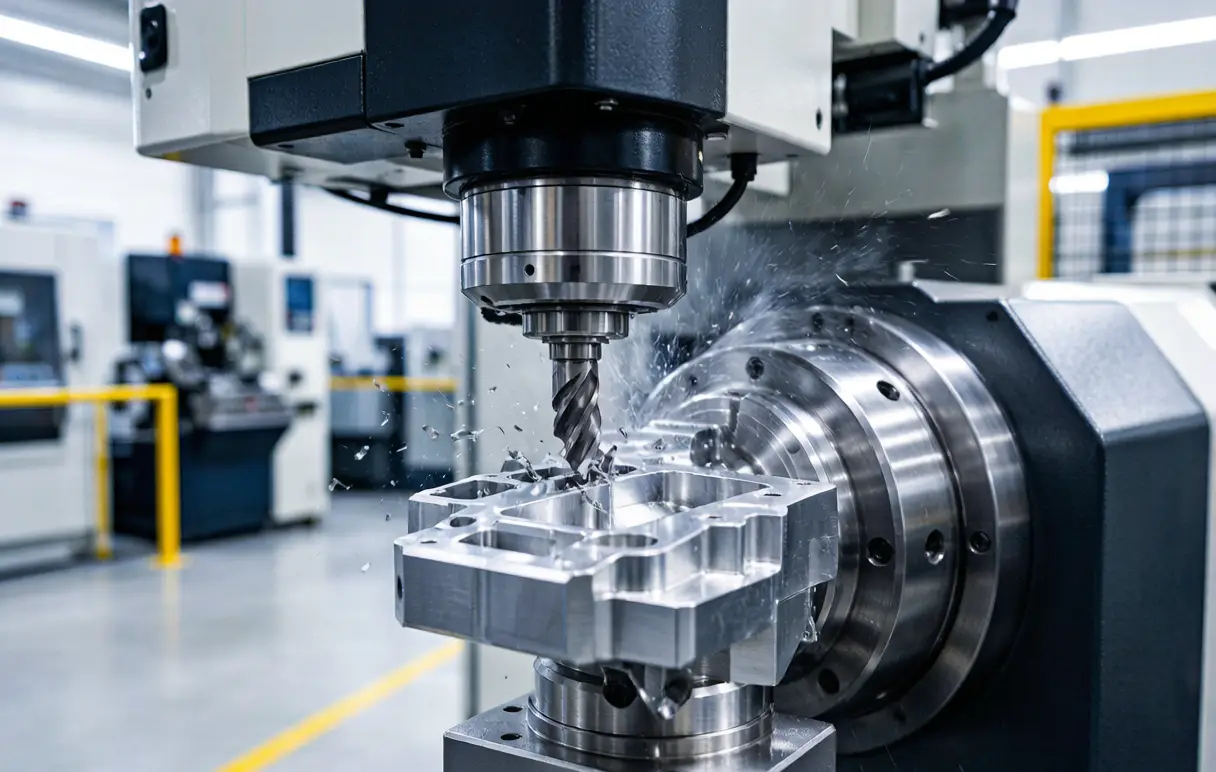
5-Axis Simultaneous Machining: For complex fixture geometries and multi-sided components
-
High-Speed Machining: For aluminum components with optimized cycle times and surface finishes
-
Deep Hole Drilling: For internal cooling channels and hydraulic passages
-
Wire EDM: For precise cutting of hardened materials and complex shapes
Quality Assurance Systems
-
Laser Tracker Systems: Volumetric accuracy measurement for large assemblies
-
CMM Inspection: Multi-sensor systems with volumetric accuracy to 1.5 + L/350 μm
-
Surface Analysis: Non-contact measurement of surface texture and geometry
-
Dynamic Testing: Vibration analysis and modal testing of completed assemblies
System Integration and Validation
Integration Methodology
-
Modular Design Approach: Enabling staged implementation and future expansion
-
Interface Standardization: Ensuring compatibility between different system components
-
Utility Management: Integrated routing of electrical, pneumatic, and data systems
-
Safety System Integration: Comprehensive implementation of safety standards and protocols
Validation and Testing Protocols
-
Cycle Time Validation: Verification of assembly cycle times under various conditions
-
Accuracy Testing: Measurement of positional accuracy and repeatability
-
Reliability Testing: Extended operation testing to verify mean time between failures
-
Safety Validation: Comprehensive testing of all safety systems and interlocks
Case Study Applications
Case Study 1: Automotive Transmission Assembly Line
-
Challenge: An automotive manufacturer required a complete robotic assembly line systems for automatic transmission assembly with cycle time of 45 seconds per unit and positional accuracy of ±0.05mm for gear meshing operations.
-
Solution: JLYPT designed and manufactured a complete assembly line with 12 robotic workcells, precision fixtures for each transmission variant, and automated testing stations. We utilized laser-welded steel frames with stress-relief annealing and precision machining of mounting surfaces. All fixtures were manufactured with hardened tool steel inserts and quick-change mechanisms.
-
Result: Achieved cycle time of 42 seconds with positional accuracy of ±0.03mm. The system achieved 99.8% uptime in continuous 3-shift operation and reduced manual labor requirements by 85%. Quality metrics showed 60% reduction in assembly defects compared to previous manual processes.
Case Study 2: Medical Device Sterile Assembly
-
Challenge: A medical device company needed a robotic assembly line systems for sterile assembly of surgical instruments with ISO Class 7 cleanroom compatibility and full traceability of all components.
-
Solution: We implemented a completely enclosed assembly line with HEPA filtration and material airlock systems. All components were manufactured from 316L stainless steel with electropolished surfaces to Ra 0.2μm. The system incorporated vision-guided assembly with force feedback and complete data logging of all assembly parameters.
-
Result: Achieved sterile assembly with zero contamination incidents. The system maintained ISO Class 7 conditions throughout operation and provided complete traceability for FDA compliance. Assembly accuracy of ±0.01mm was maintained for critical components.
Case Study 3: Consumer Electronics High-Speed Assembly
-
Challenge: A consumer electronics manufacturer required robotic assembly line systems capable of assembling 5,000 smartphones per day with precise component placement and delicate handling requirements.
-
Solution: JLYPT developed a high-speed assembly line with collaborative robots and precision vacuum grippers. We manufactured vibration-damped mounting structures and precision alignment fixtures with thermal stability for consistent operation. The system incorporated real-time vision inspection at each assembly station.
-
Result: Achieved production rate of 5,500 units per day with defect rates below 0.01%. The system enabled quick changeover between different smartphone models (under 30 minutes) and maintained positional accuracy of ±0.02mm throughout continuous operation.
Technical Performance Specifications
Performance Requirements for Assembly Systems
Performance Parameter Minimum Standard Target Performance Premium Specification Positional Accuracy ±0.1mm ±0.05mm ±0.02mm Repeatability ±0.05mm ±0.02mm ±0.005mm Cycle Time 60 seconds 30 seconds 15 seconds Uptime 95% 98% 99.5% Mean Time Between Failures 2,000 hours 5,000 hours 10,000 hours Changeover Time 4 hours 2 hours 30 minutes Energy Efficiency 70% 80% 90% Noise Level 80 dB 75 dB 70 dB Safety Rating Category 3, PLd Category 3, PLe SIL 2 Scalability Limited Modular Fully scalable
Design Optimization Strategies
Design for Manufacturing Principles
-
Modular Construction: Enabling component replacement and system expansion without complete redesign
-
Standard Component Utilization: Maximizing use of standard components to reduce cost and lead time
-
Accessibility Design: Ensuring all components are accessible for maintenance and service
-
Future-Proofing: Designing with capacity for future upgrades and technology integration
Cost Optimization Approaches
-
Value Engineering: Systematic analysis of functions to optimize cost-performance ratio
-
Manufacturing Process Optimization: Selection of most efficient manufacturing methods for each component
-
Material Optimization: Strategic use of materials to balance performance and cost
-
Lifecycle Cost Analysis: Comprehensive evaluation of total cost of ownership
Sustainability Considerations
-
Energy Efficient Design: Optimization for minimal energy consumption
-
Material Recycling: Use of recyclable materials and design for disassembly
-
Waste Reduction: Minimization of material waste in manufacturing processes
-
Longevity Design: Engineering for extended service life and upgradability
Future Technology Integration
Advanced Manufacturing Technologies
-
Additive Manufacturing: For complex internal structures and customized components
-
Artificial Intelligence: For predictive maintenance and process optimization
-
Digital Twin Technology: Virtual models for simulation and optimization
-
Advanced Robotics: Implementation of next-generation robotic technologies
Smart Factory Integration
-
IoT Connectivity: Real-time monitoring and data collection from all system components
-
Cloud Integration: Remote monitoring, diagnostics, and software updates
-
Data Analytics: Advanced analysis of production data for continuous improvement
-
Predictive Maintenance: Data-driven maintenance scheduling and failure prediction
Sustainability Advancements
-
Energy Recovery Systems: Capture and reuse of energy from braking and deceleration
-
Circular Economy Principles: Design for complete material recovery and reuse
-
Carbon Neutral Manufacturing: Implementation of carbon-neutral manufacturing processes
-
Sustainable Material Development: Development and use of advanced sustainable materials
Quality and Reliability Assurance
Comprehensive Testing Protocols
-
Factory Acceptance Testing: Complete system testing before shipment
-
Site Acceptance Testing: Verification of system performance at customer facility
-
Long-Term Reliability Testing: Extended operation under simulated production conditions
-
Environmental Testing: Verification of performance under specified environmental conditions
Documentation and Compliance
-
Technical Documentation: Complete set of manuals, drawings, and specifications
-
Regulatory Compliance: Adherence to all relevant standards and regulations
-
Certification Management: Maintenance of necessary certifications and approvals
-
Change Control: Systematic management of design and manufacturing changes
Continuous Improvement Processes
-
Performance Monitoring: Continuous monitoring of system performance and efficiency
-
Feedback Integration: Incorporation of operational experience into design improvements
-
Technology Updates: Regular evaluation and implementation of new technologies
-
Customer Support: Comprehensive support throughout system lifecycle
Conclusion: Engineering Excellence in Assembly Automation
The implementation of advanced robotic assembly line systems represents one of the most significant advancements in modern manufacturing, enabling unprecedented levels of productivity, quality, and flexibility. These complex systems require meticulous engineering, precision manufacturing, and careful integration to achieve their full potential. The success of these systems depends fundamentally on the quality and precision of their mechanical components and the expertise with which they are integrated into complete production solutions.
At JLYPT, our comprehensive approach to robotic assembly line systems encompasses every aspect of design, manufacturing, and integration. We combine advanced manufacturing technologies with deep application expertise to deliver solutions that not only meet current production requirements but are designed for future growth and adaptation. Our commitment to quality, reliability, and innovation ensures that our assembly systems provide lasting value and competitive advantage to our clients.
Ready to transform your production capabilities with advanced robotic assembly line systems? Contact JLYPT today to discuss your specific requirements with our engineering team. Our expertise in precision manufacturing and system integration enables us to deliver complete assembly solutions that optimize your production efficiency, quality, and competitiveness in today’s demanding manufacturing environment.