The Ultimate Guide to Robot Grippers for Sale: Optimizing Your CNC Machining Automation
The Complete Guide to Selecting Robot Grippers for Sale to Transform Your CNC Machining Automation
Introduction: The Critical Interface – Why Your Choice of Robot Grippers for Sale Dictates CNC Automation Success
In the precision-driven world of CNC machining, where tolerances are measured in microns and cycle times in seconds, automation is no longer a luxury but a competitive imperative. The industrial robot, a marvel of modern engineering, becomes curiously impotent without its defining interface: the end-effector. For machine tending, part transfer, and post-process handling, the selection of appropriate robot grippers for sale is the single most decisive factor between a cell that hums with smooth efficiency and one that stumbles with reliability issues and compromised quality.
At JLYPT, where we engineer high-tolerance components and sophisticated machining systems, we understand that the gripper is not merely an accessory; it is the specialized “hand” that interacts directly with your valuable workpieces. Whether you’re automating a high-speed milling center for aluminum aerospace brackets or a robust lathe for stainless steel shafts, the wrong robot grippers for sale can lead to dropped parts, marred surfaces, inaccurate positioning, and ultimately, costly downtime. This guide is engineered for manufacturing engineers, automation integrators, and production managers navigating the vast market of robot grippers for sale. We will dissect the engineering principles, present a definitive selection framework, and provide practical integration knowledge to ensure your next automation investment delivers maximum return on investment and flawless performance.
Section 1: The Engineering Foundation – How Gripper Technology Meets CNC Machining Demands
CNC machining presents a unique set of challenges for gripper design: varying part geometries, stringent surface finish requirements, exposure to coolants and chips, and the need for high repeatability. Understanding core gripper technology is the first step.
1.1 Primary Actuation Mechanisms
The internal mechanism defines the gripper’s basic capability and suitability.
-
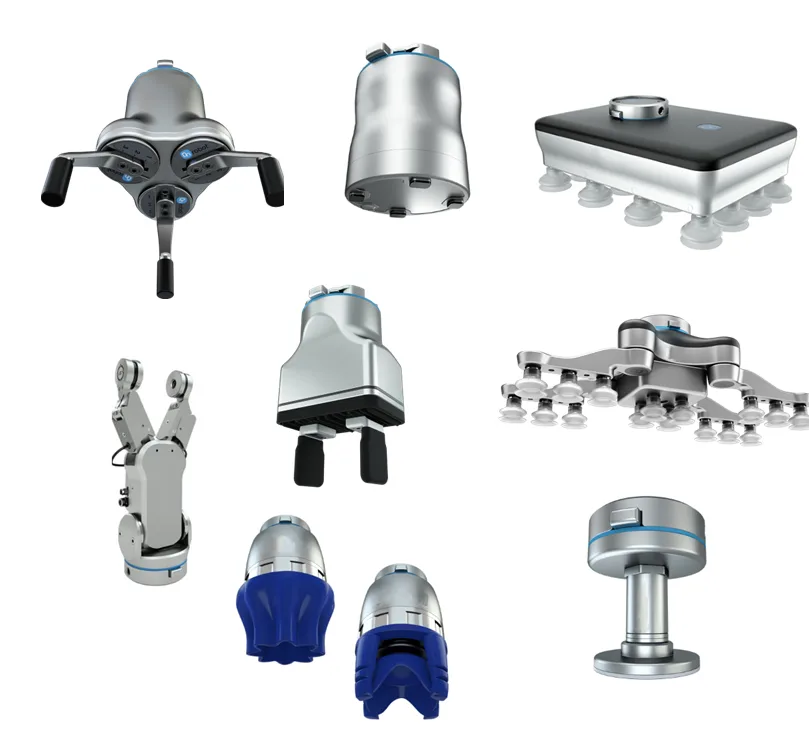
Pneumatic Grippers: The most common and cost-effective type for robot grippers for sale. They use compressed air to actuate jaws via a piston or cam mechanism. Advantages include simplicity, light weight, and high speed. Disadvantages include a lack of inherent force control (dependent on air pressure) and sensitivity to air quality. Ideal for high-cycle, medium-force applications like loading stamped blanks or plastic components.
-
Electric Grippers: Utilizing servo or stepper motors with ball screws or gear trains, these offer precise position and force control programmable via the robot controller. This is critical for handling fragile or finished surfaces common in CNC machining. They are cleaner (no air lines) but typically have a higher initial cost among robot grippers for sale.
-
Hydraulic Grippers: Provide the highest force-to-size ratio, essential for handling very heavy raw forgings or large castings. They are robust but require a hydraulic power unit, introduce potential fluid leak risks, and are less common in general CNC shops compared to foundries.
1.2 End-Effector Jaw Design & Tooling
The jaws that make contact are where theory meets the part. For CNC applications, jaw design is often custom.
-
Soft Jaws (Urethane, Rubber): Conform to irregular surfaces, protect fine finishes, and provide high friction. Common for handling machined surfaces without leaving marks.
-
Hard Jaws (Steel, Aluminum, Carbide): Used for positive location, high wear resistance (e.g., gripping rough castings), or when precise datum location is required from a machined feature.
-
Specialized Tooling: This includes mandrels for gripping internal diameters of turned parts, needle grippers for porous surfaces, or shaped form-fit jaws that cradle a specific part geometry for maximum stability during high-speed robot moves.
Table 1: Gripper Technology Comparison for CNC Machining Applications
Gripper Type Actuation Source Key Advantages Key Limitations Ideal CNC Use Case Pneumatic Parallel Jaw Compressed Air Low cost, high speed, simple, lightweight. Force varies with pressure, less precise, requires clean/dry air. High-speed tending of lightweight (<20kg) milled parts, aluminum blanks. Electric Parallel Jaw Servo Motor Precise position/force control, programmable, clean, quiet. Higher cost, generally slower max speed, requires controller integration. Handling delicate finished parts, compliant assembly, fragile composites. Angular Gripper Pneumatic Compact in one dimension, can provide high grip force. Jaw travel is arc-based, not parallel, complicating jaw design. Gripping on vertical surfaces or in confined spaces within a machine tool. Vacuum Gripper Venturi or Pump Can handle large, flat, or delicate sheets; no mechanical clamping marks. Power failure leads to dropped part; ineffective on porous, oily, or curved surfaces. Loading sheet metal blanks into a CNC punch or laser cutter, handling glass or polished stone. Magnetic Gripper Electromagnet Extremely fast, handles ferrous materials only, very low maintenance. Only for ferrous metals, residual magnetism can be an issue, safety critical. Handling steel plates, forgings, or turned parts in a clean, dry environment.
Section 2: The Selection Framework – How to Choose the Right Robot Grippers for Sale for Your Cell
Selecting from the myriad of robot grippers for sale requires a systematic analysis of your specific application. Follow this step-by-step framework.
H2: Step 1: Define the Part and Process Parameters
Create a detailed specification sheet:
-
Part Geometry & Features: Max/min dimensions, weight, center of gravity. Are there machined datum surfaces, thru-holes, or fragile features to avoid?
-
Material & Surface Condition: Aluminum, steel, titanium? Raw forging, rough-machined, or final anodized finish? This dictates required grip force and jaw material.
-
Process Environment: Presence of coolant mist, metal chips, oil, or high heat from the machining process? This determines required IP rating and material compatibility.
-
Cycle Time Requirement: How fast must the gripper open/close? This influences the choice between pneumatic (faster) and electric (slower but smarter).
H2: Step 2: Calculate the Required Grip Force
This is a critical engineering calculation to prevent part slippage or damage. The basic formula accounts for acceleration forces:
Minimum Required Grip Force (N) = (Part Weight (kg) × Acceleration due to robot motion (m/s²) × Safety Factor) / Coefficient of Friction (μ)
-
Acceleration: Can be 2-5 times gravity (g) for aggressive robot moves. Use the robot’s maximum programmed acceleration.
-
Safety Factor: Typically 1.5 to 2.0 for vertical moves; 2.0 to 3.0 for horizontal moves where gravity doesn’t aid grip.
-
Coefficient of Friction (μ): Highly variable. ~0.1-0.2 for oily metal on metal; ~0.5-0.6 for rubber on dry metal; ~0.8+ for specialized non-slip coatings.
Example: Handling a 10kg steel shaft (μ=0.15 with hard jaws) with robot acceleration of 3g (29.4 m/s²) and a safety factor of 2.5.
Required Force = (10 kg × 29.4 m/s² × 2.5) / 0.15 = 4,900 N
This indicates a need for a powerful pneumatic or hydraulic gripper. Under-specifying force is a common cause of failure when evaluating robot grippers for sale.
H2: Step 3: Interface and Integration Planning
-
Robot Flange Compatibility: Ensure the gripper’s mounting pattern matches your robot’s wrist flange (ISO 9409-1-50-4-M6 is common, but Fanuc, KUKA, ABB have their own standards).
-
Communication & Control: Will the gripper be controlled by simple robot I/O (on/off for pneumatic), analog signals, or a fieldbus network (EtherNet/IP, PROFINET, DeviceNet)? Electric robot grippers for sale often require a dedicated drive module.
-
Tool Center Point (TCP) Definition: The robot must know precisely where the gripper’s fingertips are. Consider quick-change systems that allow automatic TCP recalibration for different grippers or jaws.
Section 3: Advanced Considerations for High-Performance CNC Cells
Beyond basic selection, optimizing a cell requires deeper engineering.
H3: Compliance and Error Recovery
No system is perfectly aligned. Angular and radial compliance units (often spring-loaded or based on elastomers) can be mounted between the robot flange and the gripper. This allows the jaws to “float” slightly, compensating for minor part misplacement in a fixture or feeder, preventing jams and reducing damaging lateral forces. This is especially valuable when integrating robot grippers for sale into existing, non-perfectly-aligned workstations.
H3: Sensing and Feedback
Modern grippers offer integrated sensors that provide vital data back to the cell controller:
-
Part Presence Detection: Confirms a part is successfully grasped before a move.
-
Grip Force Monitoring: Verifies the actual force applied, ensuring process consistency and detecting errors (e.g., gripping two parts stuck together).
-
Jaw Position Feedback: Critical for electric grippers and for confirming full open/close cycles.
H3: Custom Engineering and Hybrid Tooling
Often, the optimal solution isn’t a standard off-the-shelf unit from a catalog of robot grippers for sale. For complex CNC cells, a custom-engineered tool may be necessary. This could combine multiple technologies:
-
A central pneumatic gripper for primary location.
-
Integrated pneumatic cylinders for actuating part ejectors or fixture clamps.
-
Vacuum cups on the side of the tool for simultaneously picking a part and its protective masking sheet.
-
Built-in air blast nozzles to clean chips from critical locating surfaces before insertion.
JLYPT’s expertise in precision machining is frequently leveraged to manufacture these complex, one-off gripper bodies and custom jaw tools, ensuring perfect fit and function. Explore our capabilities for custom component fabrication.
Table 2: ROI Analysis: Standard vs. Advanced Robot Grippers for Sale
Investment Factor Standard Pneumatic Gripper Advanced Electric/ Sensorized Gripper Impact on CNC Cell Performance Initial Cost Low ($500 – $3,000) High ($3,000 – $15,000+) Higher upfront cost impacts project approval but enables advanced functionality. Integration Complexity Low (Air lines, 2 I/O points) Moderate to High (Power, comms cable, programming) Requires more engineering time but enables smarter cell control. Preventable Scrap Rate Moderate. May drop parts or damage finishes if misaligned. Low. Force control and sensing prevent damage from over-gripping or mis-loads. Direct cost savings on high-value aerospace or medical components. Changeover Time Slow. Manual jaw changes and mechanical adjustment. Fast. Programmable jaw widths; some models allow automatic jaw change. Increases flexibility for High-Mix, Low-Volume (HMLV) production. Diagnostic Capability None. Failure is often only detected after a crash or dropped part. High. Predictive maintenance alerts, grip confirmation, error logging. Reduces unscheduled downtime, a major contributor to OEE loss. Typical Payback Period Very Short (often < 3 months) Longer (6-18 months) but with greater long-term benefits. Justification shifts from pure labor savings to quality, flexibility, and uptime gains.
Section 4: Case Studies – Robot Grippers in Action on the CNC Shop Floor
Case Study 1: High-Volume Automotive Transmission Case Machining
-
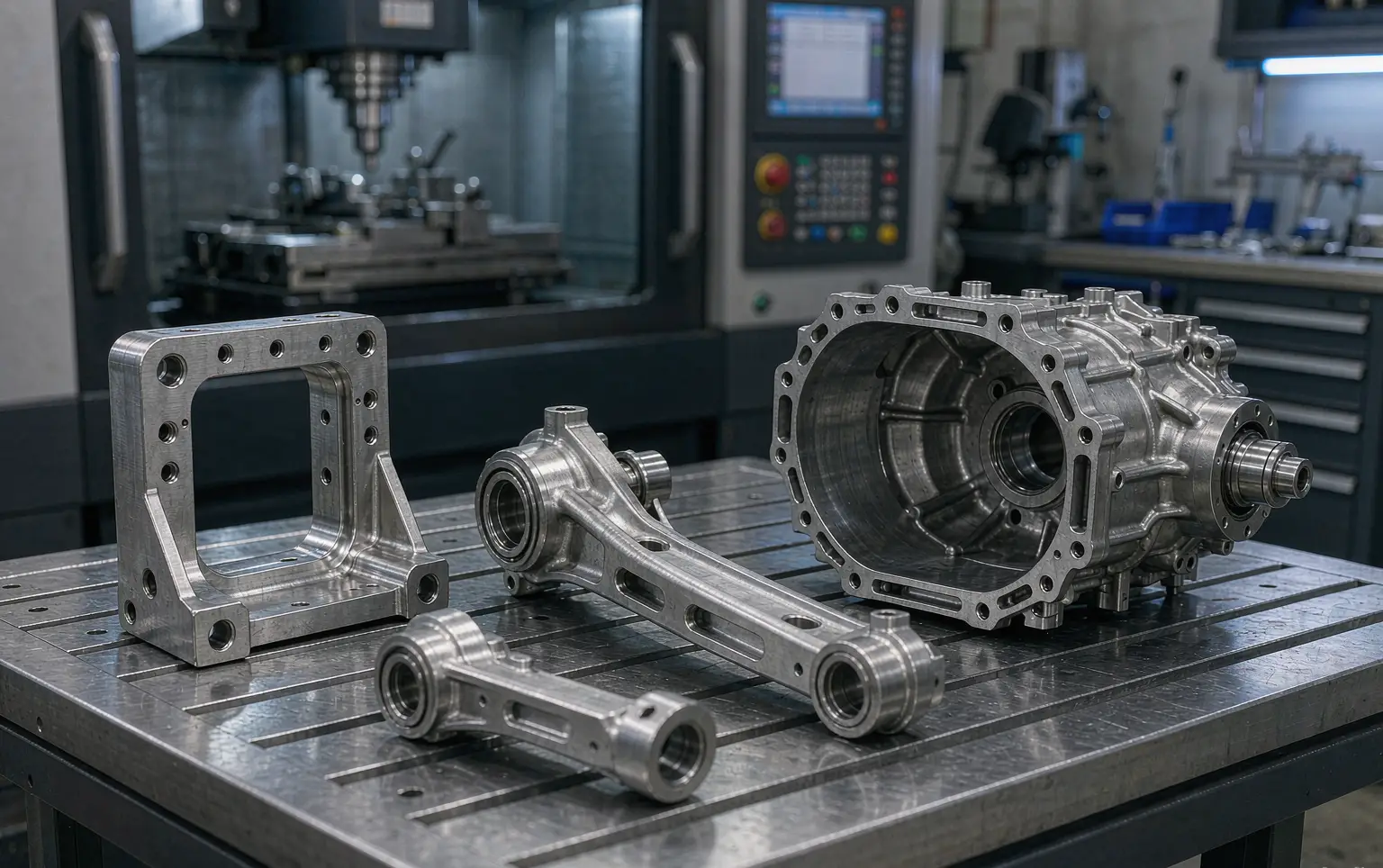
Challenge: A Tier-1 supplier needed to tend three identical CNC machining centers processing heavy aluminum transmission cases. Parts were oily, varied slightly from casting to casting, and required a crush-proof grip on specific boss features.
-
Solution: Instead of standard robot grippers for sale, a custom dual-arm hydraulic gripper was engineered. Each arm had self-centering, hardened steel jaws that located on precision-machined bores. An integrated load cell provided real-time weight verification to detect missing cores. The gripper body was machined from a solid block of 7075 aluminum by JLYPT for maximum stiffness and corrosion resistance.
-
Outcome: The cell achieved 99.7% uptime over two shifts. The positive location and immense clamping force (12,000 N) eliminated any part movement during rapid robot transfers. The custom solution, while more expensive than catalog robot grippers for sale, prevented an estimated $250,000 in potential scrap and rework annually.
Case Study 2: Flexible Cell for Small-Batch Aerospace Brackets
-
Challenge: A contract manufacturer machining hundreds of different small aluminum and titanium brackets needed a single robot to service two 5-axis mills. Changeover time between part families was a critical bottleneck.
-
Solution: Integration of an electric 2-finger gripper with a large stroke and high positional accuracy onto a robot with a quick-change tool flange. A library of over 50 different sets of quick-change soft jaws (3D-printed from abrasive-resistant material) was created. The robot’s program automatically selected the correct jaw width and grip force based on the part ID.
-
Outcome: Changeover time between dissimilar parts was reduced from 15-20 minutes (manual jaw change and teaching) to under 90 seconds. The programmable force control prevented marking on anodized finishes. The flexibility justified the investment in premium electric robot grippers for sale, allowing the shop to win more HMLV business.
Case Study 3: Delicate Medical Implant Finishing and Packaging
-
Challenge: After CNC machining, cobalt-chrome knee implants required meticulous manual handling for polishing, cleaning, and placement into sterile trays, a process prone to contamination and variation.
-
Solution: A collaborative robot (cobot) was fitted with a sanitary, IP67-rated electric gripper specifically designed for cleanroom robot grippers for sale. The jaws were coated in medical-grade silicone. A vision system guided the gripper to pick the implant from a washing basket, present it to a laser marking station, and then place it precisely into a nested tray with sub-millimeter accuracy.
-
Outcome: Throughput increased by 40% while eliminating human handling contamination. The precise, repeatable placement reduced packaging errors to zero. The cleanroom-certified gripper was a key enabler, meeting FDA guidelines for part contact surfaces.
Conclusion: Gripping the Future of CNC Automation
The journey to automate a CNC machining cell succeeds or fails at the point of contact. The vast market of robot grippers for sale offers solutions ranging from simple, economical pneumatic units to intelligent, force-sensing electric systems. The correct choice is not about buying the most expensive or the cheapest, but about conducting a rigorous analysis of your part, process, and performance goals.
By understanding the fundamental technologies, meticulously calculating requirements, and planning for integration and future flexibility, you can transform a robot from a blind mechanical arm into a sensitive, reliable, and intelligent extension of your manufacturing process. Remember, the gripper is the critical bridge between digital instruction and physical execution. Investing the time and engineering rigor into its selection will pay dividends in quality, uptime, and overall equipment effectiveness for years to come.
For manufacturers looking to navigate this critical decision, partnering with a team that understands both precision machining and automation integration is key. At JLYPT, we combine our deep CNC expertise with practical knowledge of robotic tooling to help clients design and implement complete, high-performance machining systems.
Ready to optimize your CNC automation with the right end-effector technology? Contact JLYPT to discuss your application and explore solutions. Learn more about our system-oriented approach at JLYPT CNC Machining Services.