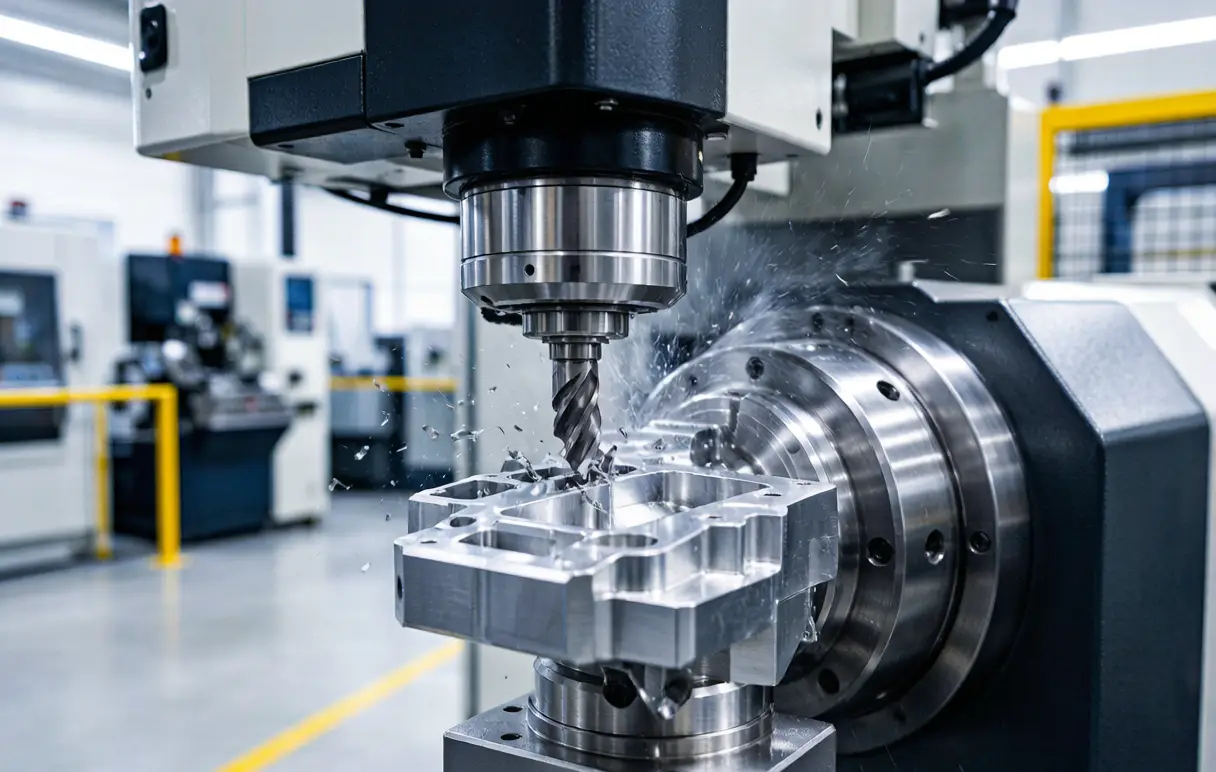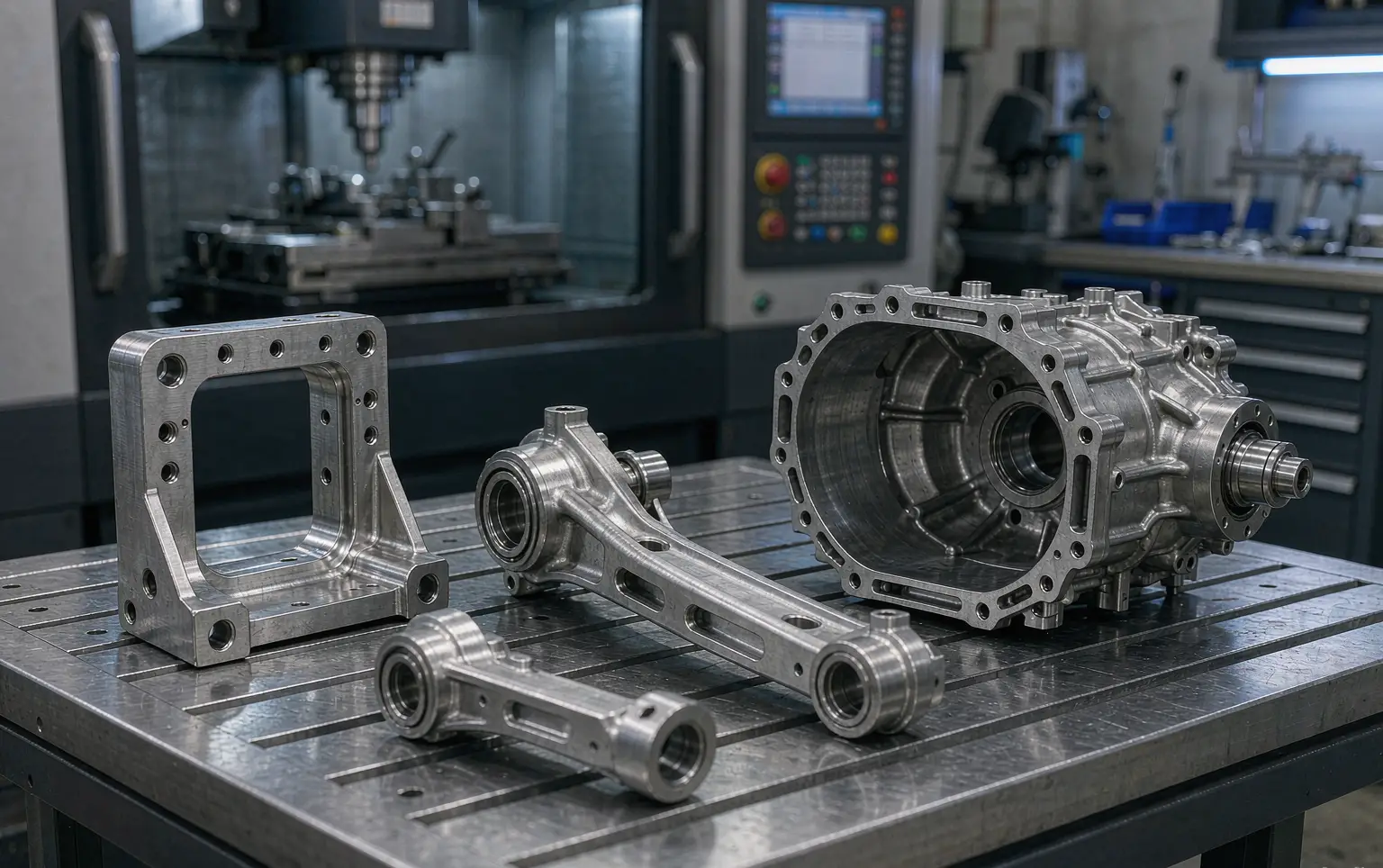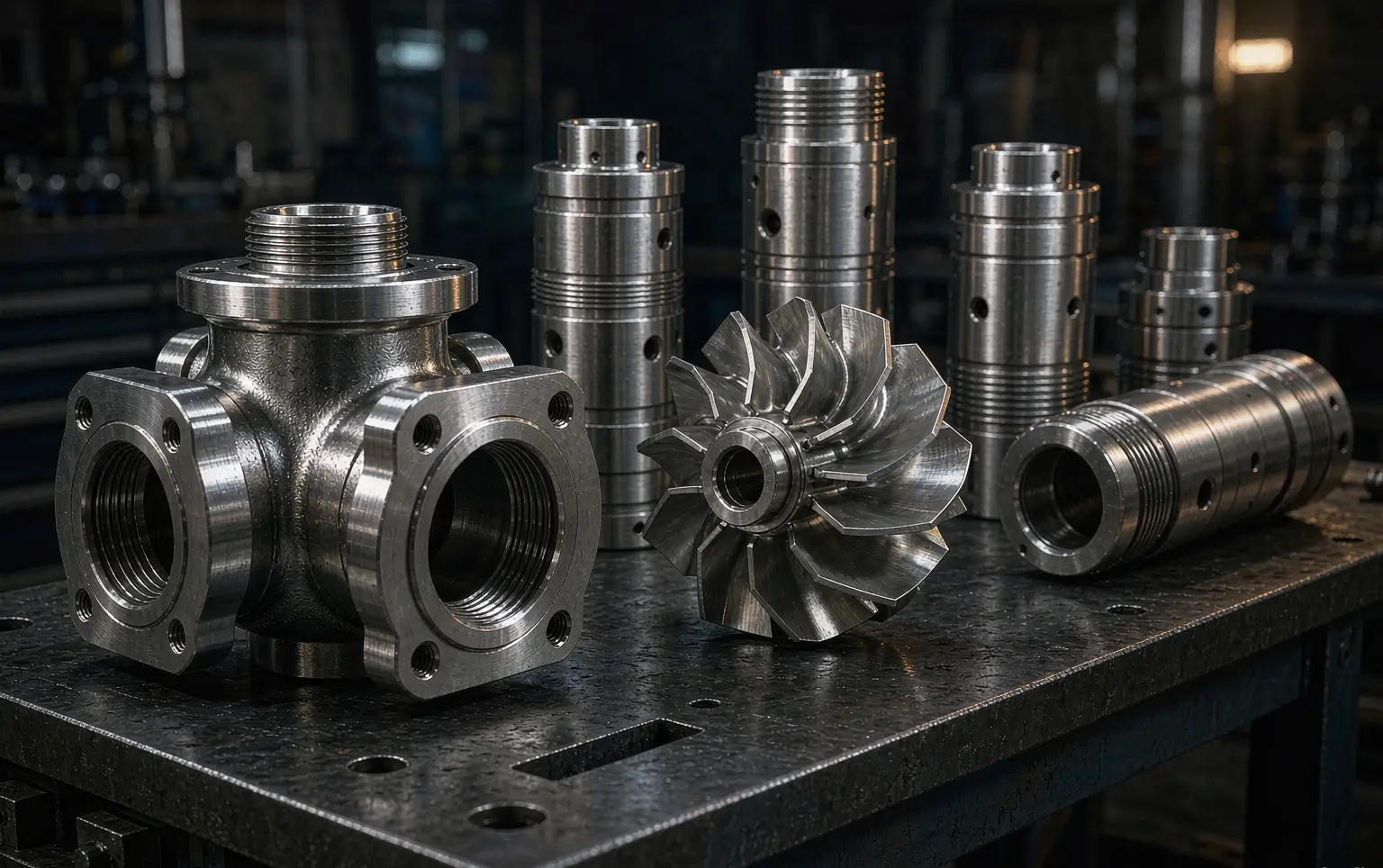
The Synergistic Evolution: Robotics in Manufacturing and the Future of Precision CNC Machining
Introduction: The Confluence of Precision and Autonomy
For engineers weighing CNC robotics precision manufacturing alongside the topics in this guide, our related coverage breaks down the trade-offs in plain engineering terms.
The field of modern manufacturing is undergoing a fundamental transformation, driven not by a single technology, but by the powerful convergence of two: the unwavering precision of Computer Numerical Control (CNC) machining and the adaptive intelligence of advanced robotics. For decades, CNC technology has been the bedrock of industrial production, enabling the creation of components with micron-level accuracy from the toughest alloys. Today, the strategic integration of robotics in manufacturing is improving this capability from isolated excellence to systemic genius. It is no longer a question of whether to adopt robotics, but how to harness its potential to build a more resilient, efficient, and competitive operation. This evolution marks the shift from automated machines to automated manufacturing systems.
At JLYPT, our core expertise lies at the heart of this transformation. We understand that the promise of robotics in manufacturing is fully realized only when the robotic systems themselves are built upon a foundation of impeccable precision. The custom grippers, sensor mounts, fixture plates, and structural components that form the “hands and bones” of a robot cell demand the same exacting standards as the final aerospace or medical parts they produce. This article explores the multifaceted role of robotics in manufacturing, providing a technical deep explore its applications, benefits, and the critical pathway to successful integration for precision-focused machine shops and OEMs.
1. The Foundational Pillars: Core Applications of Robotics in Precision Manufacturing
The implementation of robotics in manufacturing extends far beyond simple material handling. In a precision CNC environment, robots are deployed as multifunctional tools that enhance, augment, and extend the capabilities of machine tools and human operators.
1.1 Machine Tending and Lights-Out Production
The most prevalent application, where robots serve as the tireless interface between raw material and the CNC machine.
-
Technical Execution: A 6-axis articulated robot or collaborative robot (cobot), programmed via offline programming (OLP) software, executes a synchronized dance with the CNC. It uses M-code and I/O signal interlocks to open safety doors, unclamp finished parts, perform chip blow-off, load new blanks, and initiate the next machining cycle. Integration of force-torque sensors ensures delicate part placement, protecting critical datum surfaces.
-
Impact: This directly attacks machine idle time, enabling lights-out manufacturing and pushing Overall Equipment Effectiveness (OEE) from an average of 30-50% to over 85%. It liberates skilled machinists for higher-value programming and process optimization tasks.
1.2 Secondary Process Integration and Value-Added Automation
Robots transform post-machining workflows from sequential bottlenecks into parallel, in-line processes.
-
Technical Execution: A single robotic cell can integrate multiple end-of-arm tools (EOAT). After unloading a part, the robot can automatically transition to a deburring spindle, a vision inspection camera, a laser marker for part serialization, or a probe for final verification. This is enabled by advanced robot controllers that manage complex tool change routines and path planning.
-
Impact: This consolidates workflow, drastically reduces work-in-progress (WIP), minimizes handling damage, and ensures quality checks are performed 100% and consistently. It creates a continuous flow from raw billet to finished, inspected part.
1.3 Complex Assembly and Flexible Fabrication
Robotics is revolutionizing how precision-machined components come together.
-
Technical Execution: For assemblies requiring adhesive bonding, precision screw driving, or snap-fitting, robots equipped with vision guidance and force control perform these tasks with superhuman consistency. In advanced fabrication, robotic milling and finishing arms can handle large-scale components that are too big or complex for traditional CNC beds, often using the robot itself as a 5-7 axis machining platform when fitted with a spindle.
-
Impact: Enables automated, high-mix assembly lines and provides flexible capacity for large-part machining or low-volume prototyping, complementing fixed CNC assets.
1.4 Material Logistics and Smart Warehousing
Robots manage the flow of materials throughout the manufacturing ecosystem.
-
Technical Execution: Automated Guided Vehicles (AGVs) and Autonomous Mobile Robots (AMRs) transport raw material, fixtures, and finished parts between storage, machining cells, and shipping. They are integrated with Warehouse Management Systems (WMS) and Manufacturing Execution Systems (MES) for real-time tracking and just-in-time delivery.
-
Impact: Creates a truly connected factory, reducing forklift traffic, minimizing manual material handling injuries, and optimizing floor space utilization.
*Table 1: Taxonomy of Robotic Applications in a CNC-Centric Manufacturing Environment*
Application Sphere Primary Robotic Function Key Enabling Technologies Primary Value Driver Machine & Process Tending Load/Unload, Door Control, Chip Clearing. 6-Axis/Cobot, OLP, I/O Interfacing, Force Sensing. Maximizing CNC Uptime (OEE), Enabling Unattended Shifts. Post-Process Value Addition Deburring, Polishing, Washing, Inspection, Marking. EOAT Changers, Vision Systems, Spindle Attachments, In-Process Probes. In-Line Quality Control, Workflow Consolidation, Labor Reallocation. Additive & Hybrid Processes Directed Energy Deposition (DED), Laser Cladding, Thermal Spray. Robotic Arm with Process Head, Synchronized CNC Path Control. Part Repair, Surface Enhancement, Functionally Graded Material Deposition. Logistics & Material Flow Transport, Kitting, Palletizing. AGV/AMR, Conveyor Integration, RFID/Barcode Scanning. Reduced WIP, Optimized Floor Space, Just-in-Time Material Delivery.
2. The Precision Partnership: Where Robotics Meets CNC Machining Expertise
The performance ceiling of any robotic application is determined by the precision of its mechanical interface. This is where the world of robotics in manufacturing intersects directly with the core competencies of a precision machinist like JLYPT.
2.1 The Critical Role of Custom End-of-Arm Tooling (EOAT)
The robot gripper is its connection to the physical world. For handling a delicate, high-tolerance aerospace bracket or a mirror-finished medical implant, off-the-shelf grippers are inadequate.
-
Design & Fabrication: EOAT must be custom-designed for the specific part geometry, often employing kinematic coupling principles for repeatable location. They are machined from materials like aluminum 6061 for lightweight stiffness or stainless steel 17-4PH for corrosion resistance in wash-down environments. The integration of vacuum cups, servo-electric grippers, and tactile sensors requires precisely machined manifolds and mounting interfaces.
-
JLYPT’s Role: We manufacture these critical components to tolerances that match or exceed the robot’s own repeatability (±0.02mm or better). A perfectly machined gripper jaw ensures the robot’s programmed path translates into perfect part placement every time.
2.2 Precision Fixturing and Workholding
The fixtures that hold parts during robotic machining, welding, or assembly must be monuments of stability and accuracy.
-
Technical Requirements: These fixtures often incorporate modular elements from systems like Schunk or Carr Lane, but the base plates, custom risers, and dedicated locators are CNC-machined. They must account for robot reach, avoid collision envelopes, and provide reliable clamping without impeding tool or sensor access.
-
Synergy with Automation: Well-designed fixturing is the bedrock of flexible automation, allowing for quick changeovers between part families and ensuring that the robot interacts with a predictably located workpiece.
3. The Strategic Implementation Framework
Adopting robotics in manufacturing is a strategic project, not a simple procurement. A phased, methodical approach is essential for success and ROI.
Phase 1: Discovery and Feasibility Analysis
-
Process Mapping: Identify the target process with the highest ROI, typically the one with the longest manual cycle time, highest labor cost, or most quality variability.
-
Part Analysis: Catalog all parts for the cell. 3D models are essential for simulation. Payload, material, and required grip features dictate robot and EOAT selection.
-
ROI Modeling: Build a financial model based on: increased machine uptime, labor cost savings/redeployment, scrap reduction, and quality improvement. A clear payback period target (e.g., <24 months) guides investment scope.
Phase 2: Design, Simulation, and Partner Selection
-
Digital Twin Simulation: Using OLP software (e.g., RoboDK, Siemens Process Simulate), create a virtual cell. This validates robot reach, cycle time, and eliminates collisions before any hardware is purchased.
-
Selecting a Systems Integrator: Choose a partner with proven experience in CNC automation. They will handle the complex PLC programming, safety system design (per RIA/ISO 10218), and smooth integration of robot, CNC, and peripherals.
-
Component Specification: Finalize the Bill of Materials (BOM) for the robot, EOAT, sensors, safety fencing, and all custom-machined components.
Phase 3: Fabrication, Integration, and Commissioning
-
Component Fabrication: This is where precision machining delivers. All custom fixtures, grippers, and mounting brackets are manufactured.
-
Cell Build and Programming: The integrator assembles the cell, develops all control software, and programs the robot paths.
-
Site Acceptance Test (SAT): The system must run a production batch, meeting all pre-defined KPIs for cycle time, quality, and safety before final sign-off.
Table 2: ROI Analysis Framework for a Robotic Machine Tending Cell
Investment & Operational Factor Pre-Automation (Manual) Post-Automation (Robotic) Financial & Operational Impact Machine Uptime (OEE) 40% (2 shifts, with breaks/delays) 85%+ (2.5+ shifts, lights-out possible) Effectively doubles machine capacity without buying a new CNC. Direct Labor per Part High (operator tied to machine cycle). Low (one technician oversees multiple cells). Converts variable labor cost to fixed asset cost. Frees skilled labor for higher-value work. Consistency & Scrap Rate Subject to human error in loading, fatigue. Deterministic process; integrated inspection. Reduces scrap/rework by 50-90%, directly saving material and reprocessing costs. Lead Time Variability High (dependent on human pace). Low and predictable (governed by fixed cycle time). Improves on-time delivery performance and customer satisfaction. Initial Capital Outlay N/A Significant (Robot, EOAT, safety, integration). Requires clear ROI justification. Payback typically 12-36 months.
4. Case Studies: Robotics in Action Across Industries
Case Study 1: Aerospace Turbine Component Manufacturer
-
Challenge: Machining nickel-alloy turbine blades required an expert operator to manually load each delicate, high-value blank into a 5-axis mill. The process was slow, risked damage, and limited production to one shift.
-
Robotic Solution: Integration of a force-sensing 6-axis robot with a custom, self-centering gripper. The cell included an automated storage rack for blanks and finished parts. Offline programming was used to generate perfect paths from the blade’s CAD model.
-
Outcome: The cell enabled 24/7 lights-out production of blades. Throughput increased by 200%, and handling damage was eliminated. The machinists transitioned to supervising multiple cells and optimizing machining programs, improving their role.
Case Study 2: Medical Device OEM – Automated Assembly and Packaging
-
Challenge: Assembling a disposable surgical device involved fitting a CNC-machined titanium component with a plastic housing and several micro-components. Manual assembly was slow, prone to contamination, and created variability.
-
Robotic Solution: A cleanroom-certified collaborative robot (cobot) cell was deployed. The cobot, equipped with a vision system and micro-grippers, performed the entire assembly: applying medical-grade adhesive, placing components, and performing a final function test. It then packed the sterilized device into its final packaging.
-
Outcome: Assembly consistency reached 99.99%, and throughput increased by 70%. The fully documented, automated process provided an impeccable audit trail for FDA and ISO 13485 compliance, a critical business enabler.
Case Study 3: Automotive Die & Mold Shop – Large-Scale Robotic Finishing
-
Challenge: Finishing (polishing and texturing) large, complex injection molds required days of skilled, manual labor, a major bottleneck and cost center with inconsistent results.
-
Robotic Solution: A high-payload robot was fitted with an adaptive polishing spindle and 3D scanning system. The robot scanned the mold cavity, compared it to the CAD model, and automatically generated a finishing path, applying consistent pressure and patterns.
-
Outcome: Finishing time was reduced by over 65%, and surface finish quality became perfectly consistent. The shop could quote faster lead times with confidence and reallocated its finishing experts to train the system and handle only the most complex, non-repetitive tasks.
Conclusion: Building the Intelligent, Adaptive Factory of Tomorrow
The integration of robotics in manufacturing represents the most significant evolution in industrial production since the advent of CNC itself. It is the key that enables the door to the smart factory, a facility where data flows as freely as materials, where assets optimize their own performance, and where human creativity is amplified by mechanical precision and endurance.
For precision manufacturers, the journey is not about replacing the machinist but about empowering them. It is about building a symbiotic ecosystem where the relentless accuracy of CNC machining is extended and enhanced by the flexible intelligence of robotics. This synergy creates a manufacturing operation that is not only more productive and profitable but also more agile and resilient in the face of market volatility and supply chain disruption.
The future belongs to those who can effectively merge the digital and physical worlds. Robotics in manufacturing is the bridge. By starting with a strategic, well-planned implementation and partnering with experts in both precision machining and systems integration, manufacturers can build this future today.
Ready to explore how robotics can transform your precision manufacturing workflow? Contact JLYPT to discuss how our expertise in producing the critical, high-tolerance components for automation can provide the reliable foundation for your next successful project.
For engineers weighing CNC robotics precision manufacturing, aluminum drone parts manufacturer, or precision CNC machining for defense alongside the topics in this guide, our related coverage breaks down the trade-offs in plain engineering terms.