Industrial Robot Applications: Revolutionizing Modern CNC Machining
The Symbiosis of Robotics and Precision Manufacturing
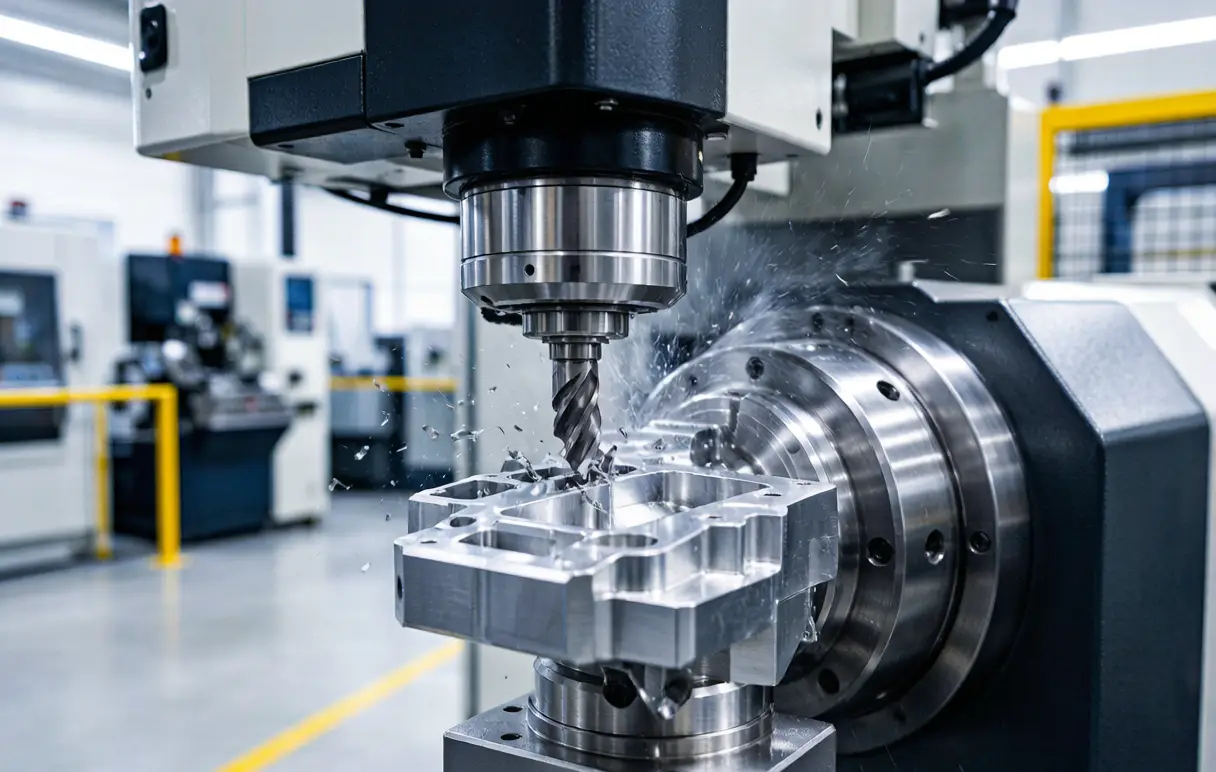
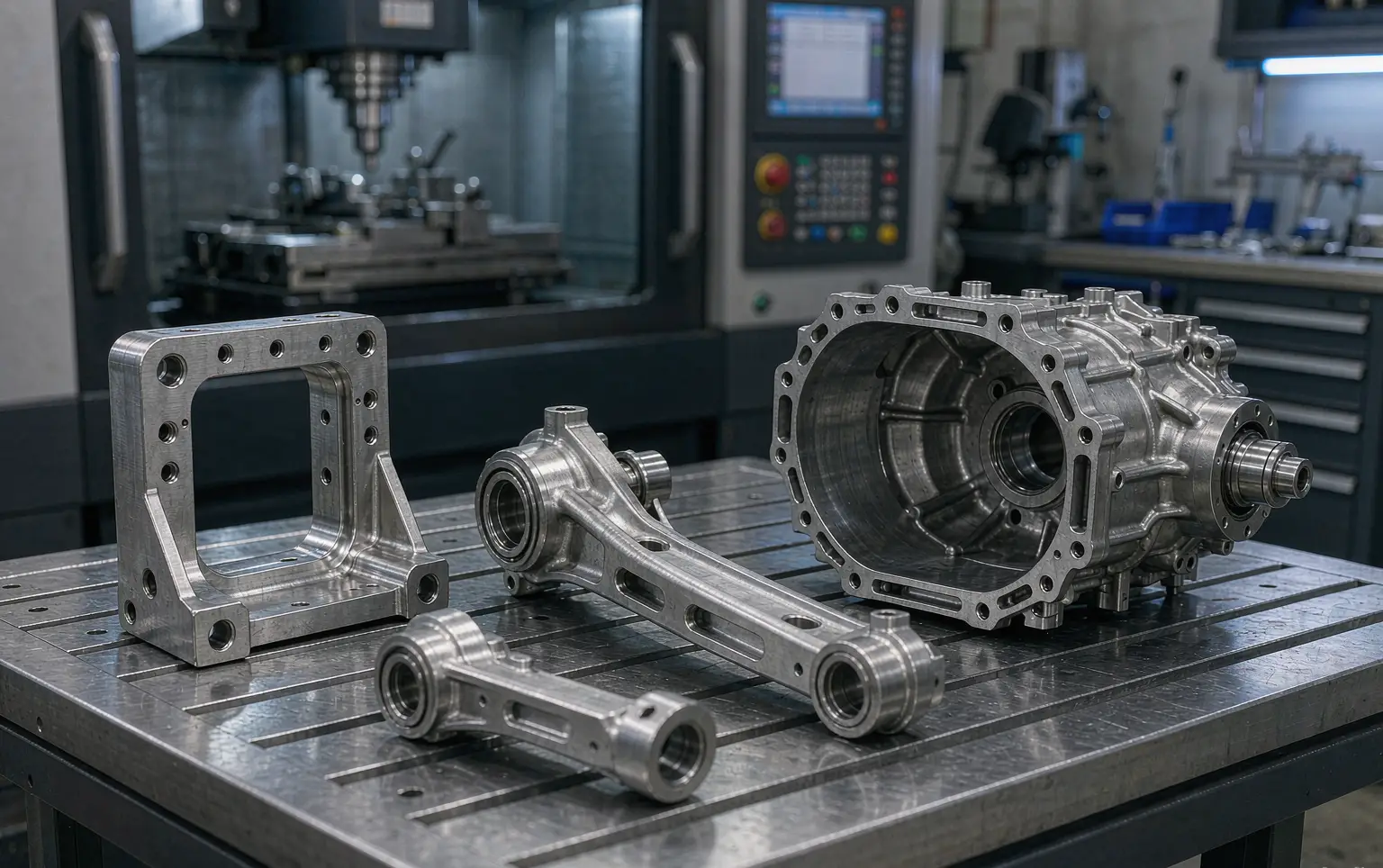
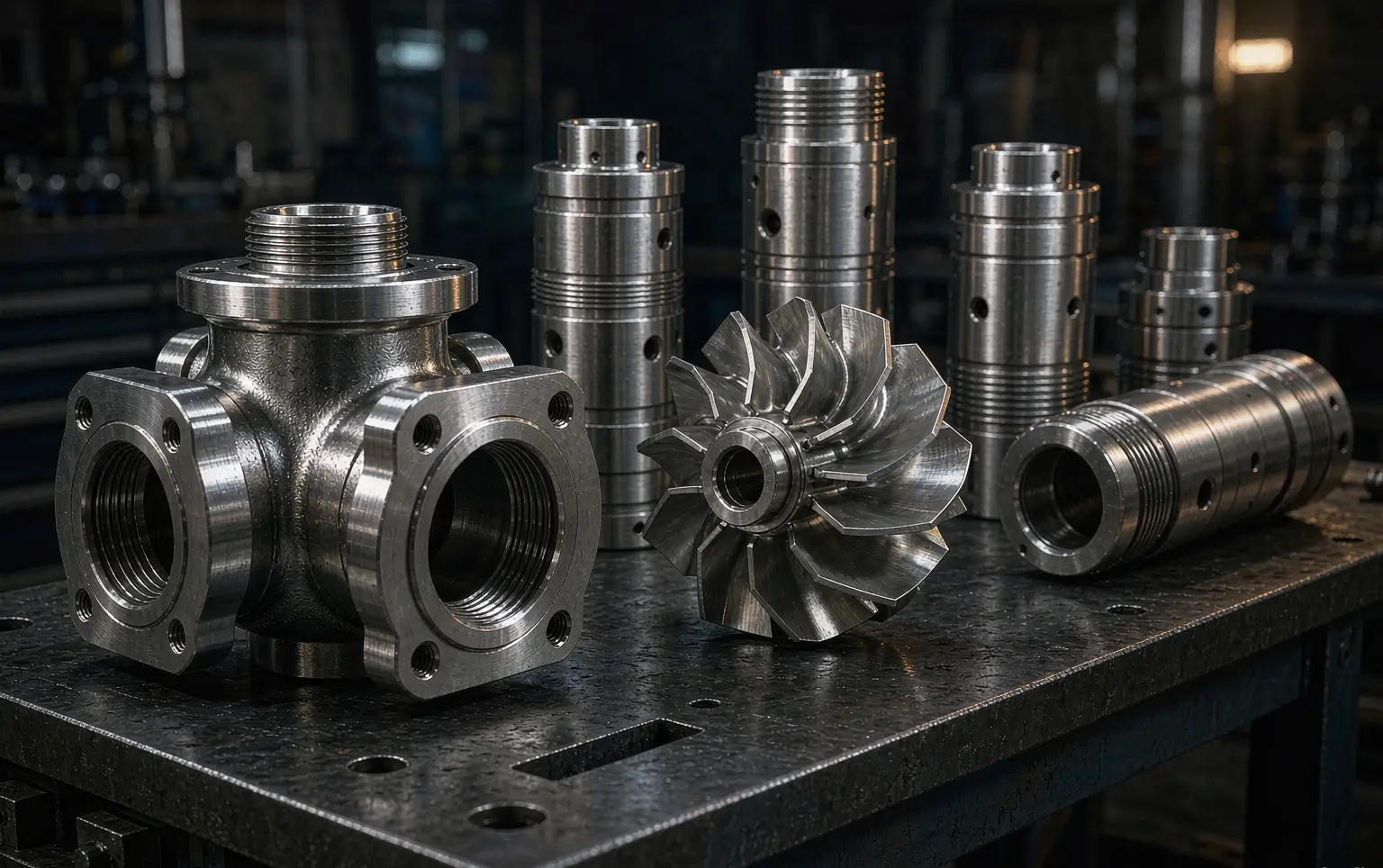
The field of modern manufacturing is undergoing a profound transformation, driven by the smooth integration of industrial robot applications into Computer Numerical Control (CNC) machining environments. This fusion is not merely a trend but a strategic imperative, responding to escalating demands for higher productivity, unwavering consistency, and complex, flexible production capabilities. At JLYPT, our expertise lies at this critical junction, where advanced CNC machining services are improved through intelligent automation. The deployment of robots in machining cells transcends simple mechanization; it represents the creation of a cohesive, intelligent system where automated material handling, in-process inspection, and adaptive machining converge to form a resilient and efficient production ecosystem. This evolution is central to the Industry 4.0 paradigm, enabling lights-out manufacturing, data-driven optimization, and the agile production of high-value components for aerospace, automotive, and medical industries. Moving beyond their traditional roles in welding and painting, today’s industrial robots, equipped with advanced sensors and sophisticated control algorithms, are now indispensable partners in precision milling, turning, and finishing operations.
Core Applications: From Machine Tending to Adaptive Finishing
The implementation of robots within CNC workflows addresses several critical operational challenges. The applications are diverse, each contributing to a leaner, more capable manufacturing process.
-
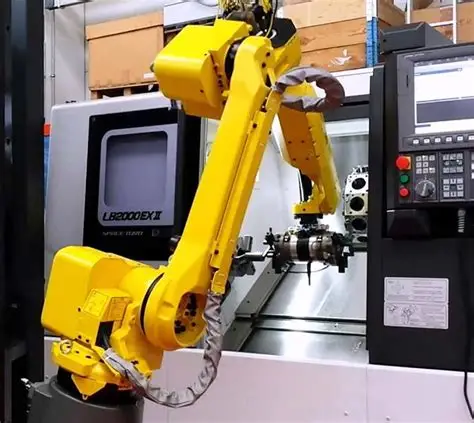
Automated Machine Tending and Material Handling: This is the most prevalent application, where robots automate the loading of raw blanks and unloading of finished parts. Systems utilizing linear axis tracks or multi-station rotary tables enable a single robot to service multiple CNC machines, such as machining centers, lathes, or grinders, dramatically increasing overall equipment effectiveness (OEE). For instance, a KR FORTEC robot on a linear rail can efficiently manage part flow between several machines, allowing for continuous, unattended operation. This not only maximizes spindle uptime but also mitigates ergonomic risks associated with handling heavy or large workpieces.
-
Secondary and Finishing Operations: Robots excel at performing value-added tasks outside the primary CNC machine. A key application is robotic deburring and polishing, where force-controlled end-effectors or specialized tools are used to remove sharp edges and achieve consistent surface finishes. This is particularly valuable for complex geometries, such as gear teeth or turbine blades, where manual finishing is inconsistent and labor-intensive. As seen in the Katsa Oy case, a robotic cell using a Renishaw RMP60 probe for part localization can automatically generate and execute a complete deburring program for gears of various sizes, ensuring uniform quality and freeing skilled workers from a dirty, repetitive task.
-
In-Process Inspection and Quality Assurance: Integrating metrology directly into the automated cell enables closed-loop process control. Robots can be fitted with touch-trigger probes (like the Renishaw RMP60) or non-contact vision systems to perform critical dimension checks immediately after machining. This real-time data can be fed back to the CNC controller for automatic tool wear compensation, ensuring parts remain within tolerance without manual intervention. The Conroe Machine case study demonstrates this powerfully: a FANUC robot places a machined bearing ring onto a Renishaw Equator gauging system; measurement results are instantly analyzed, and feedback is sent to the Okuma lathe to adjust tool offsets, achieving 100% inspection and remarkable consistency.
-
Direct Robotic Machining: For large or complex components where traditional CNC machine tools are impractical, high-stiffness robotic arms are deployed for direct milling, drilling, or routing. This application demands advanced trajectory planning and dynamic stiffness control to counteract the robot’s inherent flexibility under cutting forces. Solutions like Siemens’ SINUMERIK Run MyRobot / Direct Control are designed specifically for this, applying CNC-grade control algorithms to industrial robots to boost path accuracy by up to 300%, making them suitable for machining composites or performing accurate trimming operations.
Technical Architecture and System Integration
Successfully deploying industrial robots in a precision machining context requires careful architectural planning. The system is built on several interconnected technological pillars:
-
Control System Integration: The heart of a smooth robotic cell is unified control. Advanced solutions enable a single CNC controller to directly command the robot. For example, Delta’s system uses its NC5 series CNC controller as the host, integrating multi-axis robots to achieve synchronized control over both the machine tool and the robot, simplifying programming and enhancing coordination. Similarly, software platforms like ENCY Robot allow for offline programming and simulation, generating code for both the CNC machine and robots from brands like KUKA, ABB, and FANUC from a unified environment.
-
Sensor Integration and Adaptive Control: To handle variability in raw material or fixture positioning, robots rely on integrated sensors. 2D/3D vision guidance systems are used for bin picking and unstructured positioning, allowing the robot to locate and grasp parts that are not precisely fixtured. Force-torque sensors enable compliant operations like delicate assembly or contour-following for finishing. This sensory feedback allows the robotic cell to adapt in real-time, a cornerstone of flexible automation.
-
Digital Twin and Simulation: Before any physical installation, the entire work cell, including the robot, CNC machine, fixtures, and tooling, is modeled in a digital twin environment. Software like Delta’s DIATwin or common offline programming (OLP) suites allow engineers to simulate and optimize the robot’s paths, conduct collision detection, and validate cycle times virtually. This drastically reduces commissioning time, eliminates the risk of costly crashes, and allows for process optimization offline.
-
Connectivity and Data Analytics (IIoT): Modern robotic cells are data hubs. Through platforms like KUKA Connect or similar IIoT frameworks, data on robot performance, cycle times, and error codes are streamed to the cloud. This enables predictive maintenance, process monitoring, and overall equipment effectiveness (OEE) tracking, providing valuable insights for continuous improvement.
Overcoming the Precision Challenge: Stiffness, Accuracy, and Calibration
While robots offer immense flexibility, their application in high-precision CNC tasks has historically been limited by technical challenges distinct from those of rigid machine tools.
-
Structural Stiffness and Vibration: A robot’s serial-link, cantilevered arm structure has lower static and dynamic stiffness compared to a CNC gantry or C-frame. Under machining forces, this can lead to tool deflection, vibration (chatter), and reduced accuracy. Mitigation strategies include:
-
Path and Posture Optimization: Software algorithms plan tool paths and robot orientations that minimize deflection and avoid exciting natural frequencies.
-
Advanced Control Algorithms: Implementing vibration suppression and adaptive stiffness control within the robot’s controller to actively dampen oscillations during machining.
-
Mechanical Design: Using robots specifically designed for machining, which often feature reinforced arms, closer-coupled joints, and higher-grade reducers.
-
-
Absolute Positioning and Path Accuracy: A robot’s repeatability is often high, but its absolute accuracy in a large workspace can be affected by factors like kinematic parameter errors, linkage deformation, and thermal drift. To achieve CNC-level tolerances, several compensation techniques are employed:
-
External Measurement-Based Calibration: Using laser trackers or other metrology systems to map the robot’s volumetric errors and create a correction model.
-
On-Machine Probing: The robot uses a touch probe to measure a known artifact or the workpiece itself, then updates its internal coordinate frame to compensate for any misalignment, a technique perfectly illustrated in the Flexmill gear cell.
-
CNC-Style Control: Solutions like the aforementioned Siemens SINUMERIK for robots treat the robotic arm like a multi-axis CNC machine, applying interpolation and error compensation techniques native to high-end machine tool controls.
-
The table below summarizes the primary technical challenges and corresponding solutions in robotic CNC applications.
Table 1: Technical Challenges and Solutions in Robotic CNC Applications
Challenge Category Specific Issue Impact on Machining Engineering Solutions Mechanical Stiffness Low static/dynamic rigidity Tool deflection, poor surface finish, chatter vibration Posture optimization, vibration damping algorithms, use of stiff machining robots. Positioning Accuracy Volumetric errors, thermal drift Dimensional inaccuracies in large parts Kinematic calibration, external laser tracking, on-machine probing for real-time compensation. Process Integration Synchronization with CNC cycle Bottlenecks, idle time Unified control architecture (e.g., CNC-hosted robot control), meticulous cycle time simulation. Programming Complexity Offline path generation for complex surfaces Long setup times, risk of collisions Advanced CAM/OLP software with digital twin simulation, force-controlled adaptive paths.
Strategic Implementation and ROI Considerations
Integrating robotics is a significant capital investment. A justified implementation follows a structured approach focusing on strategic goals and measurable returns.
-
Process Identification and Feasibility: The first step is a thorough value stream analysis to identify bottlenecks. High-volume, repetitive tasks (like loading/unloading) are prime candidates. For more complex tasks (deburring, inspection), the consistency and data-capture benefits are weighed against development complexity.
-
Technology Selection and Cell Design: This involves selecting the appropriate robot type (articulated, SCARA, collaborative), payload, reach, and accuracy grade. The work cell is designed with safety fencing, part presentation systems (conveyors, pallets), and tool changers for the robot’s end-effector.
-
Focus on Flexibility and Changeover: In today’s high-mix environment, cell design must prioritize quick changeover. This is achieved through quick-change fixtures, robot-mounted tool changers, and vision-based part identification that automatically calls the correct program.
-
Calculating Return on Investment (ROI): A comprehensive ROI analysis for a robotic CNC cell must account for:
-
Direct Labor Savings: Reduction in operator time per shift.
-
Productivity Gains: Increased machine uptime and potential for lights-out operation.
-
Quality and Scrap Reduction: Savings from reduced scrap and rework due to consistent automated handling and in-process inspection.
-
Consistency and Risk Mitigation: Elimination of variability and reduction in ergonomic injuries.
-
As demonstrated by Conroe Machine, a well-integrated cell for hard-turning bearing rings achieved an astonishing payback period of just 18 days, primarily through massive gains in yield, consistency, and labor productivity.
-
Case Studies: Industrial Robot Applications in Action
Case Study 1: High-Volume Automotive Bearing Production
A manufacturer of critical transmission bearings faced challenges with manual loading/unloading and inconsistent post-process inspection, limiting output and creating quality escapes. JLYPT engineered a fully automated cell featuring a FANUC M-20iA/6-axis robot integrated with an Okuma 2SP-250H twin-spindle lathe and a Renishaw Equator™ gauging system. The robot manages the complete workflow: loading blanks, unloading finished parts, transporting them to the gauge for 100% inspection, and executing laser marking. critically, measurement data is fed back to the lathe’s control for real-time tool offset compensation. The result was a 30% increase in throughput, the elimination of manual inspection, and a scrap rate approaching zero, with the system paying for itself in a matter of weeks.
Case Study 2: Flexible Deburring for Aerospace Gear Components
Katsa Oy, a specialist gear manufacturer, struggled with the manual deburring of complex spiral bevel gears, a process that was slow, inconsistent, and hazardous. The solution was a custom robotic cell built by Flexmill, centered on an ABB IRB 6700 robot. The key to flexibility was a Renishaw RMP60 wireless touch probe mounted in the robot’s spindle. For each new gear, the robot uses the probe to automatically map the part’s exact position and orientation on the fixture. This data automatically generates a tailored robotic deburring path, eliminating hours of manual programming. The cell now delivers perfect consistency across all parts, reduces lead times, and has made a demanding job clean and safe.
Case Study 3: Large Composite Aerospace Component Trimming
An aerospace subcontractor needed to trim and drill large, contoured carbon fiber composite panels. Fixed CNC gantries were cost-prohibitive for the part size, and manual methods were inaccurate and created hazardous dust. JLYPT implemented a direct robotic machining cell using a KUKA KR 500 FORTEC robot mounted on a long linear track for extended reach. The robot was equipped with a high-frequency spindle and dust extraction. To overcome accuracy limitations, the system incorporated a laser tracker-based volumetric compensation package. Before each batch, the robot’s true position in 3D space is calibrated against the laser tracker’s reference, ensuring path accuracy across its entire massive work envelope. This solution provided the required flexibility for different part geometries and the positional accuracy needed for aerospace tolerances, all at a fraction of the cost of a dedicated massive CNC machine.
The Future Trajectory: AI and Advanced Integration
The future of industrial robot applications in CNC machining is intelligent and deeply integrated. Artificial Intelligence (AI) and machine learning (ML) are set to take automation from pre-programmed to adaptive and self-optimizing. AI-powered vision systems will enable robots to identify and adapt to defects in raw castings or composite layups in real-time. Machine learning algorithms will analyze data from force sensors and spindle power to predict tool failure and optimize cutting parameters on the fly, maximizing tool life and surface quality.
The integration will move beyond the single cell to the entire factory floor. Robots will act as the agile link between autonomous mobile robots (AMRs) for material transport, automated storage and retrieval systems (ASRS), and CNC machining centers, creating a truly flexible and lights-out manufacturing ecosystem. The role of the human will evolve from machine operator to cell supervisor and data analyst, focusing on exception handling, process improvement, and programming of ever-more-complex tasks.
Partnering for the Automated Future
The journey to implement industrial robot applications is complex but undeniably rewarding. It requires a partner with deep cross-disciplinary expertise in CNC machining, robotics, systems integration, and software. At JLYPT, we possess this holistic expertise. We don’t just supply components; we deliver turnkey, intelligent automation solutions: from initial concept and ROI analysis through detailed cell design, integration, commissioning, and ongoing support.
Our engineers leverage the latest in simulation, unified control, and precision calibration to ensure your robotic cell is not just automated, but optimized for peak performance, quality, and return on investment. We help you navigate the technical challenges of stiffness and accuracy, ensuring the robotic solution meets the stringent demands of precision manufacturing.
Ready to transform your production floor? Explore how our integrated approach to CNC machining and robotic automation can enable new levels of efficiency, quality, and competitiveness for your business. Visit our CNC Machining Services page to begin a conversation about your next project.