
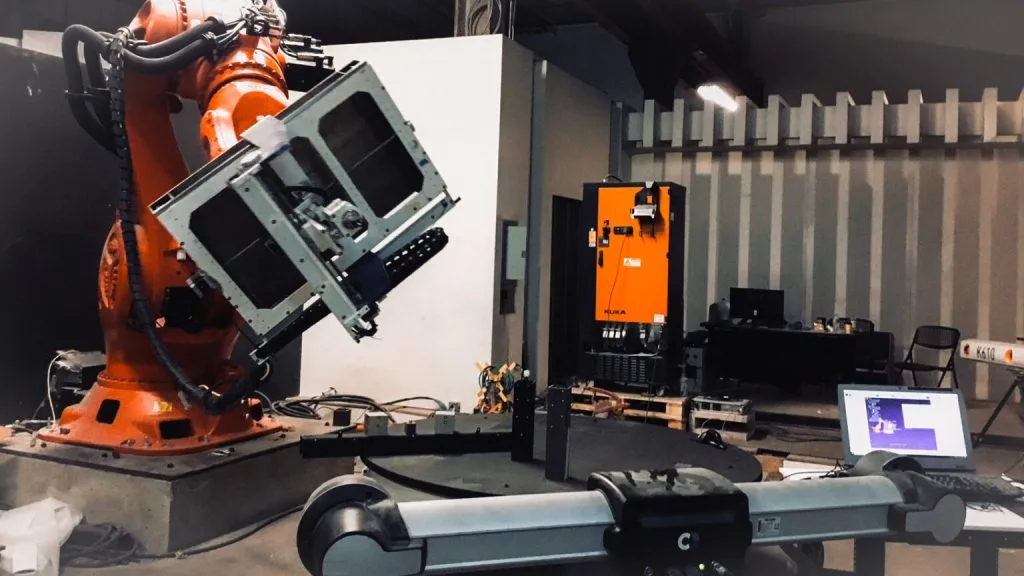
Mastering Industrial Robot Accuracy: A Definitive Guide for Precision CNC Machining
The Precision Imperative in Modern Robotic Machining
The relentless drive toward higher productivity, flexibility, and cost-effectiveness has firmly established industrial robots as indispensable assets on the advanced manufacturing floor. In the field of CNC machining, where tolerances are measured in microns and surface finishes are critical to function, the question is no longer whether to automate, but how to do so without compromising the exacting standards of precision machining. This brings us to the single most critical performance metric for robotics in such demanding applications: industrial robot accuracy.
For a precision-focused service provider like JLYPT, understanding, specifying, and achieving the necessary industrial robot accuracy is not an abstract technical exercise; it is the fundamental engineering challenge that determines the success of an automation project. This guide examines beyond the simplistic spec sheets to explore the multifaceted nature of robotic precision, the factors that degrade it, and the advanced strategies employed to achieve CNC-grade results with robotic systems.
Deconstructing Accuracy: A Vocabulary for Precision
A common source of confusion in evaluating industrial robot accuracy stems from the nuanced definitions of key terms. Clarity here is essential for setting realistic expectations and specifying the right system.
-
Repeatability (ISO 9283): This is the robot’s ability to return to the same programmed position, cycle after cycle. It is a measure of its internal consistency and is often the most prominently advertised specification (e.g., ±0.02 mm). High repeatability is necessary for accuracy but not sufficient on its own. A robot can be highly repeatable yet consistently off-target due to systematic errors.
-
Absolute Accuracy (Positioning Accuracy): This is the robot’s ability to move its tool to a commanded position in absolute space (e.g., a coordinate defined in the CAD model). It quantifies the difference between the intended position and the actual achieved position. This is the metric that matters for CNC tasks like drilling holes or machining profiles directly from a CAD file.
-
Path Accuracy (Contouring Accuracy): This measures the robot’s fidelity in following a complex, continuous trajectory at speed. It is critical for applications like milling, deburring, polishing, or laser cutting, where the smoothness and dimensional correctness of the toolpath directly affect part geometry and surface finish.
-
Compliance & Stiffness: A robot’s mechanical structure exhibits flexibility. Under external forces, such as cutting forces during milling or the inertia of a heavy payload, the arm deflects. This lack of stiffness directly degrades both positional and path accuracy in dynamic conditions.
Table 1: Accuracy Terminology and Its Impact on CNC Machining Tasks
| Term | Definition | Primary Influence | Critical CNC Machining Application |
|---|---|---|---|
| Repeatability | The closeness of agreement between repeated movements to the same taught position. | Process consistency and predictability. | Machine tending (reliable part placement), spot welding, repetitive dispensing. |
| Absolute Accuracy | The difference between the commanded position in space and the mean position achieved by the robot. | Correct geometric location of features from a CAD model. | Drilling, boring, reaming, pick-and-place from vision offsets, fixtureless assembly. |
| Path Accuracy | The robot’s ability to follow a prescribed, continuous trajectory in both position and orientation. | Dimensional fidelity and surface quality of machined contours. | 3D milling, trimming, edge deburring, polishing, laser/plasma cutting, sealing. |
| Stiffness | Resistance to deflection under an applied load (Force/Deflection). | Maintenance of accuracy under cutting forces, inertia, or payload weight. | Robotic milling, grinding, and any operation involving process forces. |
The Sources of Error: Why Robots Are Not Born Accurate
The inherent industrial robot accuracy challenge stems from the serial-link, open kinematic chain design of an articulated arm. Unlike the rigid, closed-loop structure of a CNC gantry or machining center, a robot’s positioning at its end-effector is the cumulative result of six or more individual joint positions. Errors compound at each stage.
1. Kinematic and Geometric Errors
These are systematic, built-in errors from the robot’s physical manufacturing and assembly.
-
Link Length Errors: Deviations from the designed distance between joint axes.
-
Joint Offset/Angle Errors: Misalignment of successive joint axes from their intended parallel or perpendicular relationships.
-
Backlash & Gear Transmission Error: Lost motion in the gearboxes (e.g., harmonic drives, RV reducers) connecting the motor to the joint output.
2. Non-Geometric Errors
These are dynamic and environmental factors that further distort accuracy.
-
Thermal Effects: As motors, drives, and gears operate, they generate heat, causing expansion in links and components. This thermal growth can shift the Tool Center Point (TCP) by several tenths of a millimeter over a work shift.
-
Gravity & Payload-Induced Deflection: The robot’s own weight and the weight of the payload cause structural bending, especially when the arm is fully extended. This deflection is not constant; it changes with every pose.
-
Elastic Deformation Under Load: During machining, cutting forces (in the range of tens to hundreds of Newtons) cause additional, pose-dependent deflections that directly translate into dimensional errors on the workpiece.
The Arsenal of Accuracy Enhancement: From Calibration to Smart Control
Achieving CNC-viable industrial robot accuracy requires a multi-layered engineering approach that addresses errors at their source. The following strategies represent a hierarchy of solutions, from foundational to advanced.
1. The Foundational Step: Robot Selection & Mechanical Design
The quest for accuracy begins with choosing the right hardware.
-
Accuracy-Grade Robots: Major manufacturers offer specific models or variants (e.g., “High-Accuracy,” “Machining,” or “Absolute Accuracy” packages) that feature select components, tighter tolerances in assembly, and pre-loaded calibration data.
-
Stiffness-Optimized Design: Look for robots designed with a focus on high rigidity. This often means a more robust J1 base, wider links, and optimized joint structures that minimize deflection under load. Robots derived from palletizing or handling lineages are often less suitable for machining than those from a welding or machining pedigree.
2. Kinematic Calibration: The First Leap Forward
Kinematic calibration is the process of identifying the actual geometric parameters of a specific robot (its “digital fingerprint” of errors) and updating its internal control model.
-
Process: A high-precision external measurement device, such as a laser tracker or a CMM-touch probe system, is used to measure the robot’s TCP at dozens of poses throughout its entire work envelope.
-
Outcome: Sophisticated software compares the measured positions to the positions predicted by the robot’s nominal model. It then calculates the actual values for link lengths, joint offsets, and other parameters. These corrected parameters are uploaded to the controller.
-
Impact: This process directly tackles geometric errors, typically improving absolute accuracy by an order of magnitude, from several millimeters down to the sub-millimeter or even sub-0.1mm range within the calibrated volume. It is a one-time or periodic procedure.
3. Real-Time Dynamic Compensation: The Active Solution
While calibration fixes static geometric errors, dynamic errors from deflection and thermal drift require real-time correction. This is where advanced software solutions come into play.
-
Deflection & Load Compensation: Software models (often based on Finite Element Analysis or empirical data) predict how much the robot will deflect in any given pose under the influence of its own weight, a known payload, and even programmed process forces. The controller then preemptively adjusts the joint angles to counteract this predicted deflection. This is critical for maintaining path accuracy during milling.
-
Thermal Growth Compensation: Similar models or sensor networks monitor temperature at key points on the robot. The software predicts thermal expansion and compensates the TCP position in real-time, neutralizing drift over the course of a production run.
4. Advanced Control Architectures
-
External Guidance & Closed-Loop Control: For the highest accuracy demands, the robot can be taken out of its standard open-loop mode. Systems like KUKA.KR C4 for CNC or similar allow an external high-precision measurement system (e.g., a laser interferometer or an optical scale system on a linear track) to provide real-time position feedback to the controller, creating a true closed-loop servo system that can correct for errors as they occur.
-
Robotic Machining Software & Optimized Post-Processors: Dedicated CAM software for robotics (e.g., Robotmaster, SprutCAM) generates toolpaths optimized for robot kinematics, minimizing singularities and unnecessary axis reconfigurations that harm accuracy. Smart post-processors can also implement look-ahead and smoothing algorithms to improve contouring performance.
Table 2: Hierarchy of Accuracy Enhancement Technologies
| Technology / Method | Primary Error Target | Typical Accuracy Improvement | Implementation Complexity & Cost | Best Suited For |
|---|---|---|---|---|
| Standard / Stock Robot | N/A | Baseline (e.g., ±0.5-1.0 mm absolute) | Low | Material handling, machine tending where repeatability suffices. |
| High-Accuracy Robot Model | Improved component tolerances & assembly. | 2-3x better than standard (e.g., ±0.2 mm) | Medium (Premium on robot cost) | High-precision assembly, dispensing, light deburring. |
| Full Volumetric Kinematic Calibration | Geometric (Kinematic) Errors. | 5-10x improvement (e.g., ±0.05-0.1 mm) | High (Requires specialist & equipment) | Drilling, trimming, operations requiring good absolute positioning from CAD. |
| Software-Based Dynamic Compensation | Deflection (Gravity/Payload/Process), Thermal Drift. | Maintains accuracy under load; counters thermal drift. | Medium-High (Software license & modeling) | Robotic milling, grinding, finishing where forces are present. |
| Externally Guided Closed-Loop Control | All cumulative errors in real-time. | Can approach the accuracy of the external guide system (e.g., ±0.01-0.02 mm). | Very High (Complex system integration) | Ultra-high-precision machining, inspection, and research applications. |
Real-World Case Studies: Precision Achieved
Case Study 1: Aerospace Composite Trimming with Path Accuracy
-
Challenge: A manufacturer of large carbon-fiber composite wing skins needed an agile alternative to massive 5-axis CNC mills for trimming and drilling. A robotic solution was desired, but the required profile tolerances of ±0.15 mm were beyond a standard robot’s capability, especially given the cutting forces involved.
-
Accuracy Solution: A high-stiffness, 6-axis robot was selected and underwent full volumetric kinematic calibration using a laser tracker. critically, the cell was equipped with real-time deflection compensation software. Before machining, a force profile for the trimming operation was characterized and input into the model. During machining, the software dynamically adjusted the robot’s path to counteract the predicted tool deflection.
-
Outcome: The system consistently held profile tolerances within ±0.1 mm across the entire large work surface. The path accuracy was sufficient to eliminate hand rework, and the flexibility of the robot allowed for quick changeover between different wing panel variants.
Case Study 2: High-Precision Hole Making in Automotive Prototyping
-
Challenge: An automotive prototyping shop needed to drill hundreds of locating and mounting holes in large, multi-material prototype body assemblies. Using multiple dedicated drilling jigs was time-consuming and inflexible. They required a robot to drill holes directly from CAD data with a positional accuracy of ±0.1 mm.
-
Accuracy Solution: An “absolute accuracy” grade robot was installed on a linear track to increase work envelope. The entire system (robot + track) underwent a comprehensive kinematic calibration. To account for part placement variance, a vision system was used to locate reference features on the assembly, creating a dynamic coordinate system transform for each unique part.
-
Outcome: The robot achieved the required absolute accuracy for hole placement, eliminating the need for hard tooling. The vision-based localization compensated for part fixturing errors, ensuring hole patterns were correctly located on each unique prototype, dramatically reducing lead time.
Case Study 3: Robotic Finishing of Complex Investment Castings
-
Challenge: A foundry producing complex titanium investment castings for medical implants faced high labor costs and inconsistency in manual grinding and polishing. Automating this was difficult due to significant part-to-part geometric variation from the casting process.
-
Accuracy Solution: Absolute accuracy was less critical than adaptive path accuracy. A force-controlled grinding spindle was mounted on a collaborative robot. The robot was programmed with a nominal path from the CAD model. A force-torque sensor at the wrist provided closed-loop feedback, allowing the robot to adapt its position in real-time to maintain constant contact force, effectively “riding” the true surface of the part.
-
Outcome: While not following the CAD path with micron precision, the system achieved the functional goal of a consistent, high-quality surface finish (Ra value) across all parts, compensating for casting variances automatically. This demonstrated that the right definition of accuracy, consistent process outcome, can be achieved through sensor-based adaptation rather than purely geometric precision.
The Strategic Path to Robotic Precision
For manufacturers like JLYPT and our clients, navigating the field of industrial robot accuracy requires a methodical approach:
-
Define the True Requirement: Distinguish between repeatability, absolute accuracy, and path accuracy based on the specific task. A tolerance budget must be established.
-
Select the Appropriate Platform: Choose a robot designed for stiffness and accuracy from the outset. This is the most important hardware decision.
-
Invest in Calibration: Budget for and execute professional kinematic calibration. This is the single most effective step to improve absolute positioning.
-
Evaluate Compensation Software: For force-intensive processes like milling, dynamic compensation is not a luxury; it is a necessity to maintain accuracy during the cut.
-
Consider the Complete System: Accuracy is a system property. The robot base mounting, end-effector rigidity, tool holder, and cutting tool all contribute to the final error stack. Each element must be engineered for stability.
Conclusion: The New Paradigm of Flexible Precision
The pursuit of industrial robot accuracy is proof of the evolving role of robotics in manufacturing. They are no longer confined to simple, repetitive handling tasks. Through a combination of advanced mechanical design, sophisticated software compensation, and intelligent sensor integration, modern robotic systems are now capable of meeting the stringent demands of precision CNC machining and beyond.
This capability enables a new paradigm: flexible precision. Manufacturers are no longer forced to choose between the dedicated rigidity of a CNC machine and the agility of a robot. By understanding and applying the principles outlined in this guide, it is possible to deploy robotic cells that deliver both, opening doors to automated production of high-mix, complex parts, large-scale components, and adaptive finishing processes that were previously unthinkable.
At JLYPT, we leverage this deep understanding of industrial robot accuracy to engineer automation solutions that are not just fast and flexible, but fundamentally precise and reliable. We partner with our clients to select, calibrate, and optimize robotic systems that become true extensions of their precision machining capabilities.
Ready to explore how precise robotic automation can transform your manufacturing capabilities? Contact JLYPT to discuss how our expertise in system integration and precision engineering can help you achieve your most demanding accuracy requirements. Discover our integrated approach to advanced manufacturing at JLYPT CNC Machining Services.
If the spec is still open, describe the service conditions instead of shipping a finished print — load, temperature, media exposure — and repeatability across the duty cycle can be sized from there. Route it through the quote form; background on the capability is on the robotics machining capability.