
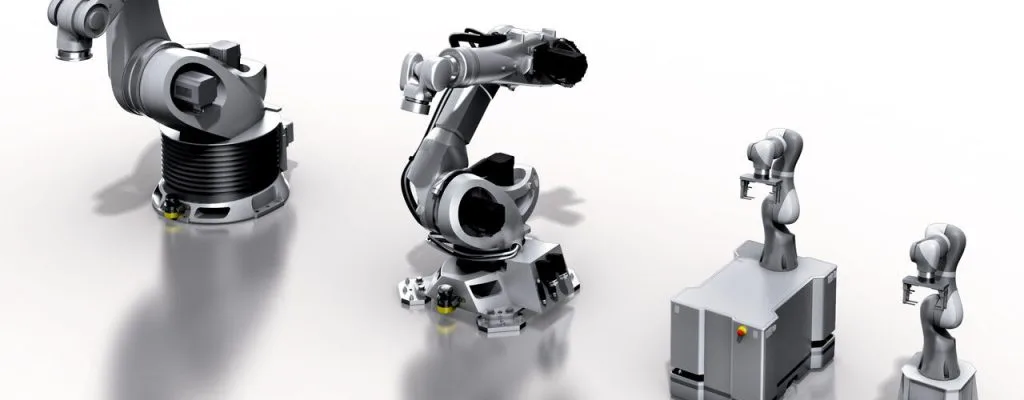
Types of Industrial Robots: A Comprehensive Guide for CNC Machining Automation
Introduction: The Robotic Arsenal in Modern Manufacturing
The integration of robotics into manufacturing represents one of the most significant technological advancements since the advent of Computer Numerical Control (CNC) itself. For precision engineering providers like JLYPT, understanding the diverse field of types of industrial robots is fundamental to designing automated cells that maximize productivity, flexibility, and return on investment. Industrial robots are not a monolithic technology; they are a family of machines, each with distinct kinematic structures, capabilities, and ideal applications.
Selecting the correct type of industrial robot for a CNC machining task is a critical engineering decision that influences everything from cell layout and part quality to cycle time and long-term reliability. This guide provides a detailed exploration of the primary types of industrial robots, analyzing their mechanical architectures, performance characteristics, and specific suitability for the demanding environment of precision machining. We will move beyond basic definitions to examine how each robot type solves particular production challenges within milling, turning, grinding, and inspection processes.
Foundational Concepts: Kinematics and Performance Metrics
Before classifying robots, it is essential to understand the core principles that define their performance. Two key concepts are kinematics and standard performance metrics.
Kinematics refers to the study of motion without considering forces. A robot’s kinematic structure, the arrangement of its joints and links, determines its workspace (the volume of space it can reach), its dexterity, and its suitability for certain path trajectories. The primary joint types are:
-
Revolute Joint (R): Allows rotational movement, like an elbow.
-
Prismatic Joint (P): Allows linear movement, like a telescoping slide.
Key Performance Metrics for CNC machining include:
-
Payload Capacity: The maximum mass the robot can manipulate while maintaining performance.
-
Reach: The maximum distance from the robot’s base to its end-effector.
-
Repeatability: The robot’s ability to return to the same programmed position repeatedly (e.g., ±0.02 mm). This is often more critical than absolute accuracy for machine tending.
-
Speed: Typically measured as the maximum TCP (Tool Center Point) speed or joint speed.
-
Stiffness: The robot’s resistance to deflection under load, critical for machining applications.
The Six Primary Types of Industrial Robots
The industry classifies robots primarily by their kinematic structure, which dictates their movement patterns and strengths. The following are the six dominant types of industrial robots.
1. Articulated Robots (6-Axis Robots)
This is the most recognized and versatile type, resembling a human arm.
-
Kinematic Structure: Typically features six revolute joints (6R), providing six degrees of freedom (DOF): three for arm positioning and three for wrist orientation.
-
Key Characteristics: Unmatched dexterity within a complex, spherical or toroidal workspace. They can orient tools and parts at virtually any angle, making them ideal for complex paths.
-
CNC Machining Applications
-
Complex Machine Tending: Loading/unloading parts into multi-axis (5-axis) machining centers where part orientation is non-uniform.
-
Robotic Machining & Finishing: Performing deburring, polishing, or light milling on large, complex contoured surfaces where the tool must maintain normal orientation to the part.
-
Inspection with Complex Angles: Using a touch probe or scanner to inspect features not accessible from a single direction.
-
-
Considerations: The serial linkage can have lower stiffness than other types, and the workspace may contain singularities (positions where joint alignment causes a loss of a degree of freedom).
2. SCARA Robots (Selective Compliance Assembly Robot Arm)
Designed for high-speed, high-precision operations in a confined plane.
-
Kinematic Structure: Features three revolute joints (parallel axes) for horizontal movement and one prismatic joint for vertical movement (RRRP).
-
Key Characteristics: Selective compliance: rigid in the Z-axis but slightly compliant in the XY plane, which can be beneficial for insertion tasks. Extremely fast and precise for planar motions.
-
CNC Machining Applications
-
High-Speed Palletizing of small, machined components.
-
Loading/Unloading CNC Lathes and Swiss-Type Lathes where parts are cylindrical and movements are primarily radial.
-
Precision Assembly of machined components, such as inserting pins or bearings into housings.
-
-
Considerations: Limited to primarily horizontal work. Cannot easily reorient parts out of the horizontal plane.
3. Cartesian/Gantry Robots (Linear Robots)
These robots are built on a three-dimensional linear coordinate system.
-
Kinematic Structure: Utilizes three orthogonal prismatic joints (PPP), often mounted on an overhead gantry structure.
-
Key Characteristics: Exceptional stiffness, high positional accuracy, and a simple, rectangular workspace. Can be scaled to very large sizes and carry very heavy payloads.
-
CNC Machining Applications
-
Heavy-Duty Machine Tending: Handling large raw castings or forged billets for large machining centers.
-
Direct Robotic Machining: Serving as the motion platform for high-precision milling, drilling, or routing of large parts (e.g., aerospace composites, automotive molds). Their stiffness makes them superior to articulated arms for significant cutting forces.
-
Multiple Machine Servicing: A single large gantry can span multiple CNC machines, performing loading/unloading duties for an entire line.
-
-
Considerations: Can occupy a large footprint. Less flexible for complex, multi-angle paths compared to articulated arms.
4. Delta/Parallel Robots
Recognizable by their lightweight, spider-like arms connected to a common base.
-
Kinematic Structure: Uses three or four parallelogram-linked arms operating in parallel to control a central end-effector platform.
-
Key Characteristics: Extremely high speed and acceleration with low moving mass. Excellent repeatability. The workspace is typically a conical volume below the robot.
-
CNC Machining Applications
-
Ultra-High-Speed Sorting & Pick-and-Place of small, finished machined parts (e.g., connectors, medical implants) from conveyors or trays.
-
Precision Packaging of machined components.
-
Light-Duty, High-Speed Assembly operations.
-
-
Considerations: Very limited payload capacity and small workspace. Not suitable for handling heavy parts or performing processes that generate significant force.
5. Collaborative Robots (Cobots)
A class defined by safe interaction capability, not a specific kinematic structure (most are articulated arms).
-
Kinematic Structure: Often 6R or 7R (7-axis for enhanced singularity avoidance), but designed with rounded edges and force-limited joints.
-
Key Characteristics: Integrated force/torque sensing, power and force limiting (PFL), and safety-rated features that allow them to work alongside humans without traditional safeguarding when risk-assessed.
-
CNC Machining Applications
-
Flexible, Low-Volume Cell Tending: Where a human and robot share tasks, e.g., a human sets up complex fixtures while the cobot performs the repetitive loading cycle.
-
Finishing & Polishing: Direct contact tasks where human-like sensitivity is valuable.
-
In-Process Inspection & Gauging: The cobot can safely hand-measure parts while the machinist operates nearby.
-
-
Considerations: Lower payload and speed compared to traditional industrial robots. A thorough risk assessment per ISO/TS 15066 is mandatory.
6. Mobile Robots (AMRs/AGVs)
Platforms that add mobility to a robotic manipulator.
-
Kinematic Structure: Combines a mobile base (Automated Mobile Robot – AMR) with a mounted manipulator (often articulated or collaborative).
-
Key Characteristics: Provides unprecedented flexibility and dynamic resource allocation. The robot can travel to different machines or stations as needed.
-
CNC Machining Applications
-
Material Delivery: Transporting raw materials from storage to multiple, dispersed CNC machines.
-
Flexible Manufacturing Cells: A mobile manipulator can dock with different machining centers, performing tending duties for a high-mix, low-volume shop without dedicated fixed automation at each machine.
-
-
Considerations: Integration complexity is high, involving navigation, docking precision, and safety for dynamic environments.
Comparative Analysis: Types of Industrial Robots for CNC Machining
| Robot Type | Kinematic Structure | Strengths | Weaknesses | Best CNC Suitability |
|---|---|---|---|---|
| Articulated (6-Axis) | 6R (Revolute) | Maximum dexterity, complex orientation, large 3D workspace. | Lower stiffness, complex programming, singularities. | Tending 5-axis mills, complex finishing paths, welding cells. |
| SCARA | RRRP | Very high XY speed & precision, cost-effective. | Planar motion only, limited Z-stroke, cannot reorient vertically. | High-speed lathe tending, precision assembly of machined parts. |
| Cartesian/Gantry | PPP (Prismatic) | Highest stiffness & accuracy, scalable, heavy payload. | Large footprint, limited dexterity, higher cost at large scales. | Heavy part handling, large-part robotic machining, multi-machine lines. |
| Delta/Parallel | Parallel Linkages | Extreme speed & acceleration, high repeatability. | Tiny payload, small conical workspace. | Sorting small finished components, ultra-high-speed pick-and-place. |
| Collaborative (Cobot) | Often 6R/7R | Safe HRI, easy programming, flexible deployment. | Low force/speed, higher cost/performance ratio. | Hybrid human-robot cells, low-volume finishing, inspection. |
| Mobile Manipulator | AMR + Manipulator | Ultimate facility-wide flexibility, dynamic scheduling. | Highest integration complexity, safety for dynamic paths. | Job shops with dispersed equipment, flexible material delivery. |
Advanced Selection Criteria for CNC Machining Integration
Choosing among the types of industrial robots requires a deep analysis of the specific machining process.
1. Machining Process Forces
-
Light Finishing (Deburring, Polishing): An articulated robot with force-control is ideal for following complex contours. A cobot is suitable for lower-volume applications.
-
Heavy Milling or Drilling: A Cartesian gantry robot is preferred due to its superior stiffness, which minimizes tool deflection and chatter, ensuring dimensional accuracy and surface finish.
2. Part Geometry and Fixturing
-
Cylindrical Parts (for Lathes): A SCARA robot is highly efficient for loading/unloading, as its motion mimics the required radial approach.
-
Large, Prismatic Parts: A gantry robot provides the reach and payload. An articulated robot on a linear track can also be effective for accessing multiple faces of a large fixture.
3. Cell Layout and Footprint
-
Dense Machine Clusters: A SCARA or overhead gantry can service machines with minimal floor space intrusion.
-
Linear Production Lines: An articulated robot on a long linear track can be the most flexible solution for sequential operations.
4. Programming and Path Complexity
-
Simple Point-to-Point Moves (Load/Unload): Any robot type can be programmed relatively easily.
-
Complex 3D Contour Following (e.g., polishing a turbine blade): An articulated robot is necessary, and offline programming (OLP) software is almost mandatory for efficient path generation and collision avoidance.
Case Studies: Strategic Robot Selection in Action
Case Study 1: High-Volume Automotive Transmission Line
-
Challenge: A Tier 1 supplier needed to machine aluminum transmission valve bodies on a line of ten CNC machining centers. Parts required loading from a conveyor, machining on five sides, and unloading to another conveyor. Speed and reliability were critical.
-
Robot Selection & Rationale: SCARA robots were selected for each machine. The rationale was based on the part geometry (relatively flat, prismatic) and the motion required (fast, precise horizontal moves from conveyor to fixture). The SCARA’s selective compliance aided in smooth part placement. Its high speed maximized cycle time, and its lower cost compared to 6-axis robots provided an excellent ROI for this dedicated, high-volume application.
-
Outcome: The line achieved a 28% increase in throughput with consistent, reliable part handling. The simple programming allowed for quick changeovers when new valve body designs were introduced.
Case Study 2: Aerospace Composite Spar Machining
-
Challenge: An aerospace manufacturer needed to trim and drill 10-meter-long carbon fiber composite wing spars. The parts were too large for any standard CNC gantry, and the trimming process required significant stiffness to prevent delamination.
-
Robot Selection & Rationale: A custom large-scale Cartesian Gantry Robot was designed. Its PPP kinematics provided the extreme stiffness required for clean cutting of composites. The system was scalable to the part length, and its inherent accuracy ensured precise hole placement. While an articulated arm could reach, it could not provide the necessary rigidity against the cutting forces.
-
Outcome: The gantry-based robotic cell performed all trimming and drilling operations within aerospace tolerances. It replaced a manual template-based process, reducing labor by 75% and improving quality consistency by over 90%.
Case Study 3: High-Mix Medical Implant Job Shop
-
Challenge: A job shop specializing in orthopedic implants (knees, hips) had low batch sizes and constantly changing part programs. They needed automation to assist machinists with machine tending and post-process cleaning without creating inflexible, dedicated cells.
-
Robot Selection & Rationale: Mobile Manipulators (AMRs with collaborative robot arms) were deployed. This type provided the ultimate flexibility. The AMR could autonomously navigate from the raw material CNC to the washing station to the CMM, with the cobot performing the load/unload/clean tasks at each stop. For the high-mix environment, this was more economical than installing a fixed robot at every station.
-
Outcome: The shop increased its overall equipment effectiveness (OEE) by 35% by reducing machine idle time. The flexibility allowed them to accept more complex, low-volume work, enhancing their market competitiveness. The safe, collaborative nature of the cobots allowed smooth integration with existing staff.
Conclusion: Matching the Machine to the Mission
The world of types of industrial robots offers a powerful toolkit for the modern CNC machining facility. There is no single “best” robot, only the most appropriate one for a given set of technical requirements, production volumes, and economic constraints. The decision matrix involves a careful balance of kinematics, performance metrics, process demands, and strategic business goals.
For precision manufacturers, this selection process is a core engineering competency. Understanding that a SCARA excels in speed for planar tasks, that an articulated arm offers unmatched dexterity, and that a gantry provides unrivalled stiffness is the first step toward building automation cells that are not just automated, but optimized.
At JLYPT, our expertise lies not only in precision machining but also in the strategic application of automation technology. We help our clients navigate the complex field of types of industrial robots to design integrated manufacturing solutions that deliver tangible performance and financial results. The correct robot, properly integrated, transforms from a capital expense into a relentless, precision-driven production asset.
Ready to determine the optimal robotic solution for your machining challenges? Contact JLYPT to leverage our expertise in both precision CNC processes and automated system integration. Explore our capabilities and begin the conversation at JLYPT CNC Machining Services.