
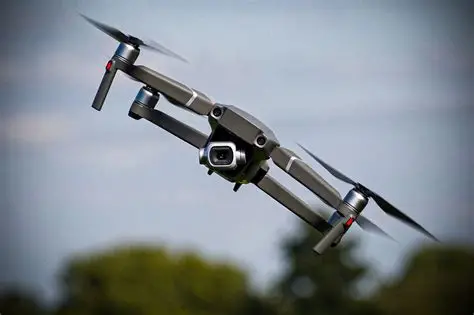
UAV Gimbal Housing Machining: How to CNC a Stable, Low‑Runout, Lightweight Gimbal Frame That Holds Alignment in Flight
A UAV gimbal is unforgiving. The payload camera might weigh only a few hundred grams, yet it demands stable pointing, low jitter, and repeatable calibration after transportation, temperature swings, and flight vibration. The gimbal housing, sometimes called the frame, yoke, yaw arm, pitch arm, roll cage, or payload enclosure, becomes the mechanical “truth” that every sensor and motor references.
That’s why UAV gimbal housing machining is not just about getting an aluminum part to look good. It’s about controlling bearing-seat geometry, motor alignment, datum strategy, thin-wall distortion, and surface finishes that don’t destroy your fits after anodizing. It also needs manufacturing repeatability: a gimbal that performs beautifully in one prototype but drifts in production is usually a machining and tolerance‑stack problem, not an algorithm problem.
This long-form guide is written from a CNC manufacturing viewpoint and is intended for engineering teams sourcing parts, as well as manufacturing teams building a stable process. You’ll find practical CNC terminology, toolpath planning, workholding, datums, GD&T, press fits, thread inserts, surface roughness, CMM verification, and multiple detailed tables.
If you’re looking for a supplier for gimbal housings and other UAV components, JLYPT supports custom CNC programs here:
Custom CNC UAV Parts Manufacturer
Table of Contents
- What Makes UAV Gimbal Housings Different From “Normal” Housings
- UAV gimbal housing machining: Common Housing Architectures and Subassemblies
- Functional Requirements That Translate Directly Into CNC Controls
- Material Selection for Gimbal Frames (6061 vs 7075 vs Titanium, etc.)
- Bearing Seats, Motor Seats, and Runout: The Geometry That Matters
- Thin Walls, Ribbing, and Stiffness‑to‑Weight: DFM Rules That Prevent Scrap
- Process Planning: 3‑Axis vs 5‑Axis CNC, Turning, and Hybrid Routing
- Workholding & Distortion Control for Gimbal Parts
- Threads, Inserts, and Fastener Interfaces for Repeated Service
- Surface Finish and Coatings: Anodize‑Aware Tolerancing and Cosmetic Strategy
- GD&T and Datum Planning for Multi‑Axis Gimbal Frames
- Inspection Plans: CMM, Runout, Coaxiality, and Surface Roughness
- Cost Drivers and RFQ Inputs That Reduce Iterations
- Detailed Manufacturing Tables (DFM, tolerances, routing, QC gates)
- Three Case Studies (Prototype → Pilot → Production)
- Why JLYPT for UAV gimbal housing machining
- Standards & Metrology Links (DoFollow)
1) What Makes UAV Gimbal Housings Different From “Normal” Housings
Most housings are primarily protective. A gimbal housing is protective, but it’s also a precision alignment structure. In practice, the housing defines:
- Relative alignment between yaw, pitch, and roll axes
- Motor stator/rotor alignment (and therefore cogging behavior and control smoothness)
- Bearing fit quality (preload stability, friction, and wear life)
- IMU or encoder positioning (calibration stability)
- Cable routing clearances and strain-relief geometry
- Mechanical stops and crash-load paths
The gimbal housing also lives in a harsh combination of requirements:
- Low mass (for endurance and agility)
- High stiffness (to push resonance modes above disturbance frequencies)
- Low distortion (to preserve bearing coaxiality)
- Repeatable production (so tuning carries over from unit to unit)
- Serviceability (threads that survive rework; consistent fastener seating)
This is where UAV gimbal housing machining becomes a discipline of controlled geometry rather than simply machining “a bracket.”
2) UAV gimbal housing machining: Common Housing Architectures and Subassemblies
Different gimbals arrange their structures differently, but most can be broken down into a few CNC‑machined categories.
Heat is the harder half. Fin spacing and boss mass decide whether the electronics survive a hover — UAV heat sink machining goes into that detail.
Table 1 , Common Gimbal Housing Parts and Their Manufacturing Implications
| Subassembly / Part | Typical features | CNC process notes | Main quality risks |
|---|---|---|---|
| Yaw arm / yaw base | bearing bores, motor seat, cable path | often multi-face; 5-axis reduces setups | coaxiality drift across setups |
| Pitch arm | thin walls, counterbores, wire channels | thin-wall control; deburr critical | distortion + burr contamination |
| Roll frame / camera cage | precision camera mounting plane, lightening pockets | needs consistent flatness and true position | vibration amplification if too flexible |
| Payload enclosure (sealed) | O-ring grooves, gasket lands, threaded holes | finish + sealing geometry; cosmetic | leaks due to groove error or surface damage |
| Motor mounts | stator pilots, bolt circle, wire exit | concentricity and runout dominate | motor misalignment → jitter/noise |
| Encoder/IMU bracket | small precise hole patterns | micro-drilling, reaming | positional error affects calibration |
| Damping interface plate | elastomer seats, isolator pockets | consistent pocket depths | uneven preload, resonance shifts |
When you plan UAV gimbal housing machining, identify which features are truly functional datums (bearing bores, motor pilots, camera plane) and which are noncritical cosmetics. That distinction drives how you fixture, which surfaces you finish last, and where you spend inspection time.
3) Functional Requirements That Translate Directly Into CNC Controls
Gimbal performance issues frequently trace back to mechanical tolerances and fit conditions. The most common “software-looking” symptoms caused by machining are:
- persistent low-frequency oscillation (structural compliance or loose fits)
- high-frequency jitter (bearing friction variation, misalignment, poor runout)
- poor horizon hold (axis non-orthogonality or shifting encoder mounts)
- inconsistent unit-to-unit tuning (inconsistent bearing seats or motor alignment)
3.1 Critical-to-function (CTF) features for most UAV gimbals
- Bearing bore size and roundness
- Bearing bore coaxiality (or at minimum controlled position relative to axis datums)
- Motor pilot concentricity to bearing axis
- Mounting plane flatness where camera or payload plate seats
- True position of fastener patterns and dowel holes (if used)
Table 2 , Gimbal Performance vs Machining CTQs
| Performance requirement | Mechanical driver | Machining control lever | How to verify |
|---|---|---|---|
| low jitter | low runout + consistent friction | finish bores in one setup; ream/hone where needed | runout gage; CMM; bearing feel checks |
| stable calibration | datum stability | datum scheme + minimized setup count | CMM true position; datum transfer checks |
| good damping behavior | stiffness + predictable mass | consistent wall thickness; controlled pocketing | weight check; modal test |
| serviceability | thread durability | thread inserts; correct drill/tap practice | go/no-go; torque audit |
| repeatable assembly | consistent spotfaces | spotface perpendicularity and depth | depth measurement; CMM |
This is the heart of UAV gimbal housing machining: control the geometry that controls motion.
4) Material Selection for Gimbal Frames (CNC and System Tradeoffs)
Material selection is not only about strength. It affects stiffness-to-weight, corrosion behavior, machinability, and how stable your part remains after finishing.
Table 3 , Materials Common in UAV Gimbal Housing Machining
| Material | Relative stiffness-to-weight | Machinability | Typical use | Notes for CNC process |
|---|---|---|---|---|
| 6061‑T6 Aluminum | good | excellent | general gimbal frames, enclosures | stable, cost-effective, great anodize compatibility |
| 7075‑T6 Aluminum | very good | good | thin arms needing stiffness | stronger; can be more sensitive to stress relief and distortion |
| 2024 Aluminum | good | fair | specialty aerospace-style parts | corrosion needs attention; not always preferred for consumer UAV |
| Titanium (Grade families) | moderate (dense) | difficult | rugged mounts, high-temp areas | tool wear; heat management; slower cycle time |
| Stainless steel | low (dense) | fair | shafts, hardware, specialty brackets | rarely for weight-critical housings |
| Engineering polymers (PEEK/Delrin) | low | excellent | sensor mounts, isolators | good for damping, but stiffness and creep must be evaluated |
| Magnesium alloys | excellent (very light) | special | ultra-light outer shells | requires strict chip/fire safety controls; finishing and corrosion strategy are critical |
For many programs, 6061‑T6 is the best baseline for UAV gimbal housing machining, while 7075‑T6 is chosen when the gimbal arms must be thin but stiff and thread strength is important. Titanium is usually reserved for mounts that see impact loads or aggressive environments.
5) Bearing Seats, Motor Seats, and Runout: The Geometry That Matters
A gimbal is essentially a controlled bearing system. If the bearing seats are inconsistent, everything downstream, encoder readings, motor control smoothness, tuning, becomes harder.
5.1 Bearing seat features that dominate performance
- Bore diameter tolerance (fit class / interference or slip)
- Roundness and cylindricity (bearing life and friction uniformity)
- Coaxiality between paired bearings (preload and binding)
- Perpendicularity of shoulder faces (bearing seating quality)
- Surface roughness in bores (fit and fretting)
5.2 Motor alignment and pilots
Brushless gimbal motors are sensitive to misalignment. A good CNC design uses:
- a pilot diameter or register for stator alignment
- controlled face runout for the motor mounting land
- tight positional control for the bolt circle relative to the pilot
Table 4 , Typical Precision Features in UAV Gimbal Housing Machining
| Feature | Why it’s critical | Recommended manufacturing approach | Common mistake |
|---|---|---|---|
| bearing bore | determines axis behavior | finish bore with boring head, reamer, or circular interpolation + spring pass | finishing bores after anodize without planning |
| bearing shoulder face | controls seating | finish in same setup as bore | shoulder face not perpendicular → bearing tilt |
| motor pilot/register | reduces runout | machine pilot and bolt circle in same datum | separate setups create eccentricity |
| encoder mount pattern | calibration stability | ream dowel holes; control true position | “tight holes” but no datum logic |
| camera mounting plane | image stability | finish plane late, low-distortion fixture | warped plane due to clamping |
If you remember one principle for UAV gimbal housing machining, make it this: the best-looking part can still be a bad gimbal if your bearing and motor references aren’t machined as a coherent datum system.
6) Thin Walls, Ribbing, and Stiffness‑to‑Weight: DFM Rules That Prevent Scrap
Gimbal housings love thin walls. CNC machining hates unsupported thin walls, especially after pocketing, when internal stresses release and the part springs.
6.1 Thin-wall failure modes in production
- wall chatter → poor surface finish and dimensional drift
- post‑machining springback → bores shift relative to each other
- distortion after anodize (or after unclamping) → assembly binding
- burrs in cable channels and pockets → wire damage
6.2 DFM rules that improve CNC success
- Add ribs where you can, and avoid long unsupported webs
- Use generous internal fillets (tool radius + stress reduction)
- Keep wall thickness consistent where possible (reduces warpage)
- Provide tool access (avoid deep narrow pockets that require long reach)
- Standardize fasteners to reduce tool changes and tolerance conflicts
Table 5 , DFM Checklist for UAV Gimbal Housing Machining
| Design item | Risk if ignored | Better design move | CNC benefit |
|---|---|---|---|
| long thin arm with no ribs | resonance + distortion | add ribs / box section | higher stiffness, better repeatability |
| sharp internal corners | crack initiation + tool limitations | add fillets sized to cutters | faster machining, less stress |
| deep pocket with narrow opening | tool reach chatter | open the pocket or split part | shorter tools, better finish |
| tiny screws into aluminum | thread stripping | use inserts or larger threads | serviceability and torque consistency |
| no datum features | assembly variation | add dowel holes or datum pads | repeatable inspection and assembly |
7) Process Planning: 3‑Axis vs 5‑Axis CNC, Turning, and Hybrid Routing
Process planning is where UAV gimbal housing machining becomes either scalable, or painful. The key is to minimize setup count while protecting critical datums.
7.1 3‑Axis CNC (VMC) , when it works best
3‑axis can be ideal for:
- flat plates and frames with features on two main faces
- gimbal arms that can be cleanly machined with two or three setups
- parts with limited undercuts and accessible pockets
Strengths:
- cost-effective
- straightforward inspection and process control
- excellent repeatability for prismatic components
Risks:
- more re-clamping → higher datum stack-up
- hard to maintain coaxiality for complex multi-face bores
7.2 5‑Axis CNC , why gimbal housings often benefit
5‑axis shines when:
- bearing bores and motor pilots must align across angled faces
- the part has sculpted geometry for mass reduction and cable routing
- you want to machine multiple faces in one setup to protect datums
- you need consistent surface finish across complex contours
7.3 Turning (lathe) + milling for ring‑style housings
Some yaw bases and bearing carriers are effectively ring parts. Turning can produce superior roundness and surface finish for bearing seats, then milling adds:
- bolt circles
- wire exits
- anti-rotation features
- mounting ears
Table 6 , Routing Options in UAV Gimbal Housing Machining
| Part style | Best primary process | Secondary ops | Why |
|---|---|---|---|
| prismatic arm/yoke | 3-axis HSM milling | ream/boring, tapping | cost-effective with controlled setups |
| monocoque camera cage | 5-axis milling | insert install, cosmetic finishing | fewer setups, better datum integrity |
| ring bearing carrier | turning | mill bolt pattern + features | superior bore quality and coaxiality |
| sealed enclosure | 3-axis or 5-axis | O-ring groove finishing, surface treatment | sealing surfaces demand controlled finishes |
8) Workholding & Distortion Control for Gimbal Parts
Workholding is the difference between “looks right” and “measures right” after unclamping.
8.1 Distortion sources specific to gimbal housings
- asymmetric pocketing (one side hollowed more than the other)
- clamping on thin walls rather than on datum pads
- thermal growth during aggressive high-speed machining
- finishing critical bores early, then warping them during later ops
8.2 Reliable workholding methods for UAV gimbal housing machining
- Soft jaws that capture stable datum pads (not cosmetic walls)
- Custom nests supporting thin frames during finishing passes
- Vacuum fixturing for flat frames when clamping would bow the part
- Op sequencing that keeps stiffness until late (leave webs, then remove)
- Machining critical bores and their mating faces in one setup when possible
Table 7 , Workholding Strategy Guide
| Problem | Symptom | Workholding fix | Process fix |
|---|---|---|---|
| thin arm vibrates | chatter marks, oversized walls | support near cut zone | reduce tool stick-out; constant engagement toolpaths |
| bores shift after unclamp | bearings bind in assembly | clamp on datum pads | finish bores after major pocketing |
| cosmetic damage | scrap due to appearance | protective soft jaws | define non-cosmetic clamp zones on drawing |
| part “springs” after anodize | fits change | anodize-aware stock/tolerance | verify pre/post finish dimensions |
9) Threads, Inserts, and Fastener Interfaces for Repeated Service
Gimbals get serviced. Camera modules get swapped. Arms get replaced. Threads are not a “minor feature” in UAV gimbal housing machining: they are a lifetime reliability decision.
9.1 When to use inserts
Use threaded inserts when:
- the screw will be removed frequently
- the aluminum section is thin
- torque must be repeatable without stripping
- you need better wear resistance than bare aluminum threads
9.2 Thread milling vs tapping
- Rigid tapping is fast and common, but broken taps can scrap small complex housings.
- Thread milling is slower but offers better control, especially in 7075 and titanium, and is safer for expensive parts.
Table 8 , Thread & Fastener Best Practices
| Feature | Recommendation | Why it helps | Verification |
|---|---|---|---|
| tapped holes in thin walls | consider inserts | prevents stripping | torque audit + visual |
| spotfaces under screws | control depth & perpendicularity | consistent clamp load | depth gage / CMM |
| small screws (M2/M2.5 class) | avoid overuse; standardize | reduces tool changes + failures | assembly feedback loop |
| dowel holes | ream, don’t drill-only | repeatable alignment | pin gage + CMM |
10) Surface Finish and Coatings: Anodize‑Aware Tolerancing and Cosmetic Strategy
Gimbal housings are often customer-facing; appearance matters. But finish choices can silently destroy precision fits if you don’t plan for them.
10.1 Anodize and fit management
Anodizing builds an oxide layer and changes effective dimensions. The practical takeaway for UAV gimbal housing machining is simple:
- Do not treat anodize as “paint.”
- If you have press fits, bearing seats, or tight pilots, your drawing must define how those areas are handled (masking, post-process sizing, or tolerance offsets).
10.2 Cosmetic vs functional surfaces
Split surfaces into:
- A-surfaces (customer-visible): consistent toolpath direction, controlled surface finish, minimal witness marks
- Functional surfaces: datums, bearing seats, sealing lands, precision over cosmetics
- Noncritical internals: open tolerances, faster machining
10.3 Sealing features (O-ring grooves, gasket lands)
If the gimbal includes a protected payload enclosure, sealing quality depends on:
- groove width/depth accuracy
- surface finish on the sealing land
- avoiding scratches from handling and deburring
Surface texture parameters reference:
ISO standards
Table 9 , Finish Planning in UAV Gimbal Housing Machining
| Surface type | Priority | Finish approach | Notes |
|---|---|---|---|
| bearing bores | functional | fine finish, controlled roughness | avoid post-anodize fit surprises |
| sealing lands | functional | controlled finish, protected handling | scratches cause leaks |
| camera mount plane | functional | finish last, minimal clamp distortion | controls payload alignment |
| exterior cosmetic | cosmetic | consistent toolpath + optional bead-blast | define acceptable witness marks |
| internal pockets | low | standard milling finish | don’t over-specify |
11) GD&T and Datum Planning for Multi‑Axis Gimbal Frames
A gimbal housing without a clear datum strategy is difficult to machine repeatably and even harder to inspect. If you want consistent performance, your drawing should tell the shop how the part “locates” in the real assembly.
GD&T fundamentals reference (DoFollow):
ISO standards
Datum systems reference (DoFollow):
ISO standards
11.1 Practical datum scheme for gimbal housings
A common, production-friendly scheme is:
- Datum A: the primary mounting plane (e.g., interface to UAV frame or payload plate)
- Datum B: a precision bore (e.g., yaw bearing bore axis)
- Datum C: a secondary plane or locating feature (e.g., dowel hole or side face) to clock rotation
This helps both machining and inspection:
- fixturing becomes repeatable
- axis-related GD&T (position, runout) becomes meaningful
- CMM programming becomes straightforward
11.2 Controls that protect gimbal motion quality
- Position of bearing bores relative to datums
- Coaxiality (or position) between bearing seats in the same axis stack
- Perpendicularity of bearing shoulder faces to the bore axis
- True position of motor bolt patterns to motor pilot
General tolerances reference (DoFollow):
ISO standards
Table 10 , GD&T-to-Function Map (Gimbal Housing)
| Feature | Function | Suggested control | Why it matters |
|---|---|---|---|
| yaw bearing bore axis | axis definition | position to A | C (or datum axis) |
| paired bearing seats | preload stability | coaxiality/position relationship | prevents binding |
| motor pilot diameter | runout control | concentricity/position to bore axis | smooth motor control |
| camera mount plane | pointing stability | flatness + parallelism to A | reduces tilt and drift |
| spotfaces | clamp repeatability | perpendicularity to A | consistent torque behavior |
12) Inspection Plans: CMM, Runout, Coaxiality, and Surface Roughness
In UAV gimbal housing machining, inspection should focus on the features that change motion behavior, rather than measuring every cosmetic wall.
Metrology reference (DoFollow):
NIST
12.1 Core inspection toolkit
- CMM for true position, datum relationships, and GD&T reporting
- Bore gages / air gages for bearing-seat size and roundness trends
- Runout indicators on functional assemblies or fixtures
- Profilometer for surface roughness on sealing lands and mating planes
- Go/No-Go thread gages for service threads
12.2 When functional gaging beats pure dimensional inspection
For gimbals, a smart method is to create a functional fixture that simulates:
- bearing insertion depth
- axis stacking
- motor mounting
Then verify: - axis smoothness / friction consistency (qualitative but valuable)
- endplay within expected window
- runout at a defined reference surface
Table 11 , Inspection Plan Template for UAV Gimbal Housing Machining
| CTQ | Tool | Frequency | Notes |
|---|---|---|---|
| bearing bore size | bore gage / air gage | high | monitor tool wear and thermal drift |
| bore relationship (position/coaxiality) | CMM | FA + sampling | prioritize axis-defining bores |
| shoulder face perpendicularity | CMM | FA + periodic | affects bearing seating |
| motor pilot + bolt circle | CMM | FA + sampling | protects runout |
| camera mount plane flatness | CMM / surface plate | FA + sampling | affects pointing accuracy |
| surface roughness (sealing land) | profilometer | FA + periodic | avoid leak issues |
| threads | go/no-go | 100% for critical | especially small threads |
13) Cost Drivers and RFQ Inputs That Reduce Iterations
A gimbal housing can look small but still be expensive because it contains many time-consuming features.
13.1 Main cost drivers in UAV gimbal housing machining
- Multiple critical bores requiring fine finishing and inspection
- High setup counts (multi-face machining without 5-axis)
- Thin-wall machining with tight tolerances (slow feeds, careful passes)
- Cosmetic requirements (bead blast, uniform tool marks, strict defect limits)
- Anodize masking and post-finish verification
- Numerous thread types and tiny screws
13.2 RFQ inputs that make quotes accurate and lead times stable
- Identify bearing types and required fits (or functional target dimensions)
- Specify coating and masking rules (especially around press fits and bores)
- Define the datum scheme and which surfaces are critical
- Provide assembly method (dowels? torque specs? adhesives?)
- Give expected volume (prototype vs pilot vs production) and revision maturity
- Clarify cosmetic acceptance criteria (scratch limits, bead blast level, color)
14) Detailed Manufacturing Tables (DFM, Tolerances, Routing, QC Gates)
Table 12 , DFM Rules of Thumb Specific to UAV Gimbal Housing Machining
| DFM topic | Common pitfall | Better approach | Production benefit |
|---|---|---|---|
| bearing seats | “tight bore” with no GD&T | define datum axis + position/perpendicularity | repeatable smooth motion |
| thin walls | aggressive pocketing early | leave support ribs, finish late | less warpage |
| tool access | deep narrow cavities | split part or open access | shorter tools, better finish |
| cable routing | sharp edges in channels | radiused edges + controlled deburr | less wire damage |
| fasteners | too many unique sizes | standardize hardware | fewer errors, faster assembly |
| cosmetics | undefined surface expectations | define cosmetic zones | less scrap due to appearance |
Table 13 , Practical Tolerance Priorities (Conceptual)
(Actual values depend on bearing size, motor design, and system targets.)
| Feature | Priority | Why |
|---|---|---|
| bearing bore size/roundness | very high | friction and life |
| bore positional relationship | very high | prevents binding and drift |
| motor pilot/bolt circle relationship | high | runout and jitter |
| camera plane flatness/parallelism | high | pointing accuracy |
| cosmetic wall thickness | low-medium | weight and appearance, not motion |
| internal pocket dimensions | low | mostly clearance |
Table 14 , Example Process Routing (5‑Axis Monocoque Gimbal Cage, 6061‑T6)
| Op # | Operation | Machine | Key output | Primary risk | Control plan |
|---|---|---|---|---|---|
| 10 | Blank prep + ID | Prep | stable stock | mix-up | traveler + marking |
| 20 | Rough exterior + datum pads | 5-axis | datums established | clamp distortion | fixture validation |
| 30 | Rough internal pocketing | 5-axis | weight removal | thin-wall spring | staged removal |
| 40 | Machine bearing seats (semi-finish) | 5-axis | bore geometry near net | thermal drift | stabilize coolant + probing |
| 50 | Finish bearing bores + shoulders | 5-axis | final axis geometry | setup error | single-setup finishing |
| 60 | Motor pilot + bolt circle finish | 5-axis | runout control | datum transfer | machine with bore datum |
| 70 | Drill/ream dowels, drill/tap threads | 5-axis | assembly location | tap break | thread milling as needed |
| 80 | Deburr (defined plan) + cleaning | Bench + fixtures | safe edges, clean channels | hidden burrs | magnified inspection |
| 90 | Surface treatment (anodize) | Finishing | corrosion + cosmetic | fit shift | masking/tolerance plan |
| 100 | Final inspection + report | CMM + gages | CTQ release | missed CTQ | checklist + FA report |
Table 15 , QC Gates That Reduce Scrap in UAV Gimbal Housing Machining
| Gate | What to check | Why it saves time |
|---|---|---|
| post-roughing | warpage trend, stock uniformity | prevents finishing a sprung part |
| pre-finish bores | probing + bore size trend | catches tool wear before scrap |
| after finish bores | CMM bore relationships | locks axis integrity |
| pre-coating | thread quality, burr-free bores | coatings hide burrs and complicate fixes |
| post-coating | critical fit checks | ensures anodize didn’t break fits |
| packaging | protective constraints for cosmetic | avoids transit scratches |
15) Three Case Studies (Prototype → Pilot → Production)
Case Study 1 , 7075‑T6 Pitch Arm With Coaxial Bearing Seats (Thin Wall, High Stiffness)
Scenario: A compact 3‑axis gimbal showed unit-to-unit variation: some assemblies were smooth, others had a tight spot through the travel range. The pitch arm held two bearing seats across a thin, pocketed structure.
Key requirements
- stable bearing coaxiality across production
- thin walls for weight, but stiff enough to avoid resonance
- durable threads due to service cycles
UAV gimbal housing machining strategy
- Switched routing to finish both bearing bores and their shoulder faces in the same setup to reduce datum stack-up.
- Adopted staged pocketing: leaving temporary support ribs until after the bores were finished.
- Used thread milling for critical service threads in 7075 to reduce tap-related variation and improve thread consistency.
- Added a controlled deburr step for cable channels and bearing-seat edges to prevent assembly damage.
Inspection highlights
- CMM verification of bore-to-bore positional relationship and shoulder face perpendicularity.
- Bore gage trending for size consistency across lots.
Result Assembly binding was reduced dramatically, and tuning carried across builds with fewer “special” adjustments, an example of how UAV gimbal housing machining quality directly impacts control behavior.
Case Study 2 , 6061‑T6 Monocoque Camera Cage (5‑Axis, Cosmetic + Precision Mix)
Scenario: A payload team wanted a one-piece camera cage to improve stiffness and reduce fasteners. The cage needed clean external aesthetics, precise camera mounting references, and internal clearances for wiring.
Key requirements
- minimal setups to preserve datum integrity
- consistent cosmetic finish across contoured surfaces
- accurate camera mount plane and motor references
UAV gimbal housing machining strategy
- 5‑axis machining to complete most critical faces in one clamping.
- Defined clamp zones on non-cosmetic internal surfaces and used soft jaws/nesting to prevent marring.
- Finished the camera mounting plane late in the process to protect flatness after major material removal.
- Standardized fastener types and counterbores to reduce tool changes and improve assembly repeatability.
Inspection highlights
- CMM: true position of mounting pattern relative to camera plane datum.
- Surface roughness checks on the camera mount land.
Result The one-piece cage reduced assembly variation and improved stiffness-to-weight. Cosmetic rejections were reduced by controlling workholding contact and explicitly separating cosmetic vs functional zones, both core principles in UAV gimbal housing machining.
Case Study 3 , Sealed Payload Housing With O‑Ring Groove (Anodize‑Aware Fits)
Scenario: A stabilized payload required environmental protection. The enclosure needed an O‑ring seal, consistent fastener torque behavior, and a precision internal mount for an IMU/encoder bracket. Early builds had inconsistent sealing and occasional alignment drift after anodizing.
Key requirements
- O‑ring groove geometry and surface finish control
- stable internal mounting datums after coating
- serviceable threads without galling or stripping
UAV gimbal housing machining strategy
- Machined sealing lands with controlled finishing passes and protected them during deburring/handling.
- Planned coating behavior: defined masking rules or tolerance offsets for key pilots and dowel features to avoid fit shifts.
- Added inserts on frequently serviced threads to stabilize torque and prevent wear in aluminum.
- Implemented a cleaning and inspection step focused on groove integrity (no scratches, no embedded debris).
Inspection highlights
- Profilometer check for sealing land surface texture consistency.
- CMM check of internal bracket datums and hole positions post-coating.
Result Leak-related issues were reduced, and alignment stayed stable across coated batches, demonstrating that UAV gimbal housing machining must treat finishing as a dimensional variable, not a cosmetic afterthought.
16) Why JLYPT for UAV gimbal housing machining
Successful UAV gimbal housing machining is a system: CNC routing, workholding, datum control, finishing strategy, and inspection discipline must all support the same functional goal, stable, low‑runout motion.
JLYPT supports custom UAV CNC projects from prototype to production, including gimbal housings, frames, mounts, and precision subcomponents. If you want a manufacturing partner who can help translate gimbal performance targets into a robust CNC plan, you can start here:
- UAV CNC manufacturing : Custom CNC UAV Parts Manufacturer
- JLYPT homepage : JLYPT