
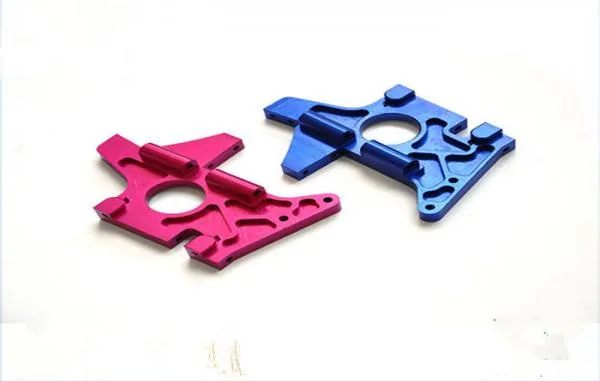
Drone Battery Housing Machining: CNC Design, Materials, Sealing, Thermal Control, GD&T, Inspection, and 3 Real Production Case Studies
Battery packs are the heaviest consumable on most UAVs, and the part most likely to be handled, swapped, dropped, overheated, or exposed to dust and moisture. A drone can tolerate a scratched arm or a scuffed landing skid. A battery enclosure is different: it must protect cells and electronics, preserve alignment at the dock, prevent water ingress, manage heat, and remain serviceable after hundreds of cycles.
That’s why Drone battery housing machining is not simply “CNC a box.” It is a multi‑discipline manufacturing problem spanning mechanical design, sealing science, thermal management, electrical isolation, and tight tolerance control, often in thin walls and aggressive weight targets.
This guide is written for engineering teams and sourcing managers building:
- quick‑swap battery modules for industrial UAVs
- waterproof packs for inspection and rescue missions
- high‑power packs for heavy lift and mapping platforms
- ruggedized packs that survive repeated field handling
If you’re developing custom UAV battery components, JLYPT supports end‑to‑end CNC programs here:
Custom CNC UAV Parts Manufacturer
Table of Contents
- What “Good” Looks Like in a Drone Battery Housing
- Drone battery housing machining: Common Enclosure Architectures
- Key Requirements: Safety, Sealing, Thermal, Docking, EMI
- Material Selection (6061/7075, Stainless, Magnesium, PEEK/Ultem, Delrin)
- CNC Process Planning: 3‑Axis vs 5‑Axis, Op Sequencing, Datums
- Sealing Design: O‑Rings, Gaskets, Groove Machining, IP Ratings
- Thermal Management Features: Heat Spreaders, Fins, Pad Lands, Vents
- Electrical Interface Machining: Pogo Pins, Busbars, Insulators, Creepage
- Fasteners & Threads: Thread Milling, Inserts, Captive Screws, Anti‑Galling
- GD&T That Actually Matters (and what to stop over‑tolerancing)
- Surface Finishes & Coatings: Hard Anodize, Chem Film, Conductive Coats
- Inspection & Quality Control: CMM, Leak Testing, Functional Gauges
- Detailed Tables: DFM, Tolerance Stack, Process Routing, QC Gates
- Cost Drivers & RFQ Checklist
- Three Production Case Studies
- Why JLYPT for Drone battery housing machining
- External Reference Links (DoFollow)
1) What “Good” Looks Like in a Drone Battery Housing
A high‑quality housing is defined by repeatability and risk reduction, not just appearance. In real production, a “good” battery enclosure achieves:
- Dock repeatability: the pack seats the same way every time; latch engages with consistent preload; connector alignment is robust to field wear.
- Sealing performance: water and dust ingress protection that matches the mission profile (often IP54–IP67).
- Thermal stability: predictable heat path from cells/BMS to the environment; no localized hotspots from poor contact or warped walls.
- Serviceability: screws and inserts survive repeated cycles; gaskets can be replaced; no fragile tabs that crack.
- Safety-first geometry: vent/relief strategy, controlled clearances, and robust insulation barriers where needed.
All of these are strongly influenced by Drone battery housing machining choices: datum strategy, wall thickness control, surface finish in sealing lands, hole true position for docks, and post‑process consistency.
2) Drone battery housing machining: Common Enclosure Architectures
Before choosing tools and tolerances, decide which enclosure architecture matches your mission and your production realities.
2.1 Two‑piece clamshell (base + lid)
- Pros: easiest assembly and service; good for modular designs
- Cons: sealing line around perimeter; more fasteners; gasket compression must be controlled
2.2 Monoblock body + cover plate
- Pros: strong and stiff; fewer sealing lines; excellent for quick‑swap docks
- Cons: deeper pocket machining; chip evacuation challenges; higher cycle time
2.3 Hybrid metal frame + polymer shell
- Pros: best weight and RF/EMI balance; good insulation and impact behavior
- Cons: more parts; more stack‑ups; more supplier coordination
2.4 “Dock‑first” cartridge pack (industrial quick swap)
- Pros: fastest field operation; robust guiding and latching
- Cons: tight alignment requirements; wear surfaces must be engineered
Table 1 , Architecture vs Machining Priorities
| Architecture | Typical UAV Use | Machining Priority | Common Failure Mode | Practical Fix |
|---|---|---|---|---|
| Clamshell | general industrial | gasket groove + flatness | leaks from uneven compression | control lid flatness + torque spec |
| Monoblock + cover | ruggedized / high power | pocketing distortion control | warped sealing land | finish skim on sealing datum last |
| Hybrid metal+polymer | weight-sensitive | interface datums | dock misalignment across parts | define functional datums + gauge |
| Cartridge quick-swap | fleets, inspections | latch + connector alignment | intermittent power contact | true position + wear inserts |
From an execution standpoint, Drone battery housing machining becomes simpler when the architecture is chosen with manufacturing and inspection in mind, not just CAD aesthetics.
3) Key Requirements That Drive the CNC Plan
Battery housings are where mechanical engineering meets product liability. Your CNC approach should be driven by a short list of non‑negotiables:
3.1 Sealing / ingress protection (IP)
If you claim an IP level, you’re effectively claiming a controlled interface between two machined parts. The sealing land must be flat and the groove must be consistent.
IP ratings overview reference (DoFollow):
Iec
3.2 Transport and handling constraints
Battery packs often must pass transport-related tests (commonly discussed in context of UN 38.3).
UN 38.3 overview (DoFollow):
Unece
3.3 Thermal behavior under load
High discharge rates mean heat. Your enclosure either:
- spreads heat into the shell (conductive approach), or
- isolates heat and provides airflow/vent paths (ventilated approach), or
- combines both
3.4 Docking, latching, and wear
Quick-swap packs impose strict alignment requirements. Wear surfaces may need:
- hardcoat anodize
- stainless wear plates
- replaceable polymer guides
3.5 Electrical insulation and creepage/clearance
A common machining-driven issue: sharp edges, burrs, or inconsistent standoff heights that reduce clearance or cut insulation.
4) Material Selection for Drone Battery Housings
Material choice affects machining time, finish, sealing, weight, and thermal performance.
Table 2 , Material Comparison (Battery Housing Context)
| Material | Density | Thermal Conductivity | Corrosion Resistance | Machinability | Where It Fits Best |
|---|---|---|---|---|---|
| 6061‑T6 Aluminum | low | good | good | excellent | general industrial packs, prototypes → production |
| 7075‑T6 Aluminum | low | good | moderate | good | high strength quick‑swap bodies, latch bosses |
| Stainless (304/316) | high | lower | excellent | moderate | harsh chemicals, extreme durability, heavier |
| Magnesium alloys | very low | good | needs protection | challenging | weight critical; coatings and safety processes matter |
| PEEK | medium | low | excellent | good (but costly) | insulation-critical, harsh environment |
| Ultem (PEI) | medium | low | very good | good | lightweight insulated housings |
| Delrin (POM) | low | low | good | excellent | guides, non-structural shells, wear parts |
| PA6/PA12 (machined) | low | low | variable | good | covers, guides; watch moisture effects |
Practical rule: If the housing is also a heat spreader, aluminum dominates. If the housing must be electrically insulating and dimensionally stable at temperature, high‑performance polymers (PEEK/PEI) can be excellent, at a cost.
In most real programs, Drone battery housing machining ends up being aluminum body + polymer isolators + stainless wear points.
5) CNC Process Planning: Setups, Datums, and Distortion Control
Battery housings often look simple, but they hide manufacturing traps:
- deep pockets with thin walls
- long sealing lands that must remain flat
- latch windows and spring pockets that chatter
- connector bosses requiring true position and perpendicularity
- weight‑reduction pockets that induce warp
5.1 3‑Axis vs 5‑Axis decision
- 3‑axis VMC is sufficient for most housings if you plan clean setups and accept multiple ops.
- 5‑axis helps when you need angled ports, complex docking geometry, or you want to reduce setups to protect datum relationships.
5.2 Datum strategy (functional, not cosmetic)
A strong baseline:
- Datum A: primary mounting or docking plane (the surface that seats in the aircraft)
- Datum B: a machined side reference used for clocking
- Datum C: a precision locating feature (boss, dowel bore, or key slot)
GD&T framework reference (DoFollow):
ISO standards
Table 3 , Setup Planning for a Typical Aluminum Monoblock Housing
| Operation | Workholding | What You Create | Critical Risk | Control Method |
|---|---|---|---|---|
| Op10: face + datum | soft jaws/fixture plate | Datum A plane | initial tilt, poor flatness | probe + finish pass |
| Op20: rough pocket | same setup | bulk removal | wall deflection | adaptive clearing, leave stock |
| Op30: semi-finish | same setup | near-net walls | chatter | shorten tools, adjust stepdown |
| Op40: machine docking features | same setup | latch pockets, guide rails | positional drift | keep in same datum |
| Op50: flip | precision stop/pins | lid interface | datum transfer error | pinned fixture + probing |
| Op60: finish sealing land | controlled clamping | final seal surfaces | warp from clamping | low clamp force, full support |
| Op70: hole-making | same | threaded holes/bores | burrs, thread damage | thread milling + deburr map |
This is the heart of Drone battery housing machining: do not “finish pretty surfaces early.” Finish the functional datums and sealing lands at the end, under stable fixturing.
6) Sealing Design: O‑Rings, Gaskets, Groove Machining, IP Reality
Sealing is where teams lose months, because they treat a groove like decoration instead of a precision feature.
6.1 O‑ring groove machining fundamentals
An O‑ring seal depends on:
- groove width and depth consistency
- surface finish on the sealing land
- compression (“squeeze”) within a defined range
- controlled gland fill (avoid overfill at temperature)
Surface texture reference (DoFollow):
ISO standards
6.2 Gasket vs O‑ring
- O‑ring: best for repeatable compression and service cycles; requires groove discipline
- Flat gasket: tolerant to minor deviations, good for complex perimeter shapes; may creep over time
6.3 Common CNC sealing failures
- tool marks crossing the sealing land
- warped lid causing uneven compression
- fastener spacing too wide, causing “tenting” between screws
- anodize thickness affecting groove dimensions when tolerances are too tight
Table 4 , Seal Feature Machining Checklist (Battery Housings)
| Feature | Target Outcome | Machining Method | Inspection | Typical Fix if Failing |
|---|---|---|---|---|
| O‑ring groove depth | consistent squeeze | finish pass with stable tool | depth mic / CMM | reduce tool wear, control offsets |
| sealing land flatness | uniform compression | final skim on supported fixture | indicator on surface plate | change clamp strategy |
| corner radii in grooves | avoid O‑ring pinch | corner toolpath planning | visual + profile check | add relief radii |
| fastener spotfaces | even torque seat | spotface after drilling | visual + flatness | add spotfaces to drawing |
| lid-to-body alignment | no shear on seal | dowel or tongue-and-groove | functional fit gauge | add locating features |
A battery pack that “almost seals” is worse than one that clearly doesn’t, because it fails unpredictably. Drone battery housing machining must treat sealing surfaces as CTQs (critical-to-quality).
7) Thermal Management Features You Can (and Should) Machine
Thermal design is often limited by what you can machine economically and repeatably.
7.1 Conductive path strategy
If you intend the housing to dissipate heat:
- machine flat pad lands for thermal pads
- control parallelism to maintain contact pressure
- add ribs/fins where airflow exists (but avoid thin fins that vibrate or deform)
7.2 Venting and pressure equalization
Some packs use membranes/vents rather than fully sealed rigid volumes. Your machining must keep:
- vent boss flatness
- thread integrity (if a vent plug is installed)
- burr‑free edges that could damage membranes
Table 5 , Thermal Features and Their Machining Implications
| Thermal Feature | Why It Works | Machining Consideration | Common Mistake |
|---|---|---|---|
| thermal pad land | improves contact | control flatness + Ra | leaving tool marks that reduce contact |
| heat spreader pocket | controlled conduction | pocket depth tolerance | uneven depth → inconsistent pad compression |
| external fins | increases convection area | tool deflection, burr control | fins too thin to survive handling |
| vent boss/seat | pressure management | burr‑free edge, flat seat | sharp burr cuts sealing washer |
| cell separator ribs | safety spacing | consistent height | ribs warped by aggressive roughing |
In high‑power programs, Drone battery housing machining is as much thermal engineering as it is structural machining.
8) Electrical Interface Machining: Docks, Pogo Pins, Busbars, Isolation
The aircraft‑battery interface is a mechanical alignment problem disguised as an electrical problem.
8.1 Pogo‑pin alignment and true position
If the dock uses spring contacts:
- control true position of pin pockets
- ensure perpendicularity so pins load evenly
- add chamfers/lead‑ins to reduce field insertion damage
8.2 Busbar seats and insulation steps
For high current, busbars may sit on machined lands:
- ensure flatness and proper seating
- avoid sharp edges that cut insulating films
- consider galvanic compatibility and coatings
Table 6 , Dock Interface CTQs
| Interface Feature | CTQ | Why It Matters | Recommended Control |
|---|---|---|---|
| connector pocket location | true position | prevents intermittent contact | CMM position report |
| guide rail width | size + parallelism | smooth insertion, low wear | functional gauge |
| latch window geometry | profile + corner radii | consistent latch engagement | go/no-go gauge |
| stop surface | flatness | prevents overtravel | indicator check |
| insulating step | height control | creepage/clearance | height gauge + visual |
This is where Drone battery housing machining directly impacts uptime in fleets: small positional errors show up as random disconnects in the field.
9) Fasteners & Threads: Thread Milling, Inserts, Captive Hardware
Battery housings are opened. Repeatedly. Thread strategy must match service cycles.
9.1 Thread milling vs tapping
- Thread milling: better control, less risk of broken taps, good in hardcoat scenarios
- Tapping: faster, but riskier on deep threads and thin walls
9.2 Inserts (Helicoil / solid inserts / PEM)
Use inserts where:
- the housing is aluminum and will be opened often
- screws are small (M2–M4) and torque consistency matters
- you need wear resistance and reduced stripping risk
9.3 Captive screws and anti‑loss features
For field service:
- captive screws reduce lost hardware
- shoulder screws can control clamp load and gasket compression
Table 7 , Thread & Fastener Strategy
| Area | Recommended | Reason | Notes |
|---|---|---|---|
| perimeter lid screws | captive + inserts | service cycles | define torque spec |
| latch mechanism screws | thread-milled in 7075 | strength + repeatability | add spotfaces |
| dock wear plates | stainless screws + anti-galling | durability | consider patch locking |
| vent plug threads | thread milling + deburr | sealing reliability | verify with gauge |
| polymer housings | metal inserts | creep control | heat-set or press-in per resin |
Done right, Drone battery housing machining makes the pack feel “engineered” rather than “assembled.”
10) GD&T That Actually Matters (and What to Stop Over‑Tolerancing)
Over‑tolerancing is a silent budget killer. Under‑tolerancing is a field failure generator. The trick is prioritization.
10.1 High-value GD&T controls
- flatness of docking plane (Datum A)
- true position of connector features relative to A/B/C
- perpendicularity of guide rails to docking plane
- parallelism between gasket land and docking plane (controls compression)
10.2 What often does NOT need tight control
- non-functional exterior chamfers
- decorative pockets
- non-mating outer profiles (unless they affect fit in the aircraft bay)
Table 8 , GD&T-to-Function Map (Battery Housing Edition)
| Feature | Function | Suggested Control | Typical Tolerance Philosophy |
|---|---|---|---|
| docking plane | consistent seating | flatness | “tight enough to repeat” |
| guide rails | insertion | parallelism + size | controlled to reduce wear |
| connector datum boss | power contact | true position | prioritize over cosmetics |
| gasket land | sealing | flatness + Ra | inspect early in pilot builds |
| latch interface | retention | profile | ensure consistent engagement |
| internal cell pocket | clearance | basic size | avoid unnecessary tightness |
A disciplined datum plan reduces rework and makes Drone battery housing machining inspectable with objective measurements.
11) Surface Finishes & Coatings: Hard Anodize, Chem Film, Conductive Coats
Finishing choices can make or break sealing, conductivity, corrosion resistance, and wear life.
11.1 Hard anodize (Type III) for aluminum
- improves wear at docks and latch windows
- changes dimensions (account for build-up)
- can affect thread fit (mask or chase threads if required)
11.2 Chem film (conversion coating)
- improves corrosion resistance and conductivity
- useful where grounding is needed
11.3 Conductive coatings for EMI
If EMI/RFI is a concern, conductive coating strategies may include:
- conductive gaskets
- conductive coatings on polymer covers
- grounding points with masked anodize
Table 9 , Finish Selection Guide
| Goal | Best Finish | Why | Watch-outs |
|---|---|---|---|
| wear resistance at docking | hard anodize | durable surface | dimensional impact |
| corrosion resistance | anodize / chem film | protects base metal | seal compatibility |
| electrical grounding | chem film + mask | maintains conductivity | control mask zones |
| cosmetic premium look | bead blast + anodize | uniform appearance | avoid blasting sealing lands |
| EMI mitigation | conductive coat + gasket | shielding | ensure durable contact points |
For sealing parts, define explicitly: no bead blasting on sealing lands unless proven safe. Many leaks are finishing‑induced, not machining‑induced.
12) Inspection & Quality Control: Make Failures Impossible to Hide
Battery housings need both dimensional and functional checks.
12.1 Dimensional inspection
- CMM for true position on docks and connector datums
- surface plate + indicator for flatness of sealing and docking planes
- thread gauges for inserts and critical screws
12.2 Functional inspection
- leak testing (air decay, vacuum, or dunk test depending on design maturity)
- docking functional gauge (simulated aircraft bay)
- latch cycle test (repeat engagement)
Quality system mindset reference (DoFollow):
Ecfr
Table 10 , Practical QC Plan (Production-Friendly)
| CTQ | Method | Frequency | Acceptance Criteria |
|---|---|---|---|
| docking plane flatness | surface plate + indicator | FA + sampling | within spec; no rocking |
| gasket land flatness | indicator/CMM | FA + sampling | even compression potential |
| connector true position | CMM | FA + periodic | within positional tolerance |
| rail width/parallelism | functional gauge | 100% (quick) | smooth pass, no bind |
| threads/inserts | GO/NO‑GO | 100% critical | gauge pass |
| sealing performance | leak test | pilot + audit | pass threshold |
Drone battery housing machining becomes scalable when inspection is engineered into the program rather than treated as a final hurdle.
13) Detailed Tables: DFM, Tolerance Stack, Process Routing, QC Gates
Table 11 , DFM Rules That Prevent Common Battery Housing Failures
| DFM Rule | Prevents | Practical Guidance |
|---|---|---|
| keep uniform wall thickness where possible | warp, sink, chatter | pocket symmetrically; avoid sudden thin zones |
| add lead-ins for docks | connector damage | chamfer guide entries |
| design gasket compression stops | leaks from over-torque | add shoulders/steps controlling squeeze |
| avoid knife edges near insulation | insulation cuts | specify edge breaks, deburr map |
| add replaceable wear plates | dock wear | stainless insert or polymer guide |
| specify torque + sequence | uneven compression | define assembly spec on drawing |
Table 12 , Tolerance Stack Example (Quick‑Swap Dock)
| Stack Element | Variation Source | Typical Control Lever | Why It Matters |
|---|---|---|---|
| housing docking plane | machining + fixture | finish last on stable datum | governs seating |
| rail-to-rail distance | tool deflection | finish pass + gauge | controls insertion feel |
| connector pocket location | setup transfer | keep in same setup as A datum | avoids intermittent contact |
| latch window position | cutter wear | tool wear limits | consistent latch preload |
| coating thickness | anodize build | mask/allowance | fit and conductivity |
Table 13 , Example Process Routing (6061 Monoblock Housing)
| Op # | Step | Machine | Toolpath Strategy | Key Risk | Control Plan |
|---|---|---|---|---|---|
| 10 | face + datum A | VMC | finish face mill | initial tilt | probe + finish pass |
| 20 | rough pocket | VMC | adaptive clearing | wall deflection | leave stock, reduce engagement |
| 30 | semi-finish walls | VMC | constant stepover | chatter | shorten tools, stabilize RPM |
| 40 | machine dock rails | VMC | finish contour | burrs/wear | edge break + verify |
| 50 | drill/ream datums | VMC | spot + drill/ream | positional drift | do before flip if possible |
| 60 | flip + fixture | VMC | pinned fixture | datum transfer | probing routine |
| 70 | machine gasket land | VMC | final skim | clamp distortion | full support, low clamping |
| 80 | thread milling/inserts | VMC | thread mill | thread fit | gauge 100% critical |
| 90 | deburr map | bench | defined edges only | over-deburr | work instruction |
| 100 | finish | anodize/chem film | mask plan | fit loss | post-finish gauge |
Table 14 , QC Gates (Where to Stop Scrap Early)
| Gate | When | Check | Stops What |
|---|---|---|---|
| Gate 1 | after Op10 | datum A flatness | bad reference for everything |
| Gate 2 | after Op40 | dock gauge pass | misfit that can’t be fixed later |
| Gate 3 | after Op70 | gasket land flatness + Ra | leaks after finishing |
| Gate 4 | after inserts | thread gauges | service failures |
| Gate 5 | post-finish | fit + conductivity (if required) | coating-driven issues |
These tables are the difference between “prototype success” and “production stability” in Drone battery housing machining.
14) Cost Drivers & RFQ Checklist
14.1 True cost drivers
- deep pocketing cycle time (especially thin walls)
- multiple setups to protect datums
- tight positional tolerances for dock/connector geometry
- surface finish requirements on sealing lands
- inserts/captive hardware installation steps
- finishing complexity (masking, selective conductivity, cosmetic class)
14.2 RFQ checklist (send with your drawings)
- 3D CAD + 2D drawing with datums and CTQs called out
- required IP level (or leak test metric)
- thermal strategy notes (pad lands, heat spreader contact zones)
- interface definition (dock gauge model or mating part CAD)
- finish spec (hard anodize vs chem film; mask zones)
- inspection requirements (FAI, CMM report, sampling plan)
- expected volumes (proto/pilot/production) and revision control
15) Three Production Case Studies (Real-World Lessons)
Case Study 1 , Quick‑Swap Industrial Pack: Intermittent Power Contact at the Dock
Situation: A fleet operator reported random resets during aggressive maneuvers. Electrical analysis showed momentary contact loss at the battery dock.
Root cause (manufacturing-driven)
- connector pocket true position drifted between batches due to setup transfer variation
- guide rails had inconsistent edge breaks; insertion wear accelerated and introduced play
What changed in Drone battery housing machining
- redefined functional datums: docking plane as Datum A, rail reference as Datum B, keyed boss as Datum C
- kept connector pocket machining in the same setup as Datum A features
- introduced a functional “dock gauge” check at 100% for pilot builds
- standardized edge break on rail entries with a controlled chamfer toolpath (not hand deburr)
Outcome: Dock engagement became repeatable across batches, intermittent resets stopped, and field wear rate reduced.
Case Study 2 , Waterproof Survey UAV: Leak Failures After Anodize
Situation: A sealed pack passed bench leak tests in raw machined condition but failed after anodize in a humid field environment.
Root cause (process integration)
- gasket land was bead blasted for cosmetics, introducing micro-texture and slight rounding at the sealing edge
- groove dimensions shifted due to coating build-up and tolerance stacking
What changed in Drone battery housing machining and finishing
- protected sealing lands from bead blast by explicit masking/finish notes
- adjusted groove design allowances for post‑finish dimensions
- added a post‑finish leak test audit (not just pre-finish)
- implemented a flatness check on the sealing land after the final skim cut and before finishing
Outcome: Post‑finish leak performance stabilized and the pack maintained sealing in real duty cycles.
Case Study 3 , High‑Power Heavy‑Lift Pack: Thermal Hotspots and Warped Pad Lands
Situation: Under sustained high discharge, cell temperatures diverged across the pack. Thermal imaging showed hotspots aligned with inconsistent contact pressure between cells/BMS and the enclosure.
Root cause (machining dynamics)
- aggressive roughing induced slight wall distortion; thermal pad lands were not parallel enough to maintain uniform pad compression
- some lands had tool marks that reduced effective contact area
What changed in Drone battery housing machining
- adopted a two‑stage approach: leave stock after roughing, then finish pad lands with a dedicated light pass using stable tooling
- changed workholding to full support under the pad land region
- introduced parallelism control between pad lands and Datum A
- added a simple contact verification method (pressure film during pilot builds) to correlate machining to thermal results
Outcome: Thermal spread improved, hotspot intensity reduced, and performance became predictable unit‑to‑unit.
16) Why JLYPT for Drone battery housing machining
A battery enclosure is a mission-critical, safety-relevant component. You need a supplier that treats it like a controlled manufacturing program, datums, CTQs, inspection gates, finish integration, not like a generic CNC job.
JLYPT supports UAV battery housings and related precision components, including:
- aluminum monoblock housings and lids
- quick‑swap dock interfaces (rails, latch pockets, connector datums)
- O‑ring grooves, gasket lands, and sealing features
- thread-milled holes, insert seats, and service-friendly hardware integration
- inspection reporting (CMM where required) and functional gauging support
Primary internal link :
Custom CNC UAV Parts Manufacturer
Additional internal link:
JLYPT