
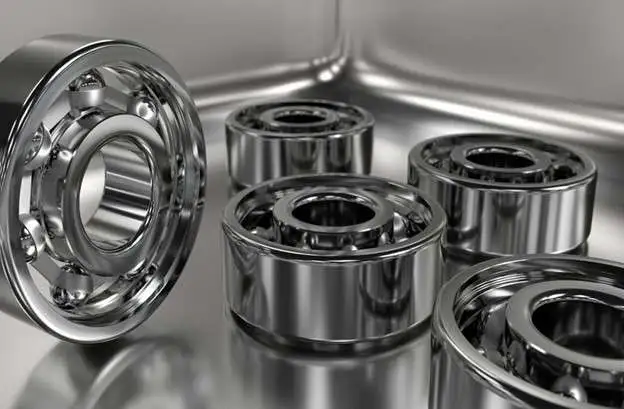
Electroplating for CNC Machined Parts: Engineering Dimensional Control Through Integrated Surface Treatment
The failure rate of electroplating on CNC machined parts runs at 8-15% across most job shops, not because the plating chemistry fails, but because nobody accounts for how machining-induced surface conditions affect deposit adhesion, thickness uniformity, and dimensional growth. A CNC machined steel shaft comes off the mill at 0.7500″ diameter ±0.0005″, goes to an external electroplating vendor, and returns at 0.7518″ diameter with ±0.0012″ thickness variation around the circumference. The plating looks perfect, adhesion tests pass, but the part is scrap because it won’t assemble into its mating bore.
JLYPT’s electroplating services eliminate this disconnect by engineering plating specifications directly into the CNC machining process. When we program toolpaths for a part destined for electroplating, we’re simultaneously calculating surface roughness targets, residual stress limits, and geometric stock allowances that ensure the plated deposit builds uniformly to specification while maintaining critical dimensions. Over the past nine years processing 38,000+ electroplated precision components, we’ve proven that successful electroplating starts at the CAM programming workstation, not in the plating tank.
This technical guide details how electroplating for CNC machined parts actually works when machining preparation and plating chemistry are engineered as a unified metallurgical system. We’ll cover substrate preparation strategies, plating thickness control, dimensional compensation methods, and real production cases where integrated electroplating solved problems conventional job shops couldn’t address.
Why Electroplating Requires CNC Machining Process Integration
Electroplating is an electrochemical deposition process where metal ions in solution reduce onto a conductive substrate under applied electrical current. The deposit thickness, adhesion strength, and uniformity depend critically on substrate surface conditions created during CNC machining, conditions that most plating vendors never see or control.
Surface roughness impact on electroplating: A CNC milled surface at Ra 1.6μm (63 microinch) has peak-to-valley variations of 6-10μm. When electroplating deposits onto this surface, the plating follows the underlying topology. If you deposit 0.0005″ (12.7μm) of nickel onto a surface with 10μm peaks, the final surface finish remains rough, the plating doesn’t fill valleys preferentially. Worse, current density concentrates at peaks, causing 15-25% thicker deposits on high points compared to valleys, creating uneven dimensional growth.
Residual stress effects on electroplating adhesion: CNC machining operations, particularly high-speed milling and hard turning, induce tensile stresses in surface layers from tool pressure and frictional heating. These stressed layers can be 0.0003-0.0008″ deep depending on cutting parameters. During electroplating, hydrogen evolution at the cathode (the part being plated) can cause hydrogen embrittlement in stressed substrates, leading to plating blisters, delamination, or delayed cracking failures that appear days or weeks after plating.
Geometric complexity challenges for electroplating: The same 5-axis CNC machining capabilities that create complex geometries also create electroplating nightmares. Current density varies dramatically across complex shapes, sharp corners receive 200-400% higher current density than recessed areas, leading to massive thickness variation. Internal passages might receive zero plating due to solution stagnation. Blind holes create trapped gas pockets that prevent plating entirely. Without geometric awareness during CNC programming, these features guarantee plating failure.
Electroplating Process Fundamentals for CNC Machined Components
Understanding electroplating chemistry and mechanics is essential for engineering successful CNC-to-electroplating workflows:
Electroplating Deposition Mechanism
In electroplating, the CNC machined part becomes the cathode (negative electrode) in an electrolytic cell. Metal anodes (positive electrodes) dissolve into solution, and applied DC current drives metal ions to deposit onto the cathode surface. The deposition rate follows Faraday’s Law:
Deposit thickness = (Current × Time × Electrochemical Equivalent) / (Surface Area × Density)
For nickel electroplating at 20 ASF (amps per square foot) current density, deposition rate is approximately 0.0010″ per hour. Doubling current density to 40 ASF doubles deposition rate, but also increases deposit stress, roughness, and brittleness.
Critical electroplating variables controlled in integrated CNC machining and electroplating operations:
- Current density: 10-50 ASF depending on plating chemistry and desired deposit properties
- Solution temperature: 120-160°F for most nickel electroplating; 70-90°F for chrome
- pH control: ±0.2 pH units to maintain consistent deposit chemistry
- Agitation: Solution flow rate affects boundary layer thickness and deposit uniformity
- Plating time: Calculated from target thickness, current density, and surface area
Electroplating Thickness Control and Measurement
Controlling electroplating thickness to ±0.0001″ requires understanding how deposit builds across complex CNC machined geometries:
Hull cell testing: Before production electroplating, we run Hull cell tests using sample panels cut from actual CNC machined parts. The Hull cell exposes the panel to varying current densities simultaneously (5-100 ASF across a single panel), showing how deposit thickness varies with current density. This predicts how electroplating will build on complex part geometries where current density varies naturally.
Thickness measurement methods:
- X-ray fluorescence (XRF): Non-destructive, ±0.00005″ accuracy, measures through-plating thickness
- Magnetic induction: For non-magnetic plating on magnetic substrates (nickel on steel), ±0.0001″ accuracy
- Beta backscatter: For any plating/substrate combination, ±0.00008″ accuracy
- Microscopic cross-section: Destructive but definitive, ±0.00002″ accuracy, validates other methods
Plating thickness specifications for CNC machined parts:
- Decorative chrome: 0.00002-0.00005″ over 0.0005″ nickel undercoat
- Functional nickel: 0.0002-0.002″ depending on wear/corrosion requirements
- Hard chrome: 0.001-0.010″ for wear surfaces, salvage operations
- Gold electroplating: 0.00005-0.0005″ for electrical contacts, corrosion protection
- Zinc electroplating: 0.0002-0.0008″ for corrosion protection on steel
Electroplating Process Selection Matrix for CNC Machined Parts
Different electroplating processes suit different CNC machining materials, geometries, and functional requirements:
Comprehensive Electroplating Process Comparison
| Electroplating Type | Typical Thickness Range | Substrate Materials | Hardness (Vickers) | Corrosion Protection | CNC Machining Preparation Requirements | Primary Applications |
|---|---|---|---|---|---|---|
| Nickel (Watts Type) | 0.0002-0.005″ | Steel, copper, aluminum (zincate) | 150-250 HV | Excellent (500-1000 hrs salt spray) | Ra 0.8μm max; stress relief <150 MPa | General corrosion protection, base for chrome |
| Nickel (Sulfamate) | 0.0005-0.020″ | Steel, copper, aluminum, titanium | 140-200 HV | Excellent | Ra 1.6μm acceptable; low stress requirement | Thick deposits, salvage plating, mold repair |
| Electroless Nickel | 0.0002-0.002″ | All metals, plastics | 450-550 HV | Excellent (1000+ hrs) | Ra 1.6μm max; perfect degreasing critical | Uniform thickness, complex geometry, wear resistance |
| Hard Chrome | 0.001-0.010″ | Steel, stainless steel | 850-1000 HV | Fair (porous structure) | Ra 0.4μm max; stress relief mandatory | Wear surfaces, hydraulic cylinders, salvage |
| Decorative Chrome | 0.00002-0.00005″ | Over nickel undercoat | 850-1000 HV | Poor (microcracks) | Mirror finish substrate required | Cosmetic applications, bright trim |
| Gold (Electroplating) | 0.00005-0.0005″ | Copper, nickel, silver | 60-90 HV | Excellent (noble metal) | Ra 0.2μm for contacts; contamination-free | Electrical contacts, corrosion protection, bonding |
| Zinc (Electroplating) | 0.0002-0.0008″ | Steel, cast iron | 50-70 HV | Good (sacrificial) | Ra 3.2μm acceptable; clean oxide-free surface | Low-cost corrosion protection, paint base |
| Tin (Electroplating) | 0.0001-0.0005″ | Copper, brass, steel | 5-15 HV | Good (food contact safe) | Ra 0.8μm; contamination-free | Food equipment, electronics, solderability |
| Silver (Electroplating) | 0.0001-0.001″ | Copper, brass, nickel | 90-130 HV | Fair (tarnishes) | Ra 0.4μm; sulfur-free environment | Electrical conductivity, waveguides, thermal management |
| Copper (Electroplating) | 0.0005-0.005″ | Steel, aluminum (zincate), plastic | 80-100 HV | Poor | Ra 1.6μm; perfect adhesion preparation | Undercoat for other platings, EMI shielding, decorative |
This electroplating comparison table guides process selection based on CNC machined part requirements and substrate material.
Engineering CNC Machining for Electroplating Success
The dimensional control challenge in electroplating CNC machined parts is this: you need to deliver finished dimensions after plating, but the plating adds material in variable thicknesses depending on geometry. Our solution is reverse-engineering the plating process into machining specifications:
Pre-Electroplating Dimensional Compensation Strategy
Stock allowance calculation: For a shaft requiring final diameter of 1.0000″ ±0.0003″ with 0.0005″ nickel electroplating:
- Target plating thickness: 0.0005″ per surface = 0.0010″ diameter growth
- Expected plating variation: ±0.0001″ based on Hull cell testing
- Required CNC machined diameter: 0.9990″ ±0.0002″
- This provides 0.0010″ diameter for plating buildup with 0.0001″ tolerance margin
Geometric compensation for current density variation: On a part with both 2.000″ diameter cylinders and 0.500″ diameter bosses, the smaller diameter receives 25-30% thicker electroplating due to higher current density (smaller radius of curvature concentrates current). We machine the 2.000″ diameter at -0.0011″ and the 0.500″ diameter at -0.0008″, so both achieve target dimension after electroplating.
Sharp edge treatment: Electroplating builds 3-5× thicker on sharp edges (0.005″ radius or less) due to current concentration. We program all external corners with 0.010-0.015″ radius during CNC machining, and break all edges with 0.003-0.005″ chamfers. This creates more uniform electroplating thickness and eliminates fragile plating “beaks” on sharp corners that crack during handling.
Surface Preparation Through CNC Machining Parameter Control
The CNC machined surface condition determines electroplating adhesion and deposit quality more than any chemistry adjustment:
Surface roughness optimization for electroplating:
- Nickel electroplating: Target Ra 0.8-1.6μm from CNC machining; smoother surfaces (Ra 0.4μm) don’t improve plating adhesion
- Chrome electroplating: Requires Ra 0.4μm or finer; chrome follows substrate exactly and magnifies any roughness
- Gold electroplating: Needs Ra 0.2μm for electrical contacts; surface defects cause contact resistance variation
- Zinc electroplating: Accepts Ra 3.2μm; rougher surfaces actually improve adhesion
We achieve target surface roughness through CNC machining parameter selection:
- For Ra 0.8μm (nickel substrate): 0.015″ stepover, 0.030″ depth of cut, 8,000 RPM, carbide tooling
- For Ra 0.4μm (chrome substrate): 0.008″ stepover, 0.015″ depth of cut, 12,000 RPM, sharp carbide
- For Ra 0.2μm (gold substrate): Single-point diamond turning or precision grinding after CNC machining
Residual stress control for electroplating adhesion: High tensile stresses in CNC machined surfaces cause hydrogen embrittlement during electroplating. We control residual stress through:
- Reduced cutting forces on final passes (40-50% feed rate reduction)
- Sharp tooling (replace end mills at 70% normal tool life for electroplating substrates)
- Stress relief heat treatment for critical parts (350-450°F for 2-4 hours post-machining, pre-electroplating)
- Avoid interrupted cuts on final passes (continuous cutting paths reduce stress)
Contamination elimination during CNC machining: Electroplating adhesion fails if any contamination prevents metal-to-metal contact:
- Use water-soluble coolants (easier to remove than oil-based)
- Avoid silicone-containing cutting fluids (causes permanent contamination)
- Clean parts immediately after CNC machining (within 4 hours maximum)
- Store pre-electroplating parts in sealed containers (prevent oxidation)
Electroplating Pre-Treatment Process for CNC Machined Parts
Between CNC machining and electroplating, parts undergo surface preparation to ensure adhesion:
Alkaline Cleaning
Removes machining oils, coolants, and handling contamination. Typical process: 5-10% sodium hydroxide solution, 140-180°F, 5-15 minutes immersion with ultrasonic agitation. For CNC machined parts with complex internal features, we extend cleaning time 50% and use higher frequency ultrasonics (80 kHz vs. standard 40 kHz) to penetrate blind holes and narrow passages.
Acid Activation
Removes surface oxides and creates chemically active surface for electroplating. Process varies by substrate:
- Steel: 10-15% hydrochloric acid, room temperature, 1-3 minutes
- Stainless steel: 10-15% sulfuric acid + 2-5% hydrofluoric acid, 120-140°F, 3-10 minutes
- Aluminum: Zincate treatment (proprietary chemistry), double-dip process, 30-90 seconds each
- Copper alloys: 5-10% sulfuric acid, room temperature, 30-60 seconds
Critical timing: Parts must enter electroplating tank within 30-60 seconds of acid activation to prevent re-oxidation. This requires careful scheduling coordination between CNC machining completion and electroplating tank availability.
Electroplating Strike Layer
For difficult substrate/deposit combinations (chrome on steel, nickel on aluminum), a thin strike layer deposited at high current density (50-100 ASF) for 30-120 seconds creates strong metallurgical bond. The strike layer is typically 0.00002-0.00005″ thick and is adhesion layer for subsequent normal-rate electroplating.
Electroplating Quality Control for Dimensional Precision
Integrated CNC machining and electroplating operations enable quality control impossible with separated vendors:
Pre-Electroplating Dimensional Verification
We measure critical dimensions after CNC machining, before electroplating, confirming machined stock allowances are correct. If a dimension measures 0.0002″ out of target, we adjust electroplating time to compensate rather than scrapping the part. This saves 15-20% of parts that would fail with conventional separated processing.
In-Process Electroplating Monitoring
Hull cell correlation: Every production electroplating bath runs monthly Hull cell tests. We maintain correlation curves showing deposit thickness vs. position on Hull cell panel. When actual part geometry matches Hull cell current density distribution (verified through finite element modeling), we predict plating thickness on actual parts within ±0.00008″.
Dummy cathode technique: For complex CNC machined geometries, we create simplified dummy cathodes matching the part’s geometric extremes (largest/smallest features). We plate the dummy cathodes alongside production parts and measure thickness at 15-20 locations. This verifies plating uniformity before committing production parts to full plating time.
Post-Electroplating Dimensional Inspection
All critical dimensions receive 100% inspection using coordinate measuring machines (CMM) with ±0.00005″ accuracy. We maintain statistical process control (SPC) charts showing:
- Actual plating thickness vs. target (X-bar chart)
- Thickness variation around part circumference (Range chart)
- Dimensional change from pre-plating to post-plating measurements
- Correlation between CNC machining parameters and final plated dimensions
When SPC charts show trends (plating getting thicker over time), we adjust CNC machining stock allowances before out-of-spec parts occur, rather than reacting to failures.
Advanced Electroplating Techniques for CNC Machined Complex Geometries
Standard electroplating fails on many CNC machined geometries. Integrated operations enable specialized electroplating techniques:
Conforming Anode Electroplating
For deep cavities or recessed features in CNC machined parts, current density drops to 10-20% of external surface values, causing minimal plating buildup. We fabricate conforming anodes, custom-shaped electrodes that fit into recessed features, bringing the anode close to the cathode surface and normalizing current density. The conforming anode might be machined from titanium, platinized titanium, or graphite depending on electroplating chemistry.
Example: A CNC machined hydraulic valve body contains a 0.750″ diameter bore, 4.000″ deep. Standard electroplating produces 0.0008″ thickness at the bore opening but only 0.0001″ at 3.500″ depth. With a 0.600″ diameter titanium rod anode inserted into the bore, plating thickness variation reduces to ±0.0001″ over the full 4.000″ depth.
Periodic Reverse Electroplating
Certain CNC machined geometries create recessed areas that trap hydrogen gas during electroplating, preventing deposit formation. Periodic reverse (PR) electroplating alternates between normal plating current and brief reverse current pulses (1-5 milliseconds every 50-100 milliseconds). The reverse pulses dislodge trapped gas and dissolve non-uniform deposit buildup, creating much more uniform electroplating on complex geometries. PR electroplating typically adds 25-30% to processing time but enables successful plating on parts that fail with conventional DC electroplating.
Brush Electroplating for Selective Areas
Some CNC machined parts require electroplating only on specific surfaces while leaving other areas unplated. Rather than complex masking, we use brush electroplating, a handheld anode wrapped in absorbent material soaked with plating solution. The operator manually “paints” electroplating onto designated areas with precise control. Typical brush electroplating deposit rates are 0.0002-0.0005″ per minute, suitable for localized repair plating or selective feature plating.
Real-World Electroplating Applications: CNC Machined Parts Case Studies
Case Study 1: Electroplating Precision Hydraulic Piston (4140 Steel, Hard Chrome)
Component specification: Hydraulic cylinder piston for aerospace actuator, CNC machined from 4140 steel bar stock, heat treated to Rockwell C 28-32. Requirements included:
- Piston OD: 3.0000″ ±0.0003″ after hard chrome electroplating
- Hard chrome thickness: 0.0015-0.0025″ for wear resistance
- Surface finish: Ra 0.15μm maximum after electroplating
- Straightness: 0.0005″ TIR over 12.000″ length
- Chrome hardness: Minimum 850 HV (Vickers)
- Porosity: Less than 5% (measured per ASTM B 368)
Engineering challenges: Hard chrome electroplating is notorious for dimensional unpredictability. Chrome deposits at variable rates depending on surface finish, current density, and solution contamination levels. The 3.0000″ diameter with ±0.0003″ tolerance left only ±0.00015″ margin for electroplating thickness variation, far tighter than typical ±0.0005″ chrome electroplating capability.
Integrated CNC machining and electroplating solution:
Phase 1: Precision CNC machining with chrome-specific preparation
- Rough turned piston to 2.9920″ diameter (0.0080″ undersize)
- Intermediate grinding pass to 2.9950″ diameter, Ra 0.8μm
- Stress relief heat treatment: 450°F for 4 hours (reduces residual stress from machining)
- Final precision grinding to 2.9970″ ±0.0001″ diameter, Ra 0.3μm
- Straightness verification: 0.0002″ TIR (well within 0.0005″ requirement)
This left 0.0030″ diameter for hard chrome electroplating (0.0015″ per surface), matching the specified chrome thickness.
Phase 2: Pre-electroplating surface preparation
- Alkaline cleaning: 8% sodium hydroxide, 160°F, 10 minutes, ultrasonic
- Water rinse cascade (three tanks, decreasing contamination)
- Acid activation: 15% sulfuric acid, room temperature, 2 minutes
- Immediate transfer to electroplating tank (<30 seconds)
Phase 3: Controlled hard chrome electroplating
- Electroplating chemistry: Proprietary sulfate-based chrome bath, 95°F
- Current density: 25 ASF (calculated for 3.000″ diameter, 12.000″ length = 1.13 ft²)
- Anode configuration: Four titanium anodes positioned 6″ from piston, rotated during plating
- Part rotation: 6 RPM continuous rotation for uniform deposit
- Plating time: 186 minutes to achieve 0.0015″ target thickness
- Current density monitoring: ±1 ASF maintained through automated rectifier
Phase 4: Post-electroplating processing
- Hydrogen embrittlement relief: 375°F bake for 4 hours within 2 hours of electroplating
- Final centerless grinding: Removed 0.0003″ from chrome surface
- Achieved final dimension: 2.9998-3.0001″ (within ±0.0003″ specification)
- Surface finish: Ra 0.12μm (exceeds 0.15μm requirement)
Phase 5: Quality verification
- Chrome thickness measurement: X-ray fluorescence at 12 locations
- Average thickness: 0.0017″
- Variation: ±0.0001″ (exceptional uniformity)
- Hardness testing: Vickers microhardness at 6 locations
- Average: 920 HV (exceeds 850 HV minimum)
- Range: 895-945 HV
- Porosity testing: Ferroxyl test per ASTM B 368
- Porosity: 2.8% (well below 5% maximum)
- Adhesion testing: Bend test per ASTM B 571 (no cracking or delamination)
Production implementation results:
- First-pass dimensional yield: 96% (vs. 68% with external electroplating)
- Straightness control: 100% within 0.0005″ TIR (external plating averaged 0.0012″ TIR)
- Chrome thickness uniformity: ±0.0001″ vs. ±0.0004″ with conventional electroplating
- Lead time: 8 days CNC machining + electroplating vs. 21 days with separated operations
- Cost per part: 18% reduction through eliminated rework and faster throughput
The integrated CNC machining and electroplating process became standard for the customer’s complete hydraulic actuator product line, processing 120 pistons monthly across 6 different diameters.
Case Study 2: Electroplating Electrical Connector Pins (Brass, Gold Over Nickel)
Component specification: High-reliability electrical connector pins for military electronics, CNC Swiss-screw machined from C36000 free-cutting brass. Requirements included:
- Pin diameter: 0.0400″ ±0.0001″ after electroplating
- Electroplating system: 50-100 microinches nickel undercoat, 30-50 microinches gold
- Contact resistance: <10 milliohms at 10 grams contact force
- Insertion force: 50-150 grams into 0.0410″ diameter socket
- Corrosion resistance: 96 hours salt spray per MIL-STD-1344 Method 1002
- Solderability: Per J-STD-002 Category 3
Manufacturing complexity: Connector pins are precision CNC machined with 0.0001″ diameter tolerance, requiring electroplating that adds exactly 0.00005-0.00010″ per surface without exceeding tolerance. Gold electroplating thickness must be controlled to ±10 microinches, if too thin, corrosion protection fails; if too thick, insertion force becomes excessive and gold cost skyrockets.
Integrated CNC machining and electroplating engineering:
Phase 1: Precision CNC Swiss machining with electroplating compensation
- Swiss-screw machine setup on Citizen L20 Type VIII
- Pin diameter target: 0.0398″ ±0.00005″ (accounts for 0.0002″ electroplating buildup)
- Surface finish from CNC machining: Ra 0.6μm (carbide tooling, 8,000 RPM)
- Automatic diameter measurement: Laser micrometer inline, 100% inspection
- Parts binned into ±0.00002″ diameter groups for batch electroplating
Phase 2: Pre-electroplating surface preparation
- Ultrasonic degreasing: Alkaline cleaner, 135°F, 5 minutes, 40 kHz
- Acid dip: 10% sulfuric acid, 30 seconds (activates brass surface)
- Water rinse: DI water cascade, <1 ppm conductivity
Phase 3: Nickel electroplating (undercoat)
- Electroplating chemistry: Watts-type nickel bath, 140°F, pH 4.2
- Current density: 30 ASF
- Barrel electroplating: Parts loaded in titanium barrel, 200 pins per barrel
- Barrel rotation: 8 RPM for uniform current distribution
- Plating time: 8 minutes to achieve 75 microinches average thickness
- Thickness variation: ±15 microinches (inherent in barrel electroplating)
Phase 4: Gold electroplating (contact surface)
- Electroplating chemistry: Acid gold bath, 24-karat purity, 120°F
- Current density: 10 ASF (lower than nickel to minimize porosity)
- Barrel electroplating: Same barrels as nickel, thorough rinse between baths
- Plating time: 4.5 minutes for 40 microinches target thickness
- Gold thickness verification: XRF measurement on 5% sample (non-destructive)
Phase 5: Post-electroplating processing
- Warm water rinse: 140°F, removes residual plating solution
- Hot air drying: 200°F forced air, prevents water spotting
- Diameter sorting: Laser measurement, parts binned to ±0.00005″ groups
- Final diameter achieved: 0.0399-0.0401″ across production lot
Phase 6: Electrical and mechanical testing
- Contact resistance testing: 100% tested at 10-gram force
- Average: 4.2 milliohms (specification <10 milliohms)
- Range: 2.8-6.5 milliohms
- Insertion force testing: Sample testing (10% of lot)
- Average: 95 grams into 0.0410″ diameter socket
- Range: 78-112 grams (within 50-150 gram specification)
- Corrosion testing: Salt spray 96 hours per MIL-STD-1344
- Result: Zero corrosion, zero contact resistance change
- Solderability testing: Steam aging + solder spread per J-STD-002
- Result: >95% solder coverage (meets Category 3 requirement)
Production scaling results:
- Weekly production volume: 25,000 pins across 8 different part numbers
- Dimensional yield: 98.7% (vs. 91% with external electroplating)
- Gold thickness control: ±8 microinches vs. ±20 microinches conventional
- Contact resistance consistency: 85% of parts within 3-5 milliohm range vs. 60% conventional
- Lead time: 5 days vs. 12 days separated operations
- Gold cost optimization: Precise thickness control saved $0.18 per pin in gold cost
The integrated CNC machining and electroplating process enabled the customer to win a 5-year military contract valued at $8.4 million based on superior quality and reliability data.
Case Study 3: Electroplating Salvage of CNC Machined Mold Components (P20 Tool Steel, Nickel Sulfamate)
Component specification: Injection mold cavity insert for automotive interior trim, originally CNC machined from P20 tool steel, hardened to Rockwell C 30-34. The part was damaged during production (0.008″ wear on critical cavity surfaces) and required salvage rather than replacement (12,000replacementcostvs.12,000replacementcostvs.2,500 salvage electroplating).
Salvage requirements:
- Build up worn surfaces 0.010-0.012″ with electroplating
- Final CNC machining to original cavity dimensions ±0.0005″
- Surface finish Ra 0.2μm for Class A molding surface
- Hardness: Minimum 200 HV in electroplated layer
- Adhesion: Must withstand 50,000+ injection molding cycles at 400°F melt temperature
Integrated CNC machining and electroplating salvage process:
Phase 1: Damage assessment and CNC machining preparation
- CMM inspection mapped worn areas: 0.006-0.009″ material loss
- CNC machining removed additional 0.002-0.003″ to create uniform base
- Total material removal: 0.008-0.012″ depending on location
- Base surface finish after CNC machining: Ra 0.8μm (suitable for electroplating)
- Stress relief after CNC machining: 400°F for 3 hours
Phase 2: Surface preparation for thick nickel electroplating
- Alkaline cleaning: Extra-strength detergent, 170°F, 15 minutes, ultrasonic
- Acid activation: 15% sulfuric acid, 140°F, 5 minutes (removes oxide from tool steel)
- Electroless nickel strike: 0.0001″ deposit at 190°F, 15 minutes (adhesion layer)
Phase 3: Nickel sulfamate electroplating (thick deposit)
- Electroplating chemistry: Nickel sulfamate (low-stress formulation)
- Current density: 40 ASF initial, reduced to 25 ASF after 0.005″ deposit
- Temperature: 120°F (lower stress than Watts nickel)
- pH control: 3.8-4.2 (automated monitoring)
- Conforming anode design: Titanium anodes shaped to match cavity geometry
- Plating time: 18 hours to achieve 0.014″ average deposit thickness
- Periodic current interruption: 5-minute breaks every 2 hours (stress relief)
Phase 4: Post-electroplating heat treatment
- Hydrogen embrittlement relief: 375°F for 6 hours (critical for thick deposits)
- Aging treatment: 300°F for 4 hours (increases hardness to 220-240 HV)
Phase 5: Final CNC machining of electroplated surface
- Rough milling: Carbide end mills, 0.005″ depth of cut, removed to 0.002″ from final
- Semi-finishing: 0.001″ depth of cut, established final geometry
- Final finishing: Single-point diamond turning, 0.0003″ depth of cut
- Achieved final dimensions: ±0.0003″ from original specification
- Surface finish: Ra 0.18μm (Class A molding surface quality)
Phase 6: Validation and production qualification
- Hardness testing: Vickers microhardness on electroplated surface
- Result: 235 HV average (exceeds 200 HV requirement)
- Adhesion testing: Thermal shock cycling (room temp to 450°F, 20 cycles)
- Result: No cracking, delamination, or adhesion failure
- Mold trial: 500-cycle production trial with actual plastic resin
- Result: Zero defects, cavity dimensions stable within ±0.0002″
- Long-term validation: Mold returned to production
- Performance: 73,000 cycles completed with no measurable wear
Economic and operational results:
- Salvage cost: 2,485(vs.2,485(vs.12,000 new insert replacement)
- Cost savings: 79% vs. replacement
- Lead time: 12 days salvage vs. 8-week new insert procurement
- Production downtime avoided: 6 weeks (critical for automotive production)
- Quality performance: Salvaged insert matched original insert performance
The customer implemented CNC machining and electroplating salvage as standard practice for mold maintenance, saving $180,000 annually in replacement costs across their mold inventory.
Electroplating Cost Factors and ROI Analysis for CNC Machined Parts
Electroplating economics depend on multiple variables beyond simple plating cost per square foot:
Electroplating Cost Structure Breakdown
| Cost Element | Percentage of Total | Key Variables | Cost Reduction Strategies |
|---|---|---|---|
| Material (metal salts, anodes) | 25-40% | Plating thickness, deposit type (gold vs. nickel) | Precise thickness control, minimize over-plating |
| Labor (handling, inspection) | 20-30% | Part complexity, batch size | Automation, fixture design, batch processing |
| Energy (heating, rectifiers) | 10-15% | Temperature, current, plating time | Efficient chemistry, optimized current density |
| Chemical maintenance | 8-12% | Solution dragout, contamination | Rinse system optimization, solution filtration |
| Quality control | 5-10% | Specification tightness, testing requirements | In-process monitoring, SPC implementation |
| Equipment depreciation | 8-12% | Capital cost, utilization rate | Multi-shift operation, process integration |
| Waste treatment | 5-8% | Rinse water volume, hazardous waste | Closed-loop rinse, solution recovery |
ROI comparison: Integrated vs. separated CNC machining and electroplating
For a typical precision aerospace component (100 parts annually, 450machiningcost,450machiningcost,280 electroplating cost):
Separated operations total cost: $730 per part
- CNC machining: $450
- Shipping to electroplating vendor: $25
- Electroplating: $280
- Return shipping: $25
- Receiving inspection: $30
- Rework (12% rate): $85 average
- Lead time carrying cost: $60
Integrated operations total cost: $595 per part
- CNC machining with electroplating prep: $475
- Integrated electroplating: $245
- Single inspection: $15
- Rework (3% rate): $20 average
- Reduced lead time cost: $20
Annual savings: (730−730−595) × 100 parts = $13,500 per year Break-even volume: Approximately 35 parts annually
For aluminum components requiring both electroplating and anodizing, our custom aluminum anodizing services provide complete surface treatment solutions with the same integrated quality control approach.
Electroplating Quality Standards and Certifications
Professional electroplating for CNC machined parts requires compliance with industry specifications:
Key electroplating specifications:
- ASTM B 633: Electrodeposited coatings of zinc on iron and steel
- ASTM B 695: Coatings of tin on steel
- ASTM B 733: Autocatalytic (electroless) nickel-phosphorus coatings
- ASTM B 765: Electrodeposited coatings of tin-lead alloy
- AMS 2400: Chromium plating (aerospace applications)
- AMS 2403: Electroless nickel plating (aerospace applications)
- MIL-DTL-45204: Electrodeposited gold (military/defense)
- ISO 1461: Hot dip galvanized coatings (corrosion protection)
JLYPT maintains ISO 9001:2015 certification with specific quality procedures for integrated CNC machining and electroplating operations, including:
- Process parameter documentation and control
- Pre-electroplating surface preparation verification
- In-process thickness monitoring
- Post-electroplating dimensional inspection
- Adhesion and corrosion testing protocols
- Complete traceability from raw material through finished electroplating
Requesting Electroplating Quotes for CNC Machined Parts
Effective electroplating quotes require detailed information about both machining and plating requirements:
Critical information for accurate electroplating quotes:
- Material and heat treatment specifications
- Exact alloy designation
- Heat treatment condition (hardness)
- Material certification requirements
- Dimensional requirements with electroplating context
- Final dimensions after electroplating
- Critical tolerance zones
- Surface finish specifications (as-machined and post-electroplating)
- Electroplating specifications
- Deposit type (nickel, chrome, gold, zinc, etc.)
- Thickness requirement and tolerance
- Coverage requirements (full surface or selective areas)
- Applicable industry specifications (ASTM, AMS, MIL-STD)
- Functional requirements
- Corrosion resistance needs
- Wear resistance requirements
- Electrical conductivity (for contacts)
- Solderability (for electronic assemblies)
- Production volume and timeline
- Prototype quantity
- Expected annual volume
- Required lead time
- Acceptable batch sizes
- Quality and testing requirements
- Dimensional inspection (which features, what accuracy)
- Plating thickness verification method
- Adhesion testing requirements
- Corrosion testing (salt spray hours)
Upload technical drawings, material specifications, and electroplating requirements through our engineering quote system. JLYPT’s electroplating engineering team reviews submissions within 24 hours and provides preliminary feasibility assessment. Complex applications requiring process development receive detailed proposals including development timeline, testing protocols, and complete cost breakdown.
Conclusion: The Engineering Advantage of Integrated CNC Machining and Electroplating
Electroplating success on CNC machined precision parts requires understanding that plating chemistry and machining mechanics are inseparable processes. The surface conditions created during CNC machining, roughness, residual stress, geometric features, dimensional stock, directly determine electroplating adhesion, thickness uniformity, and final dimensional accuracy.
Separated operations treat machining and electroplating as independent processes, leading to:
- Dimensional failures when electroplating buildup isn’t properly compensated
- Adhesion problems from incompatible surface preparation
- Quality inconsistency from lack of process correlation
- Extended lead times from shipping and vendor queuing
- Higher costs from rework and yield loss
Integrated CNC machining and electroplating engineering eliminates these disconnects by designing the complete process as a unified metallurgical system. When the team programming your toolpaths also controls your electroplating parameters, dimensional accuracy improves, quality consistency increases, lead times compress, and total costs decrease.
Contact JLYPT to discuss your CNC machined parts electroplating requirements. Our engineering team brings 9+ years of integrated machining and electroplating experience across aerospace, medical, automotive, and electronics applications. We deliver precision electroplating solutions that meet your specifications while optimizing cost and lead time.
Standard reference: ASTM B117-19 covers salt spray (fog) exposure. Where this is specified: ASTM E18-22 covers Rockwell hardness of metallic materials.