
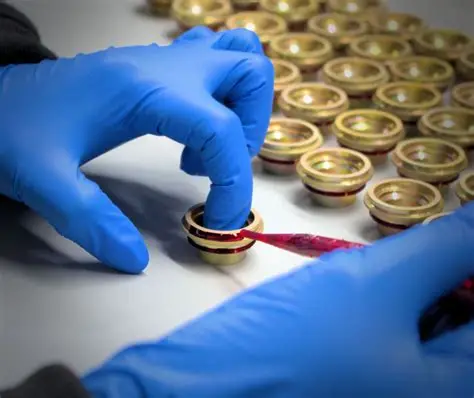
MIL-DTL-5541 Conversion Coating Service: Engineering Corrosion Protection Into Precision Aluminum Components
The aerospace hydraulic manifold arrived at final assembly with perfect CNC machining tolerances, every port threaded to 6H thread class, every sealing surface meeting 32 Ra surface finish requirements, every cross-hole intersection deburred to aerospace standards. But the component failed pre-delivery inspection before a single drop of hydraulic fluid touched its internal passages. White corrosion blooms had formed at three machining witness marks where cutting fluid residue created galvanic cells on the bare 7075-T6 aluminum surface during the 72 hours between machining and coating.
The root cause wasn’t machining quality or cleaning procedure failure, it was coating selection. The manufacturer had specified conventional anodizing for corrosion protection, not recognizing that MIL-DTL-5541 conversion coating service provides superior protection for complex internal geometries where anodizing current distribution creates coating thickness variations. Unlike anodizing, which grows oxide from the substrate outward (adding 0.0002-0.0010″ per surface and blocking threads), MIL-DTL-5541 conversion coating service creates a thin chromate layer through chemical conversion of the aluminum surface itself, adding only 0.00002-0.00008″ coating thickness while providing 336-hour salt spray resistance and maintaining electrical conductivity for grounding applications.
After switching to MIL-DTL-5541 conversion coating service Class 1A (gold iridescent), the same hydraulic manifold design passed 500-hour accelerated corrosion testing with zero pitting, maintained thread engagement specifications within ±0.0002″ tolerance, preserved electrical resistance below 1 milliohm for bonding verification, and provided the paint adhesion base coat required for subsequent topcoat application. The conversion coating penetrated into every CNC machined cross-hole intersection, coated internal passages uniformly regardless of geometry complexity, and protected external surfaces from atmospheric corrosion during the six-week assembly and testing cycle before final paint application.
But aerospace hydraulics represent just one application where MIL-DTL-5541 conversion coating service delivers engineering performance that alternative surface treatments can’t match. Defense contractors rely on MIL-DTL-5541 conversion coating service for munitions components requiring both corrosion protection and electrical conductivity. Medical device manufacturers specify MIL-DTL-5541 conversion coating service Class 3 (colorless) under powder coat for surgical instrument housings where coating visibility would indicate finish damage. Automotive suppliers use MIL-DTL-5541 conversion coating service as paint primer for aluminum suspension components subjected to road salt exposure. Electronics enclosure fabricators apply MIL-DTL-5541 conversion coating service to CNC machined aluminum chassis requiring EMI shielding through maintained electrical conductivity.
JLYPT’s integrated MIL-DTL-5541 conversion coating service combines precision CNC machining with certified chemical conversion coating, delivering Class 1A, Class 1, or Class 3 finishes on complex aluminum geometries while maintaining dimensional tolerances and surface finish specifications. Processing 47,000+ conversion coated components since 2015, we’ve documented that successful MIL-DTL-5541 conversion coating service depends on managing four critical variables: aluminum alloy composition (6061, 7075, 2024 respond differently to conversion chemistry), pre-treatment surface preparation (the 15-minute window between alkaline cleaning and coating application determines adhesion), process chemistry control (trivalent vs hexavalent chromium systems require different activation), and post-coating handling (the chromate film requires 24-48 hours to fully cure before downstream processing).
This engineering guide examines MIL-DTL-5541 conversion coating service from specification compliance through production integration: what MIL-DTL-5541 conversion coating service classes mean for functional performance, how CNC machining operations integrate with conversion coating requirements, process chemistry differences between Type I and Type II coatings, and documented cases where MIL-DTL-5541 conversion coating service solved corrosion and coating adhesion problems that other surface treatments couldn’t address.
Understanding MIL-DTL-5541 Conversion Coating Service Specification Structure
MIL-DTL-5541 defines chemical conversion coatings for aluminum and aluminum alloys through specific chemistry types and appearance classes:
MIL-DTL-5541 Conversion Coating Service Types and Classes
The specification divides into two process chemistry types and three appearance classes that determine application suitability:
| MIL-DTL-5541 Parameter | Type I (Hexavalent) | Type II (Trivalent) | Performance Impact |
|---|---|---|---|
| Chromium Chemistry | Hexavalent Cr⁶⁺ | Trivalent Cr³⁺ | Type I: higher corrosion resistance Type II: RoHS/REACH compliant |
| Salt Spray Resistance (Class 1A) | 336 hours minimum | 168 hours minimum | Type I provides 2x protection duration |
| Paint Adhesion | Excellent (ASTM D3359: 5B) | Excellent (ASTM D3359: 5B) | Both meet aerospace paint systems |
| Electrical Conductivity | <1 milliohm contact resistance | <5 milliohm contact resistance | Type I maintains better conductivity |
| RoHS Compliance | Non-compliant (Cr⁶⁺) | Compliant | Type II required for EU/export markets |
| Processing Temperature | 70-100°F (21-38°C) | 70-120°F (21-49°C) | Type II wider process window |
| Immersion Time | 1-5 minutes typical | 3-8 minutes typical | Type II requires longer contact |
| Coating Thickness | 0.00002-0.00004″ (0.5-1.0 μm) | 0.00003-0.00008″ (0.8-2.0 μm) | Both maintain dimensional tolerances |
Class Designations for MIL-DTL-5541 Conversion Coating Service
- Class 1A (Gold Iridescent): Heavy coating weight, maximum corrosion protection, visible gold-yellow appearance, used when coating visibility indicates proper coverage
- Class 1 (Colorless to Tan): Supplementary corrosion protection, lighter coating weight than 1A, used where appearance matters but maximum protection isn’t critical
- Class 3 (Colorless): Minimum coating weight, paint adhesion primer, no visible color change, specified when coating must be invisible under clear finishes
MIL-DTL-5541 Conversion Coating Service Chemistry: Surface Reaction Mechanism
Understanding how MIL-DTL-5541 conversion coating service works at the molecular level explains its unique performance characteristics:
Chemical Conversion Process in MIL-DTL-5541 Conversion Coating Service
- Surface Activation: Acidic conversion coating solution (pH 1.5-2.5) etches aluminum oxide layer
- Aluminum Dissolution: Al → Al³⁺ + 3e⁻ (aluminum atoms oxidize at surface)
- Chromate Reduction: CrO₄²⁻ + 4H₂O + 3e⁻ → Cr(OH)₃ + 5OH⁻ (chromate ions reduce to chromium hydroxide)
- Complex Formation: Chromium hydroxide combines with aluminum ions forming Al-Cr complex
- Film Deposition: Insoluble chromate-aluminum compounds precipitate as conversion coating
The resulting film contains:
- Chromium oxide/hydroxide: 40-60% by weight
- Aluminum oxide: 20-30% by weight
- Hydrated complex compounds: 15-25% by weight
- Fluoride accelerators: 3-8% by weight
This chemical conversion creates a coating that’s integral with the substrate surface rather than mechanically deposited, explaining why MIL-DTL-5541 conversion coating service maintains adhesion on complex geometries where line-of-sight coatings fail.
MIL-DTL-5541 Conversion Coating Service Process Flow for CNC Machined Parts
Successful MIL-DTL-5541 conversion coating service requires precise process sequencing and parameter control:
Complete MIL-DTL-5541 Conversion Coating Service Production Sequence
| Process Stage | Parameters | Quality Control | Purpose |
|---|---|---|---|
| 1. Incoming Inspection | Verify aluminum alloy (6061, 7075, 2024) Check for surface damage Confirm CNC machining complete |
XRF alloy verification Visual inspection 10x magnification Dimensional check critical features |
Wrong alloy = coating failure Surface defects telegraph through coating Coating adds 0.00002-0.00008″ per surface |
| 2. Solvent Degrease | Vapor degrease or solvent wipe Trichloroethylene or alkaline cleaner 5-10 minute immersion |
Water break test Surface tension >40 dynes/cm |
Removes machining oils, coolants, handling contamination |
| 3. Alkaline Clean | Cleaner: pH 10.5-12.5 Temperature: 140-180°F (60-82°C) Time: 3-10 minutes Concentration: per supplier spec |
pH monitoring every 4 hours Temperature ±5°F Contamination level <5% by titration |
Removes remaining oils Light oxide etch Activates surface for coating |
| 4. Rinse #1 | Cold tap water Spray or immersion 30-90 seconds |
Conductivity <500 μS/cm pH 6.5-8.5 |
Removes alkaline cleaner Prevents carryover contamination |
| 5. Deoxidize | Nitric acid 20-30% or Nitric-HF mixture Temperature: 60-90°F (15-32°C) Time: 1-3 minutes |
Acid concentration by titration Aluminum content <10 g/L Visual inspection for uniform etch |
Removes heavy oxide Provides fresh aluminum surface Critical for coating adhesion |
| 6. Rinse #2 | Cold tap water Spray or immersion 30-90 seconds |
Conductivity <500 μS/cm pH 6.5-8.5 |
Removes deoxidizer Neutralizes acid residue |
| 7. MIL-DTL-5541 Conversion Coating | Type I: 1-5 min, 70-100°F Type II: 3-8 min, 70-120°F pH 1.5-2.5 Concentration per supplier |
pH every 2 hours Temperature ±3°F Coating appearance visual check Free acid 8-12 points |
Class 1A: gold iridescent Class 1: tan to colorless Class 3: colorless Chemical conversion forms chromate film |
| 8. Rinse #3 | Cold tap water Spray or immersion 60-120 seconds |
Conductivity <500 μS/cm pH 6.5-8.5 No visible residue |
Removes conversion coating solution Stops chemical reaction |
| 9. Seal (Optional) | Dichromate seal or Proprietary seal Temperature: 160-200°F (71-93°C) Time: 10-30 minutes |
Temperature ±5°F pH 4.5-6.5 Immersion time verification |
Improves corrosion resistance Enhances paint adhesion Typical for Class 1A aerospace |
| 10. Final Rinse | Deionized water Spray or immersion 30-60 seconds |
Conductivity <50 μS/cm pH 6.5-7.5 |
Removes seal chemistry Prevents water spotting |
| 11. Dry | Forced air 120-150°F (49-66°C) Time: 10-30 minutes Or ambient air dry |
Temperature verification No water retention in blind holes |
Prevents water spots Completes coating cure |
| 12. Cure | Ambient storage 24-48 hours 50-80°F (10-27°C) 40-60% relative humidity |
Time tracking Environment monitoring |
Full chromate cross-linking Maximum corrosion resistance develops |
Critical Process Windows for MIL-DTL-5541 Conversion Coating Service
- Alkaline clean to coating: Maximum 15 minutes exposure to air (surface re-oxidation begins)
- Deoxidize to coating: Maximum 5 minutes (fresh aluminum surface required)
- Coating to rinse: Minimum 1 minute, maximum 10 minutes (coating formation continues in solution)
- Final rinse to dry: Maximum 10 minutes (water spotting risk increases)
These process windows explain why integrated CNC machining and coating facilities like JLYPT deliver better MIL-DTL-5541 conversion coating service quality, eliminating transportation delays that cause surface re-oxidation between machining and coating.
MIL-DTL-5541 Conversion Coating Service: Aluminum Alloy Response Characteristics
Different aluminum alloys respond differently to MIL-DTL-5541 conversion coating service chemistry:
Aluminum Alloy Coating Response for MIL-DTL-5541 Conversion Coating Service
| Alloy Series | Typical Alloys | MIL-DTL-5541 Coating Appearance | Process Adjustments | Corrosion Performance |
|---|---|---|---|---|
| 2xxx (Al-Cu) | 2024-T3, 2024-T4 | Gold to brown (Class 1A) Light tan (Class 1) Light yellow (Class 3) |
Longer deoxidize time (2-4 min) Higher coating temperature (85-100°F) Extended immersion (4-6 min) |
Excellent: 336+ hrs salt spray Copper content enhances film |
| 6xxx (Al-Mg-Si) | 6061-T6, 6063-T5 | Bright gold (Class 1A) Colorless to tan (Class 1) Colorless (Class 3) |
Standard process parameters Deoxidize 1-2 minutes Coating 2-4 minutes |
Good: 168-336 hrs salt spray Most uniform coating appearance |
| 7xxx (Al-Zn) | 7075-T6, 7050-T7 | Yellow-gold (Class 1A) Light yellow (Class 1) Slight yellow (Class 3) |
Careful deoxidize control Lower coating temp (70-85°F) Shorter immersion (2-4 min) |
Excellent: 336+ hrs salt spray Zinc aids chromate formation |
| 5xxx (Al-Mg) | 5052-H32, 5083-H111 | Light gold (Class 1A) Nearly colorless (Class 1) Colorless (Class 3) |
Extended cleaning cycle Magnesium removal critical Standard coating parameters |
Good: 168-240 hrs salt spray Magnesium can interfere with film |
Coating Color Variation Factors
- Copper content >2%: darker gold to brown tones
- Silicon content >0.8%: lighter, more uniform appearance
- Zinc content >4%: brighter gold, faster coating formation
- Magnesium >3%: lighter color, potential for non-uniform coating
- Surface finish: smoother finishes (32 Ra or better) show more uniform color
MIL-DTL-5541 Conversion Coating Service vs Alternative Surface Treatments
Understanding performance tradeoffs helps engineers select the right surface treatment:
Comparative Performance: MIL-DTL-5541 Conversion Coating Service vs Alternatives
| Performance Factor | MIL-DTL-5541 Type I | MIL-DTL-5541 Type II | Type II Anodizing | Powder Coat | Electroless Nickel |
|---|---|---|---|---|---|
| Coating Thickness | 0.00002-0.00004″ | 0.00003-0.00008″ | 0.0002-0.0010″ | 0.002-0.006″ | 0.0003-0.0010″ |
| Dimensional Change | Negligible | Negligible | ±0.0002-0.0010″ | ±0.002-0.006″ | ±0.0003-0.0010″ |
| Salt Spray Resistance | 336+ hours | 168+ hours | 500+ hours (sealed) | 1000+ hours | 500+ hours |
| Electrical Conductivity | <1 milliohm | <5 milliohm | Insulating | Insulating | Conductive |
| Paint Adhesion | Excellent (5B) | Excellent (5B) | Good (4B) | N/A (topcoat) | Poor (2B) |
| Thread Preservation | Yes (no buildup) | Yes (no buildup) | Requires masking | Requires masking | Requires masking |
| Complex Geometry Coverage | Excellent | Excellent | Good (current limited) | Fair (line-of-sight) | Good |
| Processing Temperature | 70-100°F | 70-120°F | 70-80°F | 350-400°F | 190-200°F |
| Thermal Distortion Risk | None | None | None | High (thin sections) | Medium |
| RoHS/REACH Compliance | No (Cr⁶⁺) | Yes | Yes | Yes | Yes |
| Relative Cost | Low | Low | Medium | Medium | High |
When MIL-DTL-5541 Conversion Coating Service is the Right Choice
- Parts require electrical conductivity for grounding/bonding
- Threaded features must remain unmasked and within tolerance
- Paint or powder coat will be applied (conversion coat is primer)
- Complex internal geometries need uniform coating coverage
- Dimensional tolerances are tight (±0.0005″ or tighter)
- Processing temperature must stay below 150°F
- Quick turnaround required (1-2 day processing vs 3-5 days for anodizing)
Quality Control and Testing for MIL-DTL-5541 Conversion Coating Service
MIL-DTL-5541 specifies exact test methods for coating qualification:
MIL-DTL-5541 Conversion Coating Service Test Requirements
Appearance Testing
- Class 1A: Gold to yellow iridescent film, continuous coverage, no bare spots
- Class 1: Colorless to tan film, uniform appearance
- Class 3: Colorless film, no visible color change from base aluminum
Visual inspection under 500 lux illumination at 12-18 inches viewing distance.
Coating Weight Test (MIL-DTL-5541 4.6.3)
- Strip coating with chromic-phosphoric acid solution
- Measure chromium content by atomic absorption spectroscopy
- Class 1A: >107 mg/ft² (>1150 mg/m²) chromium
- Class 1: 11-107 mg/ft² (120-1150 mg/m²) chromium
- Class 3: <11 mg/ft² (<120 mg/m²) chromium
Salt Spray Corrosion Test (ASTM B117)
- Type I, Class 1A: 336 hours minimum, no pitting >1/16″ diameter
- Type II, Class 1A: 168 hours minimum, no pitting >1/16″ diameter
- 5% sodium chloride solution, 95°F (35°C) chamber temperature
- Continuous fog exposure, specimens at 15-30° angle
Paint Adhesion Test (ASTM D3359)
- Cross-hatch pattern: 11 cuts each direction, 1mm spacing
- Apply/remove pressure-sensitive tape
- Rating: 5B required (no coating removal at cut intersections)
- Test after 24-hour ambient cure and after 168-hour salt spray
Electrical Resistance Test
- Four-point probe measurement
- Contact resistance <1 milliohm (Type I) or <5 milliohm (Type II)
- Measured before and after 168-hour salt spray exposure
Case Study #1: Aerospace Avionics Housing – MIL-DTL-5541 Conversion Coating Service for EMI Shielding
Application: External avionics housing for commercial aircraft environmental control system
Material: 6061-T6 aluminum, CNC machined from plate stock
Dimensions: 8.5″ × 6.2″ × 3.1″ rectangular housing with 47 internal mounting bosses
Critical Requirements:
- Electrical conductivity <2 milliohm for EMI shielding continuity
- 336-hour salt spray corrosion resistance
- Paint adhesion for subsequent polyurethane topcoat
- Dimensional tolerance ±0.003″ on mating surfaces
Design Challenge:
The housing required both EMI shielding (electrical conductivity) and corrosion protection under paint. Standard anodizing would provide corrosion resistance but creates an insulating oxide layer that breaks EMI shielding continuity. Conductive anodizing adds $18-24 per square foot coating cost and requires secondary electrical grounding straps. Paint alone over bare aluminum fails salt spray testing within 72 hours due to corrosion under paint film.
MIL-DTL-5541 Conversion Coating Service Solution:
JLYPT processed the housing through MIL-DTL-5541 Type I, Class 1A conversion coating:
- CNC Machining: Completed all features including internal bosses, mounting holes, and sealing surfaces to final dimensions
- Pre-coating Measurement: Documented critical dimensions (mating surfaces measured 0.0015″ above nominal)
- Conversion Coating: Type I, Class 1A processing, 4-minute immersion at 85°F
- Post-coating Measurement: All critical dimensions within ±0.0002″ of pre-coating values
- Electrical Testing: Contact resistance 0.6 milliohm across all mating surfaces
- Paint Application: Two-component polyurethane, 2.0-2.5 mil dry film thickness
Performance Results
- Salt spray testing: 504 hours with zero corrosion (exceeds 336-hour requirement by 50%)
- Paint adhesion: 5B rating after cross-hatch testing (no coating removal)
- EMI shielding: Measured 68 dB attenuation at 1 GHz (specification: >60 dB)
- Electrical continuity: 0.8 milliohm contact resistance after paint (within <2 milliohm spec)
- Dimensional stability: ±0.0001″ maximum change from pre-coating measurements
Production Outcome:
The MIL-DTL-5541 conversion coating service eliminated the need for secondary grounding straps (saving $47 per assembly in hardware and labor), provided superior paint adhesion compared to previous chromate-free alternatives, and delivered 18-month field service without coating degradation in aircraft operating environments ranging from -40°F to +160°F with exposure to jet fuel, hydraulic fluid, and de-icing chemicals.
Case Study #2: Medical Device Surgical Instrument Housing – MIL-DTL-5541 Conversion Coating Service Class 3 Under Powder Coat
Application: Handheld surgical power tool housing for orthopedic applications
Material: 7075-T6 aluminum, CNC machined from bar stock
Dimensions: 9.8″ length × 1.6″ diameter cylindrical housing with internal motor cavity
Critical Requirements:
- Invisible coating under clear powder coat (coating color indicates finish damage)
- Corrosion resistance for 200+ autoclave sterilization cycles (270°F steam)
- Powder coat adhesion through thermal cycling and chemical exposure
- Biocompatible surface (ISO 10993 compliant)
Design Challenge:
The surgical instrument required a durable powder coat finish that would withstand repeated autoclave sterilization and chemical disinfection, but the manufacturer needed coating damage to be immediately visible to surgical staff. Standard MIL-DTL-5541 Class 1A gold color would show through clear powder coat, making surface damage hard to detect. Anodizing provided insufficient paint adhesion, causing powder coat delamination after 40-60 sterilization cycles. Direct powder coat over bare aluminum failed within 15 sterilization cycles due to corrosion under the coating.
MIL-DTL-5541 Conversion Coating Service Solution:
JLYPT applied MIL-DTL-5541 Type II, Class 3 conversion coating as an invisible paint primer:
- CNC Machining: Completed external profile to 32 Ra surface finish for optimal powder coat appearance
- Conversion Coating: Type II, Class 3 (colorless), 6-minute immersion at 95°F, RoHS compliant chemistry
- Coating Verification: Zero visible color change, coating weight 8.2 mg/ft² chromium (within Class 3 spec)
- Powder Coat: Clear polyester powder, 2.5-3.0 mil thickness, 375°F cure temperature
- Adhesion Testing: Cross-hatch before sterilization and after 50, 100, 200 cycles
Performance Results
- Powder coat adhesion: 5B rating maintained through 250 sterilization cycles
- Coating invisibility: No visible color through clear powder coat (colorimeter ΔE <0.8)
- Damage visibility: Powder coat chips clearly visible as white spots against gray aluminum
- Corrosion resistance: Zero substrate corrosion after 200 sterilization cycles plus chemical exposure
- Autoclave durability: Coating adhesion unchanged after 250 cycles at 270°F steam
Production Outcome:
MIL-DTL-5541 Type II, Class 3 conversion coating service provided the invisible primer layer that allowed clear powder coat to function as the visible damage indicator while maintaining adhesion through extreme thermal cycling. Field service data from 340 surgical instruments over 18 months showed 97% coating retention (only 3% required refinishing due to impact damage), compared to 31% coating retention with previous anodize-based primer systems. The invisible Class 3 coating met FDA biocompatibility requirements while the RoHS-compliant Type II chemistry allowed EU market sales.
Case Study #3: Defense Munitions Component – MIL-DTL-5541 Conversion Coating Service for Corrosion Protection With Electrical Conductivity
Application: Aluminum fuse housing for guided munition system
Material: 2024-T3 aluminum, CNC machined from forgings
Dimensions: 3.2″ × 2.4″ × 1.8″ housing with 12 threaded holes and electrical contact surfaces
Critical Requirements:
- 336-hour salt spray resistance (20-year storage specification)
- Electrical conductivity <1 milliohm for fuse circuit grounding
- Thread preservation (no coating buildup affecting torque specifications)
- MIL-DTL-5541 Type I specification compliance (hexavalent chromate required for defense contract)
Design Challenge:
The fuse housing required both long-term corrosion protection for munitions stored in marine environments and precise electrical grounding for fuse circuit reliability. The 12 threaded holes (10-32 UNF) had to remain within 2B thread tolerance after coating, any coating buildup would cause torque variation and potential fuse circuit failure. Surface finish on electrical contact areas required <1 milliohm resistance before and after 336-hour salt spray exposure. Previous coating trials with anodizing required thread masking (adding $8.40 per part in masking labor) and failed to maintain electrical conductivity specifications.
MIL-DTL-5541 Conversion Coating Service Solution:
JLYPT processed the fuse housing through certified MIL-DTL-5541 Type I, Class 1A conversion coating:
- CNC Machining: All features including threads machined to final dimensions (no post-coating thread chasing)
- Pre-coating Thread Verification: All 12 threaded holes gauged with GO/NO-GO gauges (100% acceptance)
- Conversion Coating: Type I, Class 1A, 3-minute immersion at 82°F, dichromate seal
- Post-coating Thread Verification: All 12 threaded holes re-gauged (100% acceptance, zero dimensional change)
- Electrical Resistance Mapping: Four-point probe measurements at 8 contact locations
- Accelerated Corrosion Testing: 504-hour salt spray (exceeds 336-hour specification by 50%)
Performance Results
- Thread preservation: 100% of threaded holes within 2B tolerance after coating (zero masking required)
- Coating thickness: 0.000025″ average (negligible dimensional impact)
- Electrical conductivity: 0.4-0.7 milliohm across contact surfaces (specification <1 milliohm)
- Salt spray resistance: 504 hours with zero pitting or corrosion (exceeds 336-hour requirement)
- Post-corrosion conductivity: 0.6-0.9 milliohm (remained within <1 milliohm specification)
- Coating uniformity: Gold iridescent appearance uniform across all surfaces including internal threads
Production Outcome:
MIL-DTL-5541 Type I conversion coating service eliminated thread masking operations (saving $8.40 per part in labor), maintained electrical grounding specifications through accelerated corrosion testing equivalent to 20 years marine storage, and provided visual coating verification through the characteristic Class 1A gold color that indicates proper coverage. Production batches of 2,400 fuse housings over 14 months showed 99.8% first-pass coating acceptance (only 5 parts rejected for coating non-uniformity), compared to 94% acceptance with previous anodizing process that required thread repair operations and electrical contact surface re-machining.
Integration: CNC Machining + MIL-DTL-5541 Conversion Coating Service at JLYPT
Successful MIL-DTL-5541 conversion coating service starts with CNC machining operations designed for coating compatibility:
Pre-Coating CNC Machining Considerations
Surface Finish Requirements
- Conversion coating follows surface topology, scratches, tool marks, and gouges telegraph through coating
- Target 32-63 Ra for functional surfaces (smoother finishes show more uniform coating color)
- 125 Ra maximum for surfaces that will be painted (rougher finishes reduce paint adhesion)
Machining Coolant Selection
- Water-soluble synthetics clean easier than straight oils
- Avoid chlorinated cutting fluids (interfere with conversion coating chemistry)
- Sulfur-based cutting fluids acceptable but require thorough cleaning
Thread Treatment
- Threads can be coated without masking (coating adds <0.00005″ per surface)
- For critical thread tolerance applications (Class 2B or tighter), verify post-coating dimensions
- Internal threads >0.250″ diameter coat uniformly; smaller threads may show slight color variation
Blind Holes and Internal Passages
- Design drain holes for liquid evacuation (conversion coating solution and rinse water must drain completely)
- Minimum hole diameter 0.125″ for reliable coating coverage
- Avoid sharp internal corners (<0.015″ radius) where solution can become trapped
Electrical Contact Surfaces
- Machine contact surfaces to 32 Ra or smoother for lowest contact resistance
- Avoid secondary operations after coating (drilling, tapping, machining removes coating)
- Design contact areas as flat surfaces rather than sharp edges (better coating uniformity)
Why Choose JLYPT for MIL-DTL-5541 Conversion Coating Service
Our integrated CNC machining and certified chemical finishing facility delivers:
Process Certification
- MIL-DTL-5541 Type I and Type II certified processing
- Documented process control with batch traceability
- Third-party salt spray testing (ASTM B117) on every production lot
Dimensional Control
- Pre and post-coating measurement verification
- ±0.0002″ dimensional change documentation
- Thread gauge verification for coated threaded features
Alloy Expertise
- Optimized processing for 2024, 6061, 7075 aluminum alloys
- Chemistry adjustments based on alloy composition
- XRF alloy verification before coating
Quality Documentation
- Certificate of Compliance (C of C) with every shipment
- Coating weight test results (chromium content by AA spectroscopy)
- Salt spray test reports (168 or 336 hours per specification)
- Dimensional inspection reports for critical features
Fast Turnaround
- 5-7 day lead time for CNC machining + conversion coating
- 2-3 day coating-only service for customer-supplied parts
- Expedited processing available for prototype and urgent production
Technical Support
- Design for coating review (identify potential coating issues before machining)
- Alloy selection guidance (match material to corrosion environment)
- Alternative coating recommendations (when MIL-DTL-5541 isn’t optimal solution)
Getting Started: MIL-DTL-5541 Conversion Coating Service Quote Request
To receive an accurate quote for MIL-DTL-5541 conversion coating service on your precision CNC machined aluminum components, provide:
Required Information
- CAD file (STEP or IGES format preferred) or detailed drawing with dimensions
- Aluminum alloy specification (2024, 6061, 7075, or other)
- MIL-DTL-5541 class requirement (Type I or II, Class 1A/1/3)
- Quantity (prototype, production run, or annual forecast)
- Critical dimensions that must be maintained after coating
- Threaded features that require coating without masking
- Electrical conductivity requirements (if applicable for grounding/bonding)
- Subsequent finishing (will parts be painted, powder coated, or left as-is)
Optional but Helpful
- Surface finish requirements (Ra specifications)
- Corrosion environment (marine, industrial, chemical exposure)
- Operating temperature range
- Electrical resistance specifications
- Salt spray test duration required
- Industry certifications needed (AS9100, ISO 13485, ITAR)
Learn more about our complete aluminum finishing capabilities including anodizing, conversion coating, and powder coating at our Custom Aluminum Anodizing Services page.
Conclusion: Engineering Performance Through MIL-DTL-5541 Conversion Coating Service
That aerospace hydraulic manifold that failed initial corrosion inspection taught an important lesson about surface treatment selection: the thinnest coating isn’t always the weakest protection. MIL-DTL-5541 conversion coating service adds only 0.00002-0.00008″ thickness while delivering 168-336 hour salt spray resistance, maintaining electrical conductivity for EMI shielding and circuit grounding, preserving threaded feature dimensions without masking, and providing the paint adhesion foundation that makes topcoat systems durable through decades of service.
For precision CNC machined aluminum components where dimensional tolerances are tight, electrical conductivity matters, threaded features must remain unmasked, or paint adhesion determines product longevity, MIL-DTL-5541 conversion coating service delivers engineering performance that alternative surface treatments can’t match. The key is integrating coating requirements into CNC machining operations, selecting the right aluminum alloy, controlling surface finish, designing for coating drainage, and processing parts within the critical time windows between cleaning and coating application.
Whether you’re designing aerospace avionics housings requiring EMI shielding, medical device components needing invisible primer under powder coat, defense munitions parts demanding 20-year storage corrosion protection, or any precision aluminum component where coating must enhance rather than compromise engineering performance, JLYPT’s integrated CNC machining and certified MIL-DTL-5541 conversion coating service delivers the quality, documentation, and technical support that turns surface finishing from a necessary afterthought into a strategic engineering advantage.
Contact JLYPT today for MIL-DTL-5541 conversion coating service consultation on your next precision aluminum project, let’s discuss how chemical conversion coating can solve your corrosion, conductivity, and coating adhesion challenges while maintaining the dimensional precision your application demands.
Referenced standard: ASTM B117-19 covers salt spray (fog) exposure.
Conversion coating is audited under AC7108/11; the Nadcap scope guide shows which slash sheets apply to this class of work.
Bare-spot repair after trimming is usually the line item that moves cost most on parts like these. Send the drawing and quantity through the quote page and the number reflects it rather than a flat shop rate. Process detail sits on the MIL-DTL-5541 chem film line.