The Unassailable Edge: A Deep Dive into the Benefits of Industrial Automation for Precision CNC Machining
Introduction: Beyond the Spindle – Why Automation is the New Foundation of Manufacturing Competitiveness
In the high-stakes arena of precision manufacturing, the conversation has decisively shifted. It is no longer solely about the capabilities of a 5-axis machining center, the tolerances achievable on a Swiss-type lathe, or the surface finish from a precision grinding operation. While these remain critical technical pillars, the defining competitive frontier for modern machine shops and OEMs is now systemic efficiency. This is where the strategic implementation of industrial automation transitions from a discretionary upgrade to an existential imperative. For a precision engineering partner like JLYPT, where we live and breathe the complexities of machining aerospace-grade titanium, medical-grade stainless steel, and high-performance engineering plastics, we witness firsthand how automation is the force multiplier that transforms isolated technical excellence into holistic, resilient, and profitable production.
The benefits of industrial automation are often discussed in broad strokes—increased productivity, reduced costs. However, for the precision CNC machining sector, these benefits manifest in uniquely profound and technical ways. Automation directly addresses the most persistent and costly inefficiencies: machine idle time during changeovers, variability in manual handling, the scarcity of skilled labor for repetitive tasks, and the inability to capture and act on production data. This article moves beyond generic praise to provide a detailed, technical, and economic analysis of how embracing the benefits of industrial automation—from robotic tending and automated inspection to integrated pallet systems and digital process control—creates an unassailable competitive edge in today’s global market.
Section 1: The Multifaceted Value Proposition – Deconstructing the Core Benefits
The advantages of automating a precision machining workflow are interconnected, creating a compound positive effect on the entire operation.
1.1 The Productivity Quantum Leap: Maximizing Capital Asset Utilization
The most immediate and calculable of the benefits of industrial automation is the dramatic increase in Overall Equipment Effectiveness (OEE). A CNC machine is a high-value capital asset. Its value is realized only when the spindle is cutting material.
-
Elimination of Idle Time: Manual loading, unloading, deburring, and inspection create significant non-cut time. A robotic tending system, synchronized with the machine’s controller via M-codes and I/O signals, can perform these tasks in seconds, often while the machine is in cycle for another part. This can reduce load/unload time by over 70%.
-
Lights-Out Manufacturing: This is the ultimate expression of asset utilization. Automated cells equipped with pallet pools or Automated Guided Vehicles (AGVs) can run unmanned for extended periods—second and third shifts, weekends. This effectively multiplies the output potential of a single machine without proportional labor cost increases. For a shop running a high-volume part, this can mean the difference between fulfilling and losing a major contract.
-
Predictable, Optimized Cycle Times: Human operators have natural variance. Automation provides relentless consistency. This allows for precise production scheduling, reliable lead time quotes, and the identification of true machining cycle bottlenecks for further process optimization.
1.2 The Quality Revolution: From Inspection to In-Process Assurance
Precision machining is defined by tolerances—±0.005mm, ±0.0002″. Automation shifts quality control from a reactive, post-process inspection to a proactive, integrated assurance.
-
Elimination of Human Error in Handling: Manual loading can introduce errors—a part not seated fully against the kinematic coupling or dowel pin locators, swarf left in a critical counterbore. Robotic systems, using force-torque sensors and precision-machined gripper jaws, place components with repeatable accuracy, eliminating this source of non-conformance.
-
Integrated Metrology: Advanced automation cells incorporate in-process probing (e.g., Renishaw probes) and machine vision systems. A probe can automatically check critical dimensions after a machining operation, compensating for tool wear in real-time by updating tool offsets in the CNC. Vision systems can perform 100% inspection for surface defects, feature presence, or GD&T characteristics like true position, diverting rejects instantly.
-
Traceability and Data Integrity: Every automated action can be logged. This creates a complete digital pedigree for each part: which raw material batch it came from, the exact toolpaths and offsets used, the results of every in-process check. This data is invaluable for First Article Inspection (FAI) documentation, regulatory compliance (e.g., ISO 13485 for medical devices), and root-cause analysis.
1.3 The Strategic Human Factor: Upskilling Labor and Enhancing Safety
Contrary to the outdated view of automation as a simple labor replacement, its most significant benefits of industrial automation regarding personnel are strategic elevation and risk mitigation.
-
Upskilling the Workforce: Automation liberates highly skilled machinists and CNC programmers from monotonous, repetitive tasks. They are redeployed to higher-value roles: programming and simulating complex automated cells, analyzing production data for continuous improvement, managing multiple automated work cells, and performing advanced setup and maintenance. This improves job satisfaction and retains critical institutional knowledge.
-
Creating a Safer Work Environment: CNC machining environments present hazards: heavy parts, sharp edges, moving machinery, and exposure to coolants. Automating the handling of raw billets and finished parts removes personnel from these direct physical risks. Collaborative robots (cobots) can work alongside humans for tasks like final assembly, but they do so with built-in force-limiting safety features.
-
Mitigating the Skilled Labor Shortage: The manufacturing sector globally faces a shortage of skilled manual machine tenders. Automation allows a company to scale production and maintain quality without being bottlenecked by the availability of a specific manual skill set.
Table 1: Comparative Analysis – Manual vs. Automated CNC Machining Operation
| Performance Metric | Traditional Manual Operation | Automated CNC Cell | Technical & Business Impact |
|---|---|---|---|
| Machine Utilization (Uptime) | Typically 30-50%. Limited by operator breaks, shift changes, fatigue. | Can exceed 85-95%. Enables lights-out operation. | Directly increases ROI on capital equipment. Effectively doubles machine capacity. |
| Process Consistency & Repeatability | Subject to human variance in loading, clamping force, inspection focus. | Deterministic. Governed by program code and sensor feedback. | Dramatically reduces scrap and rework. Ensures consistent conformance to tight geometric dimensioning and tolerancing (GD&T). |
| Lead Time Predictability | Variable. Influenced by human pace and operational interruptions. | Highly predictable based on fixed cycle times and automated scheduling. | Enables reliable customer commitments and Just-in-Time (JIT) delivery. Improves supply chain reliability. |
| Data Capture & Traceability | Manual log entries; paper travelers; limited and error-prone. | Automated, digital logs of every parameter, tool used, and inspection result. | Creates a digital thread for full traceability. Essential for quality audits, recalls, and process optimization. |
| Labor Role & Safety | Focus on repetitive tending and manual inspection. Higher ergonomic and physical risk. | Focus on cell supervision, programming, data analysis, and maintenance. Reduced physical interaction with hazards. | Transforms labor from a cost center to a value-added knowledge center. Lowers workplace injury rates and associated costs. |
Section 2: The Automation Toolkit – Technologies Delivering Tangible Benefits
Understanding the benefits of industrial automation requires a look at the specific technologies that enable them within a CNC context.
2.1 Robotic Machine Tending
The gateway automation application. A 6-axis articulated robot or collaborative robot (cobot) performs loading/unloading.
-
Key Benefit: Unlocks the productivity and lights-out capabilities discussed above. A single robot on a linear track (7th axis) can often service multiple machines.
-
JLYPT Synergy: The reliability of such a system depends on precision-machined gripper jaws, custom fixture plates, and adapter couplers that ensure part location repeatability. This is where our expertise in machining aluminum 7075 or stainless steel 304 for robust, lightweight tooling is critical.
2.2 Automated Material Handling & Pallet Systems
This moves beyond a single machine to automate the flow of work through a shop.
-
Pallet Pools / Flexible Manufacturing Systems (FMS): Multiple workpieces are pre-set on standardized pallets. An automated system (often a gantry robot) delivers pallets to any available CNC machine in the cell. This allows for high-mix production with minimal setup downtime.
-
AGVs/AMRs: Mobile robots transport raw materials, work-in-progress, and finished parts between machining cells, storage, and post-processing stations like wash stations or coordinate measuring machines (CMMs).
-
Key Benefit: Creates a continuous, flexible flow, drastically reducing work-in-progress (WIP) inventory and lead times while enabling highly responsive production scheduling.
2.3 Integrated Process Control & AI-Driven Optimization
This represents the pinnacle of the benefits of industrial automation, moving from mechanization to intelligent optimization.
-
Adaptive Control & Monitoring: Systems like Siemens Sinumerik Integrate or Heidenhain stateMonitor use sensor data (spindle load, vibration, temperature) to adapt feeds and speeds in real-time, preventing tool breakage and optimizing cycle times.
-
Predictive Maintenance: AI algorithms analyze data trends to predict failures in spindle bearings, ball screws, or tooling before they occur, scheduling maintenance during planned downtime.
-
Key Benefit: Maximizes tool life, prevents catastrophic machine crashes, and ensures consistently optimal machining performance, protecting both quality and the machine tool itself.
Section 3: Case Studies – Quantifying the Benefits in Real-World Scenarios
Case Study 1: Aerospace Component Supplier – From Bottleneck to Benchmark
-
Challenge: A manufacturer of complex, thin-walled aluminum structural components for aircraft faced a bottleneck on their 5-axis HMC. The parts required meticulous manual deburring and inspection after machining, creating a 4-hour queue.
-
Automation Solution: Integration of a force-controlled robotic deburring station and an automated vision inspection portal directly into the machining cell’s workflow. The robot, programmed with the part’s CAD model, performed consistent deburring. The vision system verified critical radii and wall thicknesses.
-
Tangible Benefits:
-
Productivity: In-cell processing eliminated the 4-hour queue. Machine cycle time increased by 25%.
-
Quality: Deburring consistency improved by 90%, eliminating hand-finish variations. Automated inspection provided 100% data coverage.
-
Labor: Skilled deburring technicians were upskilled to program and oversee the robotic cell.
-
Case Study 2: Medical Implant Manufacturer – Achieving Traceability and Scale
-
Challenge: Producing titanium spinal implants required flawless quality and full traceability for FDA audits. Manual handling and record-keeping were slow, risky for contamination, and prone to documentation errors.
-
Automation Solution: Implementation of a cleanroom-compliant collaborative robot cell. The cobot handled all part transfer between machining, washing, passivation, and laser marking. Each step was logged automatically to a Manufacturing Execution System (MES), linked to the part’s unique laser-marked serial number.
-
Tangible Benefits:
-
Quality & Compliance: Achieved zero human-handling contamination. Provided an immutable digital thread for every implant, simplifying FDA audits.
-
Scalability: Output increased by 40% without expanding cleanroom floor space or headcount.
-
Safety: Eliminated ergonomic risks associated with handling small, sharp implants.
-
Case Study 3: Automotive Tier 1 Supplier – Lights-Out Production for High Volume
-
Challenge: A supplier of transmission valve bodies needed to triple output to meet a new contract but faced a severe local labor shortage for machine tenders.
-
Automation Solution: Deployment of a fully automated, lights-out manufacturing cell featuring two CNC machining centers serviced by a gantry loader, an integrated in-process probe for automated offset updates, and an AGV for part conveyance to and from a central pallet storage system.
-
Tangible Benefits:
-
Productivity: Achieved 22 hours per day of unmanned operation. Overall cell output increased by over 300%.
-
Cost: Dramatically reduced cost per part through labor savings and higher asset utilization.
-
Reliability: Production became predictable and independent of shift schedules, guaranteeing on-time delivery.
-
Conclusion: Automation as the Cornerstone of Future-Proof Manufacturing
The benefits of industrial automation for precision CNC machining are not speculative; they are proven, quantifiable, and transformative. This journey is not about replacing human ingenuity but about augmenting it with systems that handle predictability, allowing human talent to focus on complexity, innovation, and optimization. It represents a shift from a shop floor to a connected, data-driven production system.
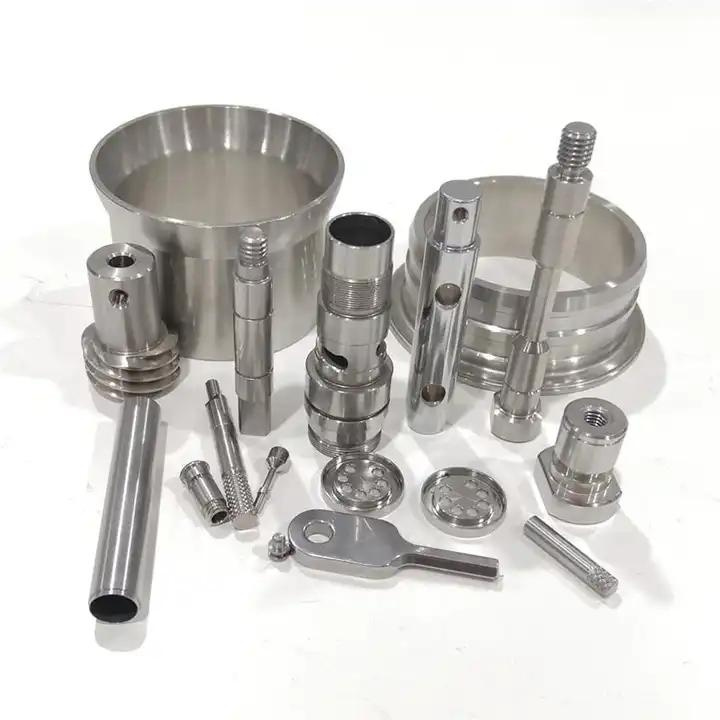
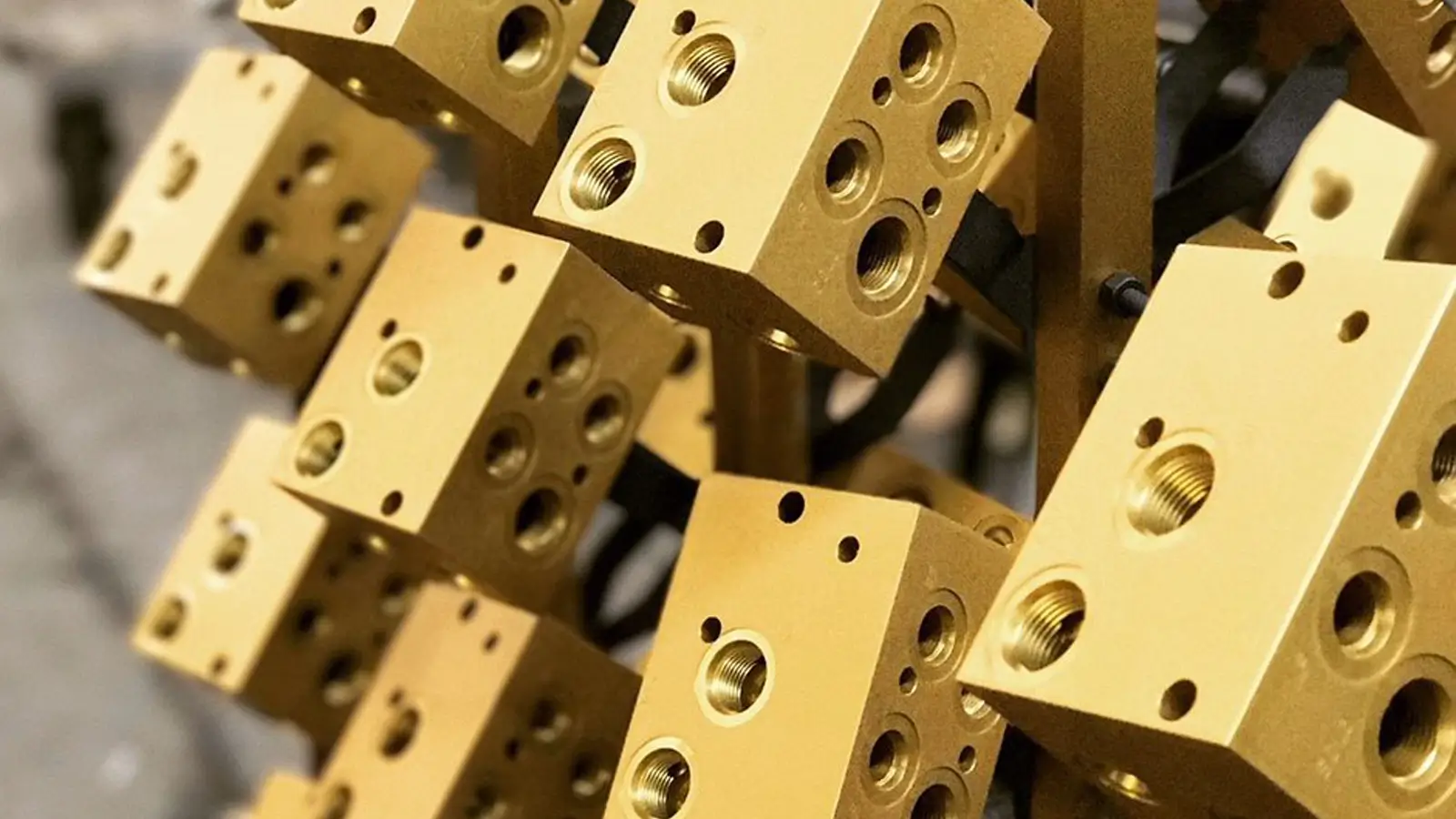
For a company like JLYPT, this evolution is central to our mission. We don’t just supply parts; we supply the precision-machined components—the custom fixtures, the robust gripper bodies, the complex manifolds—that form the reliable, high-accuracy backbone of any successful automation system. The precision required in these components is non-negotiable; it is what allows the higher-level benefits of industrial automation to be fully realized.
The question for manufacturing leaders is no longer if to automate, but how and where to start. The competitive cost of inaction—in lost capacity, compromised quality, and missed market opportunities—is simply too high. The path forward is one of strategic integration, where mechanical precision meets digital intelligence to build a manufacturing operation that is not only efficient today but also resilient and adaptable for the challenges of tomorrow.
Ready to transform the potential of your precision machining operation into a quantifiable competitive advantage? Contact JLYPT today to discuss how our expertise in manufacturing critical automation components can be the foundation of your next successful automation project. Explore our full capabilities at JLYPT CNC Machining Services.