Custom UAV Hardware Supplier: The Complete Guide to Professional CNC Manufacturing for Unmanned Aerial Systems
The global unmanned aerial vehicle market continues its remarkable expansion trajectory, with industry analysts projecting compound annual growth rates exceeding 15% through the coming decade. This sustained growth creates unprecedented demand for reliable custom UAV hardware supplier partnerships capable of delivering precision-engineered components that meet the exacting standards of modern drone platforms. From agricultural monitoring systems surveying thousands of hectares to inspection drones examining critical infrastructure, every successful UAV deployment depends on hardware components manufactured to uncompromising quality standards.
JLYPT has established itself as a premier custom UAV hardware supplier serving drone manufacturers, system integrators, and research institutions worldwide. Our comprehensive CNC machining capabilities, materials expertise, and quality management systems enable us to deliver UAV hardware components that perform reliably across the most demanding operational environments.
Explore our specialized UAV manufacturing capabilities: Custom CNC UAV Parts Manufacturer
Why Selecting the Right Custom UAV Hardware Supplier Matters
The decision to partner with a particular custom UAV hardware supplier carries implications far beyond simple procurement transactions. UAV hardware components directly influence flight performance, operational reliability, regulatory compliance, and ultimately, the commercial success of drone platforms. Understanding the factors that distinguish exceptional custom UAV hardware supplier capabilities from merely adequate manufacturing services helps procurement teams make informed partnership decisions.
Quality Consistency from Your Custom UAV Hardware Supplier
Drone manufacturers require hardware components that perform identically across production lots spanning months or years. A qualified custom UAV hardware supplier maintains statistical process control systems that monitor dimensional accuracy, surface finish, and material properties throughout production runs. Consistency eliminates the need for incoming inspection of every component and enables predictable assembly processes.
JLYPT implements comprehensive quality management aligned with AS9100 aerospace standards, ensuring that every component shipped meets documented specifications. Our custom UAV hardware supplier capabilities include first-article inspection reports, material certifications, and dimensional inspection data that provide complete traceability from raw material through finished component delivery.
Technical Expertise of a Professional Custom UAV Hardware Supplier
Manufacturing UAV hardware demands understanding of aerospace materials, precision machining processes, and the functional requirements of drone systems. An experienced custom UAV hardware supplier brings design-for-manufacturability insights that improve component performance while reducing production costs. This technical partnership extends beyond simple order fulfillment to encompass collaborative engineering that optimizes designs for CNC manufacturing processes.
Our engineering team reviews customer designs and provides feedback on tolerance specifications, material selections, and feature geometries that influence manufacturing efficiency. This proactive approach distinguishes JLYPT as a custom UAV hardware supplier committed to customer success rather than merely executing purchase orders.
Supply Chain Reliability from an Established Custom UAV Hardware Supplier
Production schedules depend on predictable component deliveries. A dependable custom UAV hardware supplier maintains robust supply chain relationships, adequate raw material inventories, and manufacturing capacity to meet committed delivery dates. Supply disruptions cascade through assembly operations, delaying product launches and damaging customer relationships.
JLYPT has cultivated long-term relationships with certified material suppliers, maintaining inventory positions that buffer against supply chain volatility. Our custom UAV hardware supplier infrastructure includes multiple qualified sources for critical materials, reducing single-point-of-failure risks that could impact customer programs.
Comprehensive Custom UAV Hardware Supplier Capabilities
Serving the diverse requirements of the UAV industry demands broad manufacturing capabilities spanning multiple processes, materials, and component types. The following sections detail the technical capabilities that define JLYPT as a comprehensive custom UAV hardware supplier.
CNC Machining Services from Your Custom UAV Hardware Supplier
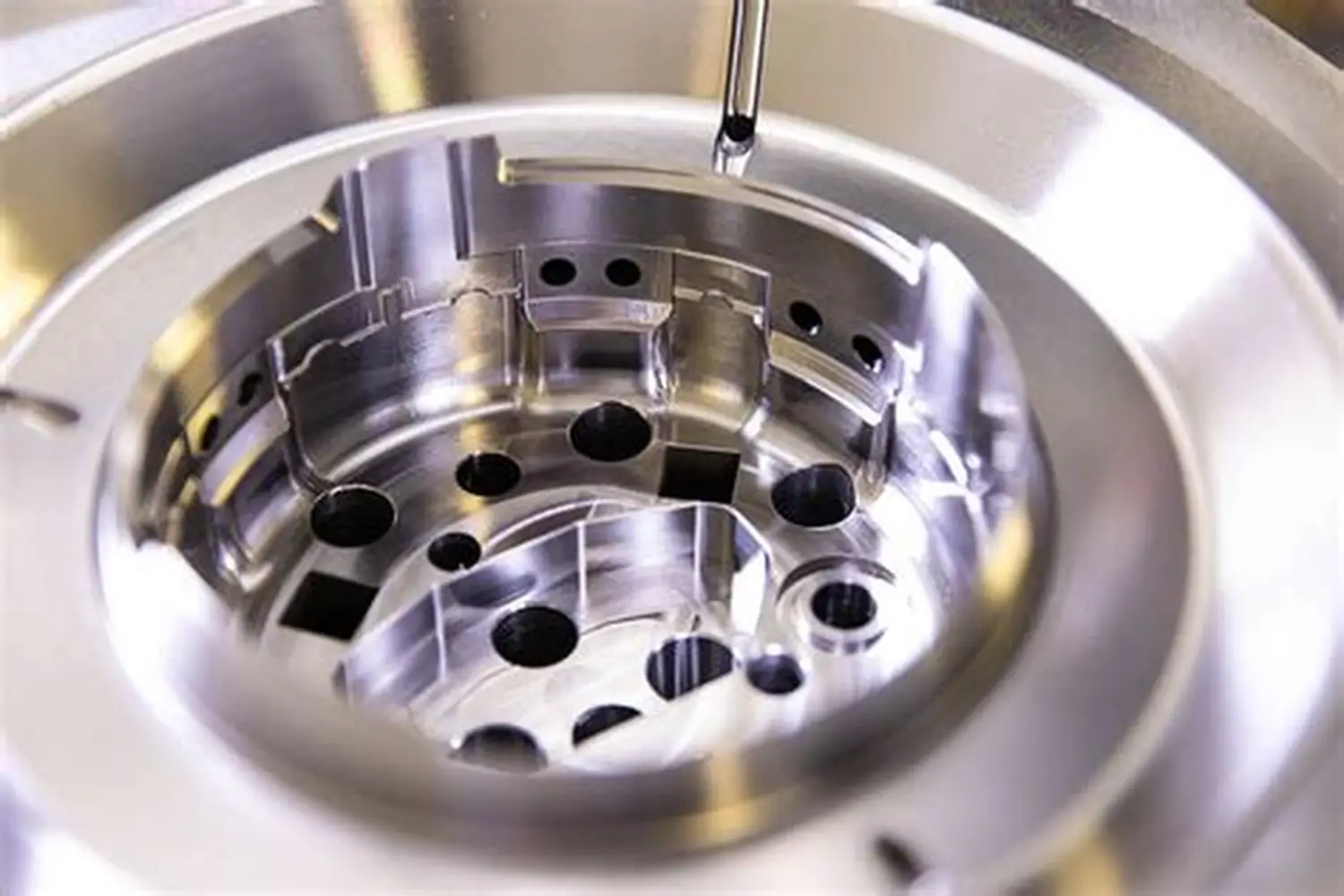
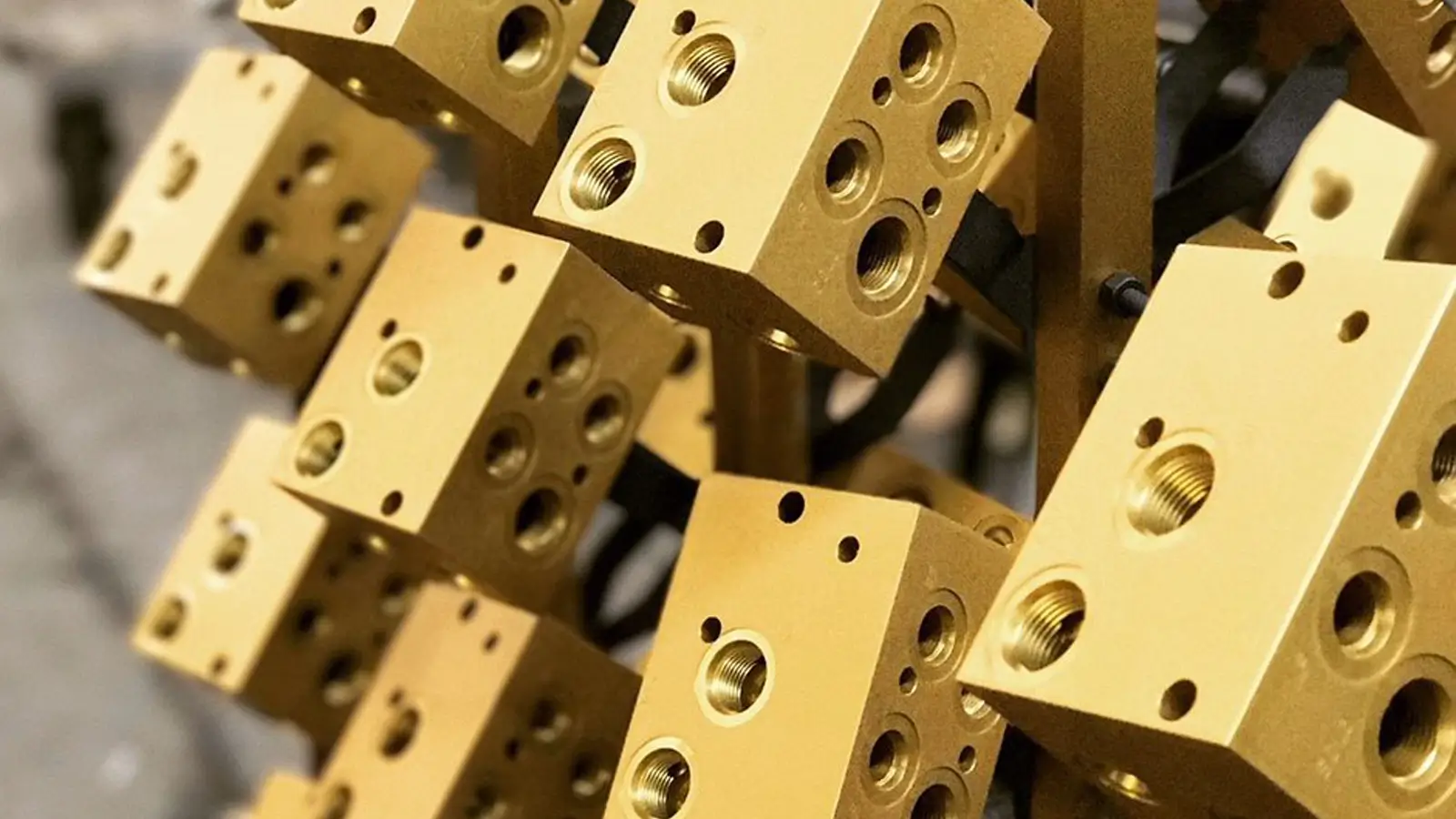
Precision CNC machining forms the foundation of custom UAV hardware supplier operations. Computer-controlled machine tools remove material from solid billets to create complex geometries with tight dimensional tolerances. Modern multi-axis CNC equipment enables production of sophisticated UAV components that would be impossible to manufacture using conventional methods.
3-Axis CNC Milling: Vertical machining centers provide efficient production of UAV hardware components with features oriented parallel or perpendicular to the machine spindle. As your custom UAV hardware supplier, JLYPT operates high-speed 3-axis machines optimized for aluminum alloys commonly specified for drone components. Spindle speeds exceeding 20,000 RPM combined with rigid machine construction deliver excellent surface finishes directly from machining operations.
4-Axis CNC Machining: Adding a rotary axis expands the range of features achievable in single setups. Index positioning enables machining of features on multiple part faces without manual intervention, improving accuracy and reducing production time. Continuous 4-axis interpolation produces helical features and wrap-around geometries found in advanced UAV hardware designs.
5-Axis CNC Machining: The ultimate in machining flexibility, 5-axis CNC centers position cutting tools at any orientation relative to the workpiece. This capability proves essential for UAV hardware components with complex contoured surfaces, undercut features, or tight geometric relationships between features at different orientations. As a custom UAV hardware supplier investing in advanced equipment, JLYPT operates multiple 5-axis machining centers dedicated to aerospace and UAV component production.
CNC Turning: Cylindrical UAV hardware components benefit from CNC turning operations that produce precise diameters, concentricity, and surface finishes. Turn-mill centers combine turning and milling capabilities, enabling complete machining of complex components in single setups. This integrated approach reduces handling, improves accuracy, and shortens lead times.
Wire EDM: Electrical discharge machining creates features impossible to produce with conventional cutting tools. Intricate internal profiles, sharp internal corners, and hardened materials all fall within wire EDM capabilities. As a full-service custom UAV hardware supplier, JLYPT includes wire EDM among available processes for specialized UAV component requirements.
Custom UAV Hardware Supplier Material Capabilities
Material selection profoundly influences UAV hardware performance, and a knowledgeable custom UAV hardware supplier guides customers toward optimal material choices for specific applications. The following materials represent the most commonly specified options for UAV hardware components.
Aluminum Alloys
Aluminum alloys dominate UAV hardware applications due to favorable strength-to-weight ratios, excellent machinability, and reasonable costs. Different alloy compositions address varying performance requirements.
6061-T6 Aluminum: The workhorse alloy for general-purpose UAV hardware, 6061-T6 offers good strength, excellent corrosion resistance, and superior machinability. Heat treatment to T6 temper provides yield strength of 276 MPa with elongation sufficient for most structural applications. As a custom UAV hardware supplier, JLYPT maintains substantial 6061-T6 inventory in various stock sizes to minimize lead times.
7075-T6 Aluminum: When maximum strength drives material selection, 7075-T6 delivers yield strength of 503 MPa while maintaining the low density characteristic of aluminum alloys. This aerospace-grade material enables thinner wall sections and lighter components without sacrificing structural integrity. The higher material cost is offset by weight savings critical for performance-oriented UAV platforms.
2024-T3 Aluminum: Superior fatigue resistance makes 2024-T3 the preferred choice for UAV hardware subject to high-cycle loading. Propeller hubs, motor mounts, and other components experiencing continuous vibrational stress benefit from this alloy’s resistance to fatigue crack initiation and propagation.
Titanium Alloys
Premium UAV platforms demanding ultimate strength-to-weight performance specify titanium alloys for critical hardware components. As a custom UAV hardware supplier with titanium machining expertise, JLYPT delivers components from these challenging materials.
Ti-6Al-4V (Grade 5): The most widely used titanium alloy provides yield strength of 880 MPa at density of 4.43 g/cm³. Excellent corrosion resistance suits marine and industrial UAV applications. Machining titanium requires specialized tooling, reduced cutting speeds, and high-pressure coolant systems that not every custom UAV hardware supplier can provide.
Commercially Pure Titanium (Grade 2): When corrosion resistance takes priority over maximum strength, Grade 2 titanium offers excellent chemical resistance with improved machinability compared to Ti-6Al-4V. Medical and scientific UAV applications sometimes specify this material for sensor housings and specialized hardware.
Engineering Polymers
Certain UAV hardware applications benefit from polymer materials offering electrical isolation, vibration damping, or chemical resistance unavailable from metals.
PEEK: Polyetheretherketone provides exceptional strength among engineering polymers, with continuous service temperatures exceeding 250°C. UAV hardware requiring electrical isolation between conductive components often specifies PEEK. As a custom UAV hardware supplier processing technical polymers, JLYPT machines PEEK components with the same precision applied to metallic materials.
Delrin (POM): Acetal homopolymer offers excellent dimensional stability, low friction, and good machinability. Bushings, spacers, and wear components in UAV mechanisms frequently utilize Delrin. The material machines cleanly with sharp tooling and maintains tight tolerances.
UHMW-PE: Ultra-high molecular weight polyethylene provides outstanding wear resistance and low friction for sliding applications. UAV hardware incorporating linear motion mechanisms sometimes specifies UHMW-PE bearing surfaces.
Custom UAV Hardware Supplier Material Comparison Table
| Material | Density (g/cm³) | Yield Strength (MPa) | Elastic Modulus (GPa) | Thermal Conductivity (W/m·K) | Corrosion Resistance | Relative Cost | Machinability Rating |
|---|---|---|---|---|---|---|---|
| 6061-T6 Aluminum | 2.70 | 276 | 68.9 | 167 | Good | Low | Excellent |
| 7075-T6 Aluminum | 2.81 | 503 | 71.7 | 130 | Moderate | Medium | Very Good |
| 2024-T3 Aluminum | 2.78 | 345 | 73.1 | 121 | Moderate | Medium | Very Good |
| Ti-6Al-4V | 4.43 | 880 | 113.8 | 6.7 | Excellent | High | Difficult |
| Grade 2 Titanium | 4.51 | 275 | 102.7 | 16.4 | Excellent | Medium-High | Moderate |
| PEEK | 1.32 | 100 | 3.6 | 0.25 | Excellent | High | Good |
| Delrin | 1.41 | 69 | 3.1 | 0.37 | Excellent | Low | Excellent |
| UHMW-PE | 0.93 | 22 | 0.8 | 0.42 | Excellent | Low | Good |
Surface Treatment Capabilities from Your Custom UAV Hardware Supplier
Raw machined surfaces rarely meet the functional and aesthetic requirements of finished UAV hardware. Professional surface treatments enhance corrosion resistance, wear properties, appearance, and component identification. A comprehensive custom UAV hardware supplier offers multiple finishing options.
Type II Anodizing: Sulfuric acid anodizing creates a porous aluminum oxide layer that accepts dye penetration for coloring. Standard thicknesses of 8-25 micrometers provide good corrosion protection for UAV hardware operating in moderate environments. Color options enable visual identification of component variants and enhance product aesthetics.
Type III Hard Anodizing: When wear resistance supplements corrosion protection requirements, hard anodizing produces dense oxide layers of 25-75 micrometers thickness. Surface hardness approaching 70 HRC resists abrasion in sliding applications. UAV hardware subject to repeated assembly cycles or mechanical contact benefits from hard anodized surfaces.
Electroless Nickel Plating: Uniform coating thickness regardless of geometry makes electroless nickel ideal for complex UAV hardware shapes. Phosphorus content variations produce deposits ranging from hard and wear-resistant to corrosion-resistant and solderable. As a custom UAV hardware supplier, JLYPT specifies appropriate electroless nickel formulations based on functional requirements.
Passivation: Stainless steel and titanium UAV hardware benefits from passivation treatments that enhance natural oxide layer formation. Nitric acid or citric acid processes remove surface contamination and promote uniform passive film development.
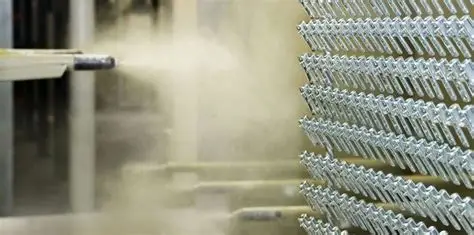
Powder Coating: Thick polymer coatings provide excellent corrosion protection and attractive appearance for non-critical UAV hardware surfaces. Color matching to customer specifications enables brand-consistent product presentation.
Alodine/Chromate Conversion: When electrical conductivity must be maintained through surface treatments, chromate conversion coatings provide corrosion protection without the insulating properties of anodizing. Ground planes and EMI shielding surfaces in UAV hardware often specify this treatment.
Custom UAV Hardware Supplier Surface Treatment Selection Guide
| Treatment | Applicable Materials | Thickness (μm) | Corrosion Protection | Wear Resistance | Electrical Conductivity | Color Options |
|---|---|---|---|---|---|---|
| Type II Anodize | Aluminum | 8-25 | Good | Moderate | None | Multiple |
| Type III Hard Anodize | Aluminum | 25-75 | Excellent | Excellent | None | Limited |
| Electroless Nickel | Most Metals | 5-50 | Excellent | Good-Excellent | Maintained | Silver |
| Passivation | Stainless/Titanium | <1 | Good | None | Maintained | None |
| Powder Coating | Most Metals | 50-150 | Excellent | Moderate | None | Multiple |
| Chromate Conversion | Aluminum | <1 | Moderate | None | Maintained | Yellow/Clear |
Custom UAV Hardware Supplier Quality Assurance Systems
Manufacturing precision UAV hardware demands rigorous quality management systems that ensure consistent conformance to specifications. As a custom UAV hardware supplier serving aerospace and defense customers, JLYPT maintains quality infrastructure aligned with industry standards.
Inspection Capabilities of a Professional Custom UAV Hardware Supplier
Verification of dimensional accuracy requires appropriate measurement equipment and trained personnel. Our custom UAV hardware supplier quality laboratory includes:
Coordinate Measuring Machines (CMM): Programmable CMM systems measure complex 3D geometries with micrometer-level accuracy. Automated inspection routines ensure consistent measurement procedures across production lots and operators. CMM capability enables verification of GD&T specifications including position, perpendicularity, parallelism, and profile tolerances.
Optical Measurement Systems: Non-contact optical systems rapidly measure 2D features and surface profiles. Vision systems integrated with CNC inspection routines provide in-process verification without removing parts from machines.
Surface Roughness Measurement: Profilometers quantify surface texture parameters including Ra, Rz, and Rmax. UAV hardware with sealing surfaces or bearing interfaces requires documented surface finish verification.
Hardness Testing: Material property verification through hardness measurement confirms proper heat treatment response. Rockwell, Brinell, and microhardness testing address different material types and component geometries.
Material Certification: Traceability from raw material through finished component ensures material authenticity. Mill certifications, material test reports, and positive material identification testing verify compliance with specifications.
Custom UAV Hardware Supplier Tolerance Capabilities
Precision UAV hardware demands tight dimensional control that challenges manufacturing capabilities. The following table summarizes achievable tolerances for various feature types:
| Feature Type | Standard Tolerance | Precision Tolerance | Notes |
|---|---|---|---|
| Linear Dimensions | ±0.10 mm | ±0.025 mm | Dependent on feature size |
| Hole Diameters | ±0.05 mm | ±0.013 mm | Reaming for precision |
| Hole Position | ±0.10 mm | ±0.025 mm | True position GD&T |
| Flatness | 0.05 mm | 0.013 mm | Per 100mm span |
| Perpendicularity | 0.05 mm | 0.02 mm | Relative |