Engineering the Unseen: The Critical Role of High-Precision Custom CNC Machining in Advanced UAV Development
Introduction: Where Aerial Innovation Meets Manufacturing Precision
The evolution of Unmanned Aerial Vehicles (UAVs) from simple remote-controlled aircraft to sophisticated, autonomous systems has been nothing short of revolutionary. This transformation is powered not just by advances in software and electronics, but fundamentally by breakthroughs in physical hardware—specifically, the development of high-performance custom UAV parts. In an industry where every gram, every aerodynamic nuance, and every structural failure point can determine mission success, the manufacturing methodology is not a secondary consideration; it is a primary engineering discipline. For startups pushing the boundaries of flight time and agility, for defense contractors requiring mission-critical reliability, and for industrial inspectors needing robust platforms, the question is not if to use custom components, but how to procure them with the necessary precision, performance, and speed.
At JLYPT, we operate at the nexus of aerospace engineering and advanced manufacturing, specializing in the production of mission-critical custom UAV parts through high-precision CNC machining. Unlike off-the-shelf solutions or additive manufacturing alone, CNC machining provides the unique combination of material integrity, dimensional accuracy, and complex geometrical freedom required for next-generation drones. From the ultra-lightweight, vibration-damped skeleton of a long-endurance fixed-wing surveillance platform to the incredibly robust and intricate landing gear assembly of a heavy-lift cargo octocopter, each component presents a unique triad of challenges: extreme weight optimization, exceptional structural efficiency, and flawless reliability.
This technical exploration delves into the engineering philosophies, material sciences, and advanced machining strategies that define the creation of superior UAV components. We will dissect why materials like aerospace-grade aluminum 7075 and high-strength composites are selected, how 5-axis simultaneous machining enables previously impossible geometries, and the critical importance of dynamic balancing and harmonic damping in machined parts. Through detailed analysis and real-world case studies, this guide demonstrates how a deep partnership with a precision machining specialist is not merely a procurement step, but a strategic advantage in the competitive and rapidly evolving UAV landscape. Discover how our dedicated expertise, focused on custom CNC UAV parts manufacturing, translates ambitious designs into reliable, high-performing aerial platforms.
The Engineering Imperative: Why Off-the-Shelf Solutions Fall Short for Advanced UAVs
The commercial drone market is flooded with generic frames and components. While suitable for hobbyists or basic applications, these mass-produced parts are fundamentally inadequate for professional, commercial, or defense-oriented UAVs for several key technical reasons.
The Weight-Performance Paradox: In UAV design, weight is the universal adversary. It directly dictates flight time, payload capacity, agility, and power consumption. Off-the-shelf parts are designed for a broad market, inevitably incorporating safety factors and geometries that lead to unnecessary mass. A custom CNC-machined motor mount, for example, can be topologically optimized using Finite Element Analysis (FEA) software. This process algorithmically removes material only from areas of low stress, resulting in a complex, organic-looking bracket that is 30-50% lighter than a standard rectangular block while maintaining or even increasing stiffness. This level of material efficiency is impossible with generic extrusion or casting.
Integrated Design and System-Level Optimization: Advanced UAVs are systems of interdependent components. A custom approach allows for design consolidation. Instead of assembling a gimbal from multiple purchased brackets, plates, and bearings, it can be machined as a single, monolithic unit from aluminum or titanium. This monolithic construction eliminates assembly error, reduces fasteners (and their weight), increases overall stiffness, and improves reliability by reducing the number of potential failure points. Furthermore, features like conformal cooling channels for electronics or integrated cable routing pathways can be machined directly into the structure, cleaning up the assembly and improving aerodynamics.
Material Certification and Traceability: Professional applications demand certified materials. Whether it’s AMS 4117 (7075-T6 aluminum) for its superior strength-to-weight ratio, 6Al-4V Titanium for its corrosion resistance and strength in critical joints, or PEEK for high-temperature engine bay components, custom machining allows the specification of material with full mill certification and heat lot traceability. This is non-negotiable for compliance with standards in defense (MIL-SPEC), aerospace (AS9100), and other regulated industries.
Precision for Performance: The dynamic performance of a UAV hinges on the precision of its parts. Vibration from unbalanced motors or poorly aligned components is a primary cause of sensor noise, frame fatigue, and electronic failure. A custom-machined propeller adapter with a runout tolerance of less than 0.01mm ensures perfect concentricity, drastically reducing vibration. Similarly, the true position tolerance of motor mounting holes, when held to a tight specification, guarantees all propulsion units are perfectly parallel, eliminating asymmetric thrust and ensuring stable, efficient flight.
*Table 1: Limitations of Off-the-Shelf vs. Advantages of Custom CNC UAV Parts*
| Design & Performance Parameter | Typical Off-the-Shelf Solution | Custom CNC Machined Solution | Impact on UAV Performance |
|---|---|---|---|
| Weight Optimization | Generic, prismatic shapes with high safety margins. | Topologically optimized, thin-wall, and hollow structures. | Directly increases payload capacity and flight endurance. |
| Structural Stiffness | Relies on assembly of multiple parts; stiffness joints are weak points. | Monolithic parts and optimized geometries maximize stiffness-to-weight ratio. | Improves flight stability, reduces vibration, and enhances control response. |
| Geometric Complexity & Integration | Limited to simple shapes; requires assembly of many components. | Enables complex, organic shapes and multi-functional integrated designs. | Reduces part count, assembly time, and failure points; enables aerodynamic shapes. |
| Material Properties | Often generic-grade aluminum (6061) or unknown plastics. | Specifiable aerospace alloys (7075, 6082), titanium, or engineered polymers. | Provides certified strength, fatigue life, and environmental resistance. |
| Precision & Tolerances | Functional but loose tolerances (±0.5mm common). | High-precision tolerances achievable (±0.025mm or better on critical features). | Ensures perfect alignment, reduces vibration, and guarantees interchangeability. |
| Damping Characteristics | Not a design consideration. | Can be engineered via material choice, internal geometry, and strategic material removal. | Actively reduces harmonic vibration, protecting sensitive avionics and sensors. |
The Material Science of Flight: Selecting the Optimal Substrate
The choice of material for a UAV component is a calculated decision based on a complex matrix of mechanical properties, environmental factors, and manufacturing constraints.
Aluminum Alloys: The Workhorse of UAV Framing
-
6061-T6: The general-purpose choice, offering good machinability, weldability, and corrosion resistance at a lower cost. Ideal for non-critical structural members, brackets, and prototypes.
-
7075-T6: The premium aerospace aluminum. Its tensile strength (up to 570 MPa) is significantly higher than 6061, rivaling many steels. This allows for dramatically thinner walls and lighter parts while maintaining strength. It is the default choice for primary load-bearing structures like arm-to-body joints, landing gear, and motor mounts in performance UAVs. Its main drawback is lower corrosion resistance and it is not weldable.
-
6082-T6: A European designation similar to 6061, with excellent corrosion resistance and good strength, often used in marine-environment UAVs.
Titanium Alloys: For Ultimate Strength and Corrosion Resistance
-
Ti-6Al-4V (Grade 5): Used where its exceptional strength-to-weight ratio, fatigue resistance, and immunity to corrosion are worth the higher material and machining cost. Applications include critical flight-critical fasteners, hinge pins for folding arms, and components in fuel cells or engines. Its poor thermal conductivity and tendency to gall during machining require specialized tooling and expertise.
Engineering Polymers and Composites:
-
PEEK (Polyetheretherketone): A high-performance thermoplastic with excellent strength, chemical resistance, and ability to withstand continuous high temperatures. Used for engine bay components, insulating mounts, and parts requiring high dielectric strength.
-
Carbon Fiber Reinforced Polymers (CFRP): While often laid up, CNC machining of cured CFRP plates is used to create precise inserts, attachment points, and sensor mounts that are integrated into composite structures. This requires diamond-coated tooling and specific dust extraction to manage the abrasive carbon dust.
Magnesium Alloys: The Ultra-Lightweight Contender
-
Alloys like AZ31B offer the highest strength-to-weight ratio of any commonly machined metal. Used in extremely weight-sensitive applications like gimbal frames or camera cages. Its high flammability risk during machining demands specialized safety procedures and is often restricted to shops with specific expertise and permits.
Table 2: UAV Material Selection Matrix for Critical Components
| Component Type | Primary Load & Environment | Top Material Choices | Key Rationale & Machining Note |
|---|---|---|---|
| Central Flight Controller Plate | Moderate bending, vibration, electronics mounting. | 6061-T6, 7075-T6 | Stiffness to protect PCBs; 7075 for minimum thickness/weight. Thermal management considered. |
| Arm-to-Body Connection Block | Very high static and dynamic torsional/bending loads. | 7075-T6 (Primary), 6Al-4V Titanium (Extreme) | Highest strength-to-weight is critical to prevent fatigue failure. Often a monolithic 5-axis part. |
| Brushless Motor Mount | High vibration, cyclic thrust loads, moderate heat. | 7075-T6, 6082-T6 | Strength to resist cracking from vibration; thermal stability to maintain alignment. |
| Landing Gear Strut | High impact load, cyclic stress, corrosion. | 7075-T6, Carbon Fiber Tubing (with machined metal ends) | Needs energy absorption and fatigue life. Hybrid designs are common. |
| Payload Gimbal Yaw Plate | Moderate torque, need for extreme stiffness, low weight. | AZ31B Magnesium, 7075-T6 | Minimal inertia for quick camera movement; magnesium ideal if budget allows. |
| Fuel Cell or Battery Plate | Compression, potential chemical exposure, heat. | 6061-T6 (anodized), PEEK | Chemical resistance and electrical insulation are key; PEEK for high-temp cells. |
| Aerodynamic Fairing / Shell | Aerodynamic pressure, vibration, UV exposure. | CNC’d from tooling board for mold, then composite layup. | Final part is composite; CNC creates the precise master mold. |
Advanced CNC Machining Strategies for UAV-Specific Challenges
Producing high-performance UAV components requires moving beyond basic milling and turning. It involves deploying advanced strategies to meet unique challenges.
5-Axis Simultaneous Machining: Freedom from Geometric Constraints
This is the single most transformative technology for custom UAV parts. Unlike 3-axis machining, where the tool approaches from only one direction, 5-axis machining allows the cutting tool to move linearly (X, Y, Z) while the workpiece rotates on two additional axes (A and B). This enables:
-
Complex Contours: Machining of aerodynamic airfoil shapes for custom wings or propeller blades from solid metal.
-
Deep Cavity Access: Creating deep, undercut pockets for electronics or batteries in a monolithic frame without multiple setups.
-
Single-Setup Accuracy: Machining features on five sides of a part in one clamping, ensuring perfect alignment between, for example, motor mounts and arm sockets, which is critical for flight dynamics.
High-Speed Machining (HSM) and Thin-Wall Machining:
UAV parts are characterized by high aspect ratios (thin, tall walls). HSM uses high spindle speeds, fast feed rates, and very light radial depths of cut to minimize cutting forces. This prevents the thin features from deflecting or vibrating during machining, allowing for the production of incredibly light yet stiff structures like ribbed internal panels or the skeletonized internals of a fuselage.
Trochoidal Milling for Tool Longevity:
When machining hard materials like 7075 or titanium, tool wear is a major cost factor. Trochoidal milling is a toolpath strategy where the end mill follows a circular, plunging path with a constant, small engagement with the material. This keeps cutting forces low and temperatures down, dramatically extending tool life—a critical factor for the economic production of high-volume custom parts like standardized motor mounts.
In-Process Metrology and Adaptive Machining:
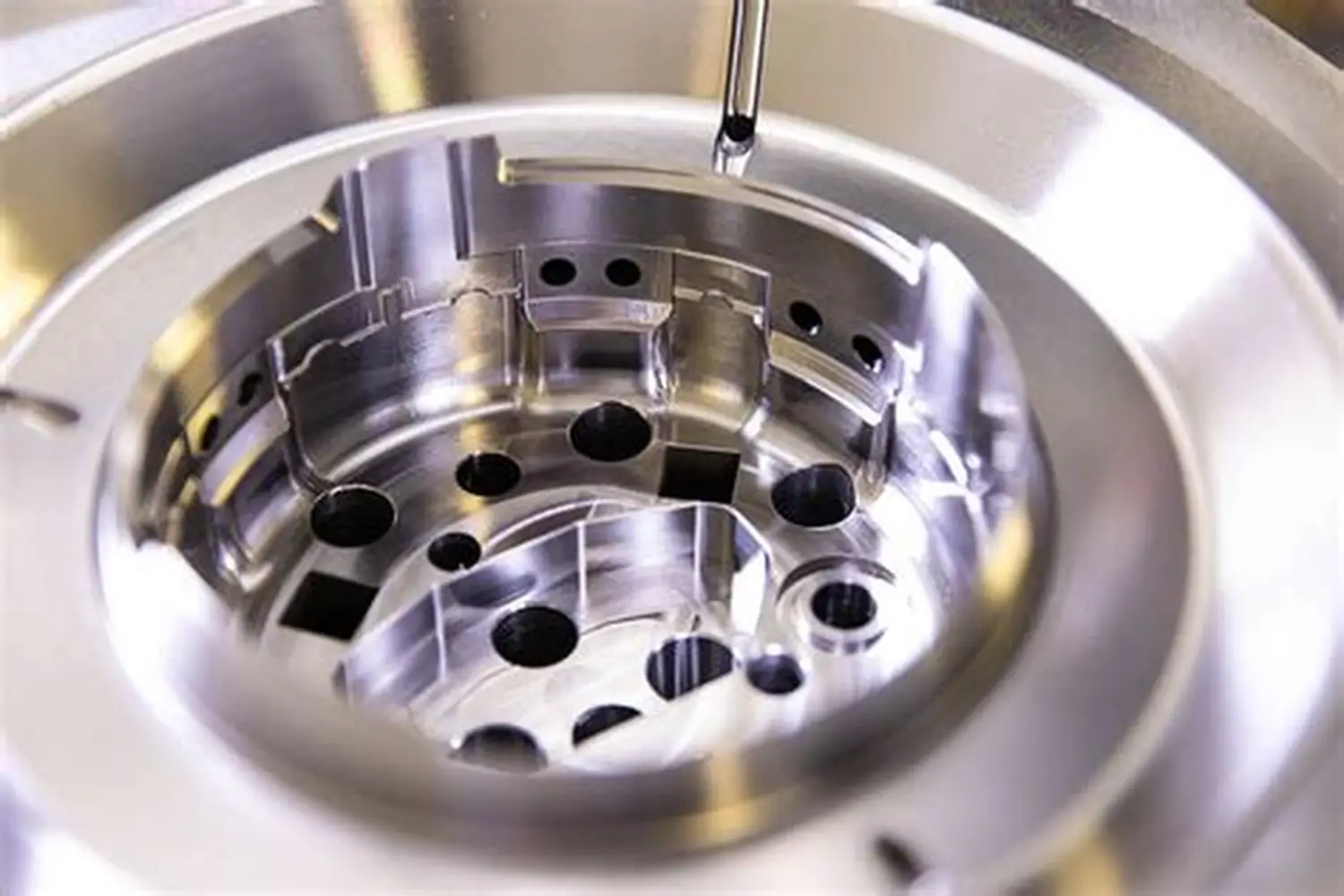
For the most critical components, integrating touch probes and laser scanners into the CNC machine allows for in-situ inspection. The machine can probe a part after roughing, compare it to the CAD model, and automatically adjust the finishing toolpath to compensate for any measured material variation or tool deflection. This “first-part-correct” capability is invaluable for prototyping and low-volume production, ensuring that even complex, one-off parts meet design intent perfectly.
The Integration Phase: From Machined Part to Flight-Ready System
A perfectly machined part is only the beginning. Its integration into the UAV system involves several critical post-machining processes.
Surface Treatments for Performance and Protection:
-
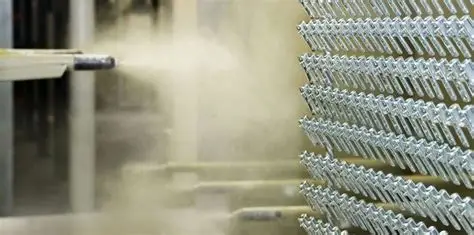
Anodizing (Type II & III): The standard for aluminum. Hardcoat anodizing (Type III) provides a wear-resistant, electrically insulating layer excellent for bearing surfaces. Color anodizing (Type II) allows for part identification and mild corrosion resistance.
-
Alodine / Chromate Conversion: A chemical film for aluminum that provides corrosion resistance and improves paint adhesion without significantly changing dimensions.
-
Electroless Nickel Plating (ENP): Provides a hard, uniform, and highly corrosion-resistant coating that is excellent for steel components or aluminum parts requiring superior chemical resistance and solderability.
-
Passivation: For stainless steel components (e.g., fasteners), this chemical process removes free iron and enhances the natural chromium oxide layer for corrosion resistance.
Dynamic Balancing: The Silent Enabler of Smooth Flight
Any rotating component—propeller adapters, motor bells, custom propellers—must be dynamically balanced. Even a minuscule mass imbalance at several thousand RPM creates destructive vibration. Post-machining, these parts are placed on a dynamic balancing machine that detects imbalance and indicates where material must be removed (or rarely, added) to bring the part into tolerance. This step is non-negotiable for professional-grade UAVs.
Non-Destructive Testing (NDT) for Mission Assurance:
For flight-critical parts in commercial or defense UAVs, verifying internal integrity is essential.
-
Dye Penetrant Inspection (DPI): Detects surface-breaking cracks in metal parts.
-
X-Ray Inspection: Can reveal internal voids, porosity, or cracks within a part or a weld.
Case Studies: Custom Machining Solving Real UAV Challenges
Case Study 1: Long-Endurance Fixed-Wing Surveillance UAV – Monolithic Wing Spar
-
Challenge: A developer of a solar-electric HALE (High Altitude, Long Endurance) UAV needed a wing spar that was both extremely light and stiff enough to resist bending over a 12-meter wingspan, while also integrating mounting points for solar panels and rib attachments.
-
JLYPT Solution: We designed and manufactured a monolithic, tapered I-beam spar from high-modulus carbon fiber reinforced epoxy pre-preg, with CNC-machined 7075-T6 aluminum end fittings and hard-point inserts. The aluminum fittings were 5-axis machined to create a complex shear web interface that bonded seamlessly to the carbon spar. The internal aluminum hard points were designed with knurled surfaces and lightening holes to maximize bond area and minimize weight. The result was a 40% lighter spar assembly with 15% greater torsional stiffness than the previous multi-part aluminum design, directly contributing to extended flight time.
Case Study 2: Heavy-Lift Logistics Octocopter – Central Distribution Hub
-
Challenge: A cargo UAV company required the central “spider” hub that connects eight independent arm modules to the central avionics and battery core. The part had to withstand enormous and uneven torsional loads, distribute power and data to each arm, provide passive cooling, and allow for rapid field assembly without tools.
-
JLYPT Solution: We produced a monolithic 7075-T6 central hub using 5-axis machining. The design featured:
-
Integrated helical cable channels running inside each arm socket, protecting wiring.
-
A mass-optimized internal lattice structure revealed by FEA, reducing weight by 35%.
-
Precision-machined conical mating surfaces on each arm socket for self-aligning, play-free connection.
-
A central cavity with mounting bosses for the power distribution board and flight controller.
-
All parts were hardcoat anodized for wear resistance at the connection points. The single-piece construction eliminated alignment issues and created a phenomenally rigid core that became the standard for the platform.
-
Case Study 3: Agile Racing Drone – Unified Motor Arm Assembly
-
Challenge: A professional FPV racing team needed a frame that offered maximum torsional rigidity for precise handling, minimal weight for acceleration, and integrated protection for the carbon fiber bottom plate. The traditional approach of separate arms screwed into a central plate was too flexible and heavy.
-
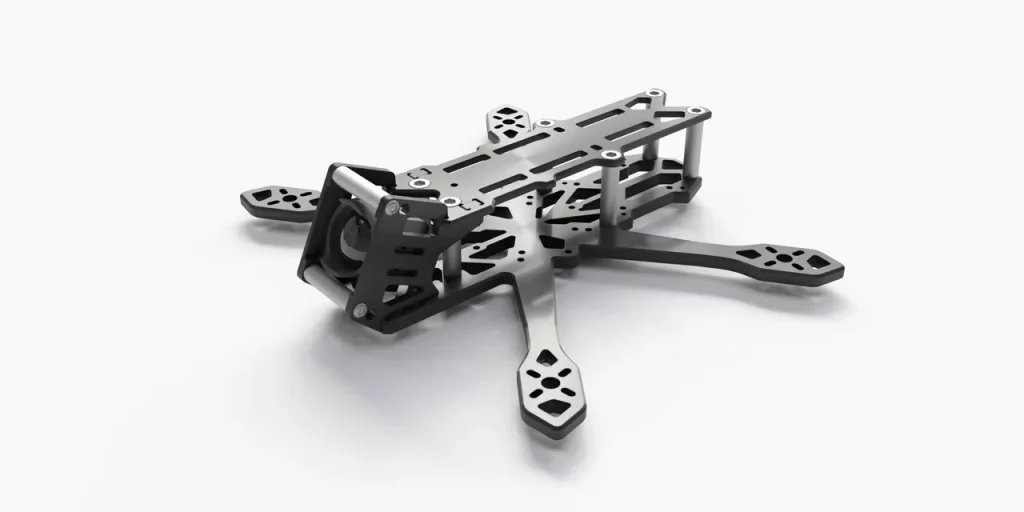
JLYPT Solution: We created a unibody “top plate” from 1.5mm thick 7075-T6 aluminum. This single part incorporated all four motor arms and the central electronics deck. Using high-speed machining, we created strategic cut-outs and thinning in low-stress areas, achieving an incredibly low mass. The arms were designed with a specific aerodynamic profile to reduce drag. The part was gold chromate coated (Alodine) for corrosion resistance and a distinctive look. The unibody design provided a 50% increase in torsional stiffness over the assembled design, giving pilots a tangible improvement in control response and cornering stability.
Conclusion: Partnering for Aerial Advantage
The development of a superior UAV is an integrated systems challenge. The airframe is not a simple container for technology; it is a foundational element that enables or constrains every aspect of performance. By embracing the possibilities of custom CNC machined UAV parts, engineers and developers gain direct control over the most critical physical parameters of their platform: weight, stiffness, reliability, and integration.
This path requires more than just sending a CAD file to a machine shop. It demands a partnership with a manufacturer who speaks the language of aerospace engineering, understands the unique demands of unmanned flight, and possesses the technological capability—from advanced 5-axis machining to post-process balancing—to execute flawlessly. At JLYPT, we have built our practice on this partnership model, providing not just manufacturing capacity, but collaborative engineering insight from the initial sketch to the final, flight-tested component.
Are you ready to translate your UAV’s conceptual design into a physical competitive advantage? Engage with our engineering team to explore how custom machining can optimize your platform. From prototype to production, we provide the precision, materials, and expertise to elevate your vision. Begin the conversation at JLYPT Custom CNC UAV Parts Manufacturing.