Drone Manufacturing Companies China: How to Evaluate Suppliers—and Secure CNC-Machined Drone Parts You Can Trust
China has become one of the most active places in the world for drone commercialization. From consumer quadcopters to industrial inspection platforms and agricultural spraying systems, many programs originate, prototype, or scale production through the Chinese manufacturing ecosystem.
But the phrase Drone manufacturing companies China can mean very different things depending on what you are buying:
- A brand that owns the product definition but outsources most components
- An OEM/ODM that assembles and tests, sourcing parts from multiple tiers
- A factory group that includes machining, sheet metal, plastics, electronics, and final assembly
- A specialist supplier (like a CNC machine shop) that produces mission-critical mechanical parts
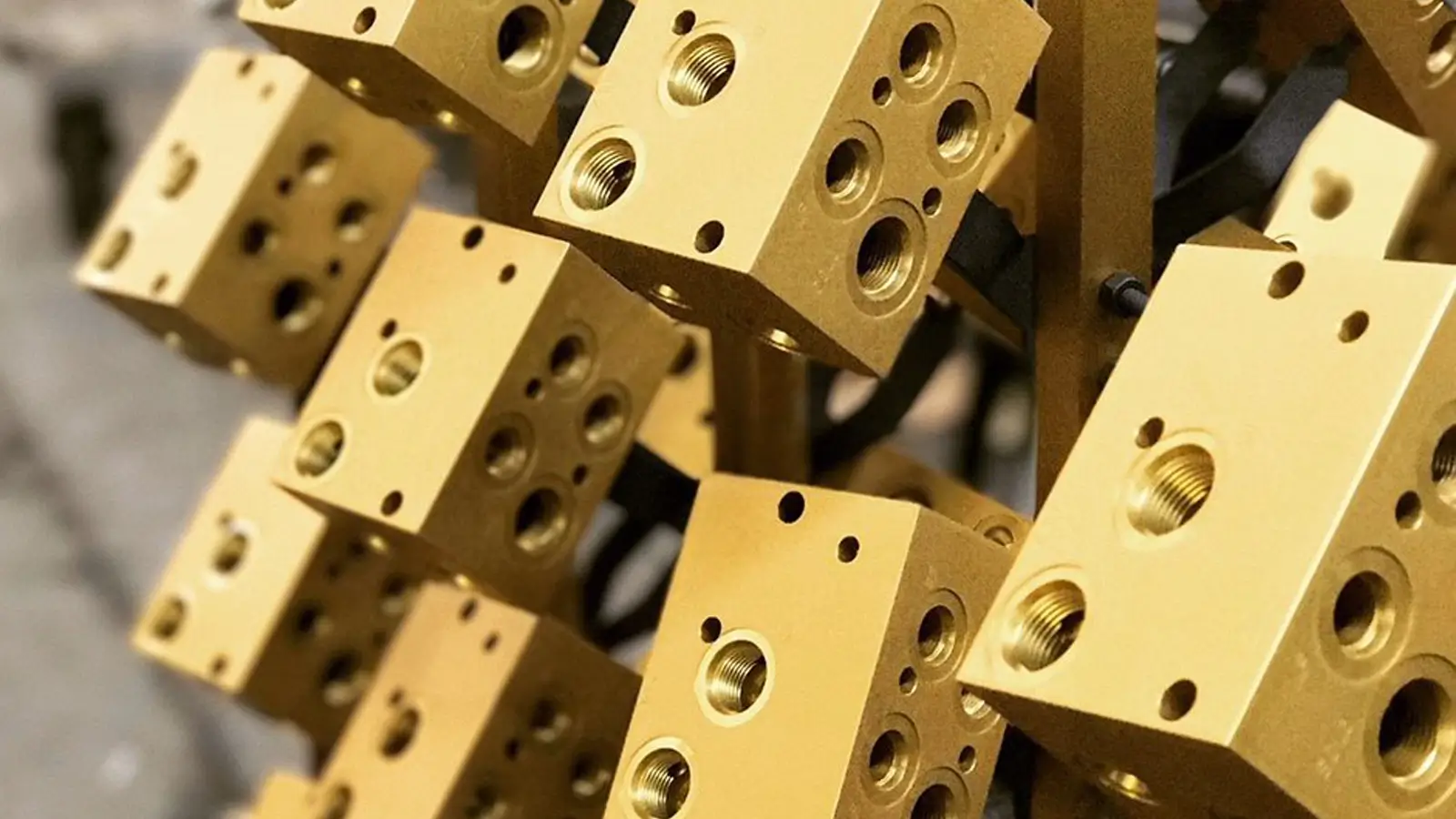
If your drone program depends on mechanical accuracy—motor alignment, vibration control, payload pointing stability, gasket sealing, thermal paths—then your success will be strongly influenced by the quality of the CNC-machined components behind the final assembly. In practice, the “best” drone manufacturer is often the one whose supply chain can deliver stable machining processes, controlled GD&T, and consistent inspection.
This article is written for engineering, sourcing, and program teams who want a practical way to evaluate Drone manufacturing companies China while also building a CNC-focused parts strategy that avoids the most common production traps.
If you are sourcing precision CNC UAV parts—structural nodes, motor mounts, housings, hubs, brackets—JLYPT supports custom CNC machining for drone components here:
https://www.jlypt.com/custom-cnc-uav-parts-manufacturer/
Table of Contents
- What “Drone Manufacturing Companies China” Really Includes
- Why CNC Machining Quality Often Determines Drone Reliability
- China Drone Supply Chain Map: Where Machining Fits
- A Buyer’s Framework: How to Evaluate Drone Manufacturers (and Their CNC Tier)
- CNC Capability That Matters for Drones: 3-Axis vs 5-Axis vs Mill-Turn
- Drone Parts Commonly CNC-Machined (and Why)
- Material Selection for Drone Hardware: 6061, 7075, Titanium, Stainless, Engineering Plastics
- Functional GD&T for Drones: Datums, True Position, and What Actually Needs Tight Tolerance
- Surface Treatments: Anodize, Hardcoat, Conductive Masking, and Finish Allowances
- Inspection Systems: In-Process Probing, CMM Reports, Traceability
- Lead Time Engineering: Modular Fixturing, Soft Jaws, Setup Reduction
- Cost Drivers and Quoting: What Makes CNC Drone Parts Expensive (and How to Reduce Cost Safely)
- Supplier Audit Scorecard (with a Detailed Table You Can Use)
- RFQ Package Checklist for CNC Drone Parts
- Three CNC Case Studies for Drone Programs (Anonymized)
- How JLYPT Supports Drone Manufacturing Companies China with CNC Machining
- Reference Links (Standards & Metrology)
1) What “Drone Manufacturing Companies China” Really Includes
When people search Drone manufacturing companies China, they might be trying to:
- find an ODM to build an entire drone product,
- identify factories capable of assembly and testing,
- locate suppliers for specific components (frames, motors, gimbals),
- or build a multi-supplier chain with a contract manufacturer coordinating final build.
For a mechanical parts buyer, it helps to separate the ecosystem into layers:
Table 1 — Company Types You’ll Encounter Under “Drone Manufacturing Companies China”
| Category | Typical responsibilities | What they do well | Typical limitations |
|---|---|---|---|
| Brand / product company | product definition, marketing, some engineering | system-level integration | may outsource most manufacturing |
| OEM/ODM drone manufacturer | assembly, test, packaging, sometimes design | turnkey builds | machining and surface treatment may be subcontracted |
| Contract manufacturer (EMS + mech integration) | electronics build + integration | scalable assembly | mechanical tolerance control depends on suppliers |
| CNC machining specialist | milled/turned parts, inspection, finishes | dimensional control, repeatability | not responsible for full drone assembly |
| Surface treatment specialist | anodize, hardcoat, conversion coating | finishing consistency | may not control machining datums |
| Sub-tier part suppliers | castings, extrusions, fasteners, inserts | cost efficiency | quality varies widely |
Practical takeaway: If your drone program is failing vibration tests, losing alignment, or suffering inconsistent assembly torque, the root cause is often located in the machining + finishing tier—even if your “drone manufacturer” looks excellent on paper.
That is why the conversation about Drone manufacturing companies China should include: Who is cutting the metal? Who controls the datums? Who owns the inspection plan?
2) Why CNC Machining Quality Often Determines Drone Reliability
Mechanical parts in drones are deceptively small, but they carry high consequence:
- A motor mount with poor perpendicularity can create persistent vibration that looks like flight-control instability.
- A gimbal bracket with bore position error can shift payload pointing, degrading mapping accuracy.
- A thin-wall enclosure with flange warp can compromise environmental sealing.
CNC machining is often selected not only for speed, but for predictable geometry and tight interface control. For modern drone platforms, key mechanical risks typically cluster around:
- Datum transfer across multiple faces
- Hole true position for bolt circles and dowel patterns
- Coaxiality for hubs, spacers, shafts
- Flatness for gasketed sealing surfaces
- Surface finish for sliding/rotating interfaces
- Finish buildup from anodizing or hardcoat
A supplier that can hold tolerances is important; a supplier that can hold functional relationships (GD&T) and verify them with consistent metrology is what makes a program scalable.
3) China Drone Supply Chain Map: Where Machining Fits
Many drone programs in China rely on a distributed supply chain. One company may own assembly, while machining is performed by dedicated CNC shops, and surface treatment is performed by separate partners.
Table 2 — Typical Drone Hardware Flow (Where CNC Adds Value)
| Stage | Output | Common risks | CNC-related control point |
|---|---|---|---|
| concept + industrial design | early CAD | non-manufacturable geometry | DFM review for tool access and setups |
| prototype builds | EVT/DVT parts | inconsistent fits and alignment | stable datum plan + 3+2/5-axis strategy |
| pilot production | PVT builds | variation across batches | repeatable fixturing + inspection routine |
| mass production | steady builds | tool wear drift, coating variation | SPC on critical dimensions, lot traceability |
| field service | repairs and upgrades | thread stripping, damage | insert strategy, robust interfaces |
If you are sourcing under the umbrella of Drone manufacturing companies China, ask one simple question early:
“Which supplier owns the dimensional truth of the mechanical interfaces?”
That supplier is often the CNC machining partner.
4) A Buyer’s Framework: How to Evaluate Drone Manufacturers (and Their CNC Tier)
If you are comparing multiple Drone manufacturing companies China, you will get better results using a two-level evaluation:
- Evaluate the system integrator (assembly, test, supply chain coordination).
- Evaluate the precision tiers (CNC machining and surface treatment) that control mechanical interfaces.
4.1 The non-negotiables for drone manufacturing success
- Ability to interpret and build to functional GD&T (not only ± tolerances)
- Evidence of controlled inspection (CMM capability or equivalent)
- Process planning that reduces setup-induced tolerance stack
- Finish and masking knowledge for anodize/hardcoat builds
- Clear revision control to prevent mixed builds
Table 3 — Evaluation Matrix for Drone Manufacturers and Their CNC Partners
| Dimension | What to verify | How to verify | Why it matters for drones |
|---|---|---|---|
| Engineering communication | DFM feedback, questions quality | sample RFQ + drawing review | prevents iteration delays |
| CNC capability depth | 3-axis/5-axis/mill-turn, fixturing | capability list + sample parts | reduces setup stack, improves alignment |
| Metrology system | CMM, calibrated gauges, reports | request sample CMM report | makes flight-test data trustworthy |
| Surface treatment control | anodize/hardcoat consistency | finish specs + sample coupons | avoids fit failures after coating |
| Traceability | lot control, material certs | ask for traceability workflow | critical for repeatability |
| Lead time discipline | realistic schedules | past delivery performance | keeps program velocity |
| Quality culture | corrective actions, containment | ask how NCRs are handled | prevents recurring defects |
A common mistake when selecting from Drone manufacturing companies China is choosing the best “catalog capability” while ignoring how they control revisions and measurement discipline.
5) CNC Capability That Matters for Drones: 3-Axis vs 5-Axis vs Mill-Turn
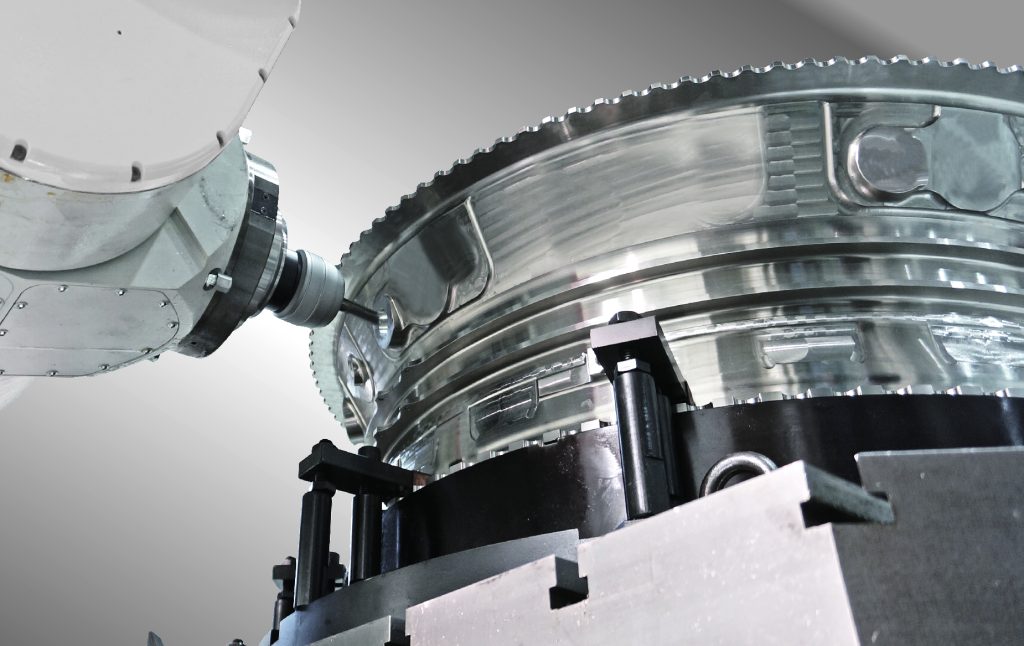
Drones concentrate functionality into compact spaces. As a result, multi-face parts with tight relationships are common: structural nodes, mounts with orthogonal faces, combined bores and side holes, and housings with complex access constraints.
Table 4 — When Drone Parts Benefit from 5-Axis Machining
| Drone component | Why geometry is challenging | Best CNC approach | Benefit |
|---|---|---|---|
| arm junction node | multi-face datums + hole patterns | 3+2 or 5-axis | fewer re-clamps, better true position |
| gimbal bracket | bores + orthogonal faces | 5-axis + controlled boring | stable pointing and rotation feel |
| camera housing | thin walls + angled surfaces | 5-axis with HSM | surface integrity + access |
| motor mount | perpendicularity to mounting face | 3+2/5-axis | reduces vibration risk |
| landing gear joints | angled bores + faces | 5-axis | easier tolerance control |
Table 5 — Mill-Turn Value in Drone Hardware
| Part type | Why it matters | Mill-turn advantage | Common inspection focus |
|---|---|---|---|
| hubs / adapters | coaxiality, balance | fewer transfers, better concentricity | runout, coaxiality, thread quality |
| shafts / spacers | bearing fits | stable diameter control | surface finish, size, roundness |
| threaded interfaces | frequent assembly cycles | controlled threading | go/no-go gauges, thread engagement |
If you are evaluating Drone manufacturing companies China, ask whether their CNC tier can:
- reduce setup count for multi-face datums,
- hold true position on bolt circles,
- and produce stable coaxial parts for rotating systems.
These capabilities show up directly in vibration stability and payload performance.
6) Drone Parts Commonly CNC-Machined (and Why)
Not everything on a drone should be CNC-machined. But the parts that define alignment, stiffness, and interface repeatability are often best produced by CNC milling or turning.
Table 6 — CNC-Machined Drone Parts and Functional Drivers
| Component | Typical function | Why CNC machining is chosen | Key machining/quality risks |
|---|---|---|---|
| motor mount | motor axis alignment | tight datum control | perpendicularity drift |
| arm node / joint | structural stiffness | multi-face accuracy | setup stack |
| payload rail | pointing repeatability | straightness + profile control | distortion |
| avionics enclosure | protection + heat path | flatness + sealing faces | flange warp |
| gimbal bracket | stabilization accuracy | bore location control | coating buildup |
| prop adapter | power transfer | concentricity | runout |
| landing gear mounts | impact resistance | strength + fit stability | thread durability |
For many Drone manufacturing companies China, the fastest route to better reliability is not changing the flight controller—it is stabilizing CNC-built interfaces that control alignment.
7) Material Selection for Drone Hardware (CNC Perspective)
Material choice affects stiffness, fatigue behavior, corrosion resistance, finish compatibility, and machinability. Drone programs often oscillate between “lightweight” and “durable,” but the right answer depends on where the part sits in the load path.
Table 7 — Common CNC Materials in Drone Builds
| Material | Best use cases | Advantages | Cautions |
|---|---|---|---|
| 6061-T6 aluminum | housings, brackets | stable machining, cost-effective | lower stiffness than 7075 in critical nodes |
| 7075-T6 aluminum | motor mounts, arm nodes | high strength/stiffness | higher cost; finish appearance variation |
| stainless steel (selected grades) | shafts, fastener interfaces | wear and corrosion resistance | weight and cycle time |
| titanium (selected grades) | high-load, corrosive environments | strong, fatigue resistance | cost, tool wear, lead time |
| acetal (POM) | fit-check jigs, light covers | machinable, stable | not structural |
| nylon (machined) | impact-prone polymer parts | toughness | moisture effects; tolerance drift |
Supplier signal: Strong CNC partners will ask what you are validating—stiffness, vibration, sealing, service cycles—before recommending material substitutions. That is a positive sign when vetting Drone manufacturing companies China.
8) Functional GD&T for Drones: Tolerances That Actually Matter
Many drone parts “look simple” until you define the functional datums. A bolt circle that is off by a small amount can still assemble, but it changes stress distribution and vibration behavior. A housing that is “within ±0.1” may still leak if the flange flatness is uncontrolled.
8.1 GD&T controls commonly critical in drones
- True position for bolt circles and dowel patterns
- Perpendicularity between motor mount face and pilot features
- Flatness for gasket interfaces
- Parallelism for rail systems and clamp surfaces
- Profile for mating surfaces and airflow-critical geometry
- Coaxiality / runout for hubs and rotating adapters
Table 8 — Drone Interface Features and Recommended Controls
| Interface | What fails if uncontrolled | Recommended control | Verification method |
|---|---|---|---|
| motor mounting | vibration, efficiency loss | datum-based true position + perpendicularity | CMM report |
| gimbal bearing system | inconsistent rotation | bore position + coaxiality | CMM + bore gauges |
| sealed enclosure | leaks, compression set issues | flatness on flange | CMM or surface plate |
| payload rail | pointing drift | profile/straightness | CMM sampling |
| coaxial hub | wobble, imbalance | runout | dial indicator + CMM |
For buyers evaluating Drone manufacturing companies China, asking for a sample CMM report on a multi-feature part is one of the fastest ways to separate marketing from capability.
9) Surface Treatments: Anodize, Hardcoat, Conductive Masking, and Finish Allowances
Surface finish decisions should be made early because finishes change dimensions. Anodizing and hardcoat can alter fits enough to turn a stable assembly into a variable one.
Table 9 — Finishes Common in CNC Drone Parts
| Finish | Typical use | Main benefit | Design/DFM note |
|---|---|---|---|
| as-machined | early builds | fastest | corrosion and cosmetic variability |
| Type II anodize | most aluminum parts | corrosion resistance | plan allowance; consider masking |
| Type III hardcoat | wear surfaces | durability | thickness can affect fits |
| conversion coating | electrical grounding needs | conductivity | appearance differs from anodize |
| bead blast + anodize | premium cosmetics | consistent look | surface texture affects contact |
Finish allowance reality (why it matters)
If a bearing seat or slip fit is machined “perfectly” and then coated, it may become too tight. A CNC supplier experienced with drone hardware will propose:
- masking critical bores,
- pre-compensating dimensions,
- or post-finish sizing strategies when appropriate.
That level of detail is a strong positive signal when evaluating Drone manufacturing companies China.
10) Inspection Systems: In-Process Probing, CMM Reports, Traceability
In drones, dimensional variation often shows up as:
- “random” vibrations between builds,
- inconsistent camera pointing,
- assembly torque scatter,
- or unexpected resonance.
A disciplined inspection plan prevents those symptoms.
Table 10 — Inspection Stack for CNC Drone Parts
| Stage | What is checked | Tools | Why it’s fast and effective |
|---|---|---|---|
| in-process | setup datums, tool wear drift | probing + offsets | prevents scrap early |
| in-cell | critical bores, thickness, threads | gauges, micrometers, go/no-go | quick feedback |
| final | datum relationships, true position | CMM | ensures functional geometry |
| lot control | consistency over time | sampling plan + records | stabilizes PVT/mass production |
For general metrology and standards frameworks used across manufacturing, these references are widely recognized:
- https://www.iso.org/standards.html
- https://www.asme.org/codes-standards
- https://www.astm.org/standards
- https://www.nist.gov/
11) Lead Time Engineering: Modular Fixturing, Soft Jaws, Setup Reduction
Speed in CNC is rarely about spindle time alone. Lead time is won by minimizing:
- setup changes,
- special fixtures that take days to build,
- rework from unclear datums,
- waiting for drawing clarifications.
Table 11 — Lead Time Levers for CNC Drone Programs
| Lever | What changes | Lead time impact | Best use case |
|---|---|---|---|
| 3+2/5-axis consolidation | fewer setups | high | multi-face nodes, gimbal brackets |
| modular fixturing | rapid repeatability | medium-high | prototypes and revisions |
| soft jaws | fast custom holding | medium | thin plates, housings |
| toolpath templates | reuse proven ops | medium | families of similar parts |
| prioritized inspection | measure what matters first | medium | rapid prototype loops |
When comparing Drone manufacturing companies China, ask how they shorten lead time without sacrificing inspection discipline. The best shops can explain their setup strategy in plain language.
12) Cost Drivers and Quoting: What Makes CNC Drone Parts Expensive
Cost is predictable when you understand the drivers. CNC drone parts often become expensive due to:
- overly tight tolerances on non-functional features,
- deep pockets and thin walls that require conservative cutting,
- multi-setup geometry that creates stack risk,
- surface treatment + masking complexity,
- high inspection demand for low quantities.
Table 12 — Cost Drivers and Safe Optimizations (CNC Drone Parts)
| Cost driver | Why it costs more | Safer optimization |
|---|---|---|
| tight tolerances everywhere | longer cycle + inspection | tighten only datums/interfaces |
| aggressive lightweighting | chatter, scrap risk | adjust wall thickness, add ribs |
| many setups on 3-axis | stack-up and rework | move critical parts to 3+2/5-axis |
| finish added late | rework, fit issues | plan coating from EVT/DVT |
| unclear revision control | mixed builds | strict revision + serialized parts |
A well-run CNC supplier will often reduce your total program cost by improving DFM and eliminating avoidable rework—especially important for teams sourcing through Drone manufacturing companies China.
13) Supplier Audit Scorecard (Use This to Compare Options)
Below is a practical scorecard you can apply to both a drone manufacturer and the CNC machining partner behind their mechanical interfaces.
Table 13 — Supplier Audit Scorecard for CNC-Driven Drone Hardware
| Category | What “good” looks like | Questions to ask | Evidence to request |
|---|---|---|---|
| Drawing comprehension | asks about datums, fits, finishes | “Which features are functional?” | annotated drawing feedback |
| CNC equipment fit | right machine for geometry | “3-axis or 5-axis for this node?” | process plan summary |
| Fixturing method | avoids distortion | “How will you hold thin walls?” | fixture concept / soft jaw plan |
| Metrology | CMM + calibration discipline | “Can you report true position?” | sample CMM report |
| Surface treatment control | understands masking/allowance | “Which bores will be masked?” | finish spec + photos |
| Traceability | lot/serial and material control | “How do you prevent mix-ups?” | traceability workflow |
| Nonconformance handling | containment + root cause | “What happens after a defect?” | corrective action example |
| On-time delivery | stable scheduling | “What’s your average OTD?” | delivery record summary |
If a company ranks high here, it is far more likely to be a reliable choice under the broad category of Drone manufacturing companies China.
14) RFQ Package Checklist for CNC Drone Parts
A strong RFQ package reduces back-and-forth and prevents incorrect assumptions.
Table 14 — RFQ Checklist (CNC-Machined Drone Parts)
| Item | Include | Why it matters |
|---|---|---|
| CAD | STEP + native if possible | avoids geometry ambiguity |
| Drawing | datums, GD&T, critical notes | locks functional intent |
| Material | alloy/temper or polymer grade | affects machinability and stiffness |
| Finish | anodize/hardcoat + masking callouts | avoids post-finish fit failures |
| Quantity | prototype + expected follow-on | informs fixturing investment |
| Critical features list | top 5–10 features | focuses inspection and timing |
| Assembly context | mating parts and fasteners | helps datum decisions |
| Delivery target | realistic and prioritized | supports scheduling |
| Inspection expectation | CMM report vs critical checks | aligns cost and lead time |
This checklist is especially useful when working with Drone manufacturing companies China that coordinate multiple sub-suppliers.
15) Three CNC Case Studies (Anonymized, Representative)
The following examples are anonymized and described at a technical level so you can recognize patterns and apply them to your own sourcing decisions. They reflect common problems seen in drone programs where CNC machining quality and process planning determine success.
Case Study 1 — Agricultural Drone Arm Node: Setup Stack Was Creating “Phantom” Vibration
Context: A medium-size agricultural platform used a multi-face arm junction node with motor mounts attached across several orthogonal surfaces.
Problem: Flight tests showed vibration variance across builds, even when electronics and motors were unchanged.
Root cause pattern: Multiple re-clamps on a basic 3-axis route caused datum shift, which altered motor axis alignment and bolt-circle true position enough to change dynamic behavior.
CNC correction strategy (what worked):
- Re-defined a functional datum scheme tied to the assembly interface.
- Moved critical geometry to a 3+2 / 5-axis style plan to reduce setup count.
- Added CMM verification for true position of the motor bolt circle relative to datums.
Result: Vibration data became consistent across revisions, making structural tuning meaningful instead of confusing.
Case Study 2 — Industrial Inspection Drone Gimbal Bracket: Coating Buildup Changed Rotation Feel
Context: A gimbal bracket required stable bearing fit and orthogonal faces for payload pointing.
Problem: EVT units felt smooth, but DVT units (after anodizing/hardcoat) showed inconsistent bearing press force and varying rotational drag.
Root cause pattern: Coating thickness and poor masking strategy changed effective bore size; additionally, bore form and surface finish were not controlled tightly enough for a repeatable bearing interface.
CNC correction strategy (what worked):
- Specified which bores must be masked (or compensated) based on fit class.
- Used controlled boring operations for form consistency.
- Documented finish allowances and verified with CMM + bore gauges.
Result: Rotation feel and pointing stability became consistent across coated builds.
Case Study 3 — Delivery Drone Payload Bay Latch: Thread Durability Failed During Service Cycles
Context: A quick-release latch system was serviced frequently during testing, with repeated assembly/disassembly.
Problem: Stripped threads and inconsistent clamp force slowed testing and caused field failures.
Root cause pattern: Prototype thread design did not account for high service cycles in aluminum; assembly torque scatter increased as threads degraded.
CNC correction strategy (what worked):
- Implemented threaded insert strategy for high-cycle fasteners.
- Standardized thread inspection with go/no-go gauges.
- Improved pocket access for tool engagement and assembly.
Result: Service cycle durability improved, torque consistency stabilized, and prototype units lasted through extended testing without constant rework.
These case patterns are exactly why selection under Drone manufacturing companies China should include a close look at the CNC machining partner—not only the final assembler.
16) How JLYPT Supports Drone Manufacturing Companies China with CNC Machining
JLYPT is positioned as a CNC machining service provider supporting drone programs with precision components that control alignment, stiffness, and assembly repeatability—especially where GD&T and inspection discipline are required.
If you are sourcing custom CNC UAV/drone parts, start here:
https://www.jlypt.com/custom-cnc-uav-parts-manufacturer/
Main site:
https://www.jlypt.com/
Where CNC suppliers typically add the most value to drone programs:
- multi-face structural nodes requiring stable datums
- motor mounts where perpendicularity and true position affect vibration
- gimbal and payload brackets where bore location controls pointing
- housings with sealing faces and controlled flatness
- turned hubs, spacers, and adapters where runout matters
When your goal is reliable scaling—not just fast prototypes—CNC process stability, inspection strategy, and finish planning become the difference between “we assembled it” and “we can ship it repeatedly.”
17) Reference Links (Standards & Metrology)
- https://www.iso.org/standards.html
- https://www.asme.org/codes-standards
- https://www.astm.org/standards
- https://www.nist.gov/