Electroless Nickel Plating Service: A CNC-Ready Guide to Ni-P Selection, Uniform Thickness, Masking, Heat Treatment, and Inspection (JLYPT)
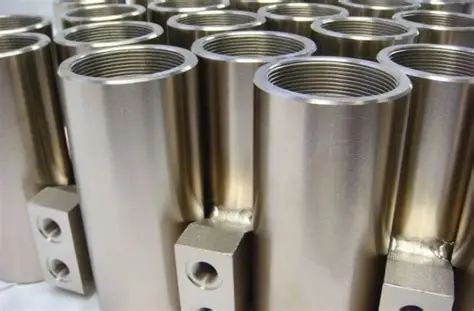
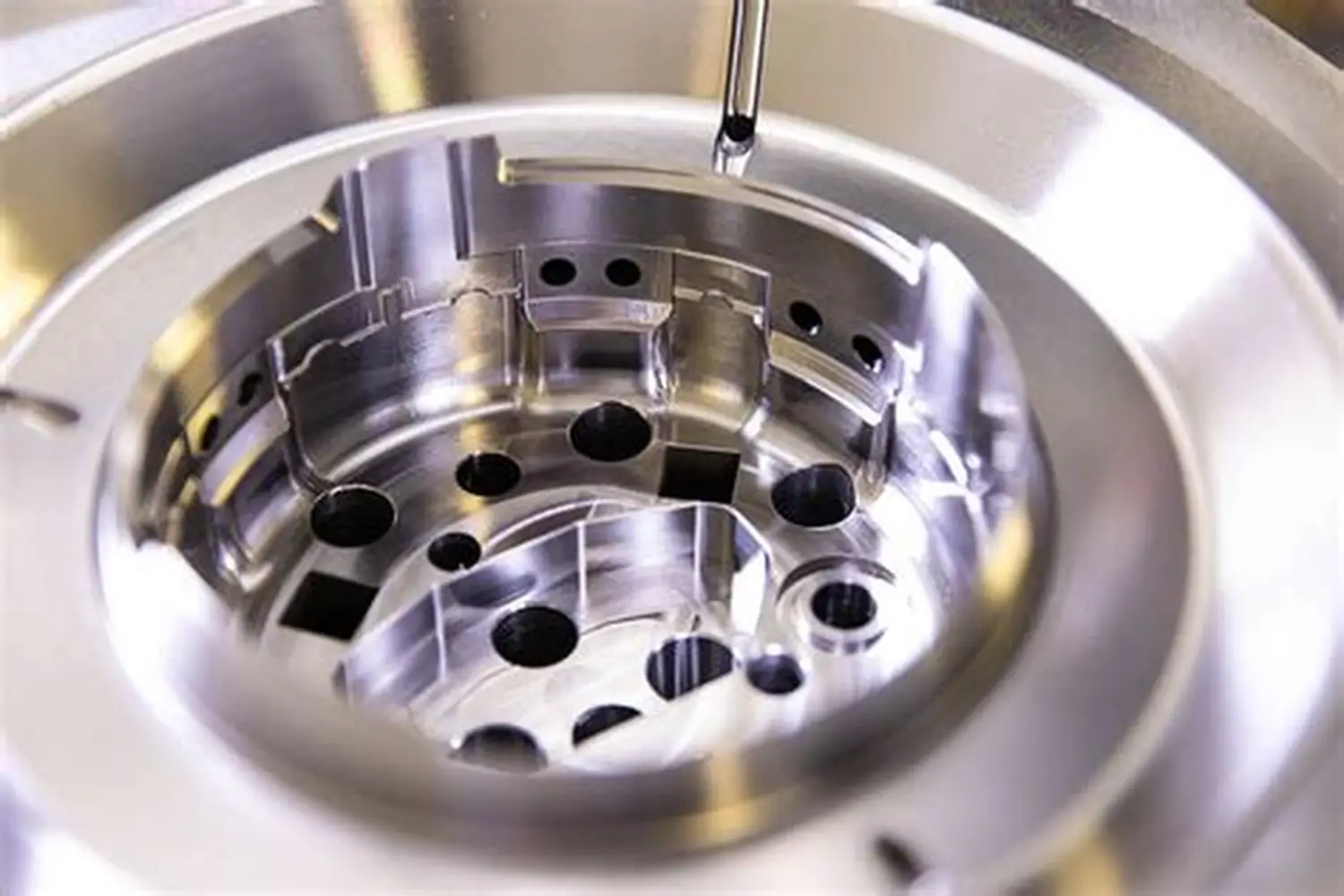
Electroless nickel is often chosen for one reason that matters in real manufacturing: uniform, controllable deposition on complex geometry—without the line-of-sight thickness variation typical of many electrolytic coatings. If your parts have pockets, cross-holes, intricate profiles, or mixed feature density, an electroless nickel plating service can be the difference between “meets print on paper” and “assembles reliably on the bench.”
This page is written for engineering, sourcing, and quality teams who need:
- consistent coating thickness on CNC machined parts,
- stable performance (corrosion resistance, hardness, lubricity, solderability—depending on chemistry),
- clear callouts that reduce RFQ back-and-forth,
- and documentation that makes receiving inspection predictable.
JLYPT is a CNC machining service provider supporting finish-driven builds where machining strategy and coating requirements must be planned together. If you want a fast, finish-aware quotation workflow, start here: https://www.jlypt.com/cnc-machining-services/ (internal, if available)
For customers comparing finishing routes, you can also review our anodizing capability here (internal link you requested to include): https://www.jlypt.com/custom-aluminum-anodizing-services/
What an electroless nickel plating service actually delivers (beyond “nickel on a part”)
An electroless nickel plating service deposits a nickel alloy—most commonly nickel-phosphorus (Ni-P)—by an autocatalytic chemical reduction process. Unlike electrolytic plating, the reaction does not rely on external current to drive deposition at high-current-density areas first. That’s why electroless nickel is valued for:
- Thickness uniformity across edges, recesses, and complex geometry
- Consistent coverage in pockets and internal features (within practical solution-flow limits)
- Tunable performance via phosphorus content (low/mid/high P)
- Optional post-plate heat treatment to raise hardness and wear resistance
- Process compatibility with multiple substrates, including steels, stainless steels, and aluminum (with correct pretreatment)
Electroless nickel is not a single coating; it’s a family of deposit chemistries and process controls. Treat it as a specification-driven engineering choice, not just a cosmetic finish.
Why buyers choose an electroless nickel plating service for CNC machined parts
When a part is machined to tight tolerances, the coating cannot be an afterthought. Most customers specify electroless nickel for one (or several) of these reasons:
Table 1 — Typical drivers for an electroless nickel plating service
| Requirement | Why electroless nickel helps | Practical impact on your part |
|---|---|---|
| Uniform coating thickness | Autocatalytic deposition is inherently even on complex shapes | More predictable fits across mixed geometry |
| Corrosion resistance | High-P Ni-P deposits can be highly corrosion resistant when properly processed | Better durability in humid or mildly aggressive environments |
| Wear resistance | Heat-treated Ni-P can reach high hardness (process dependent) | Longer life for sliding/rotating interfaces |
| Low friction options | Composite variants (e.g., Ni-P-PTFE) can reduce coefficient of friction | Reduced galling and improved release behavior |
| Barrier layer | Nickel can act as a diffusion barrier or protective layer | Improved stability for mating surfaces |
| Cosmetic / reflectivity | Nickel provides a clean metallic appearance | A consistent “engineering metal” look |
| Dimensional control | Thickness can be specified in tight bands and verified | Enables post-plate dimensional inspection routines |
If your design mixes corrosion exposure with tight fits (threads, bores, sealing lands), the “uniformity” advantage often becomes the key justification.
Electroless nickel plating service options — low, mid, and high phosphorus (Ni-P chemistry selection)
The most important knob in Ni-P electroless nickel is phosphorus content. It influences corrosion resistance, hardness, magnetic behavior, and response to heat treatment.
Table 2 — Ni-P families used in an electroless nickel plating service
| Ni-P type | Phosphorus range (typical) | Key strengths | Trade-offs | Common use cases |
|---|---|---|---|---|
| Low-P electroless nickel | ~1–4% P | High as-plated hardness, good wear | Lower corrosion resistance vs high-P | Wear components, tooling surfaces |
| Mid-P electroless nickel | ~5–9% P | Balanced hardness + corrosion performance | “Middle of the road” (needs spec clarity) | General engineering, mixed requirements |
| High-P electroless nickel | ~10–13% P | Best corrosion resistance, often non-magnetic as plated | Slightly lower as-plated hardness; heat treat changes structure | Fluid-contact parts, outdoor exposure, critical corrosion needs |
Selection shortcut:
- Choose high-P when corrosion performance and chemical stability dominate.
- Choose low-P when wear and hardness dominate (often with heat treatment).
- Choose mid-P when you need a practical balance and robust availability.
A quote request that simply says “electroless nickel” is incomplete. A quote request that says electroless nickel plating service, high phosphorus, thickness X is actionable.
Thickness planning in an electroless nickel plating service (and why CNC teams care)
Electroless nickel is typically specified in microns or inches, and it absolutely affects dimensions—especially on high-precision parts. Because the coating is relatively uniform, it’s easier to plan for than many electrolytic coatings, but you still need a strategy.
Table 3 — Typical electroless nickel thickness bands (engineering perspective)
| Thickness band | Typical intent | Where it’s used | What to watch |
|---|---|---|---|
| 2–5 µm | Light protection, minimal dimensional change | Non-critical coverage, light corrosion barrier | Porosity risk increases at very low thickness |
| 5–12 µm | Common general-purpose range | Brackets, enclosures, many CNC assemblies | Define significant surfaces + measurement plan |
| 12–25 µm | Robust corrosion/wear barrier | Fluid parts, functional sliding contact | Dimensional impact on threads/bores is real |
| 25–75 µm (process-dependent) | Heavy duty service | Rebuild, wear surfaces, specialized applications | Cost, lead time, and edge condition become critical |
CNC reality: When thickness goes up, masking and machining allowances become more important—not optional.
Uniform thickness is not “magic thickness” — geometry and solution flow still matter
Electroless nickel is famous for uniformity, but complex geometry can still create local variation due to:
- solution exchange limitations,
- gas bubble entrapment,
- boundary layer effects,
- and racking orientation.
Table 4 — Geometry-driven risks in an electroless nickel plating service
| Feature | Risk | How it shows up | Mitigation |
|---|---|---|---|
| Deep blind pockets | Stagnant solution reduces deposition rate | Thin deposit at the bottom, color shift | Add venting, change orientation, define measurement points |
| Small diameter cross-holes | Trapped bubbles | Bare spots or thin areas | Add break edges, process orientation, agitation |
| Extremely sharp edges | Coverage may be thinner at knife edges | Early wear/corrosion at edge | Add chamfer/radius; avoid zero-radius edges |
| Tight internal bores | Incomplete solution exchange | Lower deposition, measurement difficulty | Mask or redesign; specify significant surfaces |
| Mixed surface finish areas | Appearance differences after plating | “Patchy reflectivity” | Standardize machining finish on cosmetic areas |
If you want predictable outcomes, discuss the geometry early—especially if you need internal feature coverage to be function-critical.
Substrate compatibility — what an electroless nickel plating service must do differently for aluminum, steel, and stainless
Pretreatment is not a minor setup step. It determines adhesion, blister resistance, and long-term performance.
Table 5 — Substrate-specific pretreatment essentials
| Substrate | Key pretreatment need | Why it matters | Practical note |
|---|---|---|---|
| Carbon steel / alloy steel | Proper cleaning + activation | Prevents skips and adhesion failures | Watch for hydrogen embrittlement risk (spec dependent) |
| Stainless steel | Activation is critical due to passive film | Poor activation = peeling or blistering | Process discipline matters most here |
| Aluminum alloys | Zincate / double-zincate (common approach) | Aluminum oxidizes instantly; needs an intermediate layer | Alloy selection affects uniformity |
| Copper alloys | Surface prep for uniform deposit | Can plate well with correct prep | Clarify solderability needs |
| Powder metallurgy / porous materials | Seal pores or treat appropriately | Entrapped chemistry can cause issues | Evaluate porosity and functional requirement |
A robust electroless nickel plating service should ask “what alloy?” before promising cosmetic consistency or adhesion guarantees—especially on aluminum and stainless.
Electroless nickel plating on aluminum — what engineers should specify to avoid rejects
Aluminum is common in CNC, but it is also a substrate where the difference between a cosmetic win and a scrap event is often pretreatment quality.
Table 6 — Aluminum-specific risk controls for an electroless nickel plating service
| Risk | Root cause | Typical symptom | Preventive control |
|---|---|---|---|
| Adhesion loss | Inadequate zincate/activation | Peeling, flaking near edges | Use controlled zincate sequence; verify activation |
| Pitting under deposit | Surface contamination or aggressive etch | Small pits telegraph through | Tight cleaning control; define acceptable cosmetic level |
| Alloy-to-alloy shade variation | Different alloy chemistry | Visible mismatch across parts | Standardize alloy family for cosmetic builds |
| Thread fit tight | Thickness adds to pitch diameter | High assembly torque | Mask threads or machine allowance |
| Galvanic considerations | Nickel vs mating metals | Corrosion at interfaces | Evaluate environment; specify sealing/coating system |
If your end-use includes salt exposure or dissimilar metal contact, call that out at RFQ—material pairing matters.
Heat treatment in an electroless nickel plating service (hardness, wear, and dimensional caution)
Ni-P deposits can be heat treated to change structure and raise hardness. This is often used for wear parts, but it must be planned because heat treatment can:
- change hardness significantly (process dependent),
- influence corrosion performance (again chemistry dependent),
- and interact with base material properties and distortion risk.
Table 7 — When heat treatment makes sense
| Goal | Ni-P type often chosen | Why heat treat | What to confirm |
|---|---|---|---|
| Maximum wear resistance | Low-P or mid-P | Raises hardness and improves wear behavior | Final hardness target, temperature limits of base material |
| Moderate wear + corrosion | Mid-P | Balanced performance | Whether corrosion spec is still met after heat treat |
| Corrosion-critical parts | High-P | Often used as-plated for corrosion | Avoid heat treat if it compromises corrosion need (spec-specific) |
If you need heat treatment, state it clearly on the PO and confirm whether thickness and hardness verification are required.
Masking strategy in an electroless nickel plating service (threads, bores, sealing lands, electrical contact)
Masking is where plating programs become predictable. Without it, your “perfectly machined” tolerances can shift into an assembly headache.
Table 8 — Masking decision matrix (practical CNC assembly view)
| Feature type | Masking recommendation | Why | Alternative approach |
|---|---|---|---|
| Fine threads | Often mask | Pitch diameter grows with coating | Machine allowance; post-plate thread chase if permitted |
| Precision bores | Often mask or allowance | Fit changes and gauge failures | Finish-ream after plate (if allowed) |
| Press-fit shafts | Plan carefully | Thickness changes interference | Machine undersize/oversize accordingly |
| Sealing faces (gasket/O-ring) | Case-dependent | Surface energy + thickness affect sealing | Define surface finish + whether plated surface is acceptable |
| Electrical bonding pads | Mask | Nickel may be acceptable, but define requirement | Specify dedicated bond area and finish |
| Cosmetic faces | Avoid rack marks | Aesthetic + customer acceptance | Define “A-surfaces” and rack-contact zones |
A high-performing supplier will ask you to identify significant surfaces and no-plate zones before releasing production.
Inspection and documentation for an electroless nickel plating service (thickness, adhesion, porosity)
If your receiving inspection is strict—or if your customer requires compliance documentation—define the inspection outputs in the RFQ. Thickness verification can be straightforward, but it must be aligned with the geometry.
Table 9 — Common inspection methods used with an electroless nickel plating service
| Property | Method (typical) | Destructive? | Best for | Notes |
|---|---|---|---|---|
| Thickness | XRF measurement | No | Routine production | Fast, reliable on accessible surfaces |
| Thickness | Cross-section microscopy | Yes | Qualification, troubleshooting | Highest confidence; slower |
| Adhesion | Bend test / thermal shock / tape test (program-dependent) | Sometimes | Process validation | Must match your spec requirements |
| Porosity | Porosity testing methods (spec-dependent) | Sometimes | Corrosion-critical parts | Define acceptance criteria clearly |
| Hardness | Microhardness test | Sometimes | Wear parts | Often done for qualification lots |
| Visual appearance | Controlled lighting | No | Cosmetic parts | Define cosmetic standard and defect limits |
Tip for clean acceptance: specify where thickness is measured (points, surfaces, or representative locations) and whether your “minimum” applies to all significant surfaces.
Standards and specs commonly associated with an electroless nickel plating service (for clearer callouts)
Different industries reference different standards. Instead of guessing, align the coating type, phosphorus content, thickness, and post-treatments to a recognized framework—then add your part-specific requirements (masking, cosmetics, measurement points).
Table 10 — Common specification families to reference (engineering navigation)
| Standard / framework | What it helps define | Why buyers use it |
|---|---|---|
| ASTM B733 | Electroless nickel coating requirements | Clear categories for Ni-P types and thickness |
| ISO 4527 | Electroless nickel-phosphorus coatings | International reference for coating requirements |
| Customer internal specs | Cosmetics, testing, traceability | Often more strict than generic standards |
External, non-competitor reference links (for your page “DoFollow” outbound links):
- ASTM standards catalog (search B733): https://www.astm.org/standards.html
- ISO standards catalog (search ISO 4527): https://www.iso.org/standards.html
- NIST measurement references (metrology background): https://www.nist.gov/
(These are standards bodies and metrology references—not competing plating shops.)
Choosing the right electroless nickel plating service: corrosion vs wear vs lubricity
Many RFQs fail because they ask for “electroless nickel” but actually need a defined performance. Use the matrix below to avoid mismatched chemistry.
Table 11 — Selection matrix for an electroless nickel plating service
| Primary need | Best-fit Ni-P direction | Typical thickness range (example) | Add-ons to consider |
|---|---|---|---|
| Corrosion resistance in humid/mild chemical environment | High-P | 10–25 µm | Tight sealing/handling; porosity testing if critical |
| Wear resistance / sliding contact | Low-P or mid-P + heat treat | 12–25 µm | Heat treatment, surface finish control |
| Balanced general engineering | Mid-P | 5–15 µm | Standard thickness report |
| Reduced friction / release behavior | Composite (e.g., Ni-P-PTFE) | Spec-driven | Validate coefficient of friction and wear mode |
| Cosmetic metallic look | Mid-P or high-P | 5–12 µm | Define polish/texture and rack-contact zones |
If you tell JLYPT your environment and functional wear mode, we can help steer the finish selection early—before the first build reveals a mismatch.
CNC machining decisions that directly affect electroless nickel plating outcomes
Plating quality is not “fixed” by chemistry alone. The deposit is honest: it follows the surface you machine.
Table 12 — CNC-to-plating integration checklist
| Upstream factor | Why it matters for an electroless nickel plating service | Best practice |
|---|---|---|
| Surface roughness (Ra) | Controls reflectivity, friction, and sealing performance | Put Ra on functional/cosmetic faces; maintain consistent finishing passes |
| Burrs and smeared material | Causes skips, nodules, and adhesion weak points | Deburr consistently; avoid torn edges |
| Coolant residues | Leads to plating voids and stains | Use controlled cleaning and compatible fluids |
| Edge condition | Sharp edges are vulnerable | Add small chamfers/radii to protect coating continuity |
| Part handling | Fingerprints become defects | Gloves + protective packaging for cosmetic builds |
| Dimensional strategy | Thickness changes fits | Mask or machine allowance; define post-plate dimensions if needed |
A reliable electroless nickel plating service is easier when machining and finishing are planned as one process chain.
Typical defects and how a disciplined electroless nickel plating service prevents them
You can reduce risk dramatically by recognizing failure modes early and specifying controls in the RFQ.
Table 13 — Defect library (symptom → cause → prevention)
| Symptom | Likely cause | Prevention / corrective action |
|---|---|---|
| Peeling or flaking | Poor activation / pretreatment | Substrate-specific activation, verified pretreatment sequence |
| Skip plating / bare spots | Contamination, trapped gas in holes, poor solution exchange | Improve cleaning, adjust orientation, vent holes |
| Rough or nodular finish | Surface contamination or bath issues | Tight bath control, filtration, improved surface prep |
| Thickness out of range | Poor process timing/controls or unclear acceptance | Define measurement points; require thickness report |
| Cosmetic haze or streaks | Inconsistent surface finish or handling | Standardize machining finish; define cosmetic handling/packaging |
| Thread fit issues | Coating not planned in tolerance stack | Mask threads or machine allowance |
If your parts are cosmetic, also define what “acceptable” means (scratch limits, rack mark placement, reflectivity expectations). Cosmetic acceptance criteria should never be left to interpretation.
Drawing callout templates (editable) for an electroless nickel plating service
Use these as starting points. Your internal standards may require specific formatting.
Table 14 — Example callouts you can place on the drawing
| Use case | Example callout language (customize) |
|---|---|
| General-purpose Ni-P | “Electroless nickel plating service required. Ni-P, mid-phosphorus. Thickness: __ µm on significant surfaces. Mask features per note __.” |
| Corrosion-focused | “Electroless nickel plating service: high-phosphorus Ni-P for corrosion resistance. Thickness: __ µm min on significant surfaces. Provide thickness verification report.” |
| Wear-focused + heat treat | “Electroless nickel plating service: Ni-P, heat treat to achieve required hardness (specify target). Thickness: __ µm. Mask threads/bores as indicated.” |
| Cosmetic A-surfaces | “Electroless nickel plating service. No rack marks permitted on A-surfaces (see view). Cosmetic acceptance per sample/criteria.” |
| Tight fits | “Electroless nickel plating service. Threads and precision bores masked (see masking map). Final dimensions apply after plating.” |
If you want, share one of your current drawing notes and I can rewrite it into a cleaner, production-ready callout that reduces supplier interpretation.
RFQ checklist — what to send to get a fast quote for an electroless nickel plating service
The fastest quotes come from complete information.
Table 15 — RFQ inputs that directly affect cost, lead time, and yield
| RFQ item | Why it matters | Example |
|---|---|---|
| Base material + grade | Pretreatment and adhesion differ by alloy | 6061-T6 / 7075 / 303 SS / 4140 |
| Coating chemistry | Determines corrosion/hardness behavior | High-P / Mid-P / Low-P |
| Thickness requirement | Drives process time + inspection | 10 µm min / 12–18 µm / etc. |
| Significant surfaces | Defines where thickness matters | External faces + internal bore surfaces |
| Masking map | Prevents fit issues and functional failures | Mask M3 threads, datum pads, grounding areas |
| Post-treatment | Heat treat, passivation, etc. | Heat treat required / not required |
| Inspection deliverables | Controls QA workload | XRF thickness report, CoC, lot traceability |
| Cosmetic criteria | Prevents rejections | A-surface definition, allowed rack contact zones |
| Quantity + schedule | Affects batching and fixtures | 20 prototypes, then 1,000 pcs/month |
To route your request to a finishing-aware CNC workflow at JLYPT, use:
- https://www.jlypt.com/contact/ (if available)
- Or start from our finishing hub (internal link you requested): https://www.jlypt.com/custom-aluminum-anodizing-services/
3 production-style case studies (how an electroless nickel plating service solves real CNC problems)
These examples are written as practical templates—similar to what procurement and engineering teams actually face.
Case Study 1 — Aluminum Sensor Housing (Corrosion + Dimensional Control)
Part: CNC machined aluminum housing with pockets, O-ring gland, and threaded ports
Problem: anodizing was not suitable for sealing surfaces and certain assembly interfaces; corrosion performance needed improvement
Solution: electroless nickel plating service on significant surfaces, with masking on critical threads and controlled thickness on sealing land
Key process choices:
- Aluminum pretreatment route chosen to maximize adhesion stability
- Masking plan defined for threaded ports to maintain fit
- XRF thickness checks documented at specified external flats Result: improved corrosion performance and more stable assembly compared with prior finishing approach, with consistent appearance across builds.
Case Study 2 — Steel Actuation Component (Wear + Heat-Treated Hardness)
Part: CNC machined alloy steel component with sliding contact surfaces and tight functional tolerances
Problem: premature wear and galling on contact surfaces; customer needed a plating approach with uniform thickness and wear resistance
Solution: electroless nickel plating service with wear-oriented chemistry and post-plate heat treatment (program-defined)
Key process choices:
- Thickness band selected to balance wear life with tolerance stack-up
- Critical mating surfaces defined as significant surfaces
- Hardness verification performed on qualification samples (as required) Result: longer service life in sliding contact and more predictable part-to-part behavior due to uniform deposit thickness.
Case Study 3 — Stainless Fluid Hardware (Activation + Corrosion Reliability)
Part: CNC machined stainless component for fluid contact with internal passages and complex geometry
Problem: inconsistent adhesion in early trials due to stainless passivity; corrosion performance and coverage in recesses were critical
Solution: electroless nickel plating service using corrosion-focused chemistry with careful stainless activation and geometry-aware orientation
Key process choices:
- Activation controls tightened to prevent adhesion loss
- Coverage risk in deep features addressed via orientation and inspection point selection
- Documentation package included thickness report and lot identification (program-specific) Result: stable adhesion and uniform functional coverage on complex geometry, reducing rework loops and incoming QA holds.
Internal links (SEO + conversion)
Add these inside your page body (not only in navigation), ideally near the first CTA and again near the RFQ checklist:
- Primary finishing hub (requested): https://www.jlypt.com/custom-aluminum-anodizing-services/
- CNC machining services (if live): https://www.jlypt.com/cnc-machining-services/
- Contact/RFQ (if live): https://www.jlypt.com/contact/
- Home (brand trust): https://www.jlypt.com/
Even though this article is about an electroless nickel plating service, linking to your anodizing page can capture visitors who are still deciding between finishes.
External links (non-competitor, “DoFollow” credibility links)
Include a small “References” section in the footer of your page:
- ASTM standards catalog (search electroless nickel specs): https://www.astm.org/standards.html
- ISO standards catalog (search electroless nickel-phosphorus coatings): https://www.iso.org/standards.html
- NIST (metrology and measurement background): https://www.nist.gov/
These outbound links strengthen topical trust without sending traffic to competing plating suppliers.
FAQ — what buyers ask before ordering an electroless nickel plating service
Q: Is electroless nickel plating thickness uniform enough for precision CNC fits?
Uniformity is one of the main advantages, but thickness still changes dimensions. The best practice is to define significant surfaces, measurement points, and masking for threads/bores where fit is critical.
Q: Which Ni-P chemistry should I choose for corrosion resistance?
High-phosphorus Ni-P is commonly selected for corrosion-focused applications. Confirm the environment (humidity, salts, chemicals) so the coating and any post-treatments align with the real exposure.
Q: Can you plate aluminum parts reliably?
Yes, provided the pretreatment route is correct and the alloy is disclosed. Aluminum requires a controlled activation/intermediate step to ensure adhesion stability.
Q: What inspection records can I request?
Typical deliverables include thickness reports (often XRF), visual inspection records, and certificates of conformance. Program-specific testing can be added when required.
Final CTA (conversion-focused, place above your footer)
If you need a production-ready electroless nickel plating service that matches CNC tolerances, protects functional surfaces, and arrives with clear inspection documentation, send your drawing plus a short list of: (1) base material, (2) thickness requirement, (3) significant surfaces, and (4) masking needs.
Start here: https://www.jlypt.com/custom-aluminum-anodizing-services/
(If you prefer, create a dedicated electroless nickel landing page and place this same CTA there—then cross-link to anodizing as an alternative finish option.)