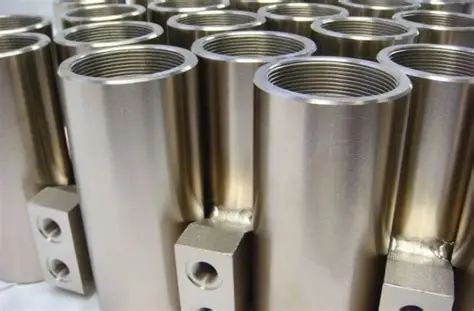
Electroless Nickel Plating Service: Advanced Surface Engineering for CNC Machined Components
Electroless nickel plating service has transformed surface engineering for precision CNC machined parts, delivering uniform coating thickness across complex geometries that electrolytic processes cannot match. At JLYPT, our autocatalytic nickel deposition technology produces consistent, high-performance coatings on aluminum, steel, copper, and specialized alloys without requiring electrical current, ensuring every surface—internal passages, blind holes, recessed features—receives identical protection.
Understanding Electroless Nickel Plating Service Technology
Electroless nickel plating service operates through autocatalytic chemical reduction, depositing nickel-phosphorus or nickel-boron alloys onto metal substrates without external power. The process maintains self-sustaining reduction reactions where hypophosphite or borohydride reducing agents donate electrons, converting nickel ions into metallic nickel while simultaneously incorporating phosphorus or boron into the deposit matrix.
This fundamental difference from electrolytic plating eliminates thickness variation caused by current density distribution. Sharp edges receive the same coating thickness as recessed areas—a critical advantage when plating precision CNC machined components with intricate geometries. The deposit grows uniformly at rates of 10-25 microns per hour, controlled by bath chemistry, temperature, and pH rather than electrical parameters.
The phosphorus content in electroless nickel plating service determines coating properties. Low-phosphorus deposits (1-5% P) offer maximum hardness and wear resistance. Mid-phosphorus formulations (6-9% P) balance corrosion protection with mechanical properties, serving as the industry standard. High-phosphorus coatings (10-13% P) provide superior corrosion resistance and magnetic neutrality for electronics applications.
Key Performance Characteristics
Electroless nickel plating service delivers measurable advantages for CNC machined parts requiring dimensional precision with enhanced surface properties. The coating exhibits exceptional hardness—400-500 HV as-deposited, increasing to 900-1100 HV after heat treatment at 400°C. This hardness exceeds most tool steels, providing wear resistance comparable to hard chrome plating.
Corrosion protection stems from the alloy’s passive film formation. High-phosphorus electroless nickel plating service achieves 1000+ hours neutral salt spray resistance on steel substrates, outperforming zinc plating and rivaling stainless steel. The amorphous or microcrystalline structure contains no grain boundaries where corrosion typically initiates, creating a barrier layer that protects base metals from aggressive environments.
Coating uniformity represents perhaps the most significant benefit. Thickness variation remains within ±10% across complex CNC machined surfaces, compared to ±50% or more for electrolytic processes. This consistency allows tighter dimensional control, predictable assembly fits, and reliable performance across production batches.
Technical Specifications: Electroless Nickel Plating Service
| Parameter | Low-Phosphorus (1-5% P) | Mid-Phosphorus (6-9% P) | High-Phosphorus (10-13% P) | Test Method |
|---|---|---|---|---|
| Deposit Hardness (as-plated) | 650-750 HV | 500-600 HV | 400-500 HV | ASTM E384 |
| Hardness After Heat Treatment | 950-1100 HV @ 400°C | 900-1000 HV @ 400°C | 800-950 HV @ 400°C | ASTM E384 |
| Phosphorus Content | 1-5 wt% | 6-9 wt% | 10-13 wt% | EDS/XRF |
| Deposit Structure | Crystalline | Mixed | Amorphous | XRD Analysis |
| Corrosion Resistance (NSS) | 200-400 hours | 500-800 hours | 1000+ hours | ASTM B117 |
| Wear Resistance (Taber) | Excellent | Very Good | Good | ASTM D4060 |
| Magnetic Properties | Magnetic | Slightly magnetic | Non-magnetic | ASTM A342 |
| Solderability | Poor | Good | Excellent | MIL-STD-883 |
| Internal Stress | 200-400 MPa tensile | 100-200 MPa tensile | Low, compressive | ASTM B636 |
| Typical Thickness Range | 5-25 microns | 5-50 microns | 5-75 microns | XRF/Coulometric |
| Deposition Rate | 15-20 µm/hr | 12-18 µm/hr | 10-15 µm/hr | Internal Protocol |
| Operating Temperature | 88-93°C | 88-93°C | 88-93°C | Temperature Control |
Electroless Nickel Plating Service Process Flow
Pre-Treatment: Critical Foundation for Adhesion
Surface preparation determines coating adhesion and long-term performance in electroless nickel plating service. CNC machined parts carry residual cutting fluids, metal particles, oxide films, and surface contaminants that prevent proper nickel deposition. Our multi-stage pre-treatment removes these barriers while activating the substrate for autocatalytic reaction initiation.
The cleaning sequence begins with alkaline soak cleaning at 60-80°C, using formulated detergents that emulsify machining oils without attacking the base metal. Immersion time varies by contamination level—typically 5-15 minutes for standard CNC machined parts. We monitor cleaning effectiveness through water-break testing, ensuring complete wetting before proceeding.
Acid activation follows alkaline cleaning, removing oxide films and exposing fresh metal surface. For steel substrates, we employ 10-15% sulfuric acid or hydrochloric acid solutions. Aluminum parts require specialized activation with nitric-hydrofluoric acid mixtures that dissolve native aluminum oxide while creating optimal surface topography. Stainless steel demands more aggressive activation—often sulfuric acid at elevated temperatures or proprietary activators containing oxidizing agents.
Activation Chemistry by Substrate:
- Aluminum alloys: Zincate treatment creates zinc displacement layer, providing nucleation sites for nickel deposition. Double zincate (strip first layer, reapply) ensures uniform activation across alloy segregation zones.
- Steel/stainless steel: Wood’s nickel strike deposits thin nickel layer from chloride-based electrolyte, overcoming passive films and establishing conductive interface.
- Copper alloys: Mild acid activation removes tarnish; direct plating possible on most copper substrates.
- Titanium: Aggressive hydrofluoric-nitric acid activation required to penetrate tenacious oxide; some formulations include palladium catalyzation.
Rinsing between process steps uses deionized water to prevent cross-contamination. We maintain rinse water conductivity below 10 µS/cm and monitor dragout to preserve bath chemistry. Parts enter the electroless nickel plating service bath within 60 seconds of final rinse to prevent re-oxidation.
Electroless Nickel Deposition: Controlled Autocatalytic Growth
The electroless nickel plating service bath contains nickel sulfate or nickel chloride as the metal source, sodium hypophosphite as the reducing agent, complexing agents to prevent spontaneous decomposition, stabilizers to control reaction rate, and pH buffers. Bath temperature maintains 88-93°C—the optimal range for stable deposition rates without excessive bath degradation.
The autocatalytic reaction occurs only on catalytic surfaces (nickel, cobalt, palladium, and activated base metals):
Ni²⁺ + H₂PO₂⁻ + H₂O → Ni⁰ + H₂PO₃⁻ + 2H⁺
Simultaneously, phosphorus incorporates into the deposit through secondary reactions, creating the nickel-phosphorus alloy. Hydrogen gas evolution accompanies deposition, requiring adequate ventilation and bath agitation to prevent porosity.
Our electroless nickel plating service maintains strict process control:
- pH monitoring: Maintained at 4.8-5.2 for mid-phosphorus formulations using automated dosing systems. pH drift affects deposition rate and phosphorus content.
- Temperature control: ±1°C tolerance through PID-controlled heating and recirculation systems. Temperature variations alter deposit properties and bath stability.
- Loading calculation: Maximum 0.8-1.2 dm² substrate area per liter of bath volume prevents metal depletion and maintains consistent deposition rates.
- Nickel replenishment: Continuous or batch addition maintains metal ion concentration at 4.5-6.0 g/L nickel.
- Hypophosphite control: Maintained at 20-30 g/L through analytical testing and automated feed systems.
- Bath turnover: Complete solution replacement after processing 3-5 metal turnovers prevents stabilizer buildup and contamination accumulation.
Filtration systems remove particulates continuously, maintaining bath clarity and preventing inclusion defects. We employ 1-5 micron cartridge filters with activated carbon polishing for organic contamination control.
Post-Treatment and Heat Treatment Options
Parts exit the electroless nickel plating service bath with excellent as-deposited properties, but post-treatment can enhance specific characteristics. Standard procedure includes:
- Hot water rinse (60-80°C) to displace bath chemistry and prevent staining
- Deionized water rinse cascade to remove residual salts
- Chromate conversion coating (optional) for additional corrosion protection and enhanced appearance
- Drying in forced-air ovens at 80-120°C
Heat treatment transforms electroless nickel plating service deposits from as-plated condition to maximum hardness. Heating at 400°C for 1 hour precipitates nickel phosphide (Ni₃P) phases, increasing hardness from 500 HV to 1000+ HV. This treatment suits wear-critical applications—bearing surfaces, sliding components, valve seats.
However, heat treatment introduces considerations:
- Dimensional changes: Coating contracts approximately 0.5-1.0% during heat treatment, affecting precision tolerances
- Substrate effects: Base metal may undergo tempering, stress relief, or phase transformation
- Hydrogen embrittlement relief: High-strength steels (>40 HRC) benefit from baking at 190-210°C for 3-23 hours to prevent delayed cracking
- Corrosion resistance reduction: Crystallization during heat treatment can slightly reduce corrosion protection
We evaluate heat treatment requirements during design review, balancing hardness requirements against dimensional precision and base metal properties.
Material Compatibility for Electroless Nickel Plating Service
| Substrate Material | Pre-Treatment Required | Adhesion Quality | Typical Applications | Special Considerations |
|---|---|---|---|---|
| Aluminum 6061-T6 | Double zincate | Excellent | Aerospace components, optical mounts | Prevents galvanic corrosion in assemblies |
| Aluminum 7075-T6 | Double zincate | Excellent | Structural parts, high-stress components | High copper content requires careful activation |
| Stainless Steel 304/316 | Wood’s strike + activation | Very Good | Medical devices, food processing equipment | Passive film removal critical |
| Carbon Steel 1018/1045 | Acid activation | Excellent | Hydraulic cylinders, pump shafts | Hydrogen embrittlement risk on hardened grades |
| Tool Steel (H13, D2) | Acid activation + strike | Excellent | Molds, dies, wear surfaces | Pre-treatment must not affect hardness |
| Copper/Brass | Light acid activation | Excellent | Electrical contacts, RF shielding | Direct plating possible on clean surfaces |
| Titanium Ti-6Al-4V | HF-HNO₃ activation | Good | Aerospace, medical implants | Aggressive activation required |
| Magnesium AZ31 | Specialized zinc immersion | Fair to Good | Lightweight housings | Limited bath life, careful pH control |
| Beryllium Copper | Acid activation | Excellent | Spring contacts, precision instruments | Maintains electrical conductivity |
| Kovar/Alloy 42 | Standard activation | Excellent | Glass-to-metal seals | Thermal expansion match preserved |
Electroless Nickel Plating Service vs. Alternative Coatings
Understanding when electroless nickel plating service provides optimal performance requires comparison against competing surface treatments. While custom aluminum anodizing services excel for aluminum-specific applications, electroless nickel offers universal substrate compatibility and superior thickness uniformity.
| Coating Type | Thickness Uniformity | Hardness (HV) | Substrate Compatibility | Corrosion Protection | Lubricity | Cost Efficiency |
|---|---|---|---|---|---|---|
| Electroless Nickel (Mid-P) | ±10% | 500-600 (1000 HT) | Universal | Excellent (1000+ hrs NSS) | Good | Medium-high volume: good |
| Electroless Nickel-PTFE | ±10% | 400-500 | Universal | Very Good | Excellent (0.05-0.15 μ) | Specialized applications |
| Hard Chrome Plating | ±50% | 800-1000 | Ferrous, limited non-ferrous | Very Good | Good | Low volume: moderate |
| Type II Anodizing | ±5% on Al only | 200-400 | Aluminum only | Good (336+ hrs) | Fair | Aluminum parts: excellent |
| PVD TiN Coating | ±15% | 2000-2500 | Limited by temperature | Poor (porous) | Good | Tooling applications |
| Electrolytic Nickel | ±50% | 150-200 | Conductive substrates | Good | Fair | High volume: good |
| Zinc-Nickel Plating | ±40% | 200-300 | Ferrous metals | Excellent (1000+ hrs) | Fair | Automotive: good |
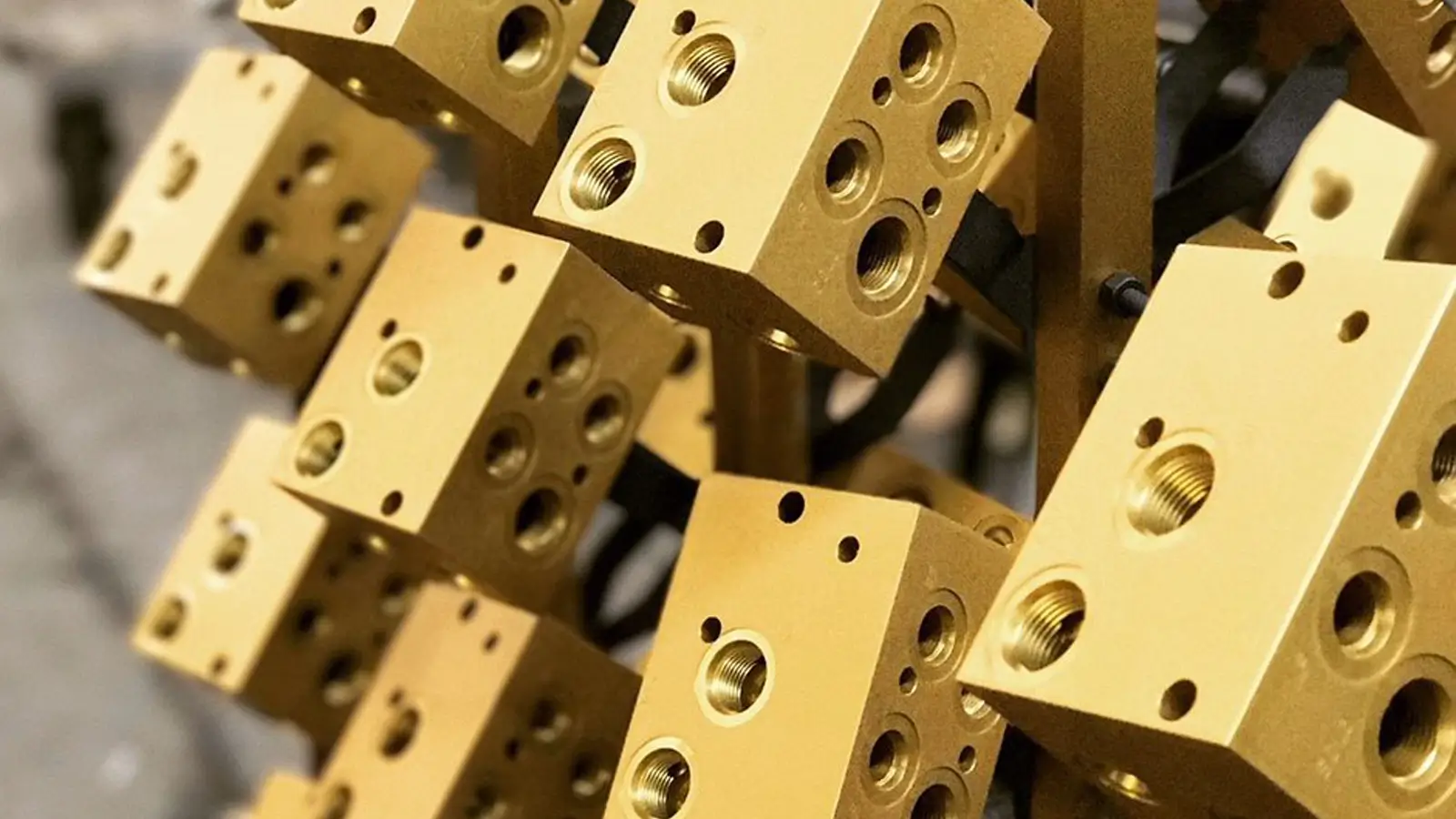
Electroless nickel plating service delivers unique advantages for CNC machined components with complex internal geometries. Blind holes, deep recesses, internal channels—features inaccessible to line-of-sight processes like PVD or inconsistently coated by electrolytic methods—receive uniform protection. This capability makes EN plating indispensable for hydraulic manifolds, valve bodies, and intricate assemblies.
Real-World Applications: Three Case Studies
Case Study 1: Hydraulic Valve Manifolds – 7075-T6 Aluminum
Project Requirements: Defense contractor specified electroless nickel plating service for hydraulic valve manifolds machined from 7075-T6 aluminum. Parts featured complex internal passages (3mm diameter, 150mm length), cross-drilled intersections, and critical sealing surfaces requiring 15-20 micron coating thickness with maximum 1000 HV hardness after heat treatment.
Technical Challenges:
- Internal passage coating uniformity verification
- Maintaining dimensional tolerance of ±0.025mm on sealing surfaces after coating
- Preventing aluminum alloy distortion during 400°C heat treatment
- Achieving MIL-C-26074 Class 4 specification compliance
Solution Implementation:
We developed a specialized process sequence addressing each challenge:
Pre-treatment optimization: Double zincate activation with extended dwell time (45 seconds first zincate, 60 seconds second application) ensured complete coverage of internal surfaces. We verified activation quality using borescope inspection of internal passages, confirming uniform zinc displacement layer.
Controlled deposition: Mid-phosphorus electroless nickel plating service bath maintained at 90°C with reduced loading (0.6 dm²/L) ensured consistent thickness through complex geometries. Real-time thickness monitoring on witness coupons tracked deposition rate, with process termination at 18 microns average thickness accounting for heat treatment shrinkage.
Dimensional preservation: Parts underwent stress-relief at 175°C for 2 hours post-plating before final heat treatment. This two-stage thermal cycle minimized aluminum alloy movement while achieving required coating hardness. CMM inspection verified dimensional stability within ±0.015mm on critical sealing surfaces.
Internal verification: We developed custom measurement protocols using ultrasonic thickness gauges with specialized probes for internal passage verification. Statistical sampling confirmed thickness variation of 16-19 microns throughout internal features.
Results Achieved:
All 250 production manifolds met MIL-C-26074 specifications with zero rejections. Hydraulic pressure testing at 5000 psi showed no leakage across 10,000 cycle fatigue testing. Field deployment in naval aircraft hydraulic systems demonstrated zero coating failures over 24 months operational service. The electroless nickel plating service eliminated previous galvanic corrosion issues between aluminum manifolds and steel fittings, extending service intervals from 500 to 2000 flight hours.
Customer reported 35% cost reduction versus previous titanium manifold design while maintaining equivalent performance and reducing weight by 18%.
Case Study 2: Precision Mold Components – H13 Tool Steel
Project Requirements: Injection mold manufacturer required electroless nickel plating service for complex mold inserts and core pins machined from H13 tool steel (48-52 HRC). Application demanded superior release properties, corrosion resistance against glass-filled nylon resins, and extended service life versus uncoated tooling.
Technical Challenges:
- Coating hardened tool steel without adhesion failure
- Maintaining sharp edge definition on parting lines and venting features
- Preventing hydrogen embrittlement of high-strength substrate
- Achieving smooth surface finish (Ra < 0.4 μm) for low-friction part release
Solution Implementation:
Surface preparation protocol: Parts underwent vapor degreasing followed by alkaline cleaning to remove residual EDM recast layer and machining oils. Controlled acid activation (15% HCl at 25°C for 90 seconds) removed surface oxides without attacking carbide structures in the tool steel matrix.
Hydrogen embrittlement prevention: Immediately after acid activation, parts received electroless nickel plating service deposition without intermediate drying. Post-plating bake cycle at 200°C for 8 hours eliminated absorbed hydrogen before it could cause delayed cracking—critical for high-strength substrates.
Composite coating application: We applied electroless nickel-PTFE composite plating (85% nickel-phosphorus, 15% PTFE particles) delivering both wear resistance and low-friction properties. The PTFE co-deposition reduced surface energy, improving polymer release characteristics.
Surface finish enhancement: Post-plating diamond polishing to Ra 0.2-0.3 μm created mirror-finish mold surfaces while maintaining coating integrity. Careful polishing parameters prevented coating breakthrough at edges and corners.
Results Achieved:
Mold components achieved 300,000+ injection cycles before requiring maintenance—triple the lifespan of uncoated H13 tooling. Part ejection force decreased 40% compared to baseline molds, reducing cycle time by 8 seconds per part. The electroless nickel plating service eliminated corrosion pitting from glass-fiber abrasion and resin degradation products, maintaining dimensional accuracy throughout extended production runs.
Surface hardness measured 980-1050 HV after heat treatment, providing excellent wear resistance. Zero coating delamination occurred during thermal cycling between 200°C injection temperature and 40°C cooling. Customer expanded electroless nickel plating service to entire mold inventory based on documented cost savings and quality improvements.
Case Study 3: Medical Surgical Instruments – 316L Stainless Steel
Project Requirements: Medical device manufacturer specified electroless nickel plating service for laparoscopic surgical instruments machined from 316L stainless steel. Requirements included biocompatibility per ISO 10993, sterilization resistance (134°C autoclave, 200+ cycles), non-magnetic properties for MRI compatibility, and corrosion resistance to bodily fluids and disinfectants.
Technical Challenges:
- Coating passive stainless steel with reliable adhesion
- Maintaining sharp cutting edges and precision articulation features
- Meeting FDA biocompatibility requirements
- Preventing magnetic interference in MRI environments
- Surviving repeated steam sterilization without degradation
Solution Implementation:
Activation for stainless steel: Parts received Wood’s nickel strike activation (nickel chloride electrolyte at 6 A/dm² for 3 minutes) breaking through the passive chromium oxide layer. This created a thin pure nickel interface layer ensuring reliable adhesion for subsequent electroless nickel plating service.
High-phosphorus formulation: We selected high-phosphorus electroless nickel (11-12% P) providing non-magnetic properties essential for MRI compatibility. This formulation also delivered superior corrosion resistance required for body fluid exposure and aggressive disinfectant chemicals.
Precision masking: Cutting edges and articulation points received selective masking using high-temperature silicone compounds, preventing coating buildup that would dull edges or bind moving joints. Masking design maintained ±0.005mm dimensional control on functional surfaces.
Biocompatibility validation: Coating samples underwent complete ISO 10993 testing battery including cytotoxicity, sensitization, irritation, and systemic toxicity. High-phosphorus electroless nickel plating service passed all biocompatibility requirements, receiving FDA approval for patient contact applications.
Sterilization testing: Accelerated aging protocol simulated 500 autoclave cycles (134°C, 18 minutes per cycle). Coating showed no visual degradation, maintained adhesion, and exhibited no increase in nickel ion release into test solutions.
Results Achieved:
Complete instrument set (47 unique components) met all medical device specifications with 100% first-article approval. Clinical use demonstrated superior corrosion resistance—zero staining or pitting after 200+ sterilization cycles versus 50-75 cycles for uncoated 316L instruments.
The electroless nickel plating service eliminated metal ion release concerns associated with bare stainless steel, particularly important for nickel-sensitive patients. Non-magnetic properties verified at <0.01 magnetic permeability allowed safe use in MRI-guided surgical procedures.
Instrument manufacturer reported 60% reduction in warranty returns related to corrosion and surface degradation. Extended service life (400+ procedures vs. 150 for uncoated) reduced hospital costs while improving surgical outcomes through consistent instrument performance.
Composite Electroless Nickel Plating Service
Advanced formulations incorporate solid lubricant particles into the nickel-phosphorus matrix, creating composite coatings with enhanced properties. Our electroless nickel plating service offers several composite options:
Electroless Nickel-PTFE (EN-PTFE):
- 15-25% PTFE particle incorporation
- Coefficient of friction: 0.05-0.15 (vs. 0.3-0.4 for standard EN)
- Applications: Mold release, sliding bearings, non-stick surfaces
- Maintains corrosion protection while adding lubricity
Electroless Nickel-Silicon Carbide (EN-SiC):
- 10-30% SiC particle content
- Hardness increase to 600-750 HV as-deposited
- Superior wear resistance for abrasive environments
- Applications: Pump components, textile guides, high-wear tooling
Electroless Nickel-Boron Nitride (EN-BN):
- 5-15% hexagonal boron nitride particles
- Excellent high-temperature lubrication (up to 800°C)
- Chemical inertness for corrosive environments
- Applications: Chemical processing equipment, high-temperature bearings
Electroless Nickel-Diamond:
- Submicron diamond particle dispersion
- Extreme hardness (800+ HV as-deposited)
- Applications: Precision cutting tools, optical polishing surfaces
Composite electroless nickel plating service requires careful process control to maintain particle suspension, ensure uniform co-deposition, and prevent agglomeration. We use ultrasonic agitation and specialized surfactants to achieve consistent particle distribution throughout the deposit.
Quality Control and Testing Protocols
Every electroless nickel plating service order undergoes comprehensive quality verification:
Pre-Plating Inspection:
- CNC machined part dimensional verification against drawings
- Surface finish measurement (Ra values documented)
- Material certification review (alloy composition, heat treatment state)
- Cleanliness assessment (residual oil, particulate contamination)
In-Process Monitoring:
- Bath chemistry analysis (nickel, hypophosphite, pH) every 4 hours
- Temperature verification (calibrated RTD sensors, ±0.5°C)
- Deposition rate tracking on witness panels
- Visual inspection for defects (pitting, roughness, discoloration)
Post-Plating Testing:
- Thickness measurement: X-ray fluorescence (XRF) at minimum 5 points per part, documented with location map
- Adhesion testing: Bend test per ASTM B733 on representative samples; cross-cut adhesion on flat surfaces
- Hardness verification: Microhardness testing (100g load, Vickers) on cross-sections
- Phosphorus content analysis: Energy-dispersive X-ray spectroscopy (EDS) verification
- Corrosion testing: Accelerated salt spray per ASTM B117 for qualification batches
- Dimensional verification: CMM inspection of critical features post-coating
Documentation Package:
- Process parameter records (temperature, pH, time logs)
- Thickness measurement reports with statistical analysis
- Material certifications and test reports
- Photographic documentation of coating appearance
- Traceability records from raw material lot through shipment
We maintain ISO 9001:2015 certification with full traceability and documented procedures for every electroless nickel plating service process step.
Design Considerations for Electroless Nickel Plating Service
Optimal results require design collaboration during the CNC machining phase:
Tolerance Allowances:
- Standard coating thickness: 12-15 microns adds 0.012-0.015mm to all surfaces
- Tolerance specification: Design critical dimensions with ±0.010mm minimum tolerance to accommodate coating
- Hole/shaft fits: Account for coating thickness on both mating surfaces (0.025mm diameter reduction for coated holes)
Geometric Recommendations:
- Avoid sharp internal corners: Minimum 0.5mm radius prevents stress concentration and coating buildup
- Drainage holes: Include 3mm minimum diameter holes in cup-shaped features to prevent solution entrapment
- Vent paths: Provide air escape routes in deep cavities to prevent gas pocket formation during plating
Masking Planning:
- Identify no-coat areas during design phase
- Specify threaded features requiring protection (typically threads finer than M6)
- Define electrical contact surfaces, bearing surfaces, or precision ground features requiring masking
Material Selection:
- Specify base metal considering thermal expansion compatibility with EN coating
- For heat-treated parts, consider whether post-plating bake affects mechanical properties
- Verify material compatibility—some exotic alloys require specialized activation
Our engineering team provides design for manufacturability (DFM) reviews, identifying potential coating challenges before CNC machining begins.
Lead Time and Production Capacity
JLYPT electroless nickel plating service maintains responsive turnaround:
Standard Production Schedule:
- Prototype quantities (1-25 parts): 5-7 working days
- Small production (26-200 parts): 7-10 working days
- Volume production (200-2000 parts): 10-15 working days
- High-volume contracts (2000+ parts): 15-20 working days with dedicated tank allocation
Expedited Service Options:
- 72-hour rush processing for urgent requirements (subject to capacity)
- Dedicated production runs for time-critical projects
- Same-day service for emergency repair/rework (limited quantities)
Production Capacity:
- Tank volumes: 500L, 1000L, 2000L electroless nickel plating service baths
- Part size range: 5mm to 1500mm maximum dimension
- Weight capacity: Up to 75kg per part or rack assembly
- Weekly throughput: 8000+ parts across multiple bath systems
Multiple tank systems ensure continuous availability even during maintenance cycles or bath changeouts.
Cost Structure and Value Analysis
Electroless nickel plating service pricing depends on several variables:
Primary Cost Drivers:
- Part surface area (dm²) determines chemical consumption
- Coating thickness specification (microns)
- Substrate material (affects pre-treatment complexity)
- Production quantity (setup amortization)
- Masking requirements
- Testing/documentation level
Typical Investment Range:
- Simple geometry, standard thickness: $8-25 per part (100+ quantity)
- Complex CNC parts with masking: $25-75 per part
- Precision components with tight tolerances: $75-200 per part
- Prototype/low volume: 2-3× production pricing
Value Proposition:
- Extended component life (2-5× versus uncoated)
- Corrosion protection eliminates replacement costs
- Uniform coating reduces machining rework
- Multi-substrate capability consolidates supplier base
- Salvage value: EN plating restores worn or mis-machined parts
Return on investment typically achieves 3-12 months for production components through reduced maintenance, extended service intervals, and improved product reliability.
Request Your Electroless Nickel Plating Service Quote
Accurate quotations require specific technical information:
- Part drawings or 3D CAD files (STEP, IGES, or PDF formats)
- Material specification with heat treatment condition
- Quantity requirements (initial order and annual forecast)
- Coating specification:
- Desired thickness (microns)
- Phosphorus content preference (low/mid/high)
- Heat treatment requirement
- Special properties (composite coating, specific hardness)
- Masking requirements identifying protected areas
- Quality/testing requirements:
- Thickness verification points
- Adhesion testing needs
- Corrosion testing (salt spray hours)
- Certifications required (material certs, test reports)
- Application description helping optimize coating selection
Our technical sales team responds within 24 hours with detailed quotations including process recommendations, lead times, and value-engineering suggestions to optimize performance and cost.
Why Choose JLYPT for Electroless Nickel Plating Service
Technical Expertise:
- 15+ years specializing in precision component finishing
- Metallurgical engineering support for coating selection
- Process development for challenging applications
- Failure analysis and corrective action capabilities
Quality Systems:
- ISO 9001:2015 certified operations
- NADCAP accreditation for aerospace applications (pending)
- Statistical process control on critical parameters
- Complete traceability and documentation
Integrated Manufacturing:
- Combined CNC machining and electroless nickel plating service eliminates coordination delays
- Single-source responsibility for dimensional accuracy
- Optimized design for coating manufacturability
- Reduced total lead time through vertical integration
Application Experience:
- Aerospace hydraulic components
- Medical surgical instruments
- Precision molds and tooling
- Automotive fuel system parts
- Electronics thermal management
- Industrial valve assemblies
- Defense optical systems
Customer Support:
- Technical consultation during design phase
- Sample coating evaluation programs
- Process qualification assistance
- Ongoing application engineering support
Conclusion: Precision Surface Engineering Through Electroless Nickel Plating Service
Electroless nickel plating service represents the optimal finishing solution for CNC machined components requiring uniform coating thickness, superior corrosion protection, and enhanced mechanical properties across complex geometries. The autocatalytic deposition process ensures consistent results regardless of part configuration, making it indispensable for precision applications where electrolytic methods fall short.
At JLYPT, our integrated approach combining precision CNC machining capabilities with advanced electroless nickel plating service delivers complete manufacturing solutions under unified quality control. Whether you require mid-phosphorus coatings for general corrosion protection, high-phosphorus deposits for electronics applications, or specialized composite formulations for extreme wear environments, our technical expertise ensures optimal coating selection and process execution.
From prototype development through high-volume production, our electroless nickel plating service maintains the dimensional precision, surface quality, and performance characteristics your applications demand. Combined with our custom aluminum anodizing services and comprehensive finishing capabilities, JLYPT provides the surface engineering solutions that transform precision CNC machined components into high-performance products.
Contact our technical team today to discuss your electroless nickel plating service requirements and discover how JLYPT’s integrated manufacturing expertise can enhance your component performance while streamlining your supply chain.