Engineering Excellence: Advanced Long-life Lubrication Systems for Robotic Gear Applications
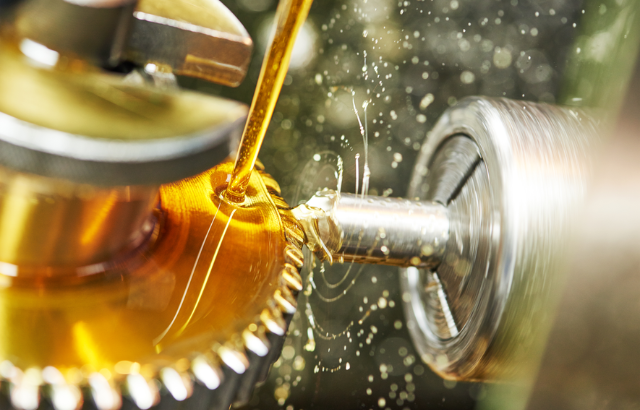
The pursuit of maintenance-free operation in robotic systems has positioned Long-life Lubrication technology as a critical engineering discipline in precision automation. This sophisticated field combines tribology, material science, and precision engineering to develop lubrication solutions that maintain optimal performance throughout extended operational lifetimes. At JLYPT, our comprehensive approach to Long-life Lubrication integrates advanced formulation science with precision application methodologies to deliver solutions that significantly extend service intervals while maintaining peak gear performance in demanding robotic applications.
Fundamental Tribology Principles for Extended Lubrication
Understanding the core principles of lubrication science is essential for developing effective Long-life Lubrication solutions:
Lubrication Regime Analysis
The performance of Long-life Lubrication systems depends on maintaining optimal lubrication regimes:
-
Elastohydrodynamic Lubrication (EHL): In gear tooth contacts, where pressure exceeds 1 GPa, the lubrication regime follows EHL principles with film thickness calculated by:
h_min = 2.65 * R^0.43 * α^0.54 * (η0 * U)^0.7 / E'^0.03 * W^-0.13
Where R is reduced radius, α is pressure-viscosity coefficient, η0 is dynamic viscosity, U is rolling speed, E’ is reduced modulus, and W is load per unit width -
Boundary Lubrication Management: Under high load and low speed conditions, boundary lubrication dominates, where additive packages in Long-life Lubrication formulations create protective surface films
-
Mixed Lubrication Optimization: Most gear applications operate in mixed lubrication regimes, requiring careful balance between base oil properties and additive chemistry
Wear Mechanism Prevention
Advanced Long-life Lubrication formulations address multiple wear mechanisms:
-
Adhesive Wear Prevention: Extreme pressure (EP) additives form sacrificial surface films preventing metal-to-metal contact
-
Abrasive Wear Mitigation: Optimal viscosity maintenance and particle control prevent three-body abrasion
-
Surface Fatigue Resistance: Micro-pitting prevention through optimized film thickness and surface active agents
Advanced Lubrication Formulation Technology
The development of Long-life Lubrication systems involves sophisticated chemical engineering:
Base Oil Technologies
-
Synthetic Hydrocarbons: PAO (Polyalphaolefin) base stocks with viscosity indices exceeding 140 and oxidation stability to 200°C
-
Ester-Based Fluids: Complex esters providing natural lubricity and additive solubility with biodegradability options
-
PFPE Compounds: Perfluoropolyether fluids for extreme temperature applications (-70°C to 300°C)
-
Silicone Polymers: For plastic and elastomer compatibility in specialized applications
Advanced Additive Packages
-
Anti-Wear Agents: Zinc dialkyldithiophosphate (ZDDP) and phosphorus-based compounds forming protective boundary films
-
Extreme Pressure Additives: Sulfurized compounds and chlorinated paraffins for high-load protection
-
Oxidation Inhibitors: Aminic and phenolic compounds extending fluid life through radical scavenging
-
Corrosion Preventatives: Organic acids and film-forming amines protecting against moisture and chemical attack
Precision Application Methodologies
Effective Long-life Lubrication requires precise application engineering:
Surface Engineering for Lubrication Retention
-
Micro-surface Texturing: Laser ablation creating lubricant reservoirs with precise depth (5-20μm) and distribution
-
Surface Coating Integration: DLC (Diamond-Like Carbon) and MoS2 coatings enhancing lubricant film formation and retention
-
Porosity Engineering: Controlled porosity in sintered components acting as lubricant reservoirs
Advanced Application Systems
-
Micro-dosing Technology: Precision dispensing systems with accuracy to ±1% for optimal lubricant distribution
-
Centrifugal Application: Rotational systems ensuring even distribution in high-speed gear applications
-
Vacuum Impregnation: Complete filling of porous structures for maximum lubricant retention
Technical Performance Specifications
Table 1: Long-life Lubrication System Performance Comparison
| Performance Parameter | Mineral Oil Based | Synthetic Blend | Full Synthetic | Solid/Permanent |
|---|---|---|---|---|
| Service Life (hours) | 4,000-8,000 | 8,000-16,000 | 16,000-30,000 | 30,000-50,000+ |
| Temperature Range (°C) | -20 to 100 | -40 to 150 | -55 to 200 | -100 to 350 |
| Base Oil Viscosity (cSt @40°C) | 32-680 | 46-1000 | 22-1500 | N/A |
| Viscosity Index | 95-105 | 130-150 | 140-180 | N/A |
| Four-Ball Wear Scar (mm) | 0.5-0.8 | 0.4-0.6 | 0.3-0.5 | 0.2-0.4 |
| Oxidation Stability (ASTM D943) | 1,000-2,000 | 2,000-4,000 | 3,000-6,000 | N/A |
| Evaporation Loss (%) | 15-25 | 8-15 | 5-12 | 0.1-2 |
| CoEfficient of Friction | 0.08-0.12 | 0.06-0.10 | 0.04-0.08 | 0.02-0.06 |
| Load Capacity (Four-Ball) | 300-500 | 400-600 | 500-800 | 600-1000 |
| Base Oil Type | Group I/II | Group III/III+ | Group IV/V | Solid/Polymer |
Material Compatibility Engineering
Long-life Lubrication systems must maintain compatibility with various engineering materials:
Metallic Material Considerations
-
Steel Alloys: Prevention of hydrogen embrittlement and stress corrosion cracking
-
Copper Alloys: Compatibility with bronze and brass components without catalytic degradation
-
Aluminum Alloys: Protection against pitting and galvanic corrosion
-
Titanium: Prevention of chloride-induced stress corrosion
Non-Metallic Material Compatibility
-
Elastomer Selection: Swell control and compression set optimization for seal materials
-
Plastic Components: Prevention of stress cracking and dimensional changes
-
Composite Materials: Resin compatibility and fiber protection
Case Study Applications
Case Study 1: Automotive Robotic Welding Cell
-
Challenge: A major automotive manufacturer experienced lubrication failure in robotic gearboxes every 3,000 hours, causing unplanned downtime in critical welding operations. The environment included high temperatures (up to 80°C ambient) and weld spatter contamination.
-
Solution: JLYPT developed a custom Long-life Lubrication system using synthetic PAO base oil with advanced polymeric thickeners and ceramic solid additives. The formulation included high-temperature antioxidants and metal deactivators specifically designed for the operational environment.
-
Result: Achieved 18,000 hours of continuous operation without lubrication-related failures. The solution reduced maintenance downtime by 75% and eliminated unplanned production stoppages due to lubrication issues.
Case Study 2: Food Processing Collaborative Robot
-
Challenge: A food processing application required NSF H1 registered lubrication for collaborative robots operating in direct product contact zones. The application demanded 10,000-hour service intervals with strict cleanliness requirements.
-
Solution: We formulated a white synthetic Long-life Lubrication system using highly refined esters with food-grade additives. The formulation included advanced antimicrobial agents and was designed for minimal misting and drippage.
-
Result: Successfully achieved NSF H1 certification while extending service intervals to 12,000 hours. The solution maintained hygiene standards while reducing lubrication-related maintenance by 80%.
Case Study 3: Aerospace Robotic Assembly System
-
Challenge: An aerospace assembly robot operating in cleanroom conditions (Class 100) required lubrication with zero particle generation and outgassing properties compatible with vacuum operations.
-
Solution: JLYPT engineered a specialized Long-life Lubrication system using PFPE base fluids with ultra-low volatility and particle generation. The formulation was tested for outgassing with total mass loss (TML) below 1.0% and collected volatile condensable materials (CVCM) under 0.1%.
-
Result: Achieved continuous operation for 25,000 hours without particle count exceedances. The solution met NASA outgassing standards while maintaining optimal gear performance in critical aerospace assembly operations.
Testing and Validation Protocols
Comprehensive testing ensures Long-life Lubrication system reliability:
Performance Testing
-
Four-Ball Wear Testing: ASTM D4172 and D2266 for wear prevention and extreme pressure performance
-
FZG Gear Test: DIN 51534 for load-carrying capacity in gear applications
-
Oxidation Stability: ASTM D943 and D2272 for fluid life prediction
-
Corrosion Testing: ASTM D665 for rust prevention capabilities
Application-Specific Testing
-
Robotic Duty Cycle Simulation: Accelerated testing replicating actual operational conditions
-
Environmental Compatibility: Temperature cycling, humidity exposure, and contamination resistance
-
Material Compatibility: Long-term exposure testing with all system materials
Future Technology Development
The evolution of Long-life Lubrication technology continues with emerging innovations:
Advanced Material Science
-
Nanoparticle Additives: Graphene, MXenes, and other 2D materials enhancing lubrication performance
-
Ionic Liquids: Advanced synthetic compounds with tunable properties
-
Smart Lubricants: Responsive materials adapting to changing operational conditions
Application Technology Advances
-
Micro-encapsulation: Controlled release of additives based on temperature or load conditions
-
Sensor Integration: Real-time lubrication condition monitoring
-
Self-healing Systems: Automated replenishment of consumed additives
Implementation Best Practices
Successful deployment of Long-life Lubrication systems requires careful implementation:
System Design Considerations
-
Lubrication System Integration: Compatibility with existing lubrication hardware and monitoring systems
-
Contamination Control: Filtration systems maintaining ISO 4406 cleanliness codes
-
Temperature Management: Cooling systems maintaining optimal operating temperatures
Maintenance and Monitoring
-
Condition Monitoring: Oil analysis programs tracking additive depletion and contamination
-
Preventive Maintenance: Scheduled oil analysis and system inspections
-
Documentation Systems: Comprehensive records of lubrication performance and maintenance activities
Conclusion: Engineering Reliability Through Advanced Lubrication
The development and implementation of advanced Long-life Lubrication systems represent a critical engineering discipline that directly impacts robotic system reliability, maintenance costs, and operational efficiency. These sophisticated lubrication solutions combine advanced formulation science with precision application engineering to deliver exceptional performance throughout extended service intervals.
At JLYPT, our comprehensive approach to Long-life Lubrication encompasses everything from initial requirement analysis and formulation development through precision application and performance validation. Our expertise in tribology, material science, and precision engineering ensures that we deliver solutions that meet the most demanding application requirements while providing exceptional value through extended service life and reduced maintenance costs.
Ready to enhance your robotic system reliability with advanced long-life lubrication solutions? Contact JLYPT today to discuss your specific application requirements with our engineering team. Our specialists will provide comprehensive technical support and custom lubrication solutions tailored to your operational requirements and performance objectives.