Professional Powder Coating Service for Metal Parts: Complete Guide for CNC Machined Components
When your precision CNC machined parts require superior surface protection and aesthetic appeal, powder coating service for metal parts delivers unmatched durability and finish quality. At JLYPT, we combine advanced electrostatic powder coating technology with strict quality control to protect your components against corrosion, wear, and environmental degradation while maintaining tight dimensional tolerances.
What Makes Powder Coating Essential for CNC Machined Metal Parts
Powder coating service for metal parts has become the industry standard for finishing precision components across aerospace, automotive, medical device, and industrial equipment sectors. Unlike traditional liquid coatings, electrostatic powder coating creates a uniform, chip-resistant finish that withstands harsh operating conditions while adding minimal thickness to your machined dimensions.
The powder coating process involves applying dry powder particles electrostatically to metal surfaces, then curing them in high-temperature ovens to create a chemically bonded protective layer. This method eliminates solvent emissions, reduces waste, and produces consistent results across production runs—critical factors when finishing high-precision CNC machined parts where dimensional accuracy matters.
Core Advantages of Powder Coating for Precision Components
Our powder coating service for metal parts delivers measurable performance improvements over alternative finishing methods. The electrostatic application ensures complete coverage of complex geometries common in CNC machined components, including internal corners, recesses, and threaded features that liquid coatings often miss.
Powder coated surfaces achieve superior hardness ratings, typically reaching 2H to 4H on the pencil hardness scale, compared to 1H to 2H for conventional paints. This hardness translates directly to scratch resistance and extended service life in demanding applications. The chemical bonding during the curing process creates a finish that won’t peel, flake, or separate from the substrate under normal operating conditions.
Environmental resistance represents another critical advantage. Powder coatings withstand UV exposure, salt spray, chemical contact, and temperature fluctuations without degradation. Our standard powder coating formulations maintain integrity through 1000+ hours of ASTM B117 salt spray testing, making them ideal for outdoor equipment, marine applications, and corrosive industrial environments.
Technical Specifications: Powder Coating Service for Metal Parts
| Parameter | Standard Specification | Precision Specification | Testing Method |
|---|---|---|---|
| Film Thickness | 60-80 microns (2.4-3.1 mils) | 40-60 microns (1.6-2.4 mils) | ASTM D7091 |
| Hardness | 2H-3H (Pencil) | 3H-4H (Pencil) | ASTM D3363 |
| Adhesion | 5B (Cross-hatch) | 5B (Cross-hatch) | ASTM D3359 |
| Impact Resistance | 80 in-lbs direct/160 in-lbs indirect | 100 in-lbs direct/200 in-lbs indirect | ASTM D2794 |
| Salt Spray Resistance | 1000+ hours | 2000+ hours | ASTM B117 |
| Gloss Level | 10-90 units (customizable) | Custom matched | ASTM D523 |
| Color Tolerance | ΔE ≤ 2.0 | ΔE ≤ 1.0 | ASTM D2244 |
| Cure Temperature | 180-200°C (356-392°F) | 160-180°C (320-356°F) | Internal Protocol |
| Curing Time | 10-15 minutes | 15-20 minutes | Internal Protocol |
Complete Powder Coating Process for CNC Machined Parts
Stage 1: Pre-Treatment and Surface Preparation
Surface preparation determines coating adhesion and long-term performance. Our powder coating service for metal parts begins with thorough cleaning to remove machining oils, cutting fluids, and metal particles left from CNC operations. We employ a multi-stage chemical pre-treatment process specifically designed for different metal substrates.
For aluminum CNC parts, we use chromate-free conversion coating that creates a microscopic crystalline layer, enhancing both adhesion and corrosion resistance. This treatment penetrates surface irregularities and creates mechanical anchoring points for the powder coating. Steel and stainless steel components undergo iron phosphate treatment, which deposits a fine-grain phosphate crystal structure that serves the same function.
The pre-treatment sequence includes:
- Alkaline cleaning at 60-70°C to remove oils and organic contaminants
- Water rinse with deionized water
- Conversion coating application (specific to metal type)
- Deionized water rinse
- Final seal rinse
- Air knife drying or oven drying at 120°C
Critical process control involves monitoring pH levels (9.5-11.5 for alkaline cleaner), temperature, and immersion time. We test coating weight and surface energy to verify proper preparation before powder application.
Stage 2: Electrostatic Powder Application
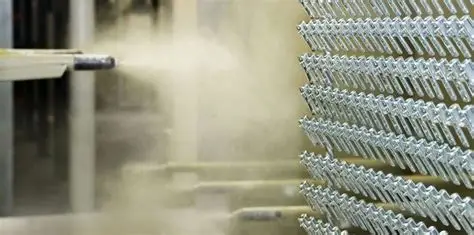
The electrostatic application process uses corona discharge or tribo-charging to impart negative charges to powder particles, which then attract to grounded metal parts. This electrostatic attraction ensures uniform coverage and allows powder to wrap around edges and into recesses that gravity-fed systems cannot reach.
Our powder coating service for metal parts employs automatic spray systems with precise control over:
- Powder feed rate (typically 200-400 g/min)
- Air pressure (0.5-2.0 bar)
- Voltage (60-100 kV for corona guns)
- Gun-to-part distance (150-300mm)
- Powder cloud density
For complex CNC machined geometries, we use manual touch-up with specialized low-voltage guns to ensure complete coverage of internal features, blind holes, and intricate contours. Powder recovery systems capture overspray for reuse, maintaining material efficiency above 95% and eliminating waste.
Film thickness monitoring occurs in real-time using non-contact infrared sensors. We target specific thickness ranges based on part function and customer requirements, adjusting application parameters to maintain consistency across production batches.
Stage 3: Curing and Quality Verification
Curing transforms powder particles into a continuous, chemically bonded coating through thermally activated cross-linking reactions. Parts enter convection ovens where precise temperature profiles ensure complete polymer flow and cure without overheating the substrate.
Our powder coating service for metal parts maintains strict thermal management to prevent dimensional changes in precision CNC machined components. We monitor:
- Part temperature (not ambient air temperature)
- Time at target temperature
- Heating rate and cooling rate
- Temperature uniformity across the oven zone
Standard polyester powder coatings cure at 180-200°C for 10-15 minutes at part temperature. Low-temperature formulations allow processing heat-sensitive components or parts with tight tolerances at 160-180°C. We verify cure completion through MEK double-rub testing and cross-cut adhesion testing per ASTM standards.
Post-cure inspection includes visual examination under controlled lighting, thickness measurement at specified locations, and adhesion testing on production samples. Each batch receives documentation showing actual cure parameters and test results.
Material Compatibility: Powder Coating Service for Metal Parts
| Metal Substrate | Recommended Pre-Treatment | Optimal Powder Type | Special Considerations |
|---|---|---|---|
| Aluminum 6061-T6 | Chromate-free conversion coating | Polyester TGIC, Epoxy-Polyester | Excellent adhesion, outgassing control required |
| Aluminum 7075-T6 | Chromate-free conversion coating | Polyester TGIC | High thermal mass, extended cure time |
| Stainless Steel 304/316 | Iron phosphate + passivation | Epoxy, Epoxy-Polyester | Pre-heat to 120°C to improve flow |
| Carbon Steel 1018/1045 | Iron phosphate | Epoxy-Polyester hybrid | Zinc phosphate for severe corrosion exposure |
| Mild Steel | Zinc phosphate | Polyester TGIC | Excellent for structural components |
| Cast Aluminum | Chromate-free + sealing | Epoxy (for porosity sealing) | May require porosity filling |
| Magnesium Alloy | Specialized chromate treatment | Epoxy | Limited temperature exposure |
Powder Coating vs Alternative Finishing Methods
Understanding when powder coating service for metal parts provides optimal value requires comparing it against alternative surface treatments. While our custom aluminum anodizing services excel for specific applications, powder coating offers distinct advantages for many CNC machined components.
Comparative Performance Analysis
| Finishing Method | Film Thickness | Color Range | Corrosion Protection | Cost Efficiency | Best Applications |
|---|---|---|---|---|---|
| Powder Coating | 40-100 microns | 500+ colors, custom match | Excellent (1000+ hrs salt spray) | High volume: excellent | General industrial, outdoor equipment |
| Type II Anodizing | 5-25 microns | Limited (dyes), clear common | Good (336+ hrs salt spray) | Low-medium volume: good | Aerospace, precision instruments |
| Type III Hard Anodizing | 25-75 microns | Limited, typically dark colors | Excellent | Medium volume: moderate | Wear surfaces, hydraulic components |
| Liquid Paint (2K) | 30-60 microns | Unlimited | Good (variable) | Low volume: good | Custom, small batch |
| E-coating | 15-25 microns | Limited | Excellent | High volume: excellent | Automotive, primer applications |
| Zinc Plating | 5-15 microns | Silver/yellow/black | Moderate (96-240 hrs) | High volume: excellent | Fasteners, small parts |
Powder coating service for metal parts delivers superior economics for production runs exceeding 50 pieces while maintaining finish quality across batch sizes from prototype to mass production. The process accommodates part sizes from small brackets (10mm) to large assemblies (2000mm), making it versatile for diverse CNC machining applications.
Real-World Applications: Three Case Studies
Case Study 1: Aerospace Mounting Brackets – 7075-T6 Aluminum
Challenge: An aerospace customer required powder coating service for metal parts consisting of 500 precision CNC machined mounting brackets from 7075-T6 aluminum. Parts featured tight tolerances (±0.05mm), complex internal geometries, and required MIL-PRF-23377 Type I Class N coating for corrosion resistance.
Solution: We developed a specialized process sequence:
- Precision masking of threaded M6 and M8 mounting holes
- Chromate-free conversion coating optimized for 7075 alloy
- Low-temperature (165°C) polyester TGIC powder to prevent dimensional changes
- Film thickness controlled to 50-60 microns to maintain assembly tolerances
- 100% dimensional verification post-coating using CMM inspection
Results: All 500 parts met dimensional requirements within ±0.03mm of nominal. Salt spray testing exceeded 2000 hours with no substrate corrosion. The customer reported zero field failures over 18 months of service in marine helicopter applications. Production lead time achieved 5 working days from raw machining to finished coating.
Case Study 2: Medical Equipment Housings – 304 Stainless Steel
Challenge: Medical device manufacturer needed powder coating service for metal parts for equipment housings machined from 304 stainless steel. Requirements included FDA-compliant coating, chemical resistance to hospital-grade disinfectants, and smooth surface finish for easy cleaning (Ra < 1.6 μm).
Solution: Implementation included:
- Enhanced alkaline cleaning cycle to remove machining oils completely
- Iron phosphate with passivation step for optimal adhesion
- Antimicrobial polyester powder with silver ion technology
- Fine powder particle size (15-25 micron) for smooth finish
- Extended cure cycle (20 minutes at 190°C) for complete cross-linking
Results: Coating passed ISO 22196 antimicrobial testing with 99.9% bacterial reduction. Chemical resistance testing confirmed no degradation after 1000+ cleaning cycles with quaternary ammonium compounds. Surface finish measured Ra 1.2-1.4 μm, meeting cleanliness requirements. The coating maintained gloss and color after 5000+ hours of fluorescent lighting exposure in hospital environments.
Case Study 3: Industrial Valve Components – Mild Steel
Challenge: Valve manufacturer required powder coating service for metal parts for 2000+ control valve bodies and actuator housings monthly. Parts operated in petrochemical environments with exposure to crude oil, saltwater, and temperatures ranging from -20°C to 80°C.
Solution: Process optimization focused on:
- Automated zinc phosphate line with six treatment stages
- High-performance epoxy-polyester hybrid powder formulation
- Dual-layer coating system: epoxy primer (40 microns) + polyester topcoat (60 microns)
- Automated powder application with thickness monitoring
- Statistical process control for coating weight and cure verification
Results: Production capacity reached 500 parts per 8-hour shift with consistent quality. Accelerated weathering testing (ASTM G154) showed no coating degradation after 2000 hours equivalent to 5+ years outdoor exposure. Field installations demonstrated zero coating failures across 18 months with over 15,000 parts in service. Cost per part decreased 23% compared to previous liquid coating process while eliminating VOC emissions completely.
Custom Color Matching and Special Finishes
Our powder coating service for metal parts includes comprehensive color matching capabilities using spectrophotometry and computerized color formulation. We maintain a standard library of 500+ RAL, Pantone, and custom colors while offering same-day custom matching for specific brand requirements.
Special finish options include:
- Textured finishes: Fine, medium, and coarse texture for improved grip and visual interest
- Metallic effects: Aluminum flake, bronze, and custom metallic powder formulations
- High-gloss finishes: Achieving 80-90 gloss units for premium appearance
- Low-gloss and matte: 10-30 gloss units for anti-glare applications
- Wrinkle finishes: Controlled texture patterns for decorative components
- Clear powder coats: Transparent protection maintaining metal appearance
Color consistency across production batches maintains ΔE values below 1.0 using spectrophotometric verification. We document color formulations and provide retention samples for long-term production continuity.
Quality Control and Testing Protocols
Every powder coating service for metal parts order undergoes multi-stage quality verification:
Incoming Inspection:
- CNC machined part dimensional verification
- Surface condition assessment
- Material certification review
- Masking requirement confirmation
In-Process Control:
- Pre-treatment chemical concentration monitoring
- Surface energy testing (dyne pen or contact angle)
- Powder coating thickness measurement (5-point minimum)
- Visual inspection under 500 lux lighting
Final Inspection:
- Complete dimensional verification per customer drawings
- Cross-cut adhesion testing (ASTM D3359)
- Impact resistance testing on sample parts
- Color measurement and matching verification
- Accelerated corrosion testing (for critical applications)
Documentation packages include process parameter records, inspection reports, material certifications, and photographic evidence. We maintain traceability from raw material lot through final shipment.
Masking and Selective Coating for Precision Parts
CNC machined components often require selective coating to preserve functional surfaces, threads, and mating features. Our powder coating service for metal parts includes precision masking capabilities using:
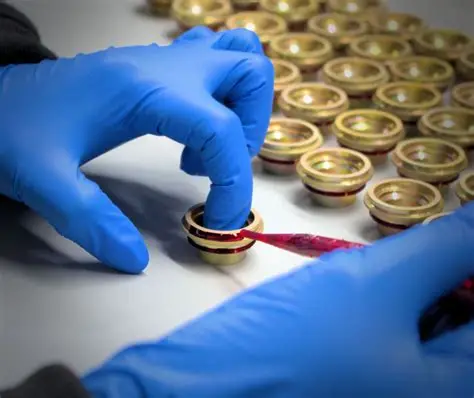
High-Temperature Silicone Plugs and Caps: Pre-sized for standard thread sizes (M2 through M24) and hole diameters, withstanding cure temperatures without degradation or residue.
Custom Masking Fixtures: CNC machined aluminum or steel fixtures for repetitive production, ensuring consistent mask placement and dimensional control.
Liquid Masking Compounds: Peelable latex or acrylic materials for complex geometries, removed post-cure without chemical residue.
Mechanical Masking: Precision ground pins and mandrels for maintaining hole diameters and bearing surfaces within tolerance.
Masking adds minimal cost (typically $2-15 per part depending on complexity) while ensuring powder-free zones maintain required surface finish and dimensional accuracy. We document masking requirements in production travelers and maintain fixture libraries for repeat orders.
Environmental and Safety Advantages
Powder coating service for metal parts eliminates volatile organic compound (VOC) emissions entirely, making it the most environmentally responsible finishing option for CNC machined components. Unlike liquid coatings that release solvents during application and cure, powder coating transfers material efficiently with minimal waste.
Key environmental benefits include:
- Zero VOC emissions (compliant with strictest air quality regulations)
- 95%+ material utilization through powder recovery systems
- No hazardous waste generation from coating operations
- Reduced energy consumption versus liquid coating cure ovens
- Elimination of solvent cleaning and disposal requirements
Worker safety improves significantly as powder coating eliminates exposure to organic solvents, isocyanates, and other hazardous chemicals common in liquid coating systems. Our facility maintains OSHA compliance with proper dust collection, grounding systems, and personal protective equipment protocols.
Lead Times and Production Capacity
Our powder coating service for metal parts maintains rapid turnaround while ensuring quality:
Standard Production:
- Prototype quantities (1-10 parts): 3-5 working days
- Small batch (11-100 parts): 5-7 working days
- Production runs (100-1000 parts): 7-10 working days
- Volume production (1000+ parts): 10-15 working days
Expedited Service:
- 24-48 hour turnaround available for urgent requirements
- Premium scheduling for time-critical projects
- Same-day coating for emergency repairs (subject to capacity)
Production capacity accommodates part sizes from 10mm to 2000mm with maximum weight up to 50kg per piece. Our facility processes 5000+ parts weekly across multiple powder coating lines, ensuring consistent availability and short queue times.
Integration with CNC Machining Services
As a full-service CNC machining provider, JLYPT offers seamless integration of powder coating service for metal parts with precision manufacturing. This vertical integration eliminates coordination delays, reduces handling damage risk, and ensures dimensional compatibility between machined features and coating requirements.
Benefits of integrated manufacturing include:
- Single-source accountability for dimensional accuracy
- Design for manufacturability consultation considering coating requirements
- Optimized tolerancing accounting for coating thickness
- Coordinated scheduling reducing total lead time by 30-40%
- Unified quality documentation and certifications
Our engineering team reviews part designs to identify potential coating challenges during the quoting phase, recommending modifications that improve coating quality without compromising function. This proactive approach prevents costly revisions and ensures first-time success.
Requesting a Quote for Powder Coating Service
To receive an accurate quote for powder coating service for metal parts, provide:
- Part drawings or 3D models showing critical dimensions and tolerances
- Material specifications including alloy designation and temper
- Quantity requirements for initial order and projected annual volume
- Color specification (RAL number, Pantone reference, or sample)
- Surface finish requirements (gloss level, texture, special effects)
- Masking requirements identifying areas requiring no coating
- Performance specifications (salt spray hours, chemical resistance, etc.)
- Quality documentation needed (inspection reports, certifications)
Our technical sales team responds within 24 hours with detailed quotations including unit pricing, tooling costs (if applicable), lead times, and recommended process specifications. We provide guidance on design optimization, material selection, and finishing options to ensure your CNC machined parts meet functional and aesthetic requirements.
Conclusion: Superior Protection for Precision Components
Powder coating service for metal parts represents the optimal finishing solution for CNC machined components requiring durability, corrosion resistance, and aesthetic appeal. The combination of electrostatic application technology, precise process control, and comprehensive quality verification ensures your parts receive consistent, high-performance coatings that extend service life and enhance product value.
At JLYPT, our integrated approach combining precision CNC machining with advanced powder coating capabilities delivers complete manufacturing solutions under one roof. Whether you need prototype finishing or high-volume production coating, our technical expertise and quality-focused processes ensure your components meet the most demanding specifications.
For aerospace mounting brackets, medical equipment housings, industrial valve components, or any precision machined part requiring superior surface protection, our powder coating service for metal parts provides the performance, consistency, and value your applications demand. Combined with our custom aluminum anodizing services, we offer comprehensive finishing options tailored to your specific requirements.
Contact our technical team today to discuss your powder coating service for metal parts requirements and discover how JLYPT’s integrated manufacturing capabilities can streamline your supply chain while improving component quality and reducing total cost.