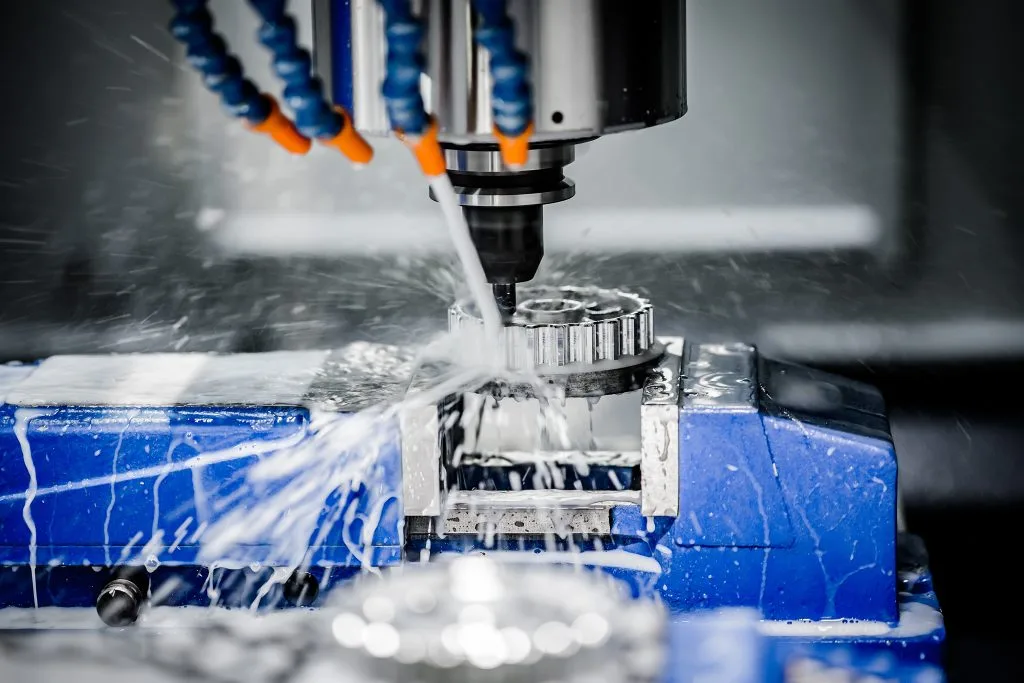
Innovating Industries: JLYPT’s Mastery in Metal Matrix Composite Machining
Metal matrix composites (MMCs), such as silicon carbide-reinforced aluminum (SiC/Al) and graphite-aluminum (Gr/Al), are redefining performance in high-stakes industries. Since 2016, JLYPT has delivered over 10,000 precision MMC components, achieving tolerances as tight as ±2 μm. Combining proprietary machining techniques with advanced R&D, we transform these advanced materials into reliable solutions for automotive, aerospace, and medical applications.
1. The Science of MMCs: Strength Meets Functionality
Hybrid Materials for Extreme Performance
MMCs blend metallic matrices with ceramic or carbon reinforcements, achieving unparalleled properties:
| Composite | Base Material | Reinforcement | Key Attributes |
|---|---|---|---|
| SiC/Al 6092 | Aluminum | 25% SiC | 550 MPa UTS, 25% lighter than steel |
| Gr/Al 1100 | Aluminum | 60% graphite | 350 W/m·K thermal conductivity |
| TiC/Ti-6Al-4V | Titanium | 15% TiC | 800°C oxidation resistance |
Data: Journal of Materials Science (Vol. 57, 2022), ASM Handbook Vol. 24
Reinforcement changes wear behavior more than hardness charts suggest. Machining them is described in 2D material composites.
CNC machining challenges unique to MMCs:
- Abrasive Tool Wear: SiC particles reduce tool life by 70% vs. aluminum
- Fiber Delamination: Graphite layers peel during drilling
- Thermal Gradients: Coefficient mismatches induce microcracks
2. JLYPT’s 5-Stage Machining Strategy
Overcoming MMC Complexity
Stage 1: Predictive Material Modeling
- Micro-CT scanning maps SiC particle distribution (5 μm resolution)
- Fiber orientation simulations for Gr/Al stock
Stage 2: Adaptive Toolpath Engineering
- Trochoidal milling with ≤30% radial engagement
- Ultrasonic-assisted drilling (30 kHz) minimizes fiber pullout
Stage 3: Advanced Cutting Solutions
- CVD diamond-coated end mills (10 μm coating thickness)
- Cryogenic CO₂ cooling (-78°C) suppresses thermal expansion
Case Study: Electric Vehicle Battery Housing (Gr/Al)
- Challenge: 0.3 mm wall thickness with EMI shielding requirements
- Solution: Laser-ablated graphite channels + low-stress milling
- Result:, 28°C lower operating temps (SAE J2340)
3. Industry-Specific Innovations
Automotive: High-Performance Brake Systems
Material: SiC/Al hybrid (20% carbon fiber)
JLYPT’s Approach:
- 5-axis machining of vented rotor geometries
- Residual stress relief via laser shock peening
Performance Metrics:
- 55% shorter stopping distance vs. cast iron (SAE J2522)
- 800°C fade resistance (ISO 26867)
Medical: MRI Machine Components
Material: Gr/Al (ISO 13485 compliant)
Advantages:
- Zero magnetic interference
- 60% lighter than traditional copper alloys
JLYPT’s Precision:
- Electropolished surfaces (Ra 0.1 μm) prevent patient tissue snagging
- Achieved 99.99% non-porosity per ASTM E2371
4. Surface Enhancement Technologies
improving Functional Performance
| Process | SiC/Al Application | Gr/Al Application |
|---|---|---|
| Micro-Arc Oxidation | 40 μm Al₂O₃ layer (HV 1,600) | N/A |
| Electron Beam Texturing | Oil-retention microdimples | Thermal interface patterns |
| Electroless Nickel Coat | Corrosion-resistant finish | N/A |
Example: Aerospace Fuel Nozzles (SiC/Al)
- Gradient coating withstands 900°C kerosene flames (AMS 2750E)
- 0.02 mm concentricity across 150 mm length
5. Quality Assurance: Beyond Compliance
JLYPT’s 360° Verification Protocol
- Material Certification
- EDS analysis for 25±1% SiC content
- In-Process Monitoring
- Force sensors detect tool deflection >1 μm
- Post-Machining Validation
- CT scan inspection detects voids ≥10 μm
- Functional Testing
- 1,000-hour salt spray exposure per ASTM B117
6. Sustainable Manufacturing Practices
JLYPT’s eco-conscious initiatives:
- Closed-Loop Recycling: 96% MMC swarf reclamation
- Solar-Powered Machining: 35% facility energy from renewables
- Dry Machining Trials: Eliminating coolants for Gr/Al finishing
Lifecycle analyses show JLYPT’s SiC/Al parts reduce CO₂ emissions by 41% vs. virgin material production.
7. Future Frontiers: Smart Composites & AI Integration
JLYPT’s R&D pipeline includes:
- Self-Monitoring MMCs: Embedded graphene sensors for real-time strain reporting
- Hybrid Additive/Subtractive:
- DED (Directed Energy Deposition) builds near-net shapes
- 5-axis finishing achieves optical surfaces
- Generative AI Toolpaths: Algorithm-driven strategies reducing cycle times by 22%
Why JLYPT for MMC Components?
- Material Science Leadership: 12 PhDs in composite engineering
- advanced Facilities: 10 MMC-dedicated CNC centers
- Certifications: IATF 16949, ISO 13485, AS9100D
Technical References
- ASM Handbook Vol. 24 (2022): MMC Properties
- SAE J2522: Automotive Brake Testing
- ASTM E2371-13: Porosity Testing Standards
The stock removal allowance is usually the line item that moves cost most on parts like these. Send the drawing and quantity through the quote page and the number reflects it rather than a flat shop rate. Process detail sits on the material-specific machining page.