Rapid Prototyping for Unmanned Aerial Vehicles: A CNC Machining Playbook for Fast Iteration Without Losing Flight-Test Truth
Rapid prototypes decide whether an airframe becomes a product—or a recurring engineering project. In UAV development, speed matters, but repeatable speed matters more: if your prototype hardware changes unpredictably from build to build, you can’t trust test results, and you can’t confidently converge on a stable design. That is why Rapid prototyping for unmanned aerial vehicles should be approached as a manufacturing system, not a one-off sprint. The goal is to move quickly while preserving the mechanical truths that flight testing reveals: stiffness, alignment, vibration behavior, thermal paths, and service durability. This guide is written for UAV engineers, program managers, and sourcing teams who need a practical, CNC-machining-first roadmap. It focuses on process planning, tolerance strategy, metrology, and how to structure prototype phases so that each iteration adds signal instead of noise. If you want to quote or discuss custom prototype UAV components, JLYPT supports CNC rapid prototyping and production machining here:
https://www.jlypt.com/custom-cnc-uav-parts-manufacturer/
Table of Contents
- What “Rapid” Should Mean in UAV Prototyping
- The Hidden Failure Mode: Fast Parts That Lie to Testing
- EVT–DVT–PVT for UAV Hardware (and What Changes Each Phase)
- CNC Machining vs Additive for UAV Prototypes: A Decision Framework
- CNC Process Map for Rapid UAV Iterations (Milling, Turning, 3+2, 5-Axis)
- Material Strategy for Prototype Fidelity (6061, 7075, Titanium, Plastics)
- Datum Strategy and Functional GD&T: Getting Trustworthy Results
- Thin-Wall, Lightweighting, and Distortion Control Under Time Pressure
- Threads, Inserts, and Service Cycles: Designing Prototypes for Real Handling
- Surface Finish, Coatings, and Allowances: When “Prototype Finish” Breaks Fits
- Inspection Strategy: In-Process Probing, CMM, and What to Measure First
- Lead Time Levers: Modular Fixturing, Soft Jaws, and Setup Reduction
- Cost Drivers in Rapid CNC Prototyping (and How to Cut Cost Safely)
- Documentation That Speeds Iteration: Revision Control and Build Notes
- Three Realistic UAV Rapid Prototyping Case Studies
- RFQ Checklist for Rapid Prototyping for Unmanned Aerial Vehicles
- How JLYPT Supports Rapid CNC UAV Prototypes
- Reference Links (Standards & Metrology)
1) What “Rapid” Should Mean in UAV Prototyping
In many industries, “rapid prototyping” implies appearance models and basic fit checks. UAV development is different: prototypes must survive vibration, landing shocks, field servicing, and repeated fastener cycles—often while carrying expensive payloads. For Rapid prototyping for unmanned aerial vehicles, “rapid” should mean:
- Short iteration loops (days, not weeks)
- Functional similarity to production intent (stiffness, alignment, fastener strategy)
- Measurable repeatability across prototype sets (so test results are comparable)
- Manufacturing learning captured early (so scaling doesn’t restart engineering) Speed is only valuable when the prototype is a credible stand-in for the next build.
2) The Hidden Failure Mode: Fast Parts That Lie to Testing
UAV programs often lose time not because parts are late, but because parts are fast and wrong in subtle ways. The most expensive errors are the ones that produce believable—but misleading—flight-test data. Common “prototype lies” include:
- Misaligned motor axes due to weak datum control (vibration appears “aero” but is actually geometric)
- Distorted housings that change sensor orientation (calibration drift seems like software)
- Coating buildup that changes fits (assembly force varies; you chase torque specs)
- Thread stripping from repeated servicing (you blame technicians instead of design intent) A credible approach to Rapid prototyping for unmanned aerial vehicles forces your prototype process to preserve the functional relationships that flight tests depend on.
3) EVT–DVT–PVT for UAV Hardware (and What Changes Each Phase)
Many UAV teams use phased validation—often informally. Making it explicit accelerates decisions and reduces scrap.
Table 1 — EVT vs DVT vs PVT in UAV CNC Prototype Programs
| Phase | Primary goal | What changes in machining | What changes in inspection | Typical output |
|---|---|---|---|---|
| EVT (Engineering Validation Test) | Prove architecture and physics | fast CNC paths, flexible setups, minimal dedicated tooling | measure only critical features; quick CMM where needed | concept proven, risk list |
| DVT (Design Validation Test) | Lock design intent + reliability | stabilized process plan, fewer setups, early fixture concepts | CMM reports for datums/true position; finish and fit verification | near-final design confidence |
| PVT (Production Validation Test) | Prove repeatable build at rate | production-like fixturing, tool-life planning, controlled routings | defined control plan, FAIs, sampling strategy | manufacturing-ready release |
| Key insight: “Rapid” does not mean “same approach at every phase.” EVT prioritizes learning. PVT prioritizes repeatability. DVT must bridge the two. |
4) CNC Machining vs Additive for UAV Prototypes: A Decision Framework
Additive manufacturing is valuable for speed, but CNC-machined prototypes often provide higher mechanical truth: stiffness, tolerance control, surface integrity, and reliable threads.
Table 2 — Prototype Process Selection for UAV Parts
| Requirement | Best-fit method | Why | Watch-outs |
|---|---|---|---|
| tight datums and hole true position | CNC machining (3+2 / 5-axis) | predictable geometry + inspection | requires DFM and setup planning |
| thin-wall metal housings with sealing | CNC machining + controlled finish | flatness + surface control | distortion risk without proper sequence |
| quick fit-check of complex ducting | additive (polymer) | fast and cheap | not stiffness-true |
| high-load structural node | CNC machining in 7075 or Ti | functional strength/stiffness | longer cycle time, more inspection |
| ergonomic covers or fairings | additive + secondary ops | rapid cosmetics | may not match production texture/finish |
| mixed approach | hybrid (additive + CNC) | speed + precision where it matters | requires clear datum handoff |
| For Rapid prototyping for unmanned aerial vehicles, the fastest path is often hybrid: use additive to explore volume and routing, while CNC locks down alignment features and critical interfaces. |
5) CNC Process Map for Rapid UAV Iterations (Milling, Turning, 3+2, 5-Axis)
A prototype CNC strategy that is “quote-friendly” but not “iteration-friendly” will collapse under design spins. The best prototype process maps anticipate change.
5.1 Core machining modes used in UAV prototyping
- 3-axis milling: quick for brackets, plates, simple mounts
- 3+2 positional machining: excellent for multi-face UAV nodes without full simultaneous toolpaths
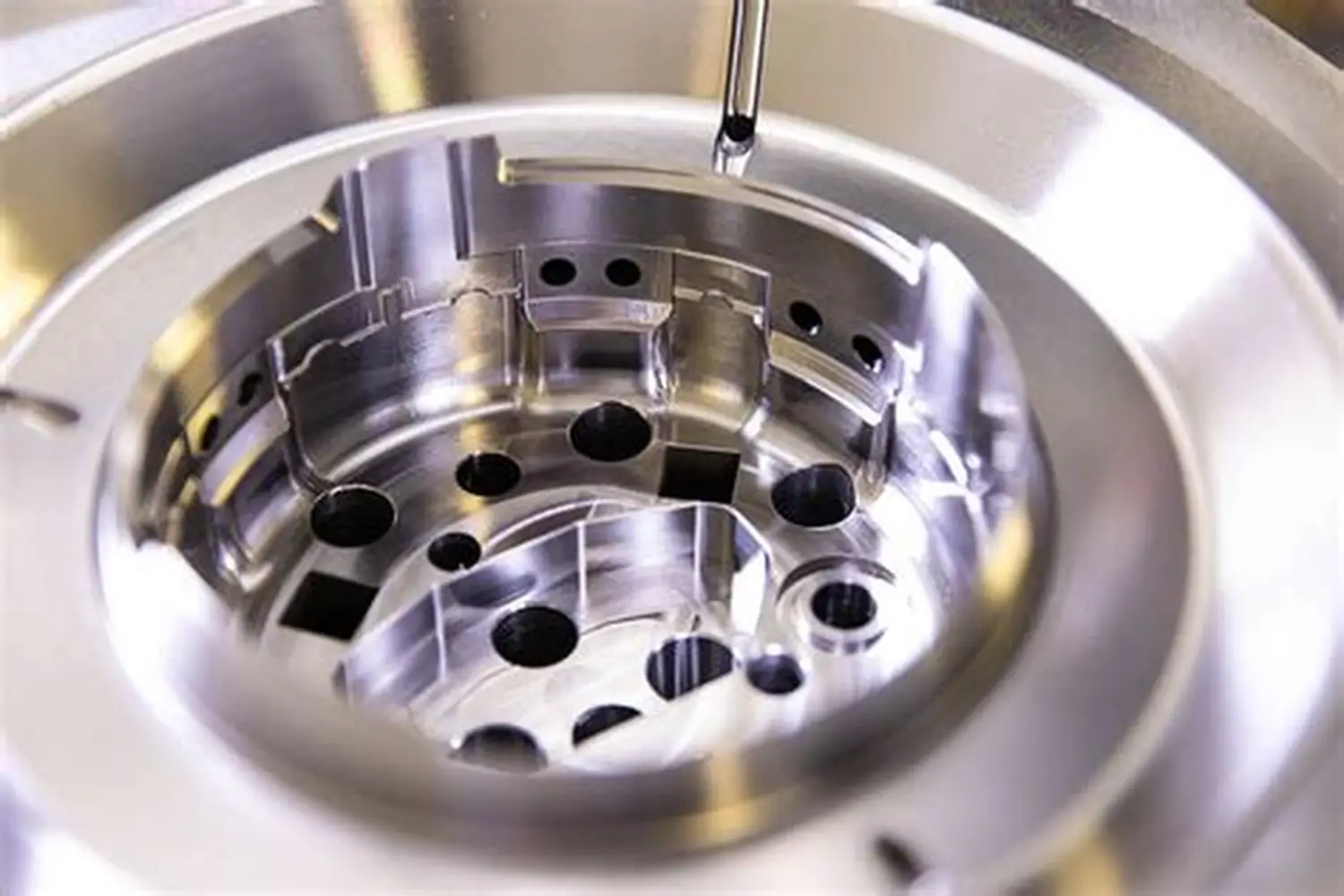
- 5-axis machining: reduces setup count, preserves true position and face-to-face relationships
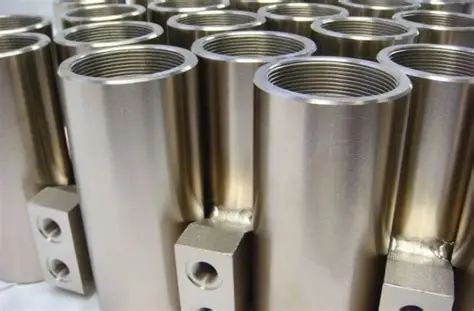
- CNC turning / mill-turn: best for coaxial spacers, hubs, collars, shafts, threaded interfaces
- High-speed machining (HSM): critical for aluminum lightweighting pockets and thin ribs
Table 3 — Matching UAV Prototype Parts to CNC Machine Strategy
| Part class | Examples | Recommended CNC route | Why it accelerates iteration |
|---|---|---|---|
| alignment-critical mounts | motor mount plates, sensor carriers | 3+2 or 5-axis | fewer re-clamps = fewer surprises |
| structural nodes | arm junction blocks, landing gear interfaces | 5-axis | holds multi-face datums in one program |
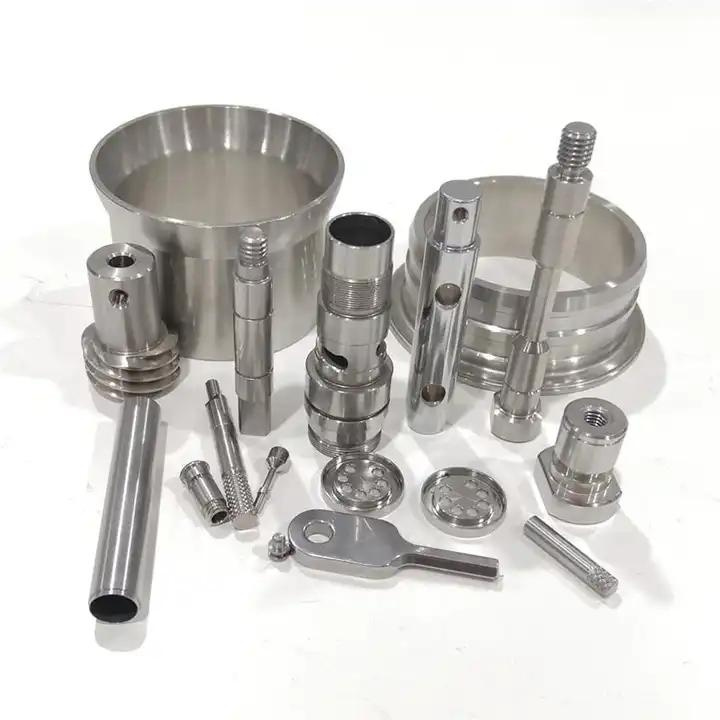
| cylindrical precision parts | spacers, prop adapters, shafts | turning / mill-turn | coaxiality and surface finish control |
| thin-wall housings | avionics enclosures, camera shells | 5-axis + HSM | access + controlled wall finish |
| mixed feature parts | bores + faces + side holes | 5-axis or mill-turn | avoids tolerance stack from multiple setups |
| When people say “CNC is slower than printing,” they usually compare against the wrong CNC plan. In rapid UAV cycles, CNC wins by reducing rework and flight-test ambiguity. |
6) Material Strategy for Prototype Fidelity (and Why “Close Enough” Often Isn’t)
Material choice in prototypes is not only about strength—it’s about stiffness, damping, thermal behavior, and finish response. If you prototype in a material that does not represent production intent, you risk validating the wrong system.
Table 4 — Material Choices in UAV Rapid CNC Prototyping
| Material | Prototype use case | Benefits | Risks / notes |
|---|---|---|---|
| 6061-T6 aluminum | housings, brackets, general structure | machinable, stable, good anodize cosmetics | lower stiffness than 7075 for some nodes |
| 7075-T6 aluminum | motor mounts, arm nodes, high stiffness parts | strong/stiff, great for alignment | anodize appearance may vary; cost higher |
| titanium (selected grades) | high-load + corrosion environments | strength, heat resistance | cycle time, tool wear, cost |
| acetal (POM/Delrin) | low-load prototypes, jigs | fast machining, good for fit checks | not structural; creep/temperature limits |
| nylon (machined) | functional polymer parts | impact resistance | moisture effects; tolerance shift |
| stainless steel (selected grades) | shafts, wear items | durability | weight penalty; slower machining |
| Prototype rule of thumb: If the part controls alignment (motor axis, payload pointing, sensor orthogonality), prototype in the production-intent metal whenever possible. | |||
| That mindset is central to Rapid prototyping for unmanned aerial vehicles: validate what matters, not what’s convenient. |
7) Datum Strategy and Functional GD&T: Getting Trustworthy Results
Fast prototypes often fail because drawings are incomplete: designers specify sizes but not relationships. UAV assemblies depend on relationships.
7.1 Prototype drawings still need functional controls
Even early prototypes benefit from:
- clear datum references (A|B|C) tied to assembly realities
- true position on hole patterns that locate motors/sensors
- flatness/parallelism on seating or sealing surfaces
- profile where surfaces mate or guide airflow
Table 5 — Functional GD&T That Commonly Matters in UAV Prototypes
| Function | GD&T control | What it protects | Typical inspection method |
|---|---|---|---|
| motor alignment | true position + perpendicularity | vibration, efficiency, bearing load | CMM report |
| sensor orthogonality | perpendicularity/parallelism | calibration stability | CMM or fixtured indicator |
| payload rail straightness | profile/straightness | repeatable payload pointing | CMM sampling |
| enclosure sealing | flatness + profile | leak resistance | CMM + surface check |
| bearing behavior | position/coaxiality | runout and friction | CMM + bore gauge |
| In Rapid prototyping for unmanned aerial vehicles, GD&T is not bureaucracy—it’s what keeps iteration from turning into guesswork. |
8) Thin-Wall, Lightweighting, and Distortion Control Under Time Pressure
UAV parts often include aggressive pocketing and thin ribs to reduce mass. Those features amplify distortion risk, especially in aluminum.
8.1 Distortion causes that appear during “rush” prototypes
- heavy roughing on one side without balancing stock removal
- excessive clamp force flattening the part during machining
- finishing thin walls too early (then re-clamping)
- long tool stick-out causing chatter and deflection
Table 6 — Distortion Symptoms and Rapid Fixes
| Symptom seen at assembly | Likely root cause | Rapid machining remedy | Verification |
|---|---|---|---|
| cover doesn’t sit flat | flange warp from sequencing | finish flange last; reduce clamp distortion | flatness check |
| holes shift between faces | datum lost across setups | consolidate setups via 3+2/5-axis | CMM true position |
| thin ribs show chatter | resonance + tool reach | adjust stepdown/stepover; add support | surface inspection |
| parts “spring” after unclamp | residual stress | rough + rest + finish; use stress-relieved stock | dimensional re-check after rest |
| A capable supplier treats thin-wall machining as a controlled process, not a gamble. |
9) Threads, Inserts, and Service Cycles: Prototypes Must Survive Handling
Prototype UAVs are disassembled repeatedly: swapping sensors, changing arms, adding dampers, revising wiring. If threads fail early, the test program slows down.
Table 7 — Thread Strategy for UAV Prototypes
| Feature type | Recommended approach | Why | Notes |
|---|---|---|---|
| frequent service fasteners | threaded inserts | resists stripping | define insert spec early |
| precision thread location | thread milling | better control in many cases | good for blind holes and hard materials |
| quick temporary builds | standard tap threads | fastest | define torque limits |
| ground path requirements | masked grounding pads | electrical reliability | avoid anodize in contact areas |
| For Rapid prototyping for unmanned aerial vehicles, “serviceability” is part of functional validation—prototype hardware must behave like field hardware. |
10) Surface Finish, Coatings, and Allowances (Prototype Builds Still Need Planning)
Even if you don’t care about cosmetics in EVT, coatings can still break fits and distort conclusions. Examples:
- anodize buildup changes slip/press fits
- hardcoat increases friction on sliding interfaces
- bead blast changes surface contact behavior and torque consistency
Table 8 — Finish Planning in Rapid UAV Prototyping
| Finish | When to use in prototypes | Main advantage | Key caution |
|---|---|---|---|
| no finish (as-machined) | early EVT | fastest | corrosion risk; friction differs from final |
| Type II anodize | EVT/DVT when corrosion & baseline assembly needed | representative behavior | plan allowance/masking |
| Type III hardcoat | DVT when wear surfaces are validated | wear resistance | can break fits without masking |
| conversion coating | when conductivity matters | electrical contact | different look and protection level |
| Practical guidance: If you expect the production unit to be anodized, include anodize at least by DVT; otherwise you risk discovering fit and torque issues too late. |
11) Inspection Strategy: Measure What Moves the Needle
Not every dimension deserves the same inspection attention. A fast prototype program measures the features that drive function.
11.1 Prototype inspection stack (from fastest to deepest)
- in-process probing for setup verification and drift control
- critical feature checks (bore gauges, pin gauges, height gauge)
- CMM inspection for datum relationships and true position
- FAI-style reporting once the design stabilizes (late DVT / PVT)
Table 9 — What to Inspect First in UAV CNC Prototypes
| Priority | Feature category | Why it matters | Typical tool |
|---|---|---|---|
| 1 | datums & seating faces | everything references them | CMM / indicator |
| 2 | hole patterns locating motors/sensors | alignment and vibration | CMM true position |
| 3 | bearing/pilot bores | runout, friction | bore gauge + CMM |
| 4 | thread quality | service cycles | go/no-go gauge |
| 5 | cosmetic surfaces | brand and consistency | visual standard |
| For standards and measurement references used across manufacturing quality systems, these are widely recognized starting points: |
- https://www.iso.org/standards.html
- https://www.asme.org/codes-standards
- https://www.nist.gov/
- https://www.astm.org/standards
12) Lead Time Levers: How to Actually Go Faster with CNC
Lead time is not only machine time. Prototypes slow down because of setup planning, fixturing, revision confusion, and waiting on clarifications.
12.1 The biggest controllable levers
- reduce setup count (3+2/5-axis where it matters)
- standardize datum strategy across revisions
- use modular fixtures and soft jaws that can be quickly re-cut
- predefine “critical features” so inspection doesn’t bottleneck
Table 10 — Lead Time Reduction Tactics for Rapid CNC Prototyping
| Lever | What changes in the shop | Time saved | Risk if misused |
|---|---|---|---|
| fewer setups | less re-clamping and alignment | high | requires correct datum plan |
| modular fixturing | repeatable holding without custom fixture blocks | medium-high | must support thin walls |
| soft jaws | quick, part-specific holding | medium | jaw design must avoid distortion |
| toolpath templates | reuse proven operations | medium | verify with each revision |
| in-process probing | fewer scrap cycles | medium | requires stable probing plan |
| This operational discipline is the backbone of Rapid prototyping for unmanned aerial vehicles at high pace. |
13) Cost Drivers in Rapid CNC Prototyping (and How to Cut Cost Without Losing Truth)
The cheapest prototype is often the most expensive—because it forces extra iterations.
Table 11 — Cost Drivers and Safe Optimizations
| Cost driver | Why it increases cost | Safe optimization approach |
|---|---|---|
| overly tight tolerances everywhere | longer cycle + inspection | tighten only interfaces and datums |
| deep pockets + thin ribs | chatter and scrap | adjust wall thickness, add ribs, reduce depth |
| frequent design spins without revision clarity | rework and confusion | strict rev control, clear change notes |
| finishing added late | rework after coating | plan finish and masking from start |
| complex multi-face relationships on 3-axis | too many setups | use 3+2 or 5-axis for critical geometry |
14) Documentation That Speeds Iteration: Revision Control and Build Notes
Prototype speed collapses when teams cannot answer:
- Which revision was flown?
- Which material/finish was used?
- Were the datums or hole patterns changed?
- Did we modify parts on-site?
Table 12 — Minimal Documentation Set for High-Speed UAV Iteration
| Document | Purpose | Best practice |
|---|---|---|
| revision-controlled drawing | defines build | lock title block rev and date |
| change note (delta log) | explains what changed | list affected features and why |
| inspection summary | confirms critical features | 1-page critical report + CMM for key parts |
| build record | links flight data to hardware | serial/lot marking + photos |
| This is how Rapid prototyping for unmanned aerial vehicles stays scientific instead of anecdotal. |
15) Three UAV Rapid Prototyping Case Studies (CNC-Focused)
Case Study 1 — Fast Motor Mount Iteration Without Vibration Drift
Goal: Evaluate multiple motor mount geometries (stiffness vs weight) while keeping alignment consistent across variants.
Part type: Aluminum motor mount plate with pilot bore + bolt circle.
Challenge: Early prototypes showed inconsistent vibration signatures between builds, masking whether geometry changes helped.
CNC strategy used:
- Selected a datum scheme tied to the mounting face and pilot bore to preserve motor axis truth.
- Used 3+2 machining to complete critical faces in fewer setups.
- Added CMM checks for true position of bolt-circle holes relative to datums.
Outcome: Each revision produced comparable vibration data, letting the team converge quickly on the geometry that reduced resonance—without chasing fixture-induced variation.
Case Study 2 — Thin-Wall Avionics Enclosure: Sealing and Flatness Under Short Lead Times
Goal: Prototype a sealed enclosure for flight electronics with a gasketed lid, while iterating internal boss layout for PCB changes.
Part type: Thin-wall CNC-milled aluminum housing + lid.
Challenge: Lightweighting pockets caused flange distortion; lids required uneven fastener torque to seal.
CNC strategy used:
- Roughing left uniform stock; sealing faces finished last.
- Soft-jaw fixturing supported perimeter walls to reduce clamp-induced warp.
- Critical inspection focused on lid interface flatness and hole pattern position.
Outcome: The enclosure sealed consistently across revisions, so environmental tests reflected design performance rather than machining distortion.
Case Study 3 — Gimbal Interface Bracket: Bearing Fit Stability Across Coating Changes
Goal: Iterate a gimbal bracket while transitioning from “as-machined” EVT builds to coated DVT builds.
Part type: Bracket with precision bearing bores and multi-face alignment features.
Challenge: After adding coating for corrosion protection, bearing installation forces varied, and rotation feel changed.
CNC strategy used:
- Defined which bores required masking (or controlled post-finish sizing when masking was not feasible).
- Used boring cycles for form control instead of relying on drilling/reaming alone.
- CMM verified bore position/coaxial relationships to functional datums.
Outcome: Rotation consistency returned, and DVT results became trustworthy for durability testing.
16) RFQ Checklist for Rapid Prototyping for Unmanned Aerial Vehicles
If you want accurate quotes and fewer back-and-forth delays, send an RFQ that makes function obvious.
Table 13 — RFQ Package Checklist (Prototype UAV CNC Parts)
| Item | What to include | Why it speeds quoting and machining |
|---|---|---|
| CAD model | STEP + native if possible | prevents interpretation errors |
| drawing | datums + GD&T on key interfaces | preserves functional relationships |
| material | alloy/temper or polymer grade | affects stability and lead time |
| finish | anodize/hardcoat/conversion + masked areas | prevents fit surprises |
| quantity | prototype qty + expected next build | informs fixture investment |
| critical features list | top 5–10 must-hold features | focuses inspection and process |
| target lead time | realistic deadline | enables scheduling strategy |
| assembly notes | mating components, fasteners, torque | guides datum and thread choices |
| inspection expectations | CMM/FAI or critical checks only | aligns cost and timing |
| This checklist is especially important when your focus is Rapid prototyping for unmanned aerial vehicles and design spins are expected. |
17) How JLYPT Supports Rapid Prototyping for Unmanned Aerial Vehicles
JLYPT supports UAV teams that need CNC prototypes quickly—without sacrificing the dimensional discipline required for meaningful flight tests. Typical support includes CNC milling, turning, and multi-axis strategies aligned to functional datums, plus inspection workflows designed around critical features (not busywork). Start here for custom UAV CNC support:
https://www.jlypt.com/custom-cnc-uav-parts-manufacturer/ Main site:
https://www.jlypt.com/ If you share your target phase (EVT/DVT/PVT), expected quantities, and the interfaces that control alignment, a prototype plan can be structured to reduce setup count, protect critical GD&T, and keep revisions traceable.
18) Reference Links (Standards & Metrology)
- https://www.iso.org/standards.html
- https://www.asme.org/codes-standards
- https://www.nist.gov/
- https://www.astm.org/standards