Robotic Precision Unleashed: A Machinist’s Guide to Modern Robot Programming Software
The Convergence of Robotics and CNC Machining
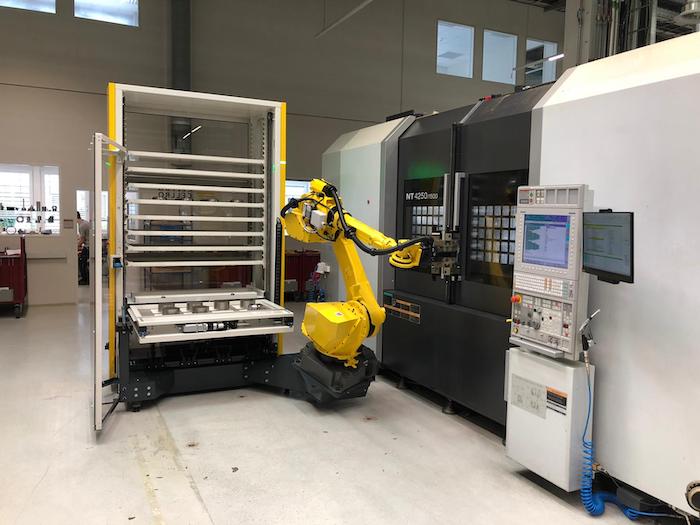
The manufacturing floor is undergoing a silent revolution. The distinct realms of industrial robotics and Computer Numerical Control (CNC) machining, once operating in parallel, are now converging into a singular, hyper-efficient workflow. This fusion is not about replacing the spindle with a robot arm, but about creating intelligent, flexible manufacturing cells where both technologies amplify each other’s strengths. At the heart of this transformation lies advanced robot programming software, the digital thread that translates complex machining intent into flawless robotic motion. For precision manufacturers like JLYPT, mastering this software is no longer optional; it is the critical differentiator that unlocks the ability to tackle larger, more complex, or higher-mix production runs with unprecedented efficiency and accuracy.
Gone are the days when robots were relegated to simple, repetitive pick-and-place tasks, programmed point-by-point through tedious teach-pendant jogging. Modern robot programming software, particularly Offline Programming (OLP) systems, has evolved into sophisticated CAD/CAM environments specifically designed for robotic workcells. These platforms allow engineers to design, simulate, and deploy complex machining programs—from multi-axis milling and turning to precision deburring and polishing—without ever taking the physical robot or CNC machine offline. This digital-first approach is dismantling the traditional barriers of robotic accuracy and programming time, enabling robots to perform tasks with tolerances approaching those of CNC machines and making automation viable for batch sizes as low as one.
This comprehensive guide will navigate the intricate landscape of robot programming software for CNC machining. We will dissect its core functionalities, compare leading platforms, and illustrate its transformative power through real-world applications. For any manufacturer looking to leverage the JLYPT standard of precision within an automated, adaptive production environment, understanding this technology is the first essential step.
The Critical Shift from Teach Pendants to Digital Twins
Traditional robot programming via teach pendant is a sequential, on-line process. An operator manually jogs the robot to each desired position, recording points to define a path. This method presents significant limitations for CNC machining applications:
-
Accuracy Limitations: Precision is subject to human visual judgment, making it unsuitable for complex contours or tight-tolerance work.
-
Massive Downtime: The entire production cell must be idle during programming, crippling overall equipment effectiveness (OEE).
-
Inability to Handle Complexity: Programming intricate 3D toolpaths, common in machining, is extraordinarily difficult and time-consuming.
-
Safety Risks: Programmers work in close proximity to powerful, moving machinery.
Robot Offline Programming (OLP) software directly addresses these shortcomings. It operates on the principle of the Digital Twin—a virtual, physics-accurate replica of the entire workcell, including the robot, CNC machine, fixtures, tools, and the workpiece. Programming is performed entirely within this simulated environment, offering profound advantages:
-
Zero Production Downtime: Programs are developed and optimized offline while the physical cell remains in production.
-
CAD-Driven Precision: Toolpaths are generated directly from the 3D CAD model of the part, ensuring perfect geometric fidelity and eliminating human error.
-
Advanced Simulation & Validation: The software performs full kinematic simulation, collision detection, reachability analysis, and cycle-time estimation before any code is deployed.
-
Seamless Integration: Leading OLP platforms can import toolpaths and G-code from familiar CNC CAM software (like Mastercam or Siemens NX), acting as an intelligent post-processor that converts CNC commands into optimized robot language.
Core Technical Pillars of Machining-Capable Robot Software
Not all robot programming software is created equal for machining. Capable systems are built on several interconnected technical pillars:
1. High-Fidelity Kinematics and Calibration
A robot’s accuracy is fundamentally lower than a CNC machine’s due to its serial-link structure and inherent flexibility. Advanced OLP software must incorporate kinematic calibration models. These models compensate for robot-specific errors like arm deflection, joint backlash, and thermal drift. Techniques such as using a touch probe (like a Renishaw RMP60) to measure reference artifacts allow the software to create a volumetric error map, dynamically correcting programmed paths to achieve machining-grade tolerances of ±0.05mm or better.
2. Intelligent Toolpath Generation and Optimization
This is the core of the software’s “CAM for robots” functionality. It involves more than simple point-to-point movement. Key features include:
-
Automatic Path Generation: Selecting a surface or edge on the CAD model automatically generates a dense, collision-free robot path.
-
Tool Center Point (TCP) Management: Precise control of the tool’s orientation and contact point with the workpiece, crucial for operations like 5-axis contouring.
-
Singularity and Axis Limit Avoidance: The software automatically detects and recalculates paths where the robot might lose a degree of freedom or hit a joint limit, ensuring smooth, uninterrupted motion.
-
Cycle Time Optimization: Using algorithms to optimize acceleration, deceleration, and cornering behavior. Techniques like “lookahead” allow the controller to pre-process upcoming path points for smoother motion and faster overall cycle times.
3. Post-Processing and Code Generation
A post-processor is the translator that converts the generic motion data from the OLP environment into the specific syntax (RAPID for ABB, KRL for KUKA, etc.) required by the target robot’s controller. For machining, post-processors must also handle the integration of spindle commands, coolant control, and tool changes, seamlessly blending robot motion with machining logic.
Landscape of Leading Robot Programming Software
The market offers a range of OLP solutions, from vendor-specific tools to agnostic powerhouses. The table below provides a comparative analysis of key platforms relevant to precision machining.
Table 1: Comparative Analysis of Leading Robot Offline Programming Software for Machining
| Software | Provider / Type | Core Strengths for Machining | Key Considerations | Ideal Use Case |
|---|---|---|---|---|
| RobotMaster | Hypertherm (Agnostic) | Seamless integration with Mastercam; exceptional path optimization & collision avoidance; supports vast robot & external axis libraries. | High cost; primarily a single-robot workstation tool. | Complex 3D milling, trimming, and deburring of molds, composites, and aerospace components. |
| ABB RobotStudio (Machining PowerPac) | ABB (Vendor-Specific) | Deeply integrated with ABB controllers; powerful CAM Converter to transform G-code (ISO 6983) to robot paths; excellent for force-control applications. | Exclusively for ABB robots, limiting cell design flexibility. | High-accuracy milling and finishing where an all-ABB ecosystem is preferred. |
| DELMIA Robotics | Dassault Systèmes (Agnostic) | Unmatched process simulation and digital twin fidelity within the 3DEXPERIENCE platform; excels in large, multi-robot production line validation. | Steep learning curve; higher cost; can be over-engineered for single cells. | Aerospace and automotive projects requiring full production line simulation and virtual commissioning. |
| RobotArt | Domestic / Agnostic | Strong CAD import and automatic trajectory generation; cost-effective with good support for domestic robot brands. | Less brand recognition globally; may lack some advanced optimization features of top-tier software. | A versatile choice for workshops implementing robots for grinding, polishing, and general machining. |
| iRobotCAM | Domestic / Agnostic | Based on a domestic 3D kernel; integrates design, simulation, and programming; supports URDF import/export for advanced research. | A newer entrant in a mature market; ecosystem and third-party support still developing. | Projects emphasizing domestic software solutions and research-oriented applications. |
Case Studies: Robot Programming Software in Action
Case Study 1: From 5-Axis CNC to Robotic Titanium Aerospace Brackets
A manufacturer of structural titanium brackets for aircraft faced a bottleneck. Their 5-axis CNC machines were tied up for days machining large, monolithic brackets from solid block, resulting in high material cost and long lead times.
-
Solution with OLP: JLYPT engineers redesigned the bracket as a forged near-net-shape part. A RobotMaster-programmed robotic cell was deployed. The software was used to generate and optimize complex 5-axis toolpaths to machine the critical mounting surfaces and lugs onto the forging. The digital twin simulation was crucial to avoid collisions with the irregular forging shape and to manage the robot’s posture for optimal stiffness.
-
Outcome: Material waste was reduced by over 60%. The robot cell, running over two shifts, matched the output of one CNC machine, freeing the high-precision CNC assets for more complex, tight-tolerance features. The payback period for the robotic cell was under 14 months.
Case Study 2: High-Mix, Low-Volume Production of Complex Investment Castings
A foundry producing high-value alloy investment castings for the energy sector needed to automate the finishing of hundreds of unique part geometries. Manual grinding was inconsistent and a major bottleneck.
-
Solution with OLP: A flexible robotic deburring and grinding cell was implemented using ABB RobotStudio with the Machining PowerPac. The key was the software’s ability to quickly convert the CNC finishing paths (developed for a manual tool) into optimized robot programs. For each new casting, the CAD model was imported, the grinding path was generated, and the program was simulated and validated offline in hours, not days.
-
Outcome: The cell automated 90% of the finishing work. Cycle time predictability improved dramatically, and part quality became consistent, eliminating rework. The OLP software’s quick program turnaround made the automation economically viable even for batch sizes of 10-20 parts.
Case Study 3: Large-Scale Composite Layup Tool Trimming
An automotive manufacturer of carbon fiber components needed to trim and drill large, contoured composite layup tools. The size (over 4 meters) made dedicated CNC machining cost-prohibitive.
-
Solution with OLP: A high-payload robot on a 10-meter linear track was programmed using DELMIA Robotics. The software’s strength in managing large-scale digital twins was essential for accurately simulating the robot’s movement along the track while maintaining tool perpendicularity to the complex tool surface. The OLP environment was used to plan the robot’s joint limits and optimize the sequence to minimize track movements.
-
Outcome: The robotic solution provided the necessary reach and flexibility at a fraction of the cost of a comparable CNC portal mill. The DELMIA-processed programs achieved the required edge quality and positional accuracy, enabling in-house tool maintenance and modification, drastically reducing lead times for prototyping new vehicle components.
Implementing Robot Programming Software: A Strategic Roadmap
Successfully integrating advanced robot programming software into your machining operations requires a structured approach:
-
Process Identification & Feasibility: Start by analyzing your value stream. Identify processes with high labor content, repetitive tasks, or those causing CNC bottlenecks (like secondary finishing). Not every process is suitable; high-volume, simple tasks may remain on dedicated CNCs.
-
Software Selection & Skill Development: Choose software based on your primary robot brands, required precision, and team’s existing CAD/CAM knowledge (e.g., a Mastercam shop may lean toward RobotMaster). Invest in formal training—this software is complex and requires dedicated expertise.
-
Pilot Project: Begin with a well-defined, medium-complexity project. This builds internal confidence and creates a proof-of-concept. A successful pilot, like automating the deburring of a family of aluminum housings, demonstrates tangible ROI and process improvement.
-
Workflow Integration: Establish a formal digital workflow: CAD Model > CAM Toolpath (if needed) > OLP Import & Robot Path Generation > Simulation & Validation > Post-Processing > Deployment to Robot. This workflow must be integrated with your existing PDM/PLM systems.
-
Continuous Calibration & Optimization: Implement a routine for robot cell calibration using probes or laser trackers. Use the analytics from the OLP software to continuously refine programs for cycle time reduction and toolpath efficiency.
The Future: AI, Cloud, and Adaptive Machining
The evolution of robot programming software is accelerating toward greater autonomy. We are moving toward:
-
AI-Powered Path Planning: Machine learning algorithms will automatically generate the most efficient robot path and orientation by analyzing the CAD model and historical cycle time data, further reducing engineering time.
-
Cloud-Based Simulation & Collaboration: Digital twins will live in the cloud, allowing teams across the globe to collaborate on cell design and programming in real-time.
-
Closed-Loop Adaptive Machining: Software will be fed real-time data from force-torque sensors and spindle power monitors. It will dynamically adjust feeds, speeds, and paths in the digital twin, which then updates the physical robot to compensate for tool wear or material variability, creating a truly adaptive machining process.
Conclusion: Engineering the Future of Flexible Precision
The sophistication of modern robot programming software has fundamentally altered the economics and capabilities of robotic automation in machining. It transforms the robot from a blind, point-to-point machine into an intelligent, flexible manufacturing asset capable of executing complex CNC-style work. For forward-thinking manufacturers, the question is no longer if to adopt this technology, but how and when.
The journey requires investment in both technology and talent, but the reward is a formidable competitive edge: the ability to produce complex, high-quality parts with unparalleled flexibility, bridging the gap between mass production and custom craftsmanship. At JLYPT, we are not just observers of this convergence; we are active engineers, leveraging these digital tools to build the next generation of precision manufacturing cells.
Are you ready to explore how robotic automation, powered by advanced programming software, can solve your production challenges? Contact JLYPT today to discuss a feasibility study for your application. Discover our integrated approach to precision and automation at JLYPT CNC Machining Services.