
The Architect’s Guide to Robotic Workcell Design for CNC Machining Automation
Introduction: From Concept to Production Reality – The Critical Discipline of Robotic Workcell Design
In the journey toward automating a CNC machining process, the selection of the robot, gripper, and vision system often commands the spotlight. However, the true determinant of success—where reliability, safety, and efficiency are either engineered in or neglected—lies in the comprehensive discipline of robotic workcell design. This discipline represents the architectural and systems engineering phase where individual components are orchestrated into a cohesive, high-performance production unit. A poorly designed workcell, no matter how advanced its components, will suffer from chronic downtime, safety incidents, and suboptimal throughput. Conversely, a masterfully executed robotic workcell design transforms capital equipment into a resilient, predictable, and scalable asset. For machine shops and manufacturing engineers, mastering this discipline is the difference between implementing automation and achieving autonomous production.
At JLYPT, our perspective is forged through the lens of precision execution and systemic thinking. We view robotic workcell design not as a mere arrangement of machinery but as the creation of a optimized production environment. It is a multi-disciplinary puzzle where mechanical engineering, industrial ergonomics, control logic, and safety standards must converge to create a system greater than the sum of its parts. This guide is crafted for manufacturing engineers, automation integrators, and operations leaders who recognize that the “how” of assembly is as critical as the “what.” We will deconstruct the core principles of effective robotic workcell design, provide a phase-gated framework for implementation, and explore the nuanced considerations that separate a functional cell from an exceptional one. The goal is to equip you with the knowledge to architect systems that not only automate a task but elevate the entire manufacturing process.
Section 1: Foundational Principles of Effective Robotic Workcell Design
Before selecting a single component, certain foundational principles must govern the entire robotic workcell design process. These principles ensure the resulting system is safe, efficient, maintainable, and adaptable.
1.1 The Hierarchy of Design Priorities: Safety, Reliability, Then Speed
-
Safety First (Non-Negotiable): Every aspect of the design must begin with risk assessment per ISO 12100 and ISO 10218. This includes not only physical safeguarding (fencing, light curtains) but also functional safety in control logic. The design must protect operators, maintenance personnel, and the equipment itself from harm.
-
Reliability & Maintainability: The cell must be designed for sustained operation with minimal unscheduled downtime. This means:
-
Service Access: Ample space for technicians to access robots, CNC machines, and peripherals for maintenance without requiring complete disassembly.
-
Component Selection: Using industrial-grade components rated for the environment (coolant, chips, vibration).
-
Error Recovery: Designing in sensors and logic paths that allow the system to detect and, where possible, automatically recover from common faults (e.g., part drop, misload).
-
-
Throughput & Efficiency: Only after safety and reliability are assured does the focus shift to optimizing cycle time. This involves minimizing the robot’s non-value-added travel, optimizing load/unload sequences, and ensuring the CNC machine’s idle time is as short as possible.
1.2 The Core Components of a Workcell Architecture
A comprehensive robotic workcell design integrates several key subsystems:
-
Primary Process Station: The CNC machine tool itself, with its work envelope, door mechanism, and control interface.
-
Material Handling Robot: The articulated, SCARA, or gantry robot responsible for part movement.
-
Material Flow System: This includes the infeed (raw parts) and outfeed (finished parts) systems. These can be conveyors, rotary index tables, pallet stacks, or Automated Guided Vehicle (AGV) interfaces.
-
Part Handling End-Effector: The custom-engineered gripper, vacuum tool, or magnetic handler that interfaces with the workpiece.
-
Tooling & Fixturing: The custom fixtures that hold parts in the CNC machine and often in the staging areas. Precision here, often achieved through JLYPT’s machining capabilities, is paramount.
-
Peripheral Support Systems: Chip conveyors, coolant management, mist collectors, and part washing stations.
-
Control & Safety System: The Programmable Logic Controller (PLC) that sequences all operations, the Human-Machine Interface (HMI), and the safety-rated components (relays, light curtains, area scanners).
-
Sensing & Inspection: Vision systems, part presence sensors, and in-process probes that provide the cell with “awareness.”
Table 1: Robotic Workcell Layout Types for CNC Machining Applications
| Layout Type | Description & Configuration | Key Advantages | Key Disadvantages | Ideal Application Scenario |
|---|---|---|---|---|
| Dedicated Single-Cell | One robot services one CNC machine. Often includes simple infeed/outfeed conveyors. | Simple design, lower initial cost, easy to program and debug. Minimal footprint. | Low robot utilization (robot idle during machine cycle). Not scalable. | Entry-level automation. Long machine cycle times where robot idle is acceptable. Prototype or low-volume cells. |
| Multi-Machine Servicing (Robot on Rail) | A single robot mounted on a linear track (7th axis) services 2-4 CNC machines in a line. | High robot utilization. One robot capital expense covers multiple machines. Reduced per-part automation cost. | Higher complexity in control and safety. Rail alignment is critical. Failure of the robot halts all machines. | High-volume production lines with similar or identical machines and parts. Excellent for maximizing ROI. |
| Pallet Pool / Matrix System | The robot services a central magazine of pallets or fixtures. CNC machines have automatic pallet changers (APCs). The robot moves pallets between storage and machines. | Maximum flexibility and uptime. Enables true lights-out operation. Easy to mix different parts. High buffer capacity. | Very high capital cost. Complex software (FMS) required. Large floor space footprint. | Flexible Manufacturing Systems (FMS) for high-mix or 24/7 production. Ideal for expensive, long-cycle-time parts. |
| Mobile Robot Cell | A collaborative robot (cobot) or small robot on a mobile base can be moved between different workstations or machines as needed. | Ultimate flexibility. Low cost for entry. Can automate multiple manual stations without dedicated hardware for each. | Lower payload and speed. Requires manual setup and teaching at each location. Not for high-volume dedicated production. | High-mix, low-volume job shops. Low-volume secondary operations (deburring, inspection). Processes that change frequently. |
| Gantry Robot Overhead Cell | A Cartesian (gantry) robot is mounted overhead on a frame, servicing machines and conveyors below. | Extremely large work envelope. Can service very large parts or multiple widely spaced stations. Frees up floor space. | Generally slower than articulated arms. Can be less rigid. Installation requires significant overhead structure. | Handling very large parts (e.g., aerospace structures). Cells with multiple process stations (mill, wash, CMM) under one gantry. |
Section 2: The Phase-Gated Framework for Robotic Workcell Design
A systematic approach mitigates risk and ensures no critical element is overlooked.
Phase 1: Discovery & Requirements Definition
This phase answers the “why” and the “what.”
-
Process Analysis: Document the current manual process in extreme detail. Create a process flow map and video the current operation.
-
Part Analysis: Catalog all parts to be run in the cell. Record dimensions, weights, materials, batch sizes, annual volumes, and critical features for gripping.
-
Performance Metrics Definition: Establish clear, measurable goals. These become the project’s success criteria. Examples:
-
Target OEE increase (e.g., from 60% to 85%).
-
Labor reduction (e.g., 1.5 FTE per shift).
-
Throughput increase (e.g., 30% more parts per shift).
-
Payback period target (e.g., < 24 months).
-
:Phase 2: Conceptual Design & Simulation
This phase develops the “how” in a virtual, risk-free environment.
-
Layout Concept Development: Using the layouts in Table 1 as a starting point, develop 2-3 conceptual layouts in CAD. Consider material flow, operator access, and maintenance aisles.
-
Cycle Time Simulation: Using offline robot simulation software (e.g., RoboDK, Siemens Process Simulate), build a digital twin of the proposed cell. Program the robot’s tasks and simulate the entire cycle. This step is crucial for:
-
Validating Reach & Avoiding Collisions: Ensuring the robot can physically perform all tasks without hitting the machine, fixtures, or itself.
-
Optimizing Cycle Time: Tweaking robot paths, speeds, and wait points to minimize the overall cycle time. The simulation will reveal if the robot can keep up with the machine’s cycle or if it becomes the bottleneck.
-
-
Initial Risk Assessment: Identify potential safety hazards and process failure modes at the conceptual stage.
Phase 3: Detailed Engineering Design
This is where the concept is fully engineered for manufacture and installation.
-
Mechanical Design: Detailed design of all custom components: robot pedestals, safety fencing, custom grippers, part fixtures, conveyor frames, and mounting brackets. This stage generates detailed manufacturing drawings.
-
Electrical & Control Design: Creation of the electrical schematics, panel layouts, pneumatic diagrams, and the PLC/HMI software architecture. Development of the communication protocol between the robot and CNC (e.g., Profinet signal list).
-
Safety System Design: Finalize the safety circuit design per ISO 13849-1 (Performance Level d or e). Specify all safety devices: safety-rated PLC, muting sensors for conveyor gates, emergency stops, and light curtains with blanking functions.
Section 3: Critical Design Considerations Specific to CNC Environments
A machining workshop presents unique challenges that must be designed for.
Contamination Management
Coolant, oil, and metal chips are the enemies of precision automation.
-
Sealed Components: Specify robots, grippers, and sensors with appropriate IP ratings (IP65 minimum, IP67 ideal).
-
Chip & Coolant Management: Design the cell floor with drains. Incorporate chip conveyors that are automatically cleared. Use protective boots on robot wrists and ways covers on linear rails.
-
Gripper Design: Avoid complex internal mechanisms in grippers that can be clogged by chips. Design jaws to shed chips, not trap them.
Precision Interface Design
The robotic workcell design must ensure the part is presented to the CNC machine with micron-level accuracy.
-
Kinematic Couplings: Use hardened and ground dowel pins and bushings at the interface between the robot’s tooling and the machine fixture for repeatable, precise location.
-
Compliance: Incorporate passive compliance (e.g., a spring-loaded or elastomer-mounted tooling plate) in the gripper or fixture to absorb minor misalignments during part insertion, preventing jams and damage.
-
Feedback: Use simple sensors (inductive or capacitive) to confirm part presence and fully seated status before allowing the machine cycle to start.
Human-in-the-Loop Design
Even an automated cell requires human interaction for setup, maintenance, and error recovery.
-
Ergonomic Load/Unload Stations: Design staging areas for raw blanks and finished parts at ergonomic heights to minimize strain during manual replenishment.
-
Clear HMI & Diagnostics: The HMI should provide a clear status of the cell and intuitive fault diagnosis guides. It should answer: “What stopped?” and “What do I do to fix it?”
-
Safe Access: Design large, interlocked access gates with safe “slow speed” or “limited space” modes for maintenance tasks, per ISO 10218.
Table 2: Robotic Workcell Design Specification & Validation Checklist
| Design Category | Key Specification / Requirement | Validation Method | Acceptance Criteria |
|---|---|---|---|
| Safety | Full compliance with ISO 10218-1/2, ISO 13849-1 PLd. | Physical safety audit by qualified engineer. Review of safety circuit diagrams and risk assessment documentation. | Zero Category 1 or 2 hazards. All safety functions operate as designed. |
| Cycle Time | Target cycle time of ≤ [X] seconds from part-out to part-in. | Measurement during final runoff with production parts. Comparison against simulation model. | Achieved average cycle time is within 5% of simulated target. |
| Positional Accuracy | Part placed in fixture within ±0.05mm of nominal position. | Use of precision dial indicator or laser tracker to measure repeatability of robot placement. | 30 consecutive placements all within tolerance band. |
| Uptime / Reliability | Cell Mean Time Between Failures (MTBF) > 400 hours. | Monitor over initial 30-day production run. Document all faults and downtime causes. | Achieved MTBF meets or exceeds target. |
| Part Handling Quality | Zero part damage attributable to cell design. | Visual inspection of first 500 parts run through the cell. | No scratches, dings, or deformities caused by gripper or transfer system. |
| Changeover Time | Changeover from Part A to Part B in ≤ [Y] minutes. | Timed changeover exercise performed by trained operator. | Includes program load, fixture/gripper change, and first-part validation. |
| Maintenance Access | All major components accessible with standard tools. | Maintenance technician walkthrough and verification. | Confirmation that filters, gripper jaws, sensors, etc., can be replaced without major disassembly. |
Section 4: Case Studies – Principles of Robotic Workcell Design in Practice
Case Study 1: High-Volume Automotive Drivetrain Component Cell
-
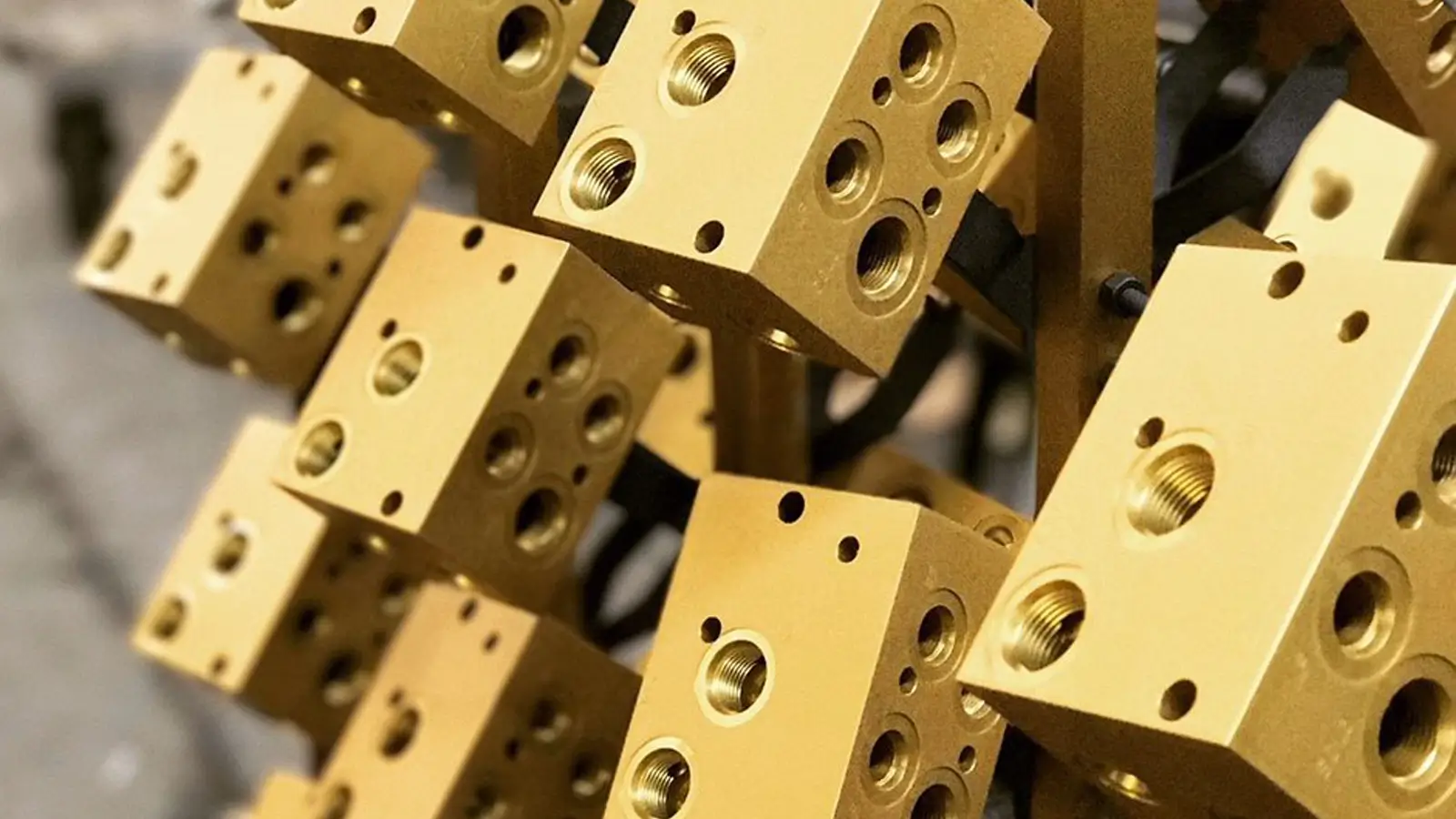
Challenge: A manufacturer needed to machine aluminum transmission valve bodies 24/7 with minimal labor. The parts were heavy (15kg), required precision handling, and the machining cycle was relatively short (8 minutes), creating a fast-paced, repetitive task.
-
Robotic Workcell Design Solution: A multi-machine servicing layout was chosen. A heavy-duty 6-axis robot was mounted on a hardened linear rail between two identical CNC machining centers. The robotic workcell design featured:
-
Centralized Part Buffer: A rotary table with eight stations presented raw and finished parts.
-
Custom Hydraulic Gripper: A self-centering, form-fitting gripper that located on machined bore features.
-
Integrated Mist Extraction: An overhead hood with extraction was built into the safety fencing.
-
Failsafe Logic: The design included part-weighing sensors post-pick to detect if the robot failed to grip a part, preventing a crash.
-
-
Outcome: The cell achieved 95% OEE, running lights-out for two full shifts. The robot’s utilization exceeded 80%. The project paid back in 18 months through labor savings and a 40% increase in output per square foot of floor space.
Case Study 2: Aerospace Turbine Blade Finishing & Inspection Cell
-
Challenge: Post-machining, individual titanium turbine blades required precise robotic handling for a series of processes: laser etching, vision-based dimensional inspection, and final packaging. The parts were delicate, high-value, and each process step had different spatial requirements.
-
Robotic Workcell Design Solution: A gantry robot overhead cell was selected. A high-precision Cartesian robot moved on X, Y, Z axes over a large worktable containing four distinct stations: an input rack, a laser etcher, a vision inspection booth, and an output packaging station. The robotic workcell design emphasized precision and cleanliness:
-
Unified Tool Changer: The gantry had an automatic tool changer to switch between a vacuum cup for handling and a calibrated probe for touch-off.
-
Vibration Isolation: The entire gantry frame was mounted on vibration-damping pads to ensure inspection accuracy.
-
Modular Station Design: Each process station was a self-contained “plug-and-play” unit, allowing for easy future reconfiguration.
-
-
Outcome: The cell created a continuous, hands-off flow for finishing blades. It eliminated three manual handling steps, reduced blade-to-blade process time variation by 90%, and provided a complete digital dossier for each blade, linking its etch code to its inspection report.
Case Study 3: Job Shop Flexible Machining Cell with Collaborative Robot
-
Challenge: A contract machining shop needed to improve the productivity of a single 3-axis vertical machining center but could not justify a large, dedicated robotic cell due to high part mix and low volumes.
-
Robotic Workcell Design Solution: A mobile, flexible cell based on a collaborative robot (cobot). The robotic workcell design was focused on flexibility and ease of use:
-
Mobile Cart: The cobot, its controller, and a simple pneumatic gripper were mounted on a lockable wheeled cart.
-
Universal Fixturing: The CNC machine was equipped with a modular fixture plate system. The cobot was programmed to use simple “pick-from-here, place-there” logic.
-
Intuitive Programming: The shop’s machinists were trained to program new part routines using the cobot’s hand-guiding teaching method in under 30 minutes.
-
-
Outcome: While not a high-speed automation solution, the cell freed the machinist to perform setup on another machine while the cobot tended the first. It reduced machine idle time by an average of 25% and provided a low-risk, low-cost introduction to automation that could be easily repurposed.
Conclusion: Designing for the Future of Manufacturing
The discipline of robotic workcell design is the crucial bridge between the promise of automation and the reality of sustained, profitable production. It demands a holistic perspective that balances the mechanical, electrical, and human factors of the manufacturing environment. A successful design is not merely functional; it is safe, reliable, maintainable, and adaptable to future needs.
The return on investing time and expertise in meticulous robotic workcell design is measured in years of trouble-free operation, maximized equipment utilization, and the creation of a manufacturing asset that can evolve with your business. It transforms automation from a capital expense into a strategic capability.
For companies embarking on this journey, the complexity can be daunting. Success often comes from partnering with experts who understand both the granular details of precision machining and the systemic challenges of automation integration. At JLYPT, our experience in creating high-precision components gives us unique insight into the design of interfaces and systems that must perform reliably in demanding production settings.
Ready to architect a robotic workcell that delivers on the full promise of automation for your CNC operations? Contact JLYPT to discuss your project from the ground up. Explore our system-oriented manufacturing philosophy at JLYPT CNC Machining Services.