Mastering Robotics Safety Standards: A CNC Integrator’s Guide to Risk Reduction and Compliance
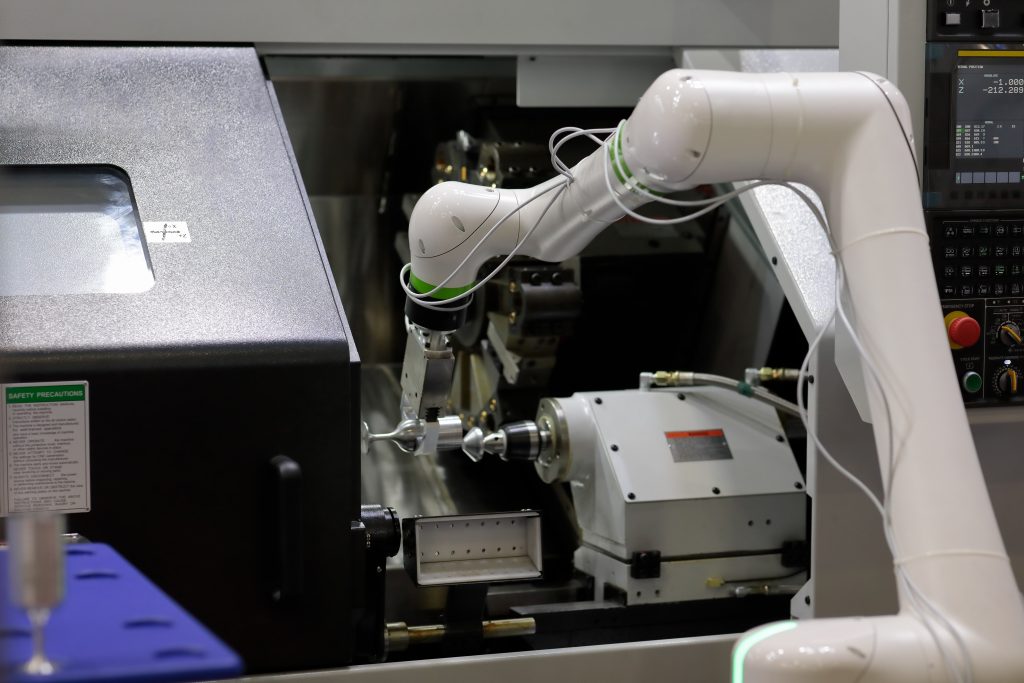
The integration of industrial robots into CNC machining cells represents the pinnacle of manufacturing productivity and flexibility. From automated pallet loading on 5-axis machining centers to robotic deburring of complex aerospace components, this synergy unlocks unprecedented capabilities. However, the powerful forces, high speeds, and complex programming inherent to these systems introduce significant hazards. Navigating the intricate landscape of robotics safety standards is not merely a regulatory hurdle; it is a fundamental engineering discipline essential for protecting personnel, safeguarding capital investment, and ensuring uninterrupted production. For manufacturers and system integrators like JLYPT, a deep, practical understanding of these standards forms the bedrock of every successful automation project. This guide delves into the key standards, implementation frameworks, and real-world strategies for achieving compliance and building inherently safe robotic CNC systems.
1. The Foundational Framework: Core Robotics Safety Standards
Robotic safety is governed by a hierarchy of international standards that provide a systematic approach to risk reduction. At the apex of this hierarchy for industrial automation are the ISO 10218 series and complementary functional safety standards.
ISO 10218-1 & -2: The Cornerstone of Robotic Safety
The recently updated ISO 10218 series, with parts 1 and 2 published in February 2025, is the primary global standard for industrial robots. It is classified as a “Type C” standard, meaning it takes precedence over more general machinery safety standards for the specific hazards it addresses.
-
ISO 10218-1:2025 – Safety requirements for industrial robots: This standard treats the robot arm itself as an “incomplete machine,” focusing on its inherent safe design, including limits on force and speed, emergency stop functionality, and user interface requirements. It explicitly excludes non-industrial applications like medical, consumer, or military robots.
-
ISO 10218-2:2025 – Safety requirements for robot systems and integration: This is the critical document for system builders. It covers the integration of the robot (the incomplete machine) into a complete work cell, addressing hazards created by the application itself, such as machining processes, peripherals, and human interaction. It governs the design, installation, commissioning, operation, and maintenance of the entire robotic cell.
Functional Safety: IEC 62061 and ISO 13849
While ISO 10218 prescribes what safety functions are needed, the standards IEC 62061 and ISO 13849 define how to design the safety-related control systems that execute these functions. They ensure that safety controls (like emergency stops, speed monitoring, or safety-rated monitored stops) are reliable enough for their assigned task.
IEC 62061 is a sector-specific standard derived from IEC 61508, focusing on electrical, electronic, and programmable electronic control systems. It uses Safety Integrity Levels (SIL) to quantify the reliability requirement of a safety function. The required SIL is determined through a rigorous risk assessment process that scores factors like Severity of Injury (Se), Exposure Frequency (Fr), Probability of a Hazardous Event (Pr), and Possibility of Avoidance (Av). For example, a high-force robotic press-brake tending application would typically demand a higher SIL (e.g., SIL 2 or 3) than a simple pick-and-place operation.
Safeguarding Technologies: IEC 61496 for Electro-Sensitive Protective Equipment (ESPE)
Physical safeguarding is a primary method of risk reduction. Standards like IEC 61496 specify the requirements for devices like safety light curtains and laser scanners. These “active opto-electronic protective devices” create invisible detection fields around hazards. IEC 61496 classifies ESPEs into types (e.g., Type 2, Type 3, Type 4), with higher types offering greater diagnostic coverage and fault tolerance. A Type 4 safety light curtain, required for safeguarding against severe injury, is designed so that not only a single fault but even an accumulation of faults will not lead to the loss of the safety function.
Table 1: Overview of Core Robotics Safety Standards
| Standard | Focus & Scope | Key Concepts/Outputs | Primary Application Phase |
|---|---|---|---|
| ISO 10218-1:2025 | Intrinsic safety of the industrial robot arm as an incomplete machine. | Force/Speed limits, emergency stop, teach pendant safety, inherent design hazards. | Robot manufacturer design. |
| ISO 10218-2:2025 | Safety of the complete robot system and its integration into an application. | Risk assessment, safeguarding, safe work cell design, collaborative operation requirements, commissioning procedures. | System integration, cell design, installation. |
| IEC 62061 / EN IEC 62061:2021 | Functional safety of safety-related electrical control systems (SRECS). | Safety Integrity Level (SIL), probabilistic calculations (PFH D), hardware fault tolerance, systematic safety lifecycle. | Design of safety control systems (e.g., safety PLCs, relay logic). |
| IEC 61496 (e.g., -2:2020) | Safety requirements for Electro-Sensitive Protective Equipment (ESPE) like light curtains & laser scanners. | Device Type (2, 3, 4), effective aperture angle, diagnostic coverage. | Selection and validation of perimeter safeguarding devices. |
| ISO 13849-1 | Functional safety of safety-related parts of control systems (SRP/CS), all technologies. | Performance Level (PL), architecture (Category), mean time to dangerous failure (MTTF D), diagnostic coverage (DC). | Design of safety controls (alternative/complement to IEC 62061). |
2. The Pillars of Safety: Key Technical Requirements in CNC Robotics
A compliant robotic machining cell is built on several interlocking technical pillars mandated by the standards.
2.1. Risk Assessment: The Indispensable First Step
Before any design begins, a comprehensive risk assessment following the process in ISO 12100 and ISO 10218-2 is mandatory. This involves identifying all foreseeable hazards—from mechanical impact and crushing at the end-of-arm tooling to energy hazards from the CNC machine’s cutting process. Each hazard is then rated based on severity, frequency, and avoidance possibility to determine the necessary level of risk reduction. This assessment directly informs the selection of safeguards and the performance level (PL) or safety integrity level (SIL) required for control functions.
2.2. Safeguarding by Design: Separation, Control, and Awareness
-
Fixed Guards & Perimeter Fencing: The first and most robust line of defense is physical separation. Hard fencing, interlocked with safety-rated door switches, prevents unauthorized access during automatic operation. Standards like OSHA 29 CFR 1910.212 reinforce that point-of-operation hazards must be guarded to prevent any part of the operator’s body from entering the danger zone.
-
Electro-Sensitive Protective Equipment (ESPE): For areas requiring periodic access, such as for fixture changeover, safety light curtains or laser scanners are used. Advanced features like muting (temporarily disabling the safeguard during a non-hazardous part of the cycle, e.g., pallet transfer) and blanking (creating a static “window” in the detection field for a fixed object like a post) are essential for maintaining productivity without compromising safety. The choice between Type 2, 3, or 4 devices is dictated by the risk assessment.
-
Safe Control System Architecture: All safety functions—Emergency Stop, Safe Stop, Speed & Position Monitoring, Mode Selection—must be executed by a safety-related control system. This system is designed per IEC 62061 or ISO 13849-1 to achieve the required SIL or PL. Key principles include redundancy, self-monitoring, and safe failure modes. For instance, a dual-channel safety PLC monitoring the position of a robot in a collaborative cell is a common architecture to achieve PL d/e or SIL 2/3.
2.3. Collaborative Robotics: When Standards Adapt to Proximity
The rise of collaborative robots (cobots) working alongside humans without traditional fences introduces a specialized subset of requirements still governed by ISO 10218-2. Safety is achieved through a combination of:
-
Inherently Safe Design: Power and force limiting (PFL) to ensure any contact is below injury thresholds.
-
Safeguarded Monitoring: Speed and separation monitoring (SSM), where sensors track the human’s position and the robot slows down or stops based on proximity.
-
Clear Procedures: Even in a collaborative workspace, a risk assessment is crucial. Tasks like manual tool changing or programming may require the robot to enter a safeguarded high-speed mode, necessitating traditional lock-out/tag-out (LOTO) procedures.
3. A Practical Roadmap: Implementing Safety in a Robotic CNC Project
For a system integrator like JLYPT, safety is integrated into every project phase:
-
Concept & Risk Assessment: Define the process. Conduct a formal, documented risk assessment with the customer to identify all tasks (automatic operation, teaching, maintenance, recovery from faults).
-
Design & Specification: Select safeguards (fencing, light curtains) and design the safety control architecture. Specify components (safety PLCs, drives, sensors) that meet the required SIL/PL. Create detailed electrical and pneumatic schematics.
-
Implementation & Integration: Build the cell with safety in mind (e.g., secure cable routing, guarded pneumatic lines). Program both the standard and safety logic. Ensure all safety device signals are correctly wired to the safety controller, not bypassed.
-
Verification & Validation (V&V): This critical phase proves the system meets the specification.
-
Verification: Check that each safety function is implemented correctly (“Did we build it right?”). Test every emergency stop, guard interlock, and safe speed limit.
-
Validation: Prove the entire integrated system achieves the necessary risk reduction (“Did we build the right thing?”). This often involves simulating faults and ensuring the system reacts safely.
-
-
Documentation & Training: Generate a complete technical file, including risk assessment, schematics, validation reports, and manuals. Conduct thorough training for the customer’s operators and maintenance staff on safe procedures, including recovery from faults and lock-out/tag-out.
4. Case Studies: Safety Standards in Action
Case Study 1: High-Speed Robotic Milling Cell for Aerospace Components
-
Challenge: Integrate a heavy-payload robot to automatically load large titanium billets into a gantry mill. Hazards included crushing during part transfer, potential for a workpiece to be ejected at high speed, and entanglement with the robot’s auxiliary cabling.
-
Standards Applied: ISO 10218-2 for system integration, IEC 62061 for the safety control system.
-
Solution: A fully enclosed cell with interlocked access gates. The safety control system (rated SIL 2) implemented a safeguarded space monitoring function. Using safety-rated encoders on the robot and CNC axes, the system ensured the robot could only move at high speed when the CNC door was verified closed and vice-versa. Redundant pressure sensors on the gripper confirmed part acquisition before any high-speed move. The validation phase included dropping a simulated communication link between the robot and PLC to verify a safe stop was initiated.
Case Study 2: Collaborative Robotic Deburring and Inspection Station
-
Challenge: Create a flexible cell where an operator manually loads a variety of small machined parts, and a cobot performs vision inspection and light deburring in close proximity.
-
Standards Applied: ISO 10218-2 (collaborative operation clauses), ISO 13849-1 for the protective stop circuitry.
-
Solution: A power-and-force-limited (PFL) cobot was used. The workspace was divided into zones using a safety laser scanner (IEC 61496 Type 3). In the outer zone, the cobot operated at full speed. If the operator’s leg breached this zone, the robot slowed. If a hand entered the inner zone, a protective stop was triggered. The cobot’s built-in force sensing provided inherent safety during contact. The risk assessment dictated clear work instructions: for tool changes, the robot was moved to a dedicated maintenance pose, and a physical LOTO procedure was enforced.
Case Study 3: Flexible Manufacturing Cell (FMC) with Mobile Robot Integration
-
Challenge: Incorporate an Autonomous Mobile Robot (AMR) to deliver pallets to multiple CNC machines tended by stationary robots. Dynamic hazards were created by the moving AMR and the interaction points at machine load stations.
-
Standards Applied: ISO 10218-2, ISO 3691-4 (for driverless industrial trucks), IEC 61496.
-
Solution: The AMR’s natural navigation path was surrounded by virtual boundaries monitored by its onboard safety laser scanners. At each machine station, a dedicated handshake protocol was implemented. The stationary robot would only unlock its safety gate and signal “ready for load” when in a safe home position. The AMR would only approach and dock once it received this signal. Fixed Type 4 light curtains were installed at the dock entry points as a final layer of protection during the physical transfer sequence, ensuring no personnel could enter the pinch point between the AMR and the machine.
5. Beyond Compliance: The Strategic Value of Robust Safety
Adhering to robotics safety standards is more than a legal necessity; it is a strategic business advantage. It minimizes the risk of catastrophic accidents and costly downtime from regulatory shutdowns. A well-documented safety system simplifies insurance underwriting and reduces liability. Furthermore, it builds a culture of safety that boosts operator confidence in automation, leading to smoother adoption and higher overall equipment effectiveness (OEE).
Conclusion: Safety as an Engineering Discipline
In the complex and dynamic environment of a robotic CNC machining cell, safety cannot be an afterthought. It must be engineered into the system from the first concept, guided by the rigorous framework of robotics safety standards like ISO 10218, IEC 62061, and IEC 61496. For integrators and manufacturers, mastering these standards is not just about following rules—it is about mastering a critical engineering discipline that enables innovation, protects valuable assets, and unlocks the full, safe potential of automation.
Partner with JLYPT for Safe, Compliant Automation
At JLYPT, we engineer productivity with an unwavering commitment to safety. Our expertise in CNC machining services is matched by our deep proficiency in integrating robotics within the strictest safety frameworks. From initial risk assessment to final validation, we ensure your automated cell is not only high-performing but also fully compliant and inherently safe.
Ready to build your next automated machining solution on a foundation of safety? Contact our automation engineering team today to discuss your project. Explore our integrated approach at JLYPT CNC Machining Services.