Robotics Training Programs: Building the Human Capital for Your Smart CNC Machining Future
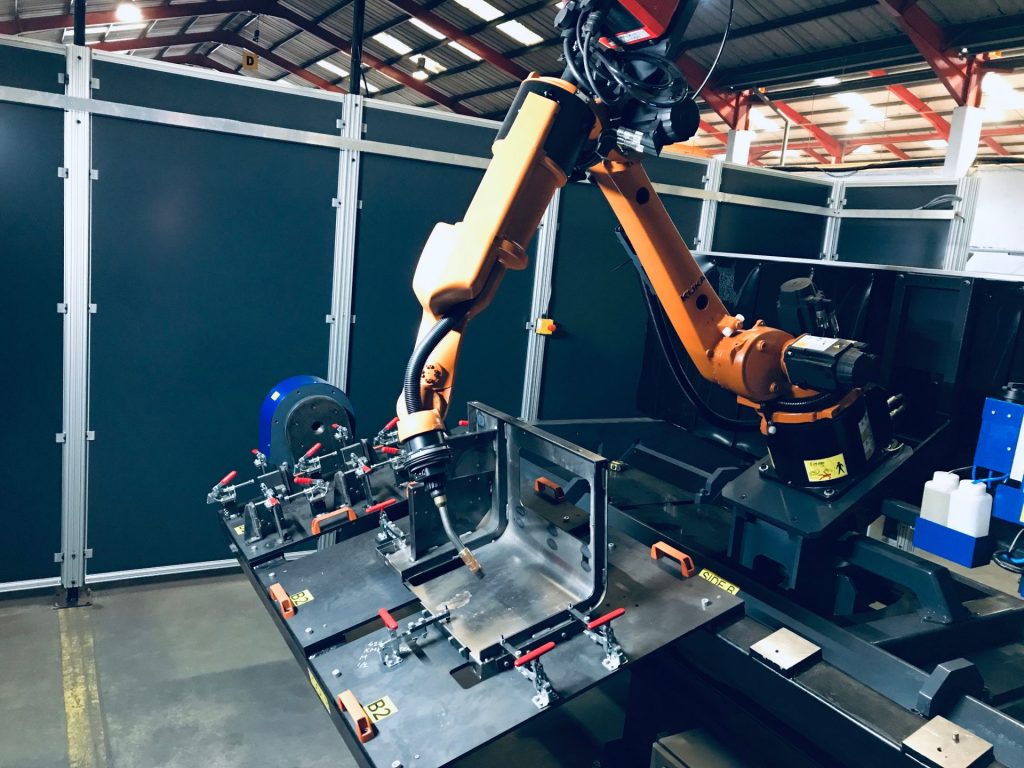
The narrative of manufacturing automation often fixates on the technology itself: the latest 6-axis articulated robot, the sophisticated force-torque sensor, or the AI-powered vision system guiding a robotic arm. While these are the visible engines of progress, a more critical, often overlooked component determines the ultimate success or failure of any automation initiative: the human operator, programmer, and maintenance technician. In the high-stakes world of precision CNC machining, where tolerances are measured in microns and unplanned downtime translates directly to lost revenue, the gap between a robotic cell’s theoretical potential and its realized performance is bridged by human expertise. This is where strategic robotics training programs cease to be an optional expense and become the foundational investment for sustainable competitive advantage.
For a precision engineering partner like JLYPT, we recognize that delivering a perfectly integrated robotic cell is only half the solution. The other half is ensuring your team possesses the cognitive and practical skills to command, optimize, and maintain that technology. Inadequate training leads to a cascade of failures: underutilized assets, chronic minor faults escalating into major downtime, safety near-misses, and an inability to adapt automation to evolving production needs. This comprehensive guide will deconstruct the essential architecture of effective robotics training programs, moving beyond basic vendor certification to build a competency framework that aligns with the specific demands of CNC machining, from machine tending and palletizing to advanced robotic deburring and in-process inspection.
1. The Training Imperative: Why Generic Programs Fail in Precision Environments
The transition from manual or CNC-centric operations to a hybrid human-robotic work cell represents a profound shift in required skills. A master machinist’s intuition for feed rates and tool engagement does not directly translate to programming a robot’s tool center point (TCP) or tuning its path accuracy. A generic, off-the-shelf robot training course, often provided by the OEM, typically focuses on the universal functions of a specific robot model. While valuable for foundational knowledge, it lacks the critical context of the machining ecosystem.
The Gaps in Standard Training:
-
Process Blindness: Standard programs seldom cover how robot cycle times interact with CNC machining cycles, how to synchronize a robot with a CNC’s M-codes for door control and pallet clamping, or how to program a robot for adaptive deburring based on real-time force feedback.
-
Limited Troubleshooting Scope: They teach how to clear a robot servo alarm but not how to diagnose whether a part misload was caused by robot positional drift, gripper wear, or a misaligned machine fixture.
-
Absence of Systems Thinking: Operators are taught to run the robot but not to understand its role within the larger Manufacturing Execution System (MES), how data flows for Overall Equipment Effectiveness (OEE) tracking, or how to perform basic preventive maintenance on the integrated peripherals like conveyors or vision systems.
A strategic robotics training program for CNC must therefore be a hybrid curriculum. It must graft deep, practical robot-specific knowledge onto the sturdy rootstock of existing machining process expertise, creating a new breed of technician: the Automated Cell Specialist.
2. Blueprinting a Tiered Competency Framework
Effective training is not a one-time event but a structured, tiered journey that maps to the roles within your organization and the complexity of your automated cells. A mature program progresses through four distinct tiers of competency.
Tier 1: Certified Operator & Safety Marshal
This is the non-negotiable foundation for anyone interacting with the robotic cell. The focus is on safe interaction, basic operation, and anomaly detection.
-
Core Curriculum:
-
Robotic Safety Standards (ISO 10218, RIA R15.06): In-depth understanding of safeguarded spaces, lock-out/tag-out (LOTO) procedures for the integrated cell, and the specific hazards of human-robot collaboration (HRC) if applicable.
-
HMI Operation & Cycle Management: Proficiency in starting, stopping, pausing, and resuming automated cycles. Understanding cell status indicators and alarm messages.
-
Basic Anomaly Response: Training to identify and respond to common faults—from gripper sensor errors and part presence check failures to simple recoverable path errors—following clear escalation procedures.
-
-
Outcome: An operator who can safely manage the cell’s production, perform basic quality checks on robot-handled parts, and act as the first line of defense against escalating faults.
Tier 2: Robot Programmer & Process Technician
This tier targets your skilled machinists, CNC programmers, and maintenance staff, elevating them to become the configurers and optimizers of the automated process.
-
Core Curriculum:
-
Offline Programming (OLP) & Simulation: Mastery of software like RobotStudio, RoboGuide, or universal platforms. This includes creating and simulating paths, performing reach and collision studies, and optimizing cycle times in a virtual environment.
-
Advanced Path Programming: Going beyond point-to-point moves to implement complex toolpaths for machining or finishing. This involves managing tool orientation, using conditional logic (IF/THEN) for error handling, and programming coordinated motion with external axes (linear tracks, rotary tables).
-
Integration Logic & Signal Handling: Understanding the Programmable Logic Controller (PLC) or the robot’s integrated PLC functionality. Training on how to program the handshake protocols between the robot and CNC (e.g., “Part Ready,” “Door Open,” “Fixture Clamped”).
-
Peripheral Integration: Programming and troubleshooting communication with peripherals: configuring I/O for pneumatic grippers, calibrating vision systems for part localization, and integrating force-torque sensors for adaptive control.
-
-
Outcome: A technician who can commission new part programs, adapt the cell for product changeovers, perform advanced recovery from faults, and continuously optimize the automated process for quality and throughput.
Tier 3: Cell Integration & Maintenance Specialist
This expert level focuses on the health, reliability, and continuous improvement of the entire automated system.
-
Core Curriculum:
-
Predictive & Preventive Maintenance: Systematic maintenance of the robot (e.g., lubricating axis reducers, checking belt tensions) and its peripherals. Training on using diagnostic software to monitor servo motor performance, analyze vibration trends, and predict component failure.
-
Advanced Diagnostics & Root Cause Analysis: Using oscilloscopes, multimeters, and controller logs to diagnose complex electromechanical failures that span the robot, PLC, and sensors.
-
Calibration & Metrology: Performing repeatability checks, recalibrating the Tool Center Point (TCP), and using laser trackers or other metrology tools to perform volumetric accuracy compensation on the robotic cell, a critical skill for machining applications.
-
Network & Data Architecture: Understanding the cell’s network topology (Ethernet/IP, PROFINET), basic cybersecurity principles, and how to extract and interpret production data for OEE analysis.
-
-
Outcome: An in-house expert who ensures maximum uptime, performs complex repairs, manages system upgrades, and provides technical leadership for future automation projects.
Tier 4: Automation Engineer & Strategic Planner
This tier focuses on the strategic layer, designing future cells and leading the digital transformation.
-
Core Curriculum: Systems engineering, feasibility study development, ROI modeling for automation, and advanced topics like digital twin implementation and AI/ML applications in robotic process optimization.
-
Outcome: Leadership capable of driving the long-term automation strategy.
Table 1: Tiered Robotics Training Framework for CNC Machining
| Tier | Target Role | Core Skills & Knowledge | Typical Duration & Format | Key Performance Indicator (KPI) |
|---|---|---|---|---|
| Tier 1: Operator | Production Operators, New Hires | Robotic safety standards, HMI operation, basic fault response, quality checkpoint verification. | 40-80 hours (Blended: theory + sim + on-cell). | Reduction in safety incidents, ability to clear 90% of minor alarms, OEE during manned shifts. |
| Tier 2: Programmer/Technician | CNC Programmers, Machinists, Techs | Offline Programming (OLP), path & logic programming, peripheral I/O integration, process troubleshooting. | 120-200 hours (Deep-dive workshops, vendor certs, project-based). | Time for new part program deployment, reduction in changeover time, scrap rate attributable to robot handling. |
| Tier 3: Integration Specialist | Senior Maintenance, Controls Engineers | Predictive maintenance, advanced diagnostics, system calibration (TCP, volumetric), network/data basics. | 80-150 hours (Advanced vendor courses, specialist seminars, mentorship). | Mean Time Between Failures (MTBF), Mean Time To Repair (MTTR), achievement of target OEE (>85%). |
| Tier 4: Automation Engineer | Engineering Managers, Process Engineers | Feasibility analysis, system design, digital twin tools, ROI modeling, strategic vendor management. | Continuous (Industry conferences, advanced degrees, strategic projects). | Success rate of automation projects, ROI on capital expenditures, development of internal automation roadmap. |
3. Modalities of Delivery: Blending Theory, Simulation, and Hands-On Practice
The “how” of training is as important as the “what.” A modern program utilizes a blended learning approach to maximize knowledge retention and practical skill development.
-
Virtual & Online Learning (Theory): Web-based modules for safety, robot fundamentals, and controller architecture provide scalable, consistent foundational knowledge. This is ideal for Tier 1 preparation and theoretical concepts in Tiers 2 and 3.
-
Simulation-Based Training (Applied Theory): Before touching a physical robot, trainees practice in a photorealistic, physics-based digital twin. They can program paths, create logic, and cause (and recover from) crashes in a zero-risk environment. This is invaluable for building programmer confidence and optimizing processes offline.
-
On-Site, Hands-On Mentorship (Practical Application): This is the critical phase where knowledge is fused with reality. Conducted on your actual production cell or a duplicate training cell, it focuses on real-world tasks: teaching points, tuning gripper sequences, integrating with the live CNC, and performing maintenance procedures. This is where an experienced integrator like JLYPT provides immense value, transferring tacit knowledge that manuals cannot convey.
-
Continuous Micro-Learning & Knowledge Bases: Post-training support through easily searchable video libraries, troubleshooting guides specific to your cell, and regular micro-lessons on advanced tips keep skills sharp and support continuous improvement.
4. Case Studies: Quantifying the ROI of Strategic Training
Case Study 1: High-Mix Aerospace Job Shop – “From Bottleneck to Agile Cell”
-
Challenge: A shop specializing in complex aerospace brackets automated a machining cell with a robot tending two 5-axis mills. However, changeovers for new parts took programmers 8+ hours, creating a new bottleneck. The generic robot training provided was insufficient for efficient offline programming and fixture calibration.
-
Training Solution: JLYPT implemented a customized Tier 2 Programmer course focused exclusively on offline programming (OLP) techniques for high-mix environments. The curriculum covered rapid fixture calibration using the robot’s touch probe, creating parametric programs that could adapt to part families, and best practices for version control of robot code.
-
Quantifiable Outcome: Within three months, average changeover programming time was reduced from 8 hours to 90 minutes. This agility allowed the shop to accept more, smaller batch jobs. The ROI on the training investment was calculated at less than 60 days based on recovered engineering time and new revenue from previously untenable work.
Case Study 2: High-Volume Automotive Supplier – “Eradicating Chronic Downtime”
-
Challenge: A robotic stamping line loader experienced an average of 15 hours of unplanned downtime per month, primarily due to gripper alignment issues and sensor faults. The maintenance team only had Tier 1 operational training, leading to lengthy wait times for external service.
-
Training Solution: A targeted Tier 3 Maintenance Specialist program was developed. It combined advanced gripper maintenance, pneumatic circuit diagnostics, and in-depth training on the cell’s safety laser scanner calibration and fault tree analysis.
-
Quantifiable Outcome: The internal team resolved 80% of the previously chronic faults. Monthly unplanned downtime fell from 15 hours to under 3 hours. The annual savings in avoided external service calls and lost production far exceeded the cost of the training program, while also improving team morale and autonomy.
Case Study 3: Medical Device Manufacturer – “Ensuring Quality and Compliance”
-
Challenge: A new collaborative robot (cobot) cell for polishing delicate medical implants was producing inconsistent results. Slight variations in operator setup and a lack of understanding of force control programming led to quality deviations and audit concerns.
-
Training Solution: A hybrid Tier 1/Tier 2 program was created. Operators were trained not just to run the cell but to understand the principles of force feedback and perform daily validation checks using calibration artifacts. Programmers received advanced training on optimizing the force-control parameters for different implant geometries.
-
Quantifiable Outcome: Part-to-part consistency (measured by surface roughness Ra) improved by over 70%. The comprehensive training documentation and standardized procedures became a key asset during a successful FDA audit, demonstrating controlled and validated processes. The cell transitioned from a quality risk to a benchmark for process control.
Conclusion: Your Most Valuable Asset is a Trained Mind
In the Fourth Industrial Revolution, the sophistication of your machinery is only a prerequisite. The true differentiator is the sophistication of your human capital. A strategic, multi-tiered robotics training program is the most powerful tool for unlocking the full potential of your automation investment. It transforms fear of technology into mastery, reactive troubleshooting into proactive optimization, and operational cost into a strategic asset.
At JLYPT, we believe our partnership extends beyond delivering a perfectly integrated robotic cell. It encompasses empowering your people with the knowledge and confidence to command that technology. We work with clients to develop and deliver role-specific, process-centric training that turns staff into confident Automated Cell Specialists, ensuring your journey toward a smarter factory is built on the solid foundation of human expertise.
Ready to build the human capital that will power your automated future? Contact JLYPT to discuss developing a customized robotics training program that turns your automation investment into a sustained competitive advantage. Discover our integrated approach to technology and talent development at JLYPT CNC Machining Services.