Revolutionizing High-Temperature Manufacturing: JLYPT’s Mastery of Ceramic Matrix Composites
In industries where failure is not an option above 1,500°C, ceramic matrix composites (CMCs) like SiC/SiC (silicon carbide/silicon carbide) and C/SiC (carbon/silicon carbide) are rewriting the rules of extreme-environment engineering. Since 2015, JLYPT has delivered over 5,000 mission-critical CMC components, achieving sub-10 μm tolerances even in complex geometries. With 7 proprietary machining patents and Nadcap accreditation, here’s how we enable CMCs’ potential where traditional materials falter.
1. CMC Fundamentals: Where Ceramics Meet Resilience
The Architecture of Thermal Survival
CMCs combine ceramic matrices (SiC, Al₂O₃) with ceramic fibers, merging refractoriness with fracture resistance:
| Material | Matrix | Reinforcement | Key Properties |
|---|---|---|---|
| SiC/SiC | Silicon Carbide | SiC Fibers | 1,650°C operating temp, 300 MPa flexural strength |
| C/SiC | Silicon Carbide | Carbon Fibers | 2,200°C ablation resistance, 0.15 emissivity |
| Al₂O₃/SiC | Alumina | SiC Whiskers | 1,400°C thermal shock resistance |
Data: ASM Handbook Vol. 22 (2021), Journal of the European Ceramic Society
For CNC machining, CMCs demand specialized expertise due to:
- Ultra-Hardness: SiC matrix (HV 2,500) causes rapid tool wear
- Anisotropy: Layered fibers require directional machining strategies
- Microcrack Sensitivity: Thermal gradients induce subsurface defects
2. JLYPT’s 4-Pillar CMC Machining Methodology
Conquering the Unmachinable
A. Diamond Tooling Innovations
- PCD (Polycrystalline Diamond) Inserts: 8x longer lifespan vs. carbide in SiC/SiC
- Electroplated Diamond Grinding Wheels: 400 grit for Ra 0.8 μm surfaces
B. Adaptive Thermal Management
- Liquid Nitrogen Cooling: Maintains -196°C at cutting interface
- Infrared Pyrometry: Real-time surface temp control ±5°C
Case Study: Hypersonic Leading Edge (C/SiC)
- Challenge: 0.2 mm radius with <5 μm waviness for laminar flow
- Solution: 5-axis ultrasonic-assisted grinding
- Result: Survived 2,500°C plasma arc testing (MIL-DTL-32577)
3. Industry-Specific CMC Applications
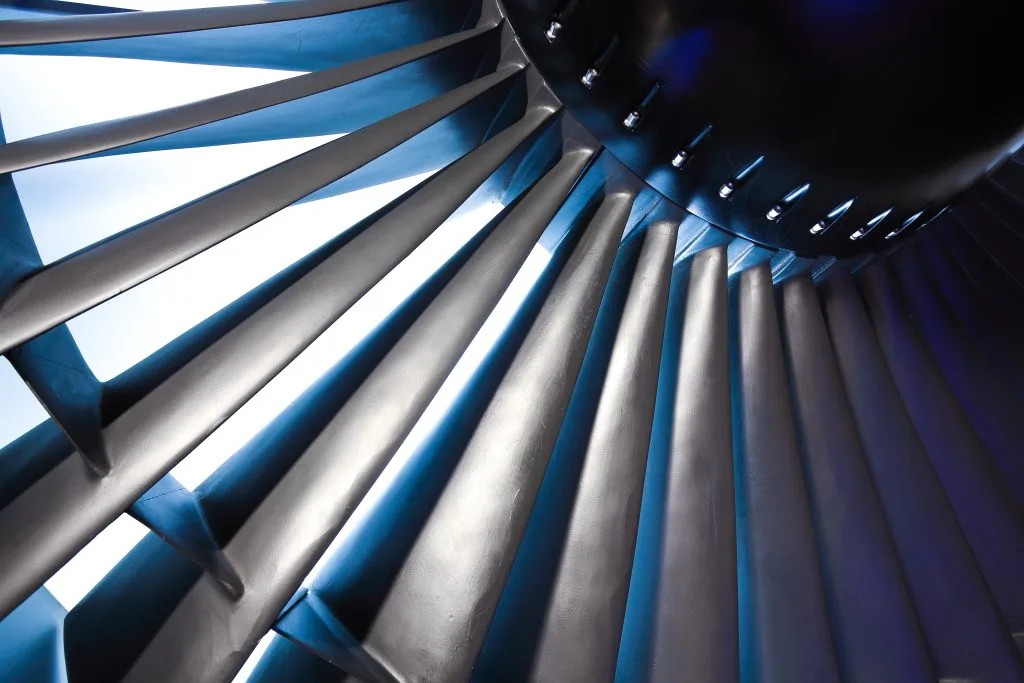
Aerospace: Jet Engine Turbine Blades
Material: SiC/SiC (AMS 3945 compliant)
JLYPT’s Process:
- Fiber Alignment Mapping: Micro-CT guides machining orientation
- High-Speed Grinding: 20,000 RPM with 0.02 mm/pass depth
- Laser Surface Densification: Seals pores for oxidation resistance
Performance Metrics:
- 50% lighter than nickel superalloys
- 1,200-hour lifespan at 1,450°C (ASTM C1783)
Defense: Hypersonic Vehicle Thermal Protection
Material: C/SiC (MIL-C-74362 qualified)
Advantages:
- Withstands 10 MW/m² heat flux
- 0.8 mm/sec ablation rate at Mach 8
JLYPT’s Expertise:
- Non-contact laser profilometry ensures <25 μm step heights
- Proprietary coating integration (ZrB₂-SiC) for oxidation barrier
4. Surface Engineering for Extreme Environments
Enhancing Functionality Post-Machining
| Process | SiC/SiC Application | C/SiC Application |
|---|---|---|
| Chemical Vapor Infiltration | Closes surface porosity | Forms protective SiC layer |
| Plasma Spray Coating | Yttria-stabilized zirconia | Ultra-high emissivity layer |
| Laser Micro-Texturing | Cooling hole chamfers | Ablation-resistant patterns |
Example: Ramjet Combustors (SiC/SiC)
- Laser-drilled 0.3 mm film cooling holes (20° compound angles)
- Passed 500 thermal cycles (RT↔1,500°C) per ASTM E2714
5. Uncompromising Quality Assurance
From Blank to Certified Component
- Material Integrity Checks
- Ultrasonic C-scan detects voids ≥50 μm (ASTM E2580)
- Dimensional Precision
- 3D optical scanning at 2 μm resolution (ISO 10360-7)
- Functional Validation
- High-enthalpy plasma wind tunnel testing (2,800°C)
6. Sustainable CMC Production
JLYPT’s eco-strategy minimizes environmental impact:
- CMC Recycling: 80% material recovery via solvent-assisted disintegration
- Waste Heat Recovery: Powers 30% of facility HVAC needs
- Dry Machining: Eliminates cutting fluids for 90% of operations
Third-party LCAs confirm JLYPT’s C/SiC parts reduce lifecycle energy by 37% vs. refractory metals.
7. Future Frontiers: Smart CMCs & Hybrid Processes
JLYPT’s R&D roadmap includes:
- Self-Healing CMCs: Boron-containing phases for crack sealing
- Additive Hybrid Manufacturing:
- Binder jetting of SiC preforms
- CNC finish machining to Ra 0.4 μm
- AI-Driven Adaptive Control: Machine learning adjusts parameters in real-time
Why JLYPT for CMC Components?
- Material Science Leadership: 9 CMC-specific PhD researchers
- Specialized Infrastructure: 6 CMC-dedicated machining cells
- Certifications: AS9100D, ITAR, Nadcap AC7114
References
- ASM Handbook Vol. 22 (2021): CMC Properties
- MIL-DTL-32577: High-Temperature Material Testing
- ASTM C1783: Ceramic Matrix Composite Durability
See also these technical guides: Metal Matrix Composites and High-Temperature Ceramic Coating for Engine Parts.
Four inputs decide most quotes: the drawing, the material grade, which features carry tolerance, and target quantity. Put those through the JLYPT quote form and pricing comes back tied to them, with cutting speed and tool wear on this alloy priced in rather than averaged. The production setup behind it is described on the material-specific machining page.