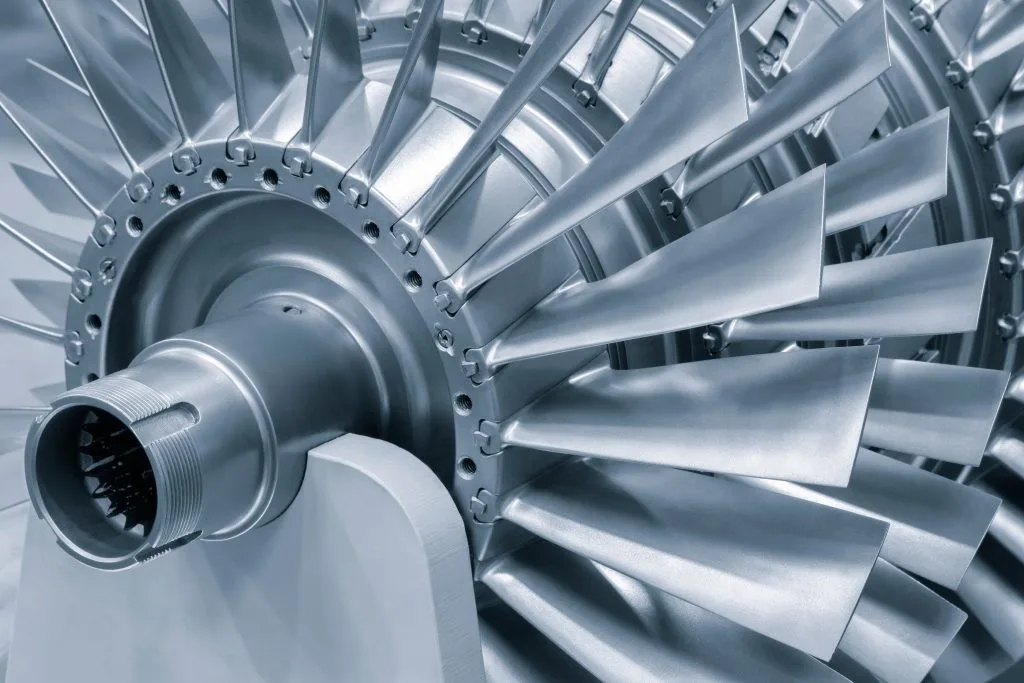
Mastering Extreme Conditions: JLYPT’s Advanced Nickel-Based Superalloys Redefine Precision Machining
In industries where temperatures soar beyond 1,000°C and corrosive environments relentlessly attack materials, conventional metals falter. Advanced nickel-based superalloys like Haynes 282®, Inconel 740H®, and Hastelloy® N rise to these challenges, but only if machined with precision. At JLYPT, we’ve honed CNC technologies to transform these formidable materials into components that power gas turbines, next-gen nuclear reactors, and ultra-supercritical power plants.
This article examines into how JLYPT enables the potential of nickel-based superalloys through innovative machining strategies, ensuring reliability where failure is not an option.
Why Advanced Nickel-Based Superalloys Demand Precision Machining
Advanced nickel-based superalloys are engineered to withstand extreme heat, pressure, and corrosion, but their very strengths pose unique machining challenges:
-
Work Hardening: Rapid hardening during cutting accelerates tool wear.
-
High-Temperature Strength: Retains hardness even at 800°C, demanding specialized toolpaths.
-
Corrosion Resistance: Dense oxide layers complicate surface finishing.
JLYPT addresses these hurdles through decades of R&D and industry-specific expertise.
JLYPT’s Superalloy Solutions: Haynes 282®, Inconel 740H®, Hastelloy® N
1. Haynes 282®: Powering Gas Turbine Combustion Chambers
Aerospace’s quest for efficiency drives demand for Haynes 282®, a γ’-strengthened alloy:
-
Combustion Liners: Withstand 900°C cyclic heating in jet engines.
-
CNC Strategies:
-
High-Speed Trochoidal Milling: Reduces heat buildup in thin-walled structures.
-
Laser-Assisted Machining: Localized heating improves machinability by 40%.
-
Case Study: A turbine OEM reduced combustion liner production costs by 25% using JLYPT’s optimized machining parameters for Haynes 282®.
2. Inconel 740H®: Enabling Ultra-Supercritical Power Plants
Inconel 740H® thrives in 750°C steam environments critical for coal-fired power efficiency:
-
Boiler Tubes: CNC-machined to 0.05 mm wall thickness uniformity.
-
Post-Processing: Electropolishing eliminates micro-cracks from deep-hole drilling.
3. Hastelloy® N: Safeguarding Next-Gen Nuclear Reactors
Developed for molten salt reactors (MSRs), Hastelloy® N resists fluoride salt corrosion at 704°C:
-
Reactor Vessel Internals: Machined with EDM to preserve corrosion-resistant surfaces.
-
Tolerance Control: ±0.01 mm for neutron moderator channels.
Conquering Superalloy Machining Challenges
1. Tooling Innovations
-
Ceramic Inserts: Withstand 1,200°C cutting temperatures in Inconel 740H® turning.
-
Adaptive Toolpaths: AI-driven CAM software adjusts feeds/speeds in real-time to counter work hardening.
2. Thermal Management
-
Cryogenic Cooling: Liquid nitrogen (-196°C) prevents thermal distortion in thin-section components.
-
In-Process Annealing: Laser interpass heating reduces residual stress in welded Hastelloy® N assemblies.
Electroless Nickel Plating on CNC Machined Parts
Electroless nickel deposition is an autocatalytic chemical process, not an electrolytic one. There is no rectifier, no anode and no current distribution problem, so the coating thickness is essentially uniform over the whole part — inside bores, in blind holes and on sharp edges. That uniformity is the reason it is specified on machined parts where electrolytic plating would build up on edges and starve recesses.
What it is used for on machined components
High-phosphorus electroless nickel is chosen for corrosion resistance on alloy steel and aluminium, medium-phosphorus for a balance of wear and corrosion behaviour, and low-phosphorus where hardness and wear matter more than corrosion. As-plated hardness is typically in the 450–550 HV range; a bake around 400 °C for roughly an hour raises high-phosphorus deposits toward 900–1000 HV. Deposits are commonly specified in the 5–25 μm band, thicker where a wear allowance or a salvage dimension is needed.
What it does to tolerances
Because the deposit is uniform, dimensional change is predictable: a 10 μm deposit adds about 10 μm per surface, so a shaft grows by about 20 μm on diameter and a bore closes by the same amount. Plan the pre-plate machine dimension around it rather than grinding after plating. Threads are the usual casualty — a standard tolerance class will often seize after plating, so either oversize the pre-plate thread or mask it.
Where it fits against the alternatives
Choose electroless nickel when geometry is complex and thickness uniformity matters, or when the part needs corrosion resistance plus moderate wear resistance in one step. Choose hard anodizing for aluminium wear surfaces where a thicker, harder layer is acceptable. Choose electrolytic hard chrome where very thick wear deposits are needed and edge build-up can be ground off afterwards.
Industry Applications: Where Superalloys Excel
1. Aerospace: Beyond Turbines
-
Afterburner Nozzles: Haynes 282® parts survive 1,100°C exhaust gases.
-
Rocket Thrust Chambers: Inconel 740H® liners machined with internal cooling channels.
2. Energy: Efficiency Redefined
-
Ultra-Supercritical Boilers: Inconel 740H® tubes improve plant efficiency by 10%.
-
Nuclear Fuel Rods: Hastelloy® N cladding ensures longevity in MSRs.
Quality Assurance: Certifications & Compliance
JLYPT’s machining adheres to:
-
AMS 5912: Haynes 282® aerospace specifications.
-
ASME SB 167: Inconel 740H® boiler tube standards.
-
ISO 9001 & NQA-1: Nuclear quality assurance.
Sustainable Superalloy Machining
JLYPT minimizes environmental impact through:
-
Chip Recycling: 98% of superalloy swarf reclaimed.
-
Energy-Efficient Processes: Hybrid machining reduces energy use by 30%.
-
Low-Waste EDM: Wire EDM recycles dielectric fluid in closed-loop systems.
Partner with JLYPT: From Prototype to Production
-
Material Testing: Request superalloy samples with CNC-machined test coupons.
-
Design for Manufacturability (DFM): Optimize geometries for cost and performance.
-
Full Certification: Receive material test reports and compliance documentation.
Conclusion: Engineering Excellence in Extreme Environments
Advanced nickel-based superalloys like Haynes 282®, Inconel 740H®, and Hastelloy® N are more than materials, they’re enablers of technological frontiers. JLYPT’s mastery in CNC machining these alloys ensures that aerospace, energy, and nuclear industries can push operational boundaries safely and efficiently.
Related Reading
If you want to go deeper into the specifics, these pages cover the adjacent details:
- Electroless Nickel Plating Service for CNC Parts
- Nickel Plating for CNC Parts
- Hard Chrome Plating vs. Electroless Nickel
Ready to harness advanced superalloys? Contact JLYPT today to discuss your project.
A finished sample settles arguments about thread fit after plating faster than a spec sheet does. Ask for one through the JLYPT quote page; the electroplating line shows what the surface looks like off the line.