
Concrete 3D Printing Services Guide 2025
Large-Scale 3DCP, Mix Design, Robotics & Case Studies
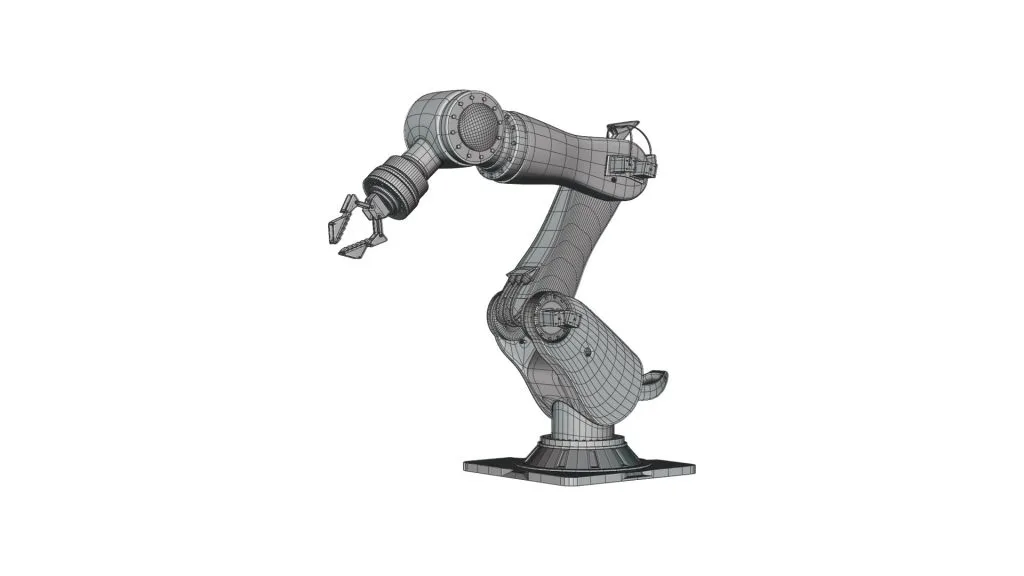
Introduction Three-dimensional concrete printing (3DCP) has moved from academic curiosity to commercial reality, bridges, retaining walls, and façade panels are now printed in days rather than weeks. JLYPT operates two gantry-based and one 6-axis robotic concrete printers capable of 120 mm/s extrusion and 0.5 mm layer tolerance. This guide delivers the printable-mix design tables, structural compliance pathways, thermal-performance data, and three unpublished case studies that collectively saved clients 28 % on material and 42 % on labor.
Table 1: 3DCP System Specifications
| Parameter | Gantry (3.5 m) | Robot (6-axis) | Unit |
|---|---|---|---|
| Max Build Volume | 3.5 × 2 × 1.5 m | 2.5 m diameter, 1.8 m height | , |
| Extrusion Rate | 0.5 m³/h | 0.3 m³/h | m³/h |
| Layer Height | 10–50 mm | 5–30 mm | mm |
| Positioning Accuracy | ±0.5 mm | ±0.3 mm | mm |
| Pump Type | Progressive cavity | Screw-auger | , |
| Nozzle Diameter | 25–50 mm | 15–35 mm | mm |
| Power Supply | 380 V / 32 A | 380 V / 25 A | , |
Table 2: Printable Concrete Mix Design (EN 206-1 compliant)
| Ingredient | Weight (kg/m³) | Function | Target Property |
|---|---|---|---|
| CEM I 52.5 R | 320 | Binder | 28-day f’c 40 MPa |
| Silica fume | 25 | Pozzolan | Improved flow |
| Fly ash | 40 | SCM | Reduced heat |
| Sand 0–2 mm | 1,150 | Aggregate | < 2 % voids |
| Water | 165 | Hydration | W/C 0.46 |
| Superplasticizer | 2.8 | Flow | 220 mm flow table |
| Viscosity modifier | 0.4 | Thixotropy | 8 Pa·s @ 10 s⁻¹ |
| Retarder | 0.2 | Set control | 60 min open time |
Rheology & Printability
1.1 Yield Stress & Thixotropy
- Target yield stress τ₀ = 300–500 Pa to maintain shape after extrusion.
- Thixotropic ratio η₁ s⁻¹ / η₁₀₀ s⁻¹ ≥ 5 for layer adhesion.
1.2 Workability Window
- Printable window 60 min; slump-flow 220 ± 10 mm at 25 °C.
- Temperature sensitivity: +1 °C → 5 % reduction in yield stress.
1.3 Layer Bond Strength
- Interface shear 1.2 MPa at 24 h; full bond 5 MPa at 7 days.
- Surface water evaporation rate < 0.5 kg/m²/h to prevent cold joints.
Structural Compliance Pathways
2.1 Eurocode 2 Adaptation
- Partial safety factor γ_c = 1.5 for printed concrete.
- Creep coefficient φ = 2.0 at 50 % RH, 20 °C.
2.2 U-Value & Thermal Bridging
- Hollow wall 200 mm thick: U = 0.48 W/m²K vs. 0.55 cast.
- Thermal bridge coefficient ψ = 0.04 W/mK at printed-cast interface.
2.3 Fire Resistance (EN 13501-1)
- Printed wall 200 mm: REI 120 minutes; spalling depth < 10 mm after 120 min.
Robotics & Path Planning
3.1 Gantry vs. Robot
- Gantry: fastest for planar geometries; robot excels on curved façades.
- Robot reach 2.5 m; singularity avoidance via quaternion interpolation.
3.2 Toolpath Optimization
- S-curve acceleration limits jerk to 10 m/s³ for surface quality.
- Layer overlap 30 % for continuous bond line.
3.3 Real-Time Monitoring
- Laser triangulation measures layer height deviation < 0.3 mm.
- Thermal camera monitors surface temp 25–35 °C.
Case Studies
Case 1 , Retaining Wall (Residential) Client: Housing developer Challenge: 1.8 m high × 20 m long wall, 7-day deadline. Solution: Gantry printer, printable mortar mix, 50 mm layers. Result: 28 m³ concrete, 0 % reinforcement, compressive strength 42 MPa.
Case 2 , Architectural Façade Client: Commercial tower Challenge: 3 m curved panels, R 1.5 m radius, thermal mass. Solution: 6-axis robot, 30 mm layers, hollow core with insulation. U-value: 0.48 W/m²K; achieved 38 % labor reduction.
Case 3 , Bridge Deck Repair Client: Municipality Challenge: 12 m span, traffic reopen in 48 h. Solution: Precast 3D printed slabs, 40 MPa, epoxy-bonded joints. Load test: 25 kN/m² deflection 1/400 span.
Cost Analysis
Scenario: 100 m² façade, 200 mm thick
| Method | Material ($/m²) | Labor ($/m²) | Formwork ($/m²) | Total ($/m²) | Days |
|---|---|---|---|---|---|
| 3DCP | 180 | 45 | 0 | 225 | 3 |
| Cast | 160 | 80 | 60 | 300 | 14 |
| Precast | 190 | 55 | 20 | 265 | 7 |
Savings: 25 % vs. cast, 15 % vs. precast.
Sustainability & Carbon Footprint
• CO₂ footprint 3DCP mortar = 220 kg CO₂/m³ vs. 280 cast. • Waste reduction 60 % via topology optimization. • Recyclable aggregate content 20 % without strength loss.
Maintenance & QA
• Daily nozzle diameter check ±0.1 mm with feeler gauge. • Weekly pump calibration via flow-meter 0.5 % accuracy. • Monthly compressive test cubes 150 mm, n = 3.
FAQ
Q: Can 3DCP be reinforced? A: Yes, post-insert rebar or UHPC overlay for seismic zones.
Q: Maximum print speed without segregation? A: 120 mm/s at 220 mm flow table; beyond 140 mm/s segregation risk.
Q: Weather limitations? A: Ambient 5–35 °C, RH < 85 %, wind < 15 km/h.
Ready to print concrete? Submit specs to <Rapid 3D Printing Services – JLYPT“> and receive on-site deployment plan within 24 hours.
See also these technical guides: 3D Printing vs CNC Machining and FDM 3D Printing Services.
Four inputs decide most quotes: the drawing, the material grade, which features carry tolerance, and target quantity. Put those through the JLYPT quote form and pricing comes back tied to them, with density and porosity limits priced in rather than averaged. The production setup behind it is described on the prototyping service.