Anodize vs Chromate Conversion Coating: A Complete Engineering Guide for CNC Machined Aluminum Parts
Choosing the right surface treatment for aluminum components can determine whether your part lasts five months or fifteen years in service. This guide breaks down the technical differences between anodizing and chromate conversion coating, covering specifications, performance data, cost factors, and real-world applications, so you can make a confident sourcing decision.
Introduction: Why Surface Finishing Selection Matters for Aluminum Parts
Aluminum alloys dominate precision CNC machining across aerospace, medical, automotive, and electronics industries. The metal offers an exceptional strength-to-weight ratio, good machinability, and natural corrosion resistance from its native oxide layer. But that native oxide layer, typically only 2 to 4 nanometers thick, provides minimal protection against aggressive service environments, galvanic coupling, or mechanical wear.
Two surface treatments account for the majority of aluminum finishing specifications on engineering drawings worldwide: anodizing (governed by MIL-A-8625) and chromate conversion coating (governed by MIL-DTL-5541). Both processes modify the surface of aluminum to improve corrosion resistance, but they achieve this through fundamentally different mechanisms and deliver vastly different performance characteristics.
Selecting the wrong finish can result in premature field failures, costly rework, or non-compliance with customer and regulatory specifications. For procurement managers and design engineers evaluating CNC machining suppliers, understanding these differences is not optional, it is a core competency that affects part quality, total cost of ownership, and program timelines.
This guide provides the technical depth you need to specify the correct treatment, communicate requirements to your machining partner, and verify incoming quality. Every data point references published industry standards or documented test results.
Need aluminum parts with precision surface finishing? JLYPT provides custom aluminum anodizing services with full MIL-spec compliance, in-house quality inspection, and engineering support from quoting through delivery. Request a quote today.
How Anodizing Works: Electrochemical Oxide Growth
Anodizing is an electrochemical process that converts the surface of aluminum into a dense, integral aluminum oxide (Al₂O₃) layer. Unlike paint or plating, which deposit a foreign material on top of the substrate, anodizing grows the oxide directly from the base metal. The resulting coating is part of the substrate, not merely bonded to it.
The Process Step by Step
- Pre-treatment: Parts undergo alkaline cleaning, acid etching or brightening, and deionized water rinsing to remove oils, machining residues, and native oxides.
- Anodizing bath: Parts are immersed in an electrolyte solution (most commonly sulfuric acid for Type II and Type III processes) and connected as the anode in a DC electrical circuit.
- Oxide growth: When current flows, oxygen ions migrate into the aluminum surface and react to form Al₂O₃. The oxide grows both inward into the substrate and outward from the original surface. Approximately 67% of the total coating thickness penetrates into the base metal, while 33% builds above the original dimension.
- Sealing (for Type II): The porous oxide structure is sealed in hot deionized water, nickel acetate, or dichromate solution to close the pore structure and maximize corrosion resistance.
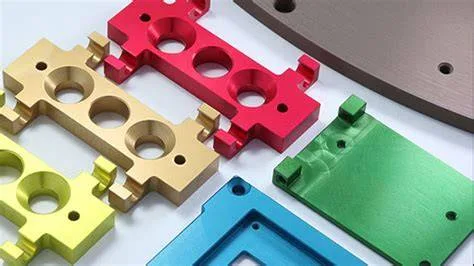
- Optional dyeing: Before sealing, the porous oxide can absorb organic or inorganic dyes, enabling a wide range of colors, black, red, blue, gold, and others.
Anodizing Classifications per MIL-A-8625F
MIL-A-8625F defines three primary types of anodizing:
Parameter Type I (Chromic Acid) Type II (Sulfuric Acid) Type III (Hardcoat) Electrolyte Chromic acid Sulfuric acid Sulfuric acid (low temperature) Typical thickness 0.00005″–0.0003″ (1.3–7.6 µm) 0.0002″–0.001″ (5–25 µm) 0.001″–0.004″ (25–100 µm) Hardness (Vickers) 200–400 HV 200–400 HV 400–700 HV Max operating temp ~660°F (350°C) ~660°F (350°C) ~660°F (350°C) Corrosion resistance (salt spray, hours to first pit) 336–1000+ hrs 336–1500+ hrs 336–2000+ hrs (sealed) Electrical insulation Moderate Good Excellent (dielectric breakdown 400–1000 V) Fatigue life impact Minimal (thin coating) 5–15% reduction 15–35% reduction Color options Limited (clear/gray) Full spectrum (dyed) Limited (natural dark gray/black) Primary applications Aerospace (fatigue-critical), primers General industrial, consumer electronics, decorative Wear surfaces, hydraulic cylinders, military
Dimensional Impact of Anodizing
One of the most common engineering questions about anodizing concerns its effect on part dimensions. Because the oxide grows both inward and outward, the net dimensional change per surface is approximately 50% of the total coating thickness added to each side.
Anodize Type Specified Thickness Growth per Surface Dimensional Change on Diameter Type II (standard) 0.0004″–0.0008″ ~0.0002″–0.0004″ per side +0.0004″–0.0008″ on diameter Type II (thin) 0.0001″–0.0004″ ~0.00005″–0.0002″ per side +0.0001″–0.0004″ on diameter Type III (hardcoat) 0.002″ ~0.001″ per side +0.002″ on diameter Type III (precision) 0.001″ ~0.0005″ per side +0.001″ on diameter
Engineering takeaway: For tight-tolerance CNC machined parts (±0.0005″ or tighter), the machinist must account for anodizing buildup during programming. At JLYPT, our engineering team calculates pre-anodize dimensions based on the specified coating thickness and alloy conversion ratio, ensuring finished parts meet print tolerances after surface treatment.
Dielectric Properties
Anodized aluminum oxide is an effective electrical insulator. This property matters for electronic enclosures, heat sinks with isolated mounting surfaces, and sensor housings.
Anodize Type Dielectric Breakdown Voltage Resistivity (Ω·cm) Type II (0.0007″ sealed) 200–600 V 10¹³–10¹⁴ Type III (0.002″ sealed) 400–1000 V 10¹³–10¹⁴
These values make anodized surfaces suitable for low-to-moderate voltage isolation but insufficient for high-voltage power applications where dedicated insulating materials are required.
How Chromate Conversion Coating Works: Chemical Passivation
Chromate conversion coating (also called chem film, chemical film, Alodine®, or Iridite®) is a chemical, not electrochemical, process. Parts are immersed in or sprayed with an acidic chromate solution that reacts with the aluminum surface to form a thin, amorphous layer of mixed chromium and aluminum oxides and chromates.
Process Overview
- Cleaning and deoxidizing: Similar to anodizing pre-treatment, alkaline clean, acid deoxidize, rinse.
- Chromate conversion: Parts are immersed in a chromate solution (hexavalent or trivalent chromium-based) for 1–5 minutes at room temperature or slightly improved temperature. No electrical current is applied.
- Rinse and dry: Parts are rinsed in deionized water and air-dried. No sealing step is required.
The resulting coating is extremely thin, typically 0.00001″ to 0.00004″ (0.25–1.0 µm), and has a characteristic gold/iridescent appearance (Class 1A per MIL-DTL-5541) or clear/colorless appearance (Class 3 per MIL-DTL-5541).
MIL-DTL-5541 Classifications
Parameter Class 1A (Hex Chrome, Gold) Class 3 (Hex Chrome, Clear) Class 1A (Tri Chrome, TCP) Coating weight ≥40 mg/ft² No minimum Varies by product Typical thickness 0.00001″–0.00004″ 0.000005″–0.00001″ 0.000005″–0.00002″ Appearance Gold/iridescent Clear/slightly iridescent Clear/pale blue Corrosion resistance (salt spray) 168 hrs minimum (Class 1A) 24 hrs minimum 168 hrs (product-dependent) Electrical conductivity Maintained (conductive) Maintained (conductive) Maintained (conductive) RoHS compliance No (hexavalent chromium) No (hexavalent chromium) Yes (trivalent chromium) Paint adhesion primer Excellent Good Good Dimensional change Negligible (<0.00005″) Negligible Negligible
Hexavalent vs. Trivalent Chromium: The Regulatory Shift
Traditional chromate conversion coatings use hexavalent chromium (Cr⁶⁺), classified as a Group 1 carcinogen by IARC and restricted under the EU RoHS Directive (2011/65/EU) and REACH Regulation. Many OEMs, particularly in automotive and consumer electronics, now mandate trivalent chromium process (TCP) alternatives.
TCP coatings (such as Henkel Alodine 5900 or Chemeon TCP-HF) use trivalent chromium (Cr³⁺), which is far less toxic. Performance data shows TCP coatings achieve comparable corrosion resistance to traditional hex-chrome Class 1A coatings in most applications, though some aerospace primes still require hexavalent formulations for legacy programs.
JLYPT supports both hexavalent and trivalent chromate conversion processes and can advise on the appropriate selection based on your regulatory requirements and end-use environment.
Head-to-Head Comparison: Anodize vs Chromate Conversion Coating
This is the core comparison that drives most engineering and procurement decisions. The following table consolidates the critical performance and process parameters:
Property Anodizing (Type II) Anodizing (Type III) Chromate Conversion (Class 1A) Coating thickness 5–25 µm (0.0002″–0.001″) 25–100 µm (0.001″–0.004″) 0.25–1.0 µm (0.00001″–0.00004″) Hardness 200–400 HV 400–700 HV Not measurable (too thin) Abrasion/wear resistance Moderate Excellent (Taber wear index 1.5–3.5 mg/1000 cycles) None Corrosion resistance (ASTM B117 salt spray) 336–1500 hrs 336–2000+ hrs 168–336 hrs Electrical conductivity Insulating Insulating Conductive Dimensional impact Significant (must be compensated) Major (must be compensated) Negligible Fatigue life impact 5–15% reduction 15–35% reduction <1% reduction Paint adhesion base Good (with proper prep) Fair (hard surface) Excellent (primary purpose) Color availability Full spectrum (dyed) Limited (natural gray/black) Gold, clear, or pale blue Processing temperature 60–72°F (Type II), 28–32°F (Type III) See Type III Room temperature Typical processing time 30–60 min (Type II), 60–120 min (Type III) See Type III 1–5 min Relative cost per part Medium ($2–8 per part typical) High ($5–20+ per part typical) Low ($0.50–3 per part typical) Applicable MIL spec MIL-A-8625F MIL-A-8625F MIL-DTL-5541F Rework/strip feasibility Possible (caustic strip) Possible (caustic strip, dimensional risk) Easy (chromic/nitric acid strip)
Cost Comparison: What Drives the Price Difference?
The cost gap between anodizing and chromate conversion coating stems from several factors:
Anodizing cost drivers
- Longer process time (30–120 minutes vs. 1–5 minutes)
- Electrical energy consumption for electrochemical conversion
- Tighter process controls (temperature, current density, time)
- Racking requirements (electrical contact points, fixturing)
- Sealing step adds time and chemical costs
- Masking for selective anodizing adds labor
Chromate conversion cost drivers
- Short immersion time keeps throughput high
- No electricity required for coating formation
- Simpler fixturing (basket processing possible)
- No sealing step
- Hazardous waste disposal costs for hexavalent chromium solutions (significant)
Cost Element Anodizing (Type II) Chromate Conversion Chemical costs per batch $15–40 $8–20 Energy per batch $5–15 <$1 Labor (per batch, 50 parts) $20–50 $10–20 Waste treatment per batch $5–15 10–30(hexchrome)/10–30(hexchrome)/3–8 (TCP) Estimated cost per small part $2–8 $0.50–3 Estimated cost per large part (>12″) $8–25 $2–6
Note: Costs are approximate and vary by region, volume, part geometry, and supplier. JLYPT provides firm quotations based on your specific part requirements.
When to Specify Anodizing
Anodizing is the correct choice when your application demands one or more of the following:
Wear and Abrasion Resistance
Type III hardcoat anodizing produces a surface harder than many tool steels. With Vickers hardness values between 400 and 700 HV, hardcoat surfaces resist scratching, galling, and abrasive wear in sliding contact applications. Hydraulic valve bodies, piston bores, guide rails, and tooling fixtures benefit from this property.
Enhanced Corrosion Protection
Sealed Type II anodizing routinely exceeds 500 hours of salt spray exposure per ASTM B117 without pitting on 6061-T6 aluminum. For marine, outdoor, or chemically exposed environments, this level of protection far exceeds what chromate conversion can deliver.
Electrical Insulation
If your design requires the aluminum housing to serve as an insulating barrier, for example, between a PCB ground plane and a chassis, anodizing provides reliable dielectric isolation. A 0.001″ Type III coating can withstand 400–1000 V dielectric breakdown, depending on alloy and sealing quality.
Decorative Appearance with Durability
Consumer electronics, sporting goods, and architectural components often require specific colors with scratch resistance. Type II anodizing with organic dye absorption delivers rich, durable finishes in virtually any color. Black anodize remains the single most common decorative finish for CNC machined aluminum parts.
Thermal Emissivity
Anodized surfaces have significantly higher thermal emissivity (0.80–0.90) compared to bare aluminum (0.03–0.10). This makes anodized heat sinks and thermal management components more effective at radiating heat, particularly in applications without forced airflow.
When to Specify Chromate Conversion Coating
Chromate conversion coating is the right choice under these conditions:
Electrical Grounding and Conductivity
This is the primary reason engineers specify chem film over anodizing. Chromate conversion maintains the electrical conductivity of the aluminum surface, making it suitable for EMI/RFI shielding enclosures, grounding paths, electrical bonding surfaces, and connector housings. Contact resistance through a Class 1A chromate coating typically measures below 5 milliohms per MIL-DTL-5541F requirements.
Paint or Primer Adhesion Base
Chromate conversion coating was originally developed as a pre-treatment for paint adhesion. The chromate layer provides an excellent bonding surface for epoxy primers, polyurethane topcoats, and powder coatings. In aerospace, many painting specifications (such as those referencing MIL-PRF-23377 primer) require chromate conversion as the base treatment.
Tight Dimensional Tolerances with No Compensation
Because the coating is less than 1 µm thick, chromate conversion adds no measurable dimension to the part. For precision components with tolerances of ±0.0001″ or tighter, where even the 0.0002″ per-side buildup of thin Type II anodizing would push dimensions out of spec, chromate conversion preserves as-machined geometry.
Fatigue-Critical Applications
Anodizing, particularly Type III hardcoat, reduces fatigue life by 15–35% due to the brittle oxide layer acting as a crack initiation site under cyclic loading. Chromate conversion coating has virtually no effect on fatigue properties (<1% reduction), making it preferred for structural aerospace components subjected to high-cycle fatigue.
Cost-Sensitive, High-Volume Production
For parts that need basic corrosion protection but not the wear resistance or decorative properties of anodizing, chromate conversion coating delivers adequate protection at 30–50% lower cost per part.
Application Case Study #1: Aerospace Flight Control Actuator Housing
Background
A Tier 1 aerospace supplier contracted JLYPT to machine 6061-T651 aluminum actuator housings for a commercial aircraft flight control system. The component operates in an unpressurized wing bay exposed to temperature cycling (-65°F to +160°F), humidity, and de-icing fluid contact.
Surface Finishing Challenge
The engineering drawing specified two different surface treatments on the same part:
- External surfaces: Type II anodizing per MIL-A-8625F, Class 2 (dyed olive drab), 0.0003″–0.0007″ thickness, sealed per MIL-A-8625F paragraph 3.7.1
- Internal bore and mating flange surfaces: Chromate conversion coating per MIL-DTL-5541F, Class 1A, to maintain electrical bonding continuity for lightning strike current dissipation
JLYPT Solution
Our process engineering team developed a masking protocol to protect internal surfaces during anodizing. The sequence was:
- CNC machine all features to pre-anodize dimensions (external diameters undersized by 0.0005″ to account for Type II buildup)
- Mask internal bore and flange surfaces with anodize-resistant maskant
- Type II sulfuric acid anodize external surfaces, dye olive drab, hot water seal
- Strip maskant, clean
- Apply chromate conversion coating (Alodine 1200S) to internal surfaces
- Final inspection: coating thickness verification via eddy current (Fischer Dualscope), salt spray witness coupons, electrical conductivity check on chromated surfaces
Results
- All 240 housings passed first-article inspection
- Anodized surfaces: 0.0004″–0.0006″ thickness (within spec)
- Chromated surfaces: contact resistance <2.5 milliohms (well within the <5 milliohm requirement)
- Salt spray witness coupons: >504 hours with no pitting on anodized surfaces
- Dimensional compliance: 100% of critical features within ±0.001″ after finishing
This project demonstrates how anodizing and chromate conversion coating can coexist on a single component when the engineering requirements demand different surface properties in different areas.
Application Case Study #2: Medical Surgical Instrument Guide Rail
Background
A medical device OEM needed 7075-T6 aluminum guide rails for a powered surgical instrument used in orthopedic procedures. The guide rails undergo repeated sterilization cycles (autoclave at 270°F/132°C, 4 minutes, steam) and experience sliding contact with stainless steel bearing elements during operation.
Surface Finishing Challenge
The application required:
- Wear resistance to withstand >1,000 sterilization cycles without dimensional degradation
- Corrosion resistance against autoclave steam and saline exposure
- Biocompatibility (no hexavalent chromium permitted per ISO 10993 and EU MDR 2017/745)
- Tight bore tolerance: 0.2500″ +0.0005″/-0.0000″ after finishing
JLYPT Solution
Type III hardcoat anodizing was the only viable option. Chromate conversion coating was eliminated due to:
- Zero wear resistance (guide rail would gall within 50 cycles)
- Hexavalent chromium restrictions for implant-adjacent devices
- Insufficient corrosion resistance for autoclave environments
Our process:
- CNC machine bore to 0.2490″ (0.0010″ undersize to accommodate Type III buildup of ~0.0005″ per side)
- Mask non-critical surfaces where coating buildup could interfere with assembly
- Type III hardcoat anodize to 0.0010″–0.0015″ total thickness in sulfuric acid electrolyte at 28°F
- Hot water seal (no nickel acetate seal, nickel sensitivity concern for medical applications)
- Hone bore to final dimension 0.2500″ +0.0005″/-0.0000″
- Verify coating thickness via cross-sectional metallography on witness samples
- Verify hardness via micro-indentation (achieved 520 HV)
Results
- Bore dimension after honing: 0.2502″ (within spec)
- Coating thickness: 0.0012″ (within 0.0010″–0.0015″ spec)
- Wear test: <0.0001″ dimensional change after 1,500 simulated sterilization and actuation cycles
- Salt spray: >1,000 hours, no pitting
- Biocompatibility testing: passed ISO 10993-5 cytotoxicity and ISO 10993-10 sensitization
The post-anodize honing step was critical. By machining the bore undersize, anodizing to full thickness, and then precision-honing to final dimension, JLYPT delivered a part that met both the wear resistance and dimensional tolerance requirements simultaneously.
Facing a complex surface finishing challenge? JLYPT’s engineering team works with you from design review through production to select and execute the right finishing process for your application. Get expert guidance and a free quote.
Application Case Study #3: Automotive EV Battery Enclosure Panels
Background
An electric vehicle startup required 5052-H32 aluminum enclosure panels for a battery module housing. The panels serve as structural elements, thermal interfaces, and EMI shields for the battery management system (BMS).
Surface Finishing Challenge
The panels had competing requirements:
- EMI shielding effectiveness: the enclosure must provide >40 dB attenuation at 1 GHz, requiring electrical continuity across all mating surfaces
- Corrosion resistance: the underside of the vehicle is exposed to road salt, water spray, and stone impingement
- Thermal interface: panels contact thermal pads against battery cells; surface treatment must not significantly increase thermal resistance
- RoHS compliance: mandatory for automotive components sold in EU markets
- Cost target: <$4 per panel surface treatment (high volume: 10,000 panels/month)
JLYPT Solution
This application required a split approach:
Mating flanges and EMI gasket surfaces: Trivalent chromium process (TCP) chromate conversion coating per MIL-DTL-5541F, Class 1A equivalent performance
- Maintains electrical conductivity for EMI shielding
- RoHS compliant (no hexavalent chromium)
- Negligible dimensional impact on gasket sealing surfaces
- Low cost per panel
External exposed surfaces: Type II sulfuric acid anodize, 0.0004″–0.0006″, dyed black, sealed
- Corrosion resistance for road salt and moisture exposure
- Durable decorative finish
- Thermal emissivity improvement (0.85 vs. 0.05 for bare aluminum) aids passive heat rejection
Thermal interface areas: Left bare (masked during both processes) with thermal interface material (TIM) applied during assembly
Results
- EMI shielding: 52 dB attenuation at 1 GHz (exceeded 40 dB requirement)
- Corrosion: anodized surfaces passed 720 hours ASTM B117 salt spray
- Surface treatment cost: 3.20perpanelatproductionvolume(within3.20perpanelatproductionvolume(within4 target)
- Thermal resistance at TIM interface: no measurable increase vs. bare aluminum control
This case illustrates a scenario where neither anodizing nor chromate conversion coating alone satisfies all requirements, but a combination of both, applied selectively with precision masking, delivers a compliant and cost-effective solution.
Alloy Compatibility: Not All Aluminum Responds the Same Way
Both anodizing and chromate conversion coating performance depend heavily on the aluminum alloy. High-copper alloys (2000 series) and high-silicon casting alloys present particular challenges.
Alloy Anodizing Quality Chromate Conversion Quality Notes 6061-T6 Excellent Excellent Industry standard for both processes 6063-T5 Excellent (superior clarity) Excellent Preferred for decorative anodizing 7075-T6 Good (slightly gray/yellow tint) Good Higher zinc content affects color consistency 2024-T3 Fair (dark, uneven oxide) Good High copper (4.4%) disrupts uniform oxide growth 5052-H32 Good Excellent Good general-purpose alloy for both 7050-T7451 Good Good Aerospace standard, similar to 7075 behavior A356/A380 (cast) Poor to Fair (porous, uneven) Fair High silicon creates non-anodizable phases MIC-6 (cast plate) Fair Good Better than sand castings, still inconsistent color
Key consideration for 2024 aluminum: The high copper content (3.8–4.9%) in 2024 creates copper-rich intermetallic particles (Al₂CuMg) that do not anodize. These particles leave voids in the oxide layer, reducing corrosion resistance. For 2024 components requiring maximum corrosion protection, chromic acid anodizing (Type I) or chromate conversion coating often outperforms sulfuric acid anodizing (Type II) because the thinner Type I coating is less disrupted by copper-rich phases.
Quality Inspection and Acceptance Criteria
Receiving inspection of anodized and chromated parts should verify specific attributes. The following table summarizes standard inspection methods:
Attribute Anodizing Test Method Chromate Conversion Test Method Coating thickness Eddy current per ASTM B244, or cross-section per ASTM B487 Weight per area per MIL-DTL-5541 (≥40 mg/ft² for Class 1A) Seal quality Dye stain test per ASTM B136, or admittance test per ISO 2931 Not applicable (no seal) Corrosion resistance Salt spray per ASTM B117 (witness coupons) Salt spray per ASTM B117 (168 hrs min for Class 1A) Adhesion Not typically tested (integral coating) Tape test per ASTM D3359 (for paint adhesion evaluation) Hardness Micro-indentation per ASTM E384 (Type III) Not applicable Coating presence Visual (uniform matte or satin appearance) Visual (gold iridescent for Class 1A, clear for Class 3) Electrical conductivity Dielectric breakdown per ASTM D149 (if required) Contact resistance per MIL-DTL-5541 (<5 milliohms) Dimensional verification CMM or micrometer (compare to post-anodize print dimensions) Standard dimensional inspection (no compensation needed)
At JLYPT, every anodized and chromated lot ships with a Certificate of Conformance (CoC) documenting process parameters, inspection results, and material traceability. For aerospace and medical programs, we provide full AS9102 First Article Inspection Reports (FAIRs) upon request.
Environmental and Regulatory Considerations
RoHS and REACH Compliance
The European Union’s Restriction of Hazardous Substances (RoHS) Directive restricts hexavalent chromium (Cr⁶⁺) to a maximum concentration of 0.1% by weight in homogeneous materials. Traditional chromate conversion coatings using hexavalent chromium formulations (such as Alodine 1200S) exceed this threshold and are non-compliant for products sold in EU markets.
Compliant alternatives
- Trivalent chromium process (TCP): Henkel Alodine 5900, Chemeon TCP-HF, and SurTec 650 are widely qualified TCP products that meet MIL-DTL-5541 performance requirements without hexavalent chromium.
- Anodizing: All types of anodizing (Type I, II, III) are inherently RoHS compliant. The aluminum oxide coating contains no restricted substances.
PFAS Restrictions (Emerging)
Some anodizing sealers and dyes historically contained per- and polyfluoroalkyl substances (PFAS). Regulatory scrutiny of PFAS is increasing globally. JLYPT uses PFAS-free sealing and dyeing chemistries across all anodizing lines to ensure forward compatibility with anticipated regulations.
Waste Stream Management
Both processes generate regulated waste streams:
- Anodizing: Spent sulfuric acid, aluminum-laden rinse water, seal tank sludge
- Chromate conversion: Hexavalent chromium waste (classified as hazardous waste under RCRA in the US and equivalent regulations globally)
Suppliers with in-house waste treatment capability can better control costs and environmental compliance. JLYPT operates a permitted industrial wastewater treatment system with continuous pH monitoring, chromium reduction, and metals precipitation.
Common Specification Errors and How to Avoid Them
Over years of processing thousands of CNC machined aluminum parts, JLYPT’s engineering team has identified recurring specification mistakes that cause delays, rework, or field failures:
Error #1: Specifying Anodizing on Electrical Grounding Surfaces
Problem: An engineer calls out “anodize all over” on a part that requires electrical bonding at a mounting interface. Solution: Add a note: “Mask area per detail B for chromate conversion coating per MIL-DTL-5541, Class 1A. Anodize all other surfaces per MIL-A-8625, Type II, Class 2 (black).”
Error #2: Failing to Account for Anodize Buildup on Tolerance Features
Problem: A shaft diameter is toleranced at 0.5000″ ±0.0003″ on the drawing. After Type II anodizing at 0.0006″ thickness, each side gains approximately 0.0003″, adding 0.0006″ to the diameter. The finished shaft measures 0.5006″, out of tolerance. Solution: Either specify pre-anodize dimensions on the drawing (0.4994″ ±0.0003″ pre-anodize, 0.5000″ ±0.0003″ post-anodize) or add a note: “Dimensions apply after anodizing.” Communicate clearly with your machining supplier.
Error #3: Specifying Hexavalent Chromate Conversion for RoHS-Compliant Products
Problem: A legacy drawing calls out “Alodine 1200S per MIL-DTL-5541, Class 1A.” The product ships to EU markets under RoHS requirements. Solution: Update the specification to allow trivalent chromium alternatives: “Chromate conversion coating per MIL-DTL-5541, Class 1A, trivalent chromium process (TCP) acceptable.”
Error #4: Expecting Wear Resistance from Chromate Conversion Coating
Problem: An engineer specifies chromate conversion on a sliding contact surface, expecting the coating to resist abrasion. Solution: Chromate conversion provides zero wear resistance. For sliding or abrasive contact, specify Type III hardcoat anodizing or consider alternative treatments (hard chrome plating, electroless nickel, PVD coatings).
Error #5: Over-Specifying Hardcoat Thickness on Fatigue-Critical Parts
Problem: A structural bracket subjected to high-cycle vibration fatigue is specified with 0.003″ Type III hardcoat “for maximum protection.” Solution: Thick hardcoat significantly reduces fatigue life. If corrosion protection is the primary need (not wear resistance), Type II anodizing at 0.0004″–0.0008″ provides adequate corrosion resistance with far less fatigue impact. If hardcoat is truly necessary, keep thickness to the minimum functional requirement and consider shot peening the substrate before anodizing to restore compressive residual stresses.
Decision Framework: Choosing Between Anodize and Chromate Conversion
Use this flowchart logic to guide your specification:
Step 1: Does the surface require electrical conductivity?
- Yes → Chromate conversion coating
- No → Continue to Step 2
Step 2: Does the surface experience mechanical wear or abrasion?
- Yes → Type III hardcoat anodizing
- No → Continue to Step 3
Step 3: Is decorative color required?
- Yes → Type II anodizing with dye
- No → Continue to Step 4
Step 4: Is the part fatigue-critical with cyclic loading?
- Yes → Chromate conversion coating (or Type I chromic acid anodizing for thin, fatigue-friendly oxide)
- No → Continue to Step 5
Step 5: What level of corrosion resistance is required?
- High (>500 hrs salt spray) → Type II or Type III anodizing
- Moderate (168–336 hrs salt spray) → Chromate conversion coating
- Basic (indoor, controlled environment) → Either process works; choose based on cost
Step 6: Is the part a primer/paint base?
- Yes → Chromate conversion coating (optimal paint adhesion)
- No → Choose based on other requirements above
Step 7: Are there tight dimensional tolerances with no room for buildup?
- Yes → Chromate conversion coating
- No → Anodizing is acceptable with dimensional compensation
Not sure which surface treatment fits your application? JLYPT’s process engineers review every project and recommend the optimal finishing approach based on your functional requirements, regulatory constraints, and budget. Submit your drawings for a free engineering review and quotation.
Combining Anodizing and Chromate Conversion on the Same Part
As demonstrated in the aerospace and automotive case studies above, many real-world components require both treatments applied selectively. This is standard practice in industries where different surfaces of a single part serve different functions.
Typical Combination Scenarios
Application Anodized Areas Chromated Areas EMI enclosure External surfaces (corrosion + aesthetics) Gasket grooves, grounding tabs (conductivity) Avionics chassis Body panels (corrosion + insulation) Connector mounting faces, card guides (grounding) Hydraulic manifold Bore surfaces (wear resistance, Type III) Port faces, mounting surfaces (conductivity, paint base) Sensor housing Outer shell (corrosion + color coding) Internal cable shield contact areas (conductivity)
Process Sequence
The standard sequence is:
- Machine to pre-anodize dimensions
- Mask areas designated for chromate conversion
- Anodize
- Remove maskant
- Apply chromate conversion to unmasked areas
- Final inspection
Reversing the sequence (chromate first, then anodize) is generally avoided because the anodizing pre-treatment chemicals strip the chromate coating.
Masking Materials and Methods
Masking Method Best For Limitations Liquid maskant (lacquer-based) Complex geometries, large areas Labor-intensive application and removal Pressure-sensitive tape Flat surfaces, straight edges Difficult on contoured surfaces Silicone plugs and caps Bores, threaded holes Limited to standard sizes Wax-based maskant Recessed features Lower temperature resistance Tooling fixtures (titanium) High-volume production Expensive initial investment
JLYPT maintains an inventory of standard masking plugs and caps and fabricates custom masking fixtures for high-volume programs where consistent masking quality and reduced labor costs justify the tooling investment.
Frequently Asked Questions
Can I anodize over chromate conversion coating?
Yes, but the chromate coating must be stripped first. Anodizing over an existing chromate layer produces poor oxide quality and adhesion. The standard approach is to strip the chromate with a mild acid etch, then proceed with normal anodizing pre-treatment.
Can I chromate conversion coat over anodizing?
No. Chromate conversion requires direct contact with aluminum metal to form the chemical reaction. An anodized surface (aluminum oxide) will not react with chromate chemistry. If you need a conductive surface on a previously anodized part, the anodize must be locally stripped before applying chromate conversion.
Does anodizing affect thread fit?
Yes. Anodize buildup on threaded features can cause interference. Standard practice is to mask internal threads (which are protected from corrosion by mating fasteners) and accept anodize on external threads with thread class tolerance adjustment. For critical thread fits, specify masking on the drawing.
What is the maximum operating temperature for anodized surfaces?
Aluminum oxide (Al₂O₃) is stable to approximately 660°F (350°C). Above this temperature, the sealed oxide can begin to crack due to differential thermal expansion between the oxide and substrate. For continuous high-temperature service, anodizing remains functional but may lose some corrosion protection due to seal degradation.
How long does chromate conversion coating last in outdoor exposure?
Class 1A hexavalent chromate coatings provide 168+ hours of salt spray resistance per MIL-DTL-5541. In real-world outdoor exposure without additional paint or topcoat, chromate conversion typically provides 6–24 months of protection depending on climate severity. For long-term outdoor exposure, chromate conversion should be used as a base for paint rather than a standalone finish.
Is chromate conversion coating the same as passivation?
No. Passivation (per ASTM A967 or AMS 2700) is a nitric or citric acid treatment for stainless steel that removes free iron from the surface. Chromate conversion coating is specific to aluminum (and some other non-ferrous metals) and involves a chemical reaction with chromium compounds. The terms are sometimes confused but refer to entirely different processes for different substrates.
Why Engineers and Procurement Teams Choose JLYPT for Surface-Finished Aluminum Parts
Selecting a CNC machining supplier that also controls the surface finishing process eliminates the quality risks, communication gaps, and lead time extensions that come with managing separate machining and finishing vendors.
JLYPT’s integrated capabilities include
- In-house CNC machining: 3-, 4-, and 5-axis milling; CNC turning; Swiss-type machining for aluminum alloys including 6061, 7075, 2024, 5052, and specialty grades
- In-house surface finishing: Type I, II, and III anodizing; chromate conversion coating (hexavalent and trivalent); plus additional finishes including electroless nickel, powder coating, and bead blasting
- Engineering support: Our process engineers review your drawings, recommend optimal finishing specifications, calculate pre-treatment dimensions, and develop masking plans, before production begins
- Quality systems: ISO 9001:2015 certified, with capability for AS9100 aerospace and ISO 13485 medical device quality documentation
- Testing and inspection: Eddy current coating thickness measurement, salt spray testing (in-house ASTM B117 chamber), hardness testing, CMM dimensional verification, and surface roughness measurement
- Single-source accountability: One purchase order, one point of contact, one quality system from raw material through finished, inspected, and packaged parts
Typical Lead Times
Service Prototype (1–10 parts) Low Volume (10–100 parts) Production (100+ parts) CNC machining + chromate conversion 5–7 business days 7–12 business days 12–18 business days CNC machining + Type II anodize 5–8 business days 8–14 business days 14–20 business days CNC machining + Type III hardcoat 7–10 business days 10–16 business days 16–22 business days CNC machining + combination finish 8–12 business days 12–18 business days 18–25 business days
Lead times are estimates. Expedited processing is available for urgent programs.
Conclusion: Match the Treatment to the Function
The choice between anodizing and chromate conversion coating is not a matter of which process is “better”, it is a matter of which process matches the functional requirements of each surface on your part.
Choose anodizing when you need: wear resistance, enhanced corrosion protection, electrical insulation, decorative color, or improved thermal emissivity.
Choose chromate conversion coating when you need: electrical conductivity, paint adhesion base, dimensional preservation, fatigue life retention, or lower per-part finishing cost.
Choose both when your part has surfaces with different functional demands: which, in practice, describes a large percentage of precision aluminum components in aerospace, defense, medical, and automotive applications.
The most effective approach is to work with a machining and finishing partner that understands both processes at a technical level and can guide your specification from design through delivered parts. That is exactly what JLYPT provides.
Ready to get started? Upload your drawings and specifications to receive a detailed quotation with surface finishing recommendations tailored to your application. Our engineering team typically responds within 24 hours. Request Your Free Quote from JLYPT →