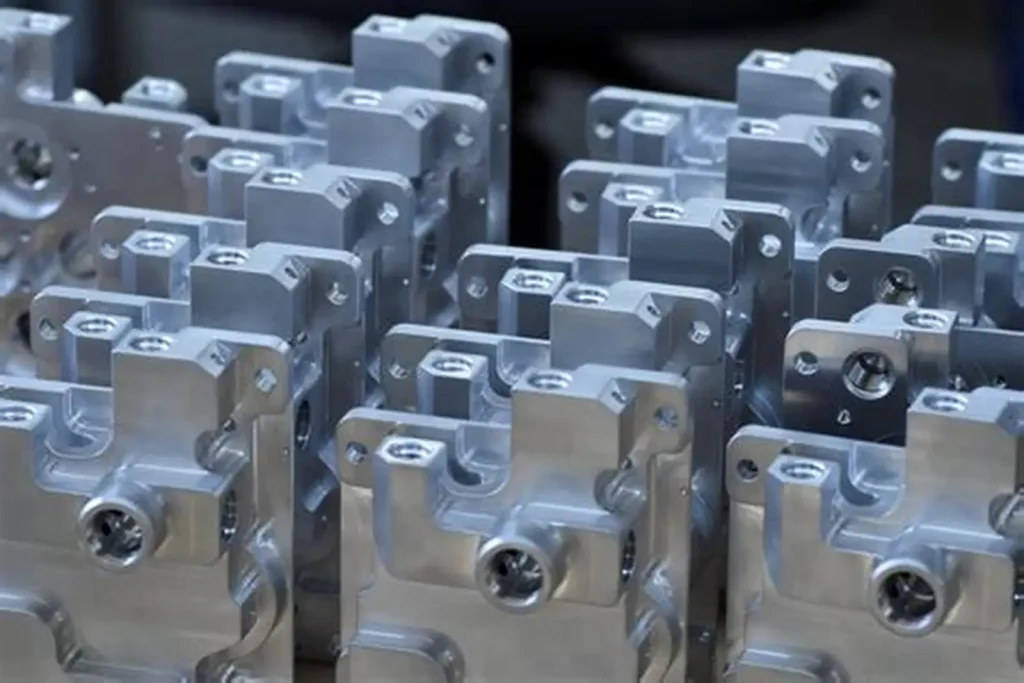
Anodizing Masking for Threads and Holes: The Definitive Engineering Guide for Precision CNC Parts
When an anodized aluminum component arrives at assembly and a fastener refuses to seat in a threaded hole, the root cause almost always traces back to one critical step that was either skipped or poorly executed: masking before anodizing.
Anodic oxide coatings grow both inward and outward from the original aluminum surface. On a flat face, that dimensional change is straightforward to predict and accommodate. On a thread form—where tolerances are already measured in thousandths of an inch—that same coating growth can eliminate clearance, destroy thread engagement, and turn a flight-ready aerospace bracket into scrap.
This guide breaks down exactly how masking works for threaded features and holes during both Type II and Type III anodizing processes, which masking materials perform best under specific process conditions, how to calculate dimensional impact on thread classes, and what inspection criteria separate a conforming part from a reject.
If your project involves precision CNC-machined aluminum parts that require anodizing with functional threads and holes, JLYPT’s custom aluminum anodizing services can handle the full workflow—from machining through masking, anodizing, and final inspection—under one roof.
Why Masking Matters—The Physics of Anodic Oxide Growth on Threads
How Anodizing Changes Part Dimensions
Anodizing is an electrochemical conversion process. Unlike paint or plating, the aluminum oxide layer does not simply sit on top of the substrate. Approximately 50% of the total coating thickness penetrates inward into the base metal, while the remaining 50% builds outward above the original surface.
For a Type II sulfuric acid anodize per MIL-A-8625 Type II, Class 1, the typical coating thickness specification is 0.0002″–0.0010″ (5–25 µm). The net dimensional change per surface is therefore roughly half of the total coating thickness.
For a Type III hard coat anodize per MIL-A-8625 Type III, coatings range from 0.0010″–0.0040″ (25–100 µm), with some applications pushing to 0.004″ or beyond. The outward growth per side can reach 0.002″.
Table 1: Anodic Oxide Growth and Dimensional Impact
| Parameter | Type II (MIL-A-8625 Type II) | Type III (MIL-A-8625 Type III) |
|---|---|---|
| Total Coating Thickness Range | 0.0002″–0.0010″ (5–25 µm) | 0.0010″–0.0040″ (25–100 µm) |
| Approximate Outward Growth (per side) | 0.0001″–0.0005″ | 0.0005″–0.0020″ |
| Approximate Inward Penetration (per side) | 0.0001″–0.0005″ | 0.0005″–0.0020″ |
| Typical Hardness (Rockwell C equivalent) | 55–65 HRC | 65–70+ HRC |
| Surface Roughness Increase (Ra) | +0.1–0.3 µm | +0.3–1.0 µm |
| Wear Resistance (Taber Abrasion, mg/1000 cycles) | 10–20 mg loss | 1.5–5 mg loss |
What Happens to Unmasked Threads
A standard unified thread form—say a ¼-20 UNC Class 2B internal thread—has a pitch diameter tolerance band of roughly 0.0015″. If both flanks of each thread receive even a modest Type II coating of 0.0005″ total thickness (0.00025″ outward growth per side), the effective pitch diameter shrinks by 0.0005″ total. That consumes one-third of the entire tolerance band.
With Type III hard anodizing at 0.002″ total thickness, the pitch diameter reduction reaches 0.001″ per side, or 0.002″ total. That exceeds the full tolerance range for most Class 2B and Class 3B threads, making the hole non-functional without post-anodizing re-tapping—which itself introduces risks of coating delamination, exposed bare aluminum, and corrosion vulnerability.
The situation compounds for fine-pitch threads. A #10-32 UNJF thread used in aerospace applications has even tighter pitch diameter tolerances. Without proper masking, Type III anodizing makes these threads virtually unusable.
Table 2: Thread Dimensional Impact—Unmasked Anodizing
| Thread Size | Class | Pitch Dia. Tolerance Band | Type II Impact (0.0007″ coating) | Type III Impact (0.002″ coating) | Functional After Anodizing? |
|---|---|---|---|---|---|
| ¼-20 UNC | 2B | 0.0015″ | −0.00035″ total | −0.0010″ total | Type II: Marginal; Type III: No |
| ¼-28 UNF | 2B | 0.0012″ | −0.00035″ total | −0.0010″ total | Type II: Marginal; Type III: No |
| #10-32 UNJF | 3B | 0.0010″ | −0.00035″ total | −0.0010″ total | Type II: Tight; Type III: No |
| M6×1.0 | 6H | 0.0013″ (32 µm) | −0.00035″ total | −0.0010″ total | Type II: Marginal; Type III: No |
| M8×1.25 | 6H | 0.0015″ (38 µm) | −0.00035″ total | −0.0010″ total | Type II: Marginal; Type III: No |
| ½-13 UNC | 2B | 0.0018″ | −0.00035″ total | −0.0010″ total | Type II: Yes; Type III: Marginal |
The data above makes a clear argument: any threaded feature that must accept a fastener after anodizing should be masked, particularly for Type III processes.
Masking Methods—Materials, Selection Criteria, and Application Techniques
Selecting the right masking method requires matching the material’s chemical resistance, temperature tolerance, and dimensional conformity to the specific anodizing process. Sulfuric acid baths for Type II typically operate at 68–72°F (20–22°C), while Type III hard coat processes run at 28–36°F (−2 to +2°C) with higher current densities. Both environments demand masking solutions that resist sulfuric acid concentrations of 10–22% by weight.
Silicone Masking Plugs and Caps
Silicone plugs remain the most widely used masking solution for through-holes and threaded bores. They offer excellent chemical resistance to sulfuric acid, chromic acid, and alkaline etch solutions. High-quality silicone plugs withstand temperatures from −65°F to +500°F (−54°C to +260°C), well within the range of all standard anodizing processes.
Advantages:
- Reusable—typical silicone plugs survive 50–200 anodizing cycles before degradation
- Available in tapered and pull-plug configurations for fast installation
- Provide positive sealing against electrolyte intrusion
- Standard catalog sizes cover most common thread and hole diameters
Limitations:
- Custom sizes required for non-standard bores or interrupted threads
- Tapered plugs may not seal uniformly on long through-holes
- Cannot mask features smaller than approximately 0.040″ (1 mm) diameter
Pull-plug vs. Tapered plug selection:
- Tapered plugs work best for blind holes where access is limited to one side. The taper creates a compression seal as the plug is pressed in.
- Pull-plugs (T-handle or loop-pull) are preferred for through-holes because the handle allows easy removal, and the pull action seats the plug more firmly against the hole wall.
High-Temperature Masking Tape
Anodizing masking tapes are typically polyester (PET) or polyimide (Kapton-type) films with silicone adhesive backings. They conform to flat and gently contoured surfaces and resist acid immersion without adhesive breakdown.
Typical Specifications:
| Property | Polyester Masking Tape | Polyimide Masking Tape |
|---|---|---|
| Backing Thickness | 0.001″–0.003″ | 0.001″–0.002″ |
| Adhesive Type | Silicone | Silicone |
| Temperature Rating | −40°F to +400°F | −100°F to +500°F |
| Acid Resistance (15% H₂SO₄) | Good (up to 60 min) | Excellent (up to 120 min) |
| Elongation at Break | 80–120% | 40–70% |
| Conformability | Moderate | Good |
| Cost per Roll (36 yd × 1″) | 8–8–15 | 25–25–45 |
Masking tape is ideal for protecting flat surfaces, O-ring grooves, and bearing seats adjacent to threaded features. However, tape alone cannot reliably mask internal thread forms—the geometry prevents full adhesion across the thread crests and roots. Tape is best used in combination with plugs: a plug seals the bore, and tape covers the surrounding face to prevent coating buildup near the hole entry.
Liquid Maskants (Peelable Coatings)
Liquid maskants—sometimes called lacquer masks or peel coats—are brush-applied or dip-applied coatings that cure to form a chemically resistant barrier. Products like Enthone Microstop, Turco Mask, or AC Products Stop-Off Lacquer are common in production anodizing shops.
Best use cases:
- Complex geometries where plugs and tape cannot conform (e.g., irregular internal cavities, interrupted thread forms, or counterbored holes with step features)
- Low-volume prototype runs where purchasing custom plugs is not cost-effective
- Features requiring partial masking—e.g., protecting only the first three threads of a blind hole
Application tips:
- Apply 2–3 coats with 10-minute flash time between coats
- Ensure coverage extends 0.010″–0.020″ beyond the feature boundary to account for acid wicking
- Inspect under UV light if the maskant contains fluorescent indicators
- Allow full cure (typically 30–60 minutes at room temperature, or 10 minutes at 150°F) before immersion
Wax-Based Maskants
Hot-melt wax masking is used less frequently but offers advantages for high-volume production of parts with consistent geometries. The wax is melted and injected or dipped into the features to be protected, then solidifies to form a robust barrier.
Key advantages:
- Excellent gap-filling for complex blind hole geometries
- Easy removal with hot water or steam after anodizing
- No adhesive residue
Key limitations:
- Setup time and equipment cost (wax pots, injection tooling)
- Risk of wax contamination of the anodizing bath if sealing is imperfect
- Not suitable for Type III processes where bath temperatures are very low, which can cause premature wax cracking
Masking Strategy by Feature Type
Every threaded and hole feature on a CNC-machined part demands a specific masking approach based on its geometry, function, and tolerance requirements. The table below provides a decision matrix.
Table 3: Masking Method Selection Guide by Feature Type
| Feature Type | Recommended Primary Mask | Backup/Secondary Mask | Critical Considerations |
|---|---|---|---|
| Through-hole, threaded (e.g., ¼-20 through) | Silicone pull-plug | Liquid maskant if non-standard | Ensure plug seats flush; check both sides for acid bypass |
| Blind hole, threaded (e.g., M6×1.0, 12 mm depth) | Silicone tapered plug | Liquid maskant for full depth coverage | Plug must reach full thread depth; trapped air may cause incomplete masking at hole bottom |
| Through-hole, unthreaded (e.g., Ø6.00 mm reamed hole) | Silicone plug, sized to hole tolerance | Masking tape disc (if hole is on flat face) | Maintain hole diameter within H7 tolerance after anodizing if unmasked |
| Counterbored hole (e.g., SHCS clearance + spotface) | Combination: plug for bore + tape for spotface | Liquid maskant for complex counterbore geometries | Tape must cover transition edge between bore and spotface |
| O-ring groove adjacent to thread | Tape over groove surface | Liquid maskant for groove floor | Groove surface finish (Ra ≤ 0.8 µm) must be preserved |
| Dowel pin hole (press-fit tolerance) | Silicone plug, precision-sized | Liquid maskant | Any coating in a press-fit hole changes interference fit; must be masked |
| Helicoil/thread insert bore | Silicone plug matching insert bore dia. | Liquid maskant prior to insert installation | Anodize before Helicoil installation whenever possible |
Dimensional Tolerance Management—Before, During, and After Anodizing
Pre-Anodizing Machining Adjustments
When a thread cannot be masked—for example, external threads on a shaft that must be fully anodized for corrosion protection—the machining dimensions must account for coating buildup.
For external threads (bolts, studs):
- Machine the major diameter undersize by the expected outward coating growth per side
- For Type II at 0.0005″ total coating: reduce major dia. by 0.00025″ per side (0.0005″ on diameter)
- For Type III at 0.002″ total coating: reduce major dia. by 0.001″ per side (0.002″ on diameter)
For internal threads (tapped holes):
- Machine the minor diameter oversize by the same per-side growth factor
- Alternative: tap after anodizing (discussed below)
Table 4: Pre-Machining Dimensional Compensation for Anodized Threads
| Thread Type | Anodize Type | Coating Thickness (total) | Outward Growth/Side | Compensation Method | Adjusted Dimension |
|---|---|---|---|---|---|
| ¼-20 UNC external | Type II | 0.0007″ | 0.00035″ | Reduce major dia. by 0.0007″ | Major dia: 0.2493″ → 0.2486″ |
| ¼-20 UNC external | Type III | 0.0020″ | 0.0010″ | Reduce major dia. by 0.0020″ | Major dia: 0.2493″ → 0.2473″ |
| M6×1.0 internal | Type II | 0.0007″ | 0.00035″ | Increase minor dia. by 0.0007″ | Minor dia: 4.917 mm → 4.935 mm |
| M6×1.0 internal | Type III | 0.0020″ | 0.0010″ | Increase minor dia. by 0.0020″ | Minor dia: 4.917 mm → 4.968 mm |
| #10-32 UNJF external | Type III | 0.0020″ | 0.0010″ | Reduce major dia. by 0.0020″ | Major dia: 0.1900″ → 0.1880″ |
Post-Anodizing Chase Tapping and Retapping
When masking is impractical or when specifications require the thread bore to be anodized for corrosion protection, post-anodizing chase tapping is performed. This involves running a tap through the anodized hole to remove the oxide from the thread flanks while preserving the coating on the bore walls between threads.
Critical process controls:
- Use a sharp, new tap—dull tooling will chip and delaminate the anodic coating
- Tapping speed: 50–100 RPM maximum for 6061-T6 and 7075-T6 substrates
- Use a minimal amount of light tapping fluid (avoid petroleum-based lubricants that may contaminate sealed anodize surfaces)
- Chase tap should be the same size and pitch as the original; do not use an oversize tap
- Inspect thread flanks under 10× magnification for coating delamination or edge chipping
Risk assessment: Chase tapping creates exposed aluminum on thread flanks. If the part operates in a corrosive environment (salt spray, marine atmosphere, chemical exposure), exposed thread flanks become corrosion initiation sites. For critical applications, masking is always preferred over post-processing.
Quality Inspection and Testing for Masked Anodized Features
Thread Gauge Verification
After anodizing—whether the threads were masked or chase-tapped—thread function must be verified using calibrated GO/NO-GO gauges per ASME B1.2 (inch) or ISO 1502 (metric).
Acceptance criteria:
- GO gauge must enter the thread freely under hand pressure (no wrenching)
- NO-GO gauge must not engage more than three turns
- For Class 3B threads, use certified Class X or Class W gauges with current calibration certificates
Coating Thickness Measurement on Adjacent Surfaces
Eddy current instruments (per ASTM B244) or cross-sectional microscopy (per ASTM B487) are used to verify coating thickness on anodized surfaces adjacent to masked features. This confirms that masking did not interfere with proper coating formation on non-masked areas.
Common issue: If a masking plug extends beyond the thread bore and partially shields the surrounding face, the anodic coating near the hole perimeter may be thin or absent. Specify a maximum masking coverage zone in your technical drawing—typically 0.010″–0.030″ from the hole edge is acceptable.
Salt Spray and Corrosion Testing
For parts anodized per MIL-A-8625, salt spray testing per ASTM B117 validates corrosion resistance. Masked areas (bare aluminum after mask removal) should be evaluated separately from anodized surfaces.
Table 5: Salt Spray Performance—Anodized vs. Masked (Bare) Surfaces
| Surface Condition | Salt Spray Hours to First White Corrosion (5% NaCl, 95°F) | Salt Spray Hours to First Pitting |
|---|---|---|
| Type II, sealed, dyed | 336–500 hours | 750+ hours |
| Type II, sealed, clear | 336–500 hours | 750+ hours |
| Type III, unsealed | 500–1000 hours | 1000+ hours |
| Type III, sealed | 750–1500 hours | 1500+ hours |
| Bare 6061-T6 (masked area) | 24–72 hours | 48–168 hours |
| Bare 7075-T6 (masked area) | 8–24 hours | 24–72 hours |
This data highlights a critical engineering tradeoff: masked threads and holes gain functional precision but sacrifice corrosion protection. For components exposed to harsh environments, design engineers should consider applying a supplementary corrosion inhibitor (e.g., zinc chromate primer, dry film lubricant, or corrosion-inhibiting sealant) to bare threaded areas after assembly.
Dielectric Breakdown Testing
In electronic enclosure applications where anodized surfaces serve as electrical insulation, coating integrity near masked areas must be verified. Dielectric breakdown testing per MIL-A-8625 requires Type II coatings to withstand a minimum of 400 volts DC and Type III coatings to withstand 800 volts DC.
The transition zone between an anodized surface and a masked feature is the highest-risk area for dielectric failure. Specify inspection at this boundary in your quality plan.
Case Study 1—Aerospace Flight Control Valve Body (7075-T6)
Application Overview
A tier-2 aerospace supplier contracted JLYPT to machine and anodize a flight control hydraulic valve body from 7075-T651 aluminum plate. The part contained:
- 14 threaded ports (AN fitting threads per SAE AS4395: 7/16-20 UNJF Class 3B)
- 6 cross-drilled hydraulic passages (Ø3.5 mm, tolerance ±0.012 mm)
- 2 O-ring gland grooves (AS568 dash number -114)
- Full Type III hard anodize per MIL-A-8625 Type III, Class 1 at 0.002″ ±0.0005″
Masking Challenge
All 14 AN fitting ports required Class 3B thread function after anodizing. The cross-drilled passages had to remain within ±0.012 mm diameter tolerance to maintain hydraulic flow rate specifications. O-ring groove surface finish had to stay at Ra ≤ 0.4 µm to prevent seal leakage.
At 0.002″ total Type III coating, the pitch diameter of each 7/16-20 UNJF port would lose approximately 0.001″ per side—far exceeding the Class 3B tolerance band.
JLYPT’s Solution
- Threaded ports: Custom-machined PTFE plugs with silicone O-ring seals at the port entry face. PTFE was selected over standard silicone plugs because the non-standard AN port geometry required a precision interference fit. Each plug was machined on a Swiss-type CNC lathe to ±0.0005″ to match the port minor diameter.
- Cross-drilled passages: Precision stainless steel pins (tolerance-ground to −0.0005″ / −0.001″ from passage diameter) were inserted to block electrolyte ingress while maintaining concentricity.
- O-ring grooves: Polyester masking tape cut on a CNC flatbed cutter to match groove geometry, applied in two layers with staggered seams.
Results
- All 14 ports passed GO/NO-GO thread gauge inspection per Class 3B on first check
- Cross-drilled passage diameters measured within ±0.008 mm of nominal (well within ±0.012 mm tolerance)
- O-ring groove finish measured Ra 0.35 µm—no degradation from baseline
- Coating thickness on non-masked surfaces: 0.0019″–0.0022″ (within 0.002″ ±0.0005″ spec)
- Salt spray testing: 1,200+ hours with no corrosion on anodized surfaces
- Zero rejected parts across a 200-piece production lot
Planning a similar project? Contact JLYPT for a free DFM review of your anodizing masking requirements and receive a detailed process plan within 24 hours.
Case Study 2—Medical Surgical Instrument Housing (6061-T6)
Application Overview
A medical device OEM required JLYPT to produce an autoclavable surgical instrument housing machined from 6061-T6 aluminum. The component featured:
- 8 threaded fastener holes (M3×0.5 Class 6H, blind, 8 mm depth)
- 2 precision locating pin holes (Ø4.000 mm +0.000 / −0.005 mm)
- 1 electrical connector port (threaded ring feature)
- Type II anodize per MIL-A-8625 Type II, Class 2 (dyed blue, 0.0004″–0.0007″)
- Biocompatibility requirement per ISO 10993
Masking Challenge
The M3 blind threaded holes were only 8 mm deep—too shallow for standard catalog silicone plugs, which tend to bottom out without sealing the thread entry. The locating pin holes had zero positive tolerance on diameter, meaning any coating growth would push them out of specification. The electrical connector port had a proprietary thread form not covered by standard plug catalogs.
JLYPT’s Solution
- M3 blind holes: A two-step approach was used. First, liquid maskant (Enthone Microstop) was applied to the first 2 mm of thread depth using a precision syringe applicator. Then, miniature silicone tapered plugs (2.5 mm base diameter) were pressed in to seal the bore entrance. The combination protected the full thread while avoiding the bottoming-out issue.
- Locating pin holes: Custom silicone plugs were molded in-house using a 3D-printed mold cavity. Plug diameter was held to 3.995 mm (−0.005 mm from nominal hole diameter) to create a light interference fit without distorting the hole.
- Electrical connector port: Liquid maskant was applied in three coats with a fine-tip brush, followed by a silicone cap over the port face. UV inspection confirmed continuous coverage across the proprietary thread form.
Results
- All M3 threads accepted class 6H GO gauges; NO-GO gauges rejected at ≤2 turns
- Locating pin holes measured Ø3.998–Ø4.000 mm after mask removal—within spec
- Type II coating thickness: 0.0005″–0.0006″ across all exposed surfaces
- Dye color uniformity (ΔE measured by spectrophotometer): ΔE ≤ 1.2 across all parts—acceptable for medical device branding requirements
- ISO 10993 biocompatibility testing passed (cytotoxicity, sensitization, irritation)
- Full lot of 500 pieces delivered with zero masking-related defects
Case Study 3—Automotive Performance Suspension Upright (2024-T351)
Application Overview
A performance automotive parts manufacturer engaged JLYPT to machine and anodize a front suspension upright (knuckle) from 2024-T351 aluminum forging. The part included:
- 4 wheel stud holes (½-20 UNF Class 2B, through)
- 2 caliper mount threaded bosses (M12×1.5 Class 6H, blind)
- 1 steering tie rod taper bore (1:10 taper, ground finish)
- 1 wheel bearing press-fit bore (Ø62.000 mm +0.013 / +0.000 mm)
- Type III hard anodize at 0.0015″ ±0.0005″ for wear resistance on bearing bore, with selective masking on threads
Masking Challenge
This component presented conflicting requirements: the bearing bore needed Type III hard anodizing for wear resistance and load-bearing capability, while all threaded features and the steering taper bore had to remain bare for proper mechanical engagement.
2024 aluminum is more challenging to anodize than 6061 due to its higher copper content (3.8–4.9% Cu). Copper-rich phases in the alloy cause uneven oxide growth and higher defect rates, particularly near masked boundaries where current density gradients form.
JLYPT’s Solution
- Wheel stud holes: Standard silicone pull-plugs with T-handles, sized to match ½-20 minor diameter. Plugs were inspected before each batch for dimensional degradation (replaced after 100 cycles).
- Caliper mount bosses: Custom PTFE plugs with integral silicone face seals. The blind hole depth (18 mm) required plugs to be precision-machined to avoid bottoming out while maintaining positive sealing.
- Steering taper bore: A hardened steel taper mandrel (ground to match the 1:10 taper within 0.0001″ TIR) was inserted and held in place with a retaining nut. The metal-to-metal contact between the mandrel and bore prevented electrolyte access entirely.
- Bearing bore: Left unmasked to receive full Type III coating. Pre-machined 0.0015″ oversize on diameter to compensate for inward coating growth while leaving the outward growth as the functional wear surface.
Pre-anodizing process control for 2024 alloy:
- Extended alkaline etch time (8 minutes vs. standard 5 minutes for 6061) to remove copper smut
- Desmutting in 50% nitric acid with ferric sulfate additive for 3 minutes
- Anodizing current ramp: 12 ASF initial, ramped to 24 ASF over 15 minutes to prevent burning at masked boundaries
Results
- All threaded features passed GO/NO-GO gauge checks on first attempt
- Steering taper bore concentricity maintained at ≤0.0002″ TIR
- Bearing bore coating thickness: 0.0013″–0.0017″ (within spec)
- Bearing bore hardness: 68 HRC equivalent (micro-Vickers HV 600+)
- Salt spray testing on anodized surfaces: 800+ hours, no corrosion
- Taber abrasion test on bearing bore: 2.8 mg loss per 1,000 cycles (CS-17 wheel, 1 kg load)—meeting wear specification
- Production lot of 1,000 pieces with 99.6% first-pass yield (4 rejects, all due to incoming forging porosity, not masking failure)
Need precision masking for a multi-feature part with mixed anodizing requirements? Get a quote from JLYPT within 24 hours—we handle the engineering, masking design, and quality documentation.
Common Masking Failures and How to Prevent Them
Even experienced anodizing shops encounter masking-related defects. Understanding the failure modes allows engineers and buyers to write better specifications and evaluate supplier capability more effectively.
Failure Mode 1—Electrolyte Bypass (Seepage Under Plugs)
Cause: Undersized plug, worn plug, or insufficient insertion depth.
Symptom: Partial anodize coating inside the first 1–3 threads of a masked hole. Often appears as a discolored ring at the bore entry.
Prevention:
- Specify plug diameter to create 0.002″–0.005″ interference fit
- Inspect plugs for Shore A hardness degradation (replace when hardness drops below 40 Shore A from original 50–60 Shore A)
- Apply liquid maskant as a secondary seal around the plug-to-face interface
Failure Mode 2—Coating Bridging Across Mask Edge
Cause: Oxide growth extends under the edge of masking tape or over the lip of a plug, creating a thin, fragile coating bridge that cracks during mask removal.
Symptom: Jagged, chipped coating edge at the mask boundary. Exposed aluminum at the transition zone.
Prevention:
- Score the mask boundary with a sharp blade before removal (for tape-masked areas)
- Remove plugs by pulling straight out—never twist or rock, which propagates cracks along the edge
- Specify a minimum mask overlap of 0.020″ beyond the feature boundary
Failure Mode 3—Thin Coating Near Masked Features (Current Shielding)
Cause: The physical presence of the masking plug or tape alters the electric field distribution during anodizing. Current density drops in the immediate vicinity of the mask, producing thinner coating in these zones.
Symptom: Coating thickness measurements within 0.050″–0.100″ of a masked hole show values 10–30% below nominal.
Prevention:
- Account for current shielding in process setup by extending anodize time by 5–10%
- Position parts on the rack so that masked features do not face the cathode directly (reducing the shielding effect)
- Specify coating thickness measurement locations at least 0.100″ from any masked feature boundary
Table 6: Common Masking Defects—Causes, Symptoms, and Corrective Actions
| Defect Type | Root Cause | Visual/Measured Symptom | Corrective Action | Prevention Strategy |
|---|---|---|---|---|
| Electrolyte bypass | Plug undersize or worn | Partial coating in masked area | Strip and re-anodize; replace plugs | Interference fit 0.002″–0.005″; plug inspection program |
| Coating bridging/chipping | Oxide growth under mask edge | Jagged edge, exposed Al at boundary | Touch-up with conversion coating | Score edge before removal; 0.020″ overlap |
| Thin coat near mask | Current shielding by mask | Low thickness readings near holes | Extended anodize time | Measure 0.100″ from mask boundary; adjust rack position |
| Mask contamination of bath | Dissolved adhesive or wax | Staining on other parts in batch | Drain and clean bath; filter | Verify mask chemical compatibility; pre-test in acid |
| Trapped air in blind holes | Plug inserted too fast | Incomplete masking at hole bottom | Re-mask and re-anodize | Insert plugs slowly; tilt part to vent air |
Specification Writing—How to Call Out Masking on Engineering Drawings
Procurement engineers and design engineers can prevent masking failures at the source by writing clear, unambiguous masking requirements on their drawings and purchase orders. Vague callouts like “mask threads” lead to interpretation differences between shops.
Key Elements to Include
- Anodizing specification and class (MIL-A-8625 type, class, thickness)
- Explicit list of masked features (by feature number, symbol, or notation)
- Mask boundary tolerance (how far from the feature edge may the mask extend)
- Post-anodizing functional requirement (thread gauge class, pin gauge size, press-fit interference)
- Supplementary corrosion protection for bare areas (if required—e.g., “apply MIL-PRF-81309 corrosion inhibitor to bare threads after assembly”)
Table 7: Drawing Callout Checklist for Masking Specifications
| Drawing Element | Required? | Example |
|---|---|---|
| Anodize spec (MIL-A-8625 type/class) | Yes | “Type III, Class 1, 0.002 ±0.0005″” |
| Masked feature identification | Yes | “Mask features labeled ‘M’ on drawing” |
| Mask boundary tolerance | Recommended | “Mask boundary ±0.015″ from feature edge” |
| Thread gauge requirement | Yes (for threads) | “Class 2B GO/NO-GO per ASME B1.2” |
| Coating thickness measurement location | Recommended | “Measure at locations marked ‘T’ on drawing” |
| Corrosion protection for bare areas | If applicable | “Apply MIL-PRF-81309 Type II to bare threads” |
| Seal specification | If applicable | “Seal per MIL-A-8625, hot water or dichromate” |
| Color/dye requirement | If applicable | “Black dye per MIL-A-8625 Class 2, color chip XYZ” |
Cost Factors—What Drives Masking Price in Production Anodizing
Masking is a labor-intensive manual operation. In high-volume production, masking labor can account for 30–60% of the total anodizing cost per part. Understanding the cost drivers helps procurement teams negotiate effectively and design engineers make masking-friendly design choices.
Primary Cost Drivers
- Number of masked features per part — Each plug, tape application, or liquid maskant application adds handling time. A part with 2 masked holes costs significantly less to process than a part with 20.
- Feature accessibility — Holes on easily reached exterior surfaces are faster to mask than holes inside recessed pockets, on the backside of flanges, or inside internal channels.
- Masking material type — Standard catalog plugs (0.05–0.05–0.50 each) are far cheaper per cycle than custom-machined PTFE plugs (5–5–50 each, but reusable for 500+ cycles). Liquid maskants cost 0.10–0.10–0.30 per application but require more labor time.
- Tolerance requirements — A feature that requires ±0.001″ post-anodizing tolerance demands more careful masking and 100% inspection, both of which increase cost.
- Lot size — Setup costs (plug selection, fixture preparation, first-article inspection) are amortized over the lot. Small lots (10–50 pieces) carry higher per-part masking cost than large lots (500+ pieces).
Table 8: Estimated Masking Cost per Feature (Production Volume)
| Feature Type | Masking Method | Cost per Feature (10 pcs) | Cost per Feature (100 pcs) | Cost per Feature (1,000 pcs) |
|---|---|---|---|---|
| Standard threaded hole (catalog plug) | Silicone plug | 1.50–1.50–3.00 | 0.75–0.75–1.50 | 0.30–0.30–0.75 |
| Non-standard threaded hole (custom plug) | Custom PTFE plug | 8.00–8.00–15.00 | 3.00–3.00–6.00 | 1.00–1.00–2.50 |
| Flat surface / spotface | Masking tape | 1.00–1.00–2.00 | 0.50–0.50–1.00 | 0.20–0.20–0.50 |
| Complex geometry (irregular cavity) | Liquid maskant | 3.00–3.00–5.00 | 1.50–1.50–3.00 | 0.75–0.75–1.50 |
| Press-fit bore (tight tolerance) | Precision plug + 100% inspect | 5.00–5.00–10.00 | 2.50–2.50–5.00 | 1.00–1.00–3.00 |
Design Tips to Reduce Masking Cost
- Minimize the number of threaded features that must be masked. If a thread can be tapped after anodizing without functional compromise, eliminate the masking requirement.
- Standardize thread sizes. Using three thread sizes across a part instead of seven reduces the number of plug types the anodizer must stock and handle.
- Avoid threads inside deep pockets. If a threaded hole is at the bottom of a 2″-deep pocket, the anodizer must use long-reach tooling or custom fixtures to apply and remove the mask.
- Specify masking boundaries on the drawing. When the anodizer knows exactly where masking starts and stops, setup time and rework rates both decrease.
JLYPT’s Integrated CNC + Anodizing Masking Workflow
Most machining shops outsource anodizing. Most anodizing shops do not machine. This separation creates communication gaps: the machining shop may not understand which features are critical for masking, and the anodizing shop may not understand the part’s functional requirements.
JLYPT eliminates this gap by controlling the entire process chain:
Step 1: DFM Review and Masking Plan Development When you submit a part for quotation, JLYPT’s engineering team reviews every threaded and hole feature against the anodizing specification. A masking plan is created that identifies each feature to be masked, the masking method, plug specifications, and inspection criteria. This plan is reviewed with the customer before production begins.
Step 2: CNC Machining with Anodizing in Mind Thread dimensions are machined to account for coating growth on any features that will not be masked. For masked features, standard nominal dimensions are held. Surface finish in O-ring grooves, bearing bores, and sealing surfaces is machined to final specification—no post-anodizing polishing required.
Step 3: Masking Application Trained operators apply masking using the approved plan. Each part is photographed with masks installed as part of the in-process quality record. Plug fit is verified with gauge pins.
Step 4: Anodizing Parts are anodized in JLYPT’s MIL-A-8625-qualified process line with real-time monitoring of temperature, current density, and bath chemistry.
Step 5: Mask Removal and Inspection Masks are removed per procedure. Thread gauging, coating thickness measurement, and visual inspection are performed on every part (100% inspection for critical features, AQL sampling for cosmetic features).
Step 6: Documentation and Shipping Certificate of Conformance (CoC), material certifications (mill certs), coating thickness data, thread gauge records, and salt spray results (if specified) are compiled and shipped with the parts.
Ready to streamline your anodizing masking process? Submit your drawings to JLYPT for a free masking plan and quote. We respond with a detailed proposal—including masking method, cost breakdown, and inspection plan—within one business day.
Frequently Asked Questions
Can I tap threads after anodizing instead of masking?
Yes, and this is common practice for non-critical applications. Post-anodizing tapping removes the oxide from thread flanks, which restores thread function but leaves bare aluminum exposed to corrosion. For parts used in controlled environments (indoor electronics, consumer products), this tradeoff is acceptable. For aerospace, marine, or outdoor applications, masking is preferred because it preserves the option to apply corrosion-inhibiting sealant to bare threads rather than relying on a partially coated surface.
Does anodizing affect thread strength?
The anodic oxide layer is brittle (elongation at break ≈ 0%) and does not contribute to thread shear or tensile strength. However, the inward penetration of the oxide slightly reduces the effective cross-section of the aluminum substrate. For most fastener applications, this reduction is negligible—less than 1% of the thread shear area. Thread strength calculations per ASME B1.1 should use the pre-anodizing dimensions for the aluminum substrate.
What is the maximum coating thickness that still allows functional threads without masking?
For Class 2B unified threads, a rough guideline is:
- Type II at 0.0003″ total: Generally functional without masking for threads ¼” diameter and larger
- Type II at 0.0007″ total: Masking recommended for all threads
- Type III at any thickness: Masking required for all threads
These guidelines assume no pre-machining dimensional compensation. If the part is machined oversize or undersize to account for coating growth, higher thicknesses may be tolerable.
How do I specify masking for Helicoil inserts?
The best practice is to anodize the part before installing Helicoils. Mask the Helicoil bores during anodizing using silicone plugs sized to the STI (Screw Thread Insert) bore diameter—not the final thread size. After anodizing and mask removal, install the Helicoil inserts into the bare aluminum bores. The inserts themselves (typically 304 stainless steel or A286) provide their own corrosion resistance.
Can masking be automated?
For high-volume production (10,000+ pieces per year) of parts with consistent geometry, semi-automated masking systems exist. These include:
- CNC-controlled tape applicators for flat surfaces
- Pneumatic plug insertion tools for repetitive hole patterns
- Robotic liquid maskant dispensing for complex geometries
For most CNC-machined parts produced in lot sizes of 50–5,000, manual masking by trained operators remains the most cost-effective and flexible approach.
Summary—Key Takeaways for Engineers and Procurement Teams
- Anodizing changes thread dimensions. Type II coatings can consume 25–50% of a Class 2B tolerance band; Type III coatings can exceed the entire band.
- Masking is not optional for functional threads. Any threaded feature that must accept a fastener after anodizing should be masked, especially under Type III hard coat specifications.
- Match the masking method to the feature. Silicone plugs for through-holes, tapered plugs for blind holes, liquid maskants for complex geometries, and tape for flat surfaces and grooves.
- Write clear masking specifications. Ambiguous drawing callouts lead to rework, delays, and cost overruns. Identify every masked feature, specify boundary tolerances, and define post-anodizing functional acceptance criteria.
- Integrate machining and anodizing under one supplier. Separated supply chains increase communication errors. An integrated CNC machining and anodizing provider like JLYPT reduces risk and cost by controlling the full process from billet to finished, anodized, inspected part.
- Evaluate your supplier’s masking capability. Ask for their masking procedure documentation, first-article inspection records, and thread gauge calibration certificates. A qualified supplier can produce these on request.
Get Expert Masking Support for Your Next Project
Whether you need 50 prototype parts with two masked threads or 10,000 production components with complex selective anodizing, JLYPT’s CNC machining and anodizing team delivers precision-masked parts with full documentation and zero guesswork.